Make your outdoor seating areas feel like an extension of your home by first defining how you’ll use it, then laying out clear zones and circulation paths (42–48 inches for main routes). Echo your indoor palette and furniture profiles with weather-rated materials like teak, powder-coated aluminum, and performance fabrics. Anchor each zone with a focal point, then add side tables and outdoor rugs to set boundaries without walls. Keep décor edited and cohesive, and you’ll see how lighting, shade, and planting complete the effect.
Key Takeaways
- Plan clear zones and 42–48 inch pathways so dining, lounging, and circulation feel intentional and unobstructed.
- Echo indoor colors, lines, and materials outdoors using weather-rated equivalents for a seamless, cohesive look.
- Choose comfortable, ergonomic seating with durable frames and performance cushions that match your indoor comfort level.
- Use rugs, lighting, planters, and side tables to define areas and add function without visual clutter.
- Keep a tight palette and edit decor regularly, focusing on a few key pieces for clarity and easy maintenance.
Decide How You’ll Use the Space
Before you buy furniture or start rearranging, decide exactly how you’ll use your outdoor seating area, because that purpose should drive every layout and material choice. Identify your primary activity: quiet reading, family dining, or entertaining guests. Then assign zones and circulation paths so you won’t bottleneck doorways or grills.
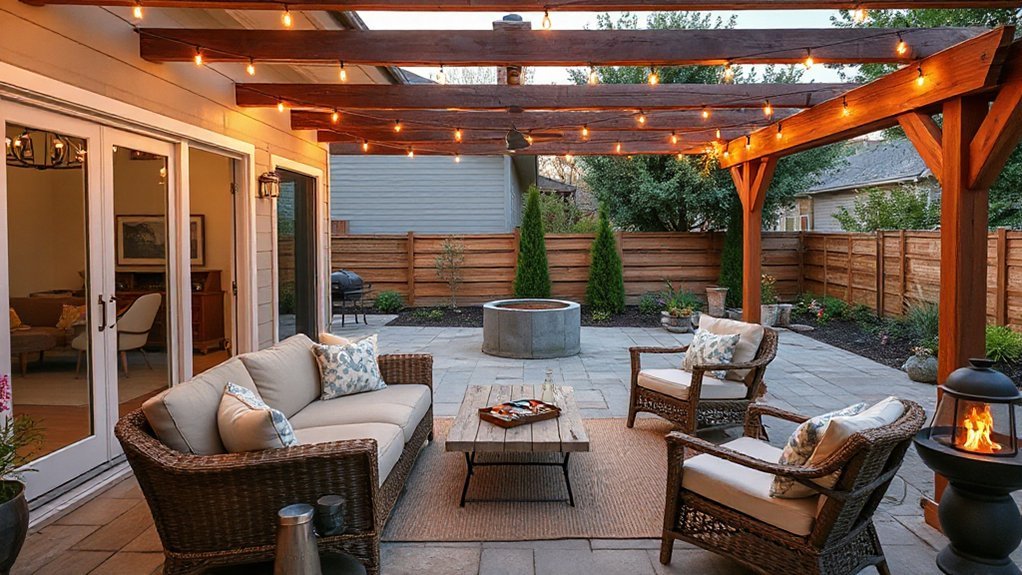
If you’ll gather around a fire pit, prioritize wind protection, noncombustible surfaces, and seating that supports long conversations. If you’ll rely on an outdoor kitchen, place dining within easy reach of prep and serving areas, and plan for task lighting and heat-resistant finishes.
Set capacity targets, measure clearances, and confirm shade, privacy, and storage needs before committing to furniture sizes. This prevents costly rework later.
Pull Indoor Style Cues Outdoors
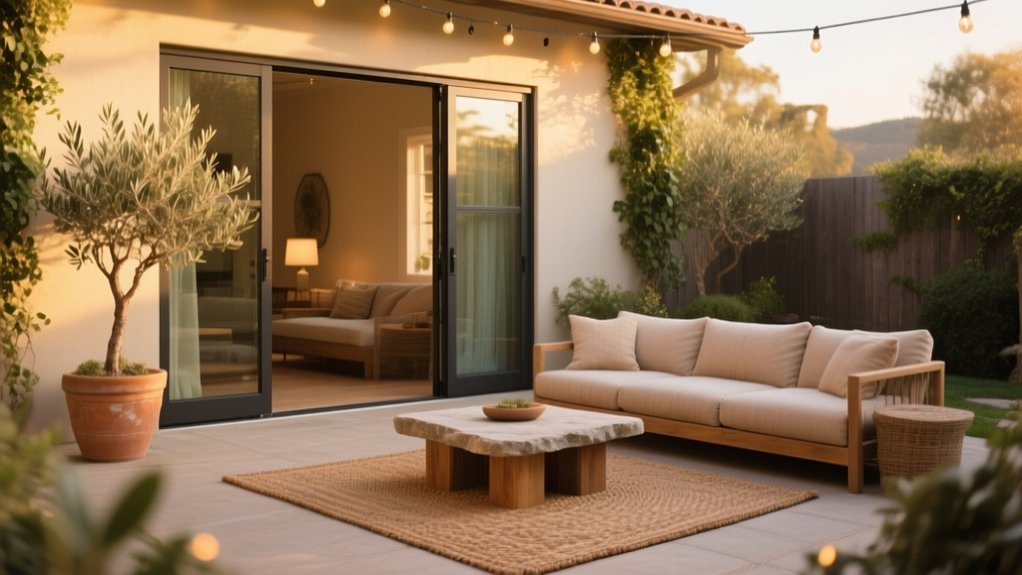
Although outdoor conditions demand tougher materials, you’ll get a more cohesive result if you treat the patio or deck as an extension of your interior and borrow its strongest style cues. Start by echoing your indoor color schemes: repeat one dominant hue, one secondary tone, and a restrained accent in cushions, planters, and outdoor rugs.
Match your interior’s visual weight by choosing furniture lines that mirror your sofa’s profile—sleek, classic, or rustic.
Translate key finishes outdoors with weather-rated equivalents: powder-coated metal in place of painted steel, teak for walnut, and performance fabrics for linen.
Reinforce continuity overhead through ceiling treatments; extend a porch beadboard pattern, paint the soffit your interior trim color, or add slatted panels that reference indoor millwork. You’ll create harmony without forcing sameness.
Plan Outdoor Seating Zones and Traffic Flow
To make your outdoor seating area function as well as it looks, you’ll need to define distinct seating zones for dining, lounging, and conversation. You can separate these zones with rugs, planters, or lighting while keeping sightlines open for a cohesive feel.
Then map clear walking paths between doors, tables, and key features so you don’t force guests to weave through furniture.
Define Distinct Seating Zones
When you define distinct seating zones, you turn an outdoor area into a space that feels intentional, comfortable, and easy to navigate. Start by assigning each zone a purpose: dining, conversation, quiet reading, or sun lounging. Then size furnishings to that activity. Anchor every zone with a clear focal point, such as a fire table, dining table, or a pair of lounge chairs.
Use visual boundaries to signal separation without building walls. An outdoor rug, low planter edge, or change in decking pattern creates definition while keeping the setting open. Reinforce the identity of each zone with coordinated outdoor accessories—side tables, lanterns, and cushions—so the space reads cohesive.
Add garden art as a subtle marker that draws attention and establishes hierarchy.
Map Clear Walking Paths
Once you’ve established your seating zones, map clear walking paths that connect them without cutting through the “use” area of each grouping. You’ll protect conversation circles, keep circulation intuitive, and make the space feel professionally planned. Treat garden pathways as functional corridors, not afterthoughts, and size them for real movement—especially when guests carry drinks or serve food.
- Set primary routes at 42–48 inches wide; keep secondary routes at 30–36.
- Align paths with natural destinations: doors, grill, dining, and lounging.
- Choose walkway materials that match traction needs and maintenance—pavers, decomposed granite, or composite decking.
- Light corners and passages to prevent stumbles and visually reinforce direction.
You’ll reduce bottlenecks and preserve each zone’s comfort and purpose outdoors.
Choose Lounge-Ready Outdoor Seating Furniture
Although every patio layout differs, lounge-ready outdoor seating furniture always starts with the right proportions and materials for sustained comfort. Choose seat depths around 22–24 inches for relaxed lounging, and keep seat heights near 16–18 inches so you can stand up easily.
Prioritize ergonomic designs: supportive back angles, slightly reclined profiles, and armrests positioned to reduce shoulder strain.
Select frames built for outdoors—powder-coated aluminum for low maintenance, teak for stability, or stainless steel for coastal conditions.
Add luxury materials where it matters most, such as dense, UV-stable resin weave or kiln-dried hardwood with sealed joinery.
Confirm weight ratings and fastener quality, then test for wobble.
Finally, scale pieces to your circulation plan so movement stays effortless.
Add Weatherproof Textiles for Cozy Comfort
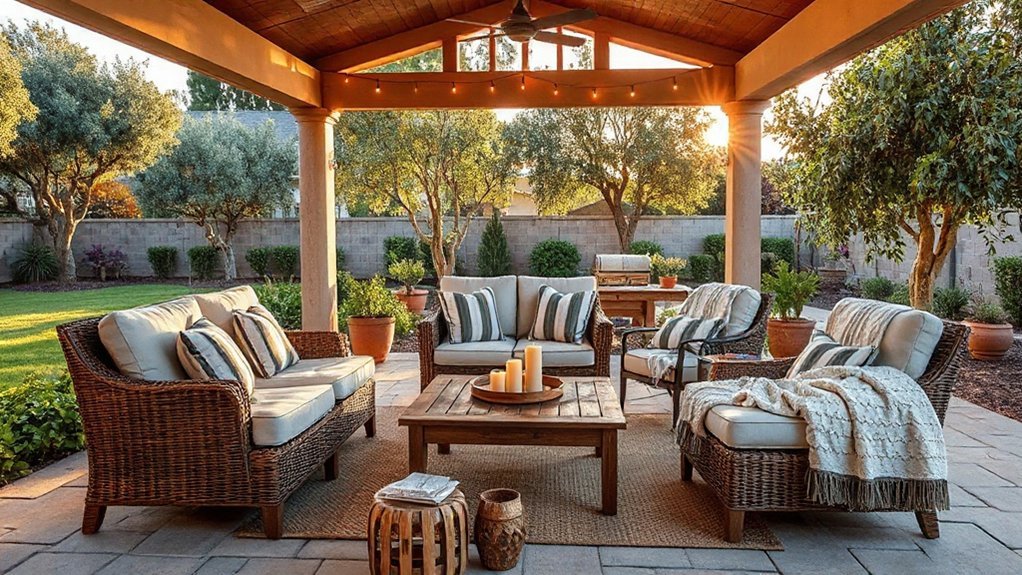
Well-proportioned, outdoor-rated seating sets the foundation, but weatherproof textiles make it feel inviting enough to linger. You’ll get cozy comfort by adding cushions, throws, and rugs engineered to resist moisture, UV fading, and mildew while still feeling refined.
- Choose solution-dyed acrylic or olefin for cushions; they dry quickly and keep color true.
- Layer a low-pile, polypropylene rug to soften underfoot and define the conversation zone.
- Add a light throw with a water-repellent finish, then store it in a deck box between uses.
- Specify removable covers with hidden zippers so you can launder them and maintain a crisp look.
Keep a coordinated palette, vary textures, and you’ll make the patio read like an interior room.
Use Layered Lighting for a Warm Glow
As daylight fades, layered lighting gives your outdoor seating area a warm, intentional glow while improving safety and usability. Begin with soft overhead sources—string lights or a dimmable pendant—so you establish an even ambient glow without harsh glare.
Add task lighting near steps, pathways, and serving surfaces to reduce trips and support effortless entertaining. Then introduce accent lights to highlight planters, textured walls, or a favorite sculpture, creating depth and visual balance.
Prioritize fixture placement: keep lights out of direct sightlines, aim beams downward, and avoid hotspots on faces. Choose warm-color LEDs (2700–3000K) for a residential feel, and use timers or smart controls to maintain consistent brightness.
Verify outdoor ratings and conceal wiring for a clean finish.
Add Shade and Privacy Around Seating
When midday sun or close neighbors make your seating area feel exposed, you can restore comfort by adding shade and privacy in ways that suit your layout and climate. Start by mapping sun angles and sightlines, then choose shade solutions that won’t impede circulation or views.
Prioritize adjustable options so you can respond to heat, wind, and seasonal changes without constant rearranging. For privacy, use structures that block selectively while preserving airflow and code compliance.
- Install a cantilever umbrella or retractable awning to fine-tune coverage.
- Add a pergola with a tensioned canopy for stable, architectural shade.
- Position privacy screens where neighbors’ windows align with seating height.
- Use outdoor curtains on a track to create instant enclosure when needed.
Finish With Plants, Decor, and a Focal Point
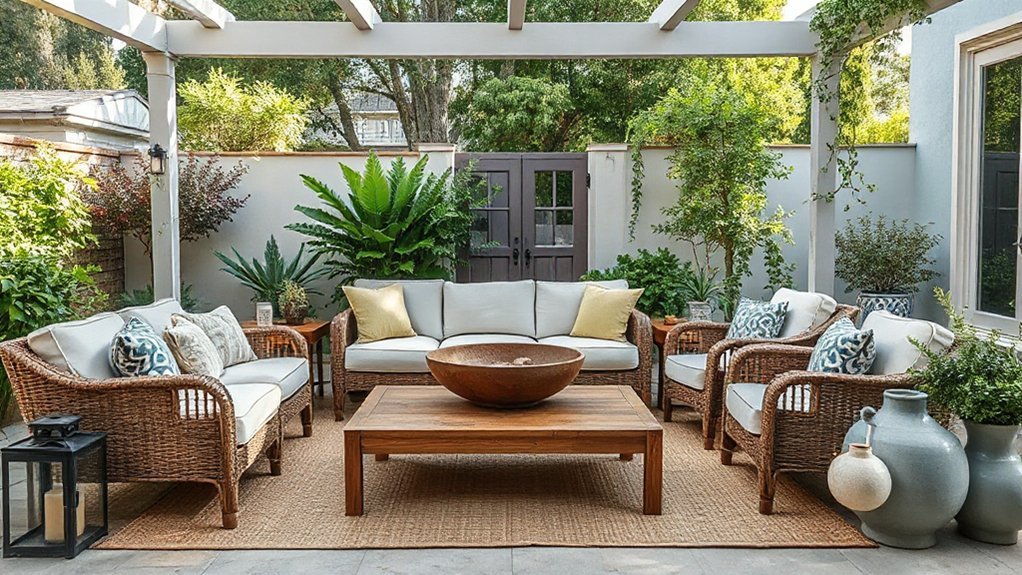
With shade and privacy in place, refine the seating area with layered plants, restrained decor, and one clear focal point that anchors the view.
Arrange greenery in three heights: groundcovers at the edge, mid-level pots near seating, and a taller shrub or small tree behind to frame the zone. Repeat one leaf shape or color so the planting reads intentional, not busy.
Choose outdoor accents that support function: a side table, lanterns, and a weatherproof rug to define circulation. Keep the palette tight and materials consistent with your home’s exterior.
Add garden art sparingly, and let it serve as the focal point—an urn, sculptural planter, or wall piece aligned with the main sightline.
Finally, edit: if an item doesn’t guide the eye or improve comfort, remove it.
Frequently Asked Questions
Do I Need a Permit to Build a Patio or Outdoor Seating Area?
You often need a permit if you pour concrete, change drainage, or build a raised structure; check your local planning office. Confirm setbacks and inspections, coordinate landscaping design, and preselect lighting options to meet codes.
What’s the Best Way to Keep Mosquitoes Away From Seating Areas?
Your best approach combines eliminating standing water, airflow from fans, and targeted Mosquito repellents. For example, your neighbor added two box fans and citronella planters; these Natural deterrents reduced bites, especially with weekly cleanup.
How Can I Reduce Outdoor Noise From Neighbors or Nearby Streets?
You can reduce outdoor noise by installing soundproof barriers, sealing fence gaps, and adding dense hedges. Use landscaping strategies like layered shrubs, berms, and water features; position seating behind screens and away from traffic lines.
What Outdoor Seating Materials Are Safest for Kids and Pets?
Choose rounded-edge, splinter-free teak or recycled plastic, and powder-coated aluminum to prevent cuts and rust. Use non toxic cushions and pet safe fabrics, avoid treated wood and peeling paint, and prioritize washable, UV-stable covers.
How Do I Store or Cover Furniture During Winter or Heavy Storms?
Store furniture indoors or in a dry shed, and use outdoor furniture covers fitted tightly with straps. For seasonal furniture storage, clean and dry pieces first, elevate off ground, and ventilate to prevent mildew.
Conclusion
You’ll plan every detail so your outdoor seating feels effortless—an irony that proves good design never “just happens.” Decide how you’ll use the space, then echo indoor cues in durable finishes. Zone seating to protect traffic flow, and choose lounge-ready pieces that invite lingering. Add weatherproof textiles, layered lighting, and smart shade for comfort and privacy. Finally, use plants, decor, and one clear focal point to make outdoors feel unmistakably like home.