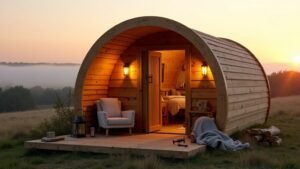
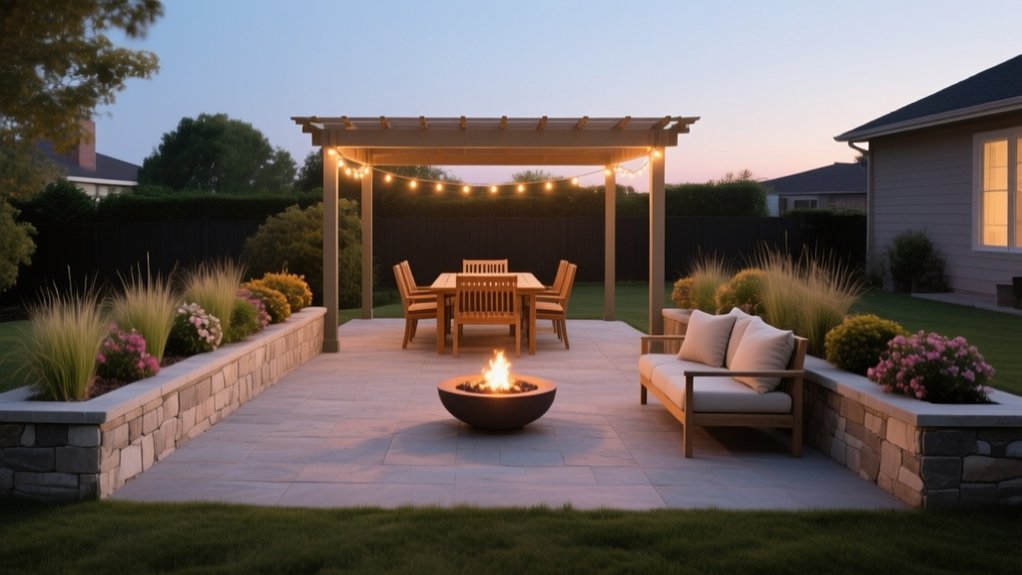
You’ll create a balanced, functional outdoor space by planning around your daily routines and UK conditions like winter light, wind, and wet ground. Map clear zones from the back door for dining, lounging, and play, and define them with edging, pots, or trellis “rooms.” Keep main paths about 900mm wide (600mm for side access) and choose slim, multi-use furniture that preserves walkways. Layer hardy planting, privacy screens, and lighting—there’s more to refine next.
Key Takeaways
- Map daily routines and UK conditions (light, wind, wet ground) to define practical zones for dining, lounging, play, and storage.
- Create clear garden “rooms” using edged paving, gravel, or decking to prevent soil runoff and visually separate activities.
- Design paths around real traffic flow, keeping main routes 900mm wide, side access 600mm, with safe materials and low-level lighting.
- Choose minimal, multi-functional furniture and confirm clear walkways and sightlines before buying to keep spaces open and comfortable.
- Layer privacy and structure with evergreens, climbers, containers, slatted panels, and pergolas for screening, seasonal shade, and year-round usability.
Start With How You’ll Use the Yard Daily
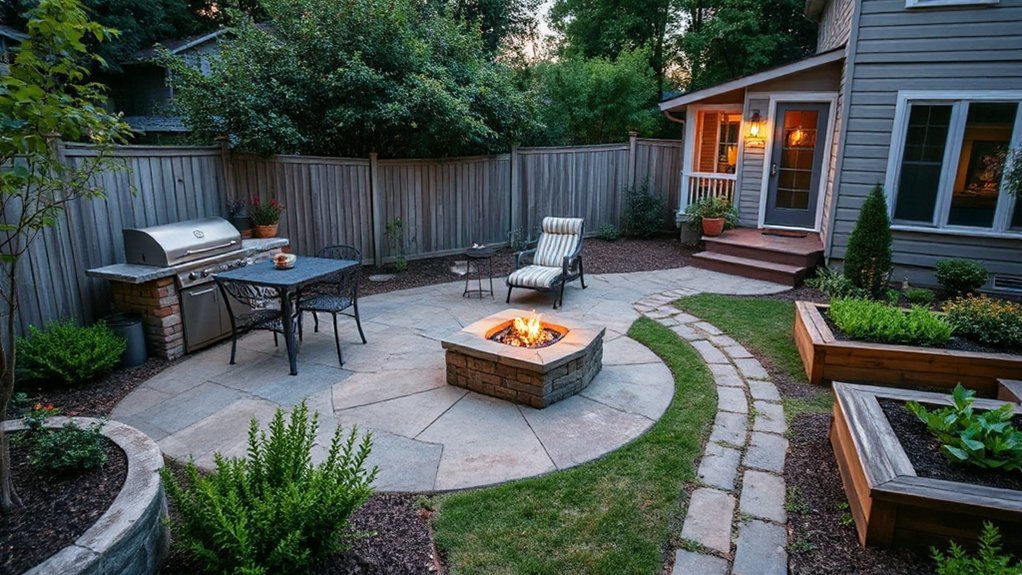
Before you sketch layouts or buy furniture, get clear on how you’ll actually use the garden day to day, because that routine should drive every decision. Track a typical week: morning coffee, bin day access, dog laps, kids’ homework outside, or a quick evening tidy-up. Note when you’re out there, how long for, and what you always carry (mug, hose, secateurs).
In the UK, factor low winter light, prevailing wind, and wet ground underfoot. Check sightlines from the kitchen and back door so you’ll keep on top of maintenance.
Prioritise surfaces you’ll walk on daily, storage for cushions and tools, and lighting you’ll rely on. Let garden aesthetics and outdoor decor follow function, not compete with it.
Map Zones for Dining, Lounging, and Play
Once you know what you’ll do outside each day, sketch the space into clear zones so everything has a place and doesn’t clash. Start at the back door and map the main walking line to the bins, shed, and washing line, keeping it clear and non-slip.
Place dining near the kitchen for easy carrying, and set a simple boundary with pots or a low trellis so chairs don’t drift into paths.
Put lounging where you’ll catch evening sun or shelter from wind; mark it with an outdoor rug or a strip of gravel.
Give play its own corner, away from breakables and barbecues.
Use Garden art as a visual anchor, and swap Seasonal decor to signal each zone without moving furniture.
Size Each Zone to Fit Your Space
Although it’s tempting to give every activity equal space, your garden will feel calmer if you size each zone around how you actually use it and the room you’ve got. Start with priorities: if you host often, allow a dining area that fits your table plus chair clearance; if you rarely eat outside, scale it down and give more room to lounging or planting.
In a small UK patio, keep play compact with a fold-away sand tray or pop-up goal. Use simple zone separation—planters, low screening, or contrasting paving—to stop areas bleeding into each other. Leave breathing room around key pieces so it doesn’t feel cramped.
When each zone matches real habits, you’ll get spatial harmony and easier maintenance too.
Plan Pathways So Traffic Flows Naturally
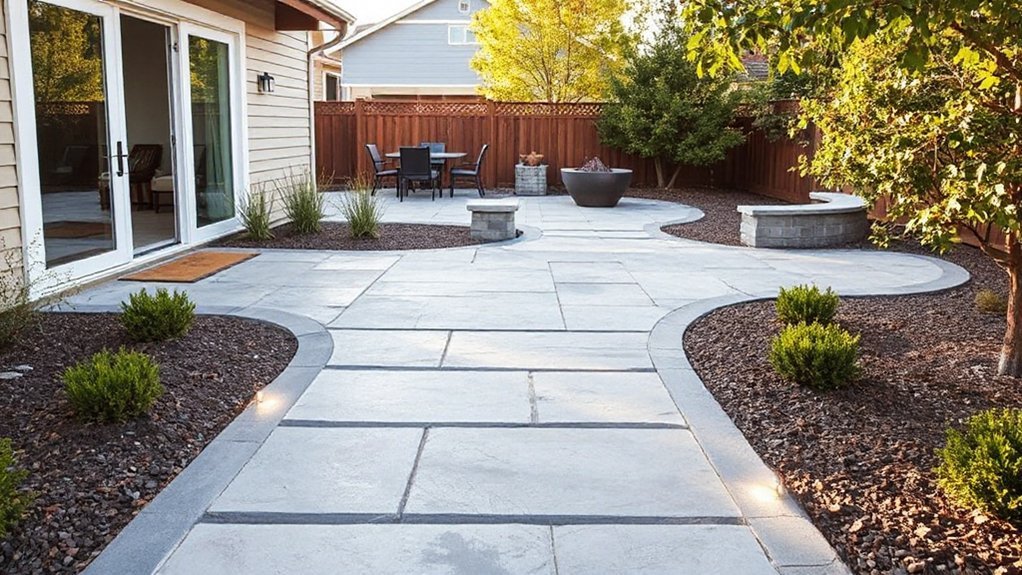
If you map your movement first, you’ll lay paths that make the whole garden feel calmer and easier to use. Walk the likely routes from back door to shed, bins, patio, and washing line, then mark them with a hose or string.
Keep main routes at least 900mm wide so two people can pass, and allow turning space by gates and steps. Use gentle curves to steer people away from planting, but keep sightlines clear for safety in wet UK winters.
Reinforce landscape symmetry by aligning paths with doors, windows, or a central lawn line. Choose pathway materials for grip and drainage: textured paving, resin-bound aggregate, or gravel with edging to stop spread.
Finish with low-level lighting for night-time wayfinding.
Choose Patio Furniture That Won’t Crowd You
Before you buy anything, you’ll measure clear walkways so you can move comfortably between the door, seating, and any cooking or dining area.
You’ll then choose space-saving pieces—like slimmer chairs, folding bistro sets, or benches that sit tight to a wall—to keep your patio feeling open.
To stretch a small UK garden further, you’ll prioritise multi-functional seating such as storage benches, stackable chairs, or modular sections that reconfigure for guests.
Measure Clear Walkways
When you measure out clear walkways first, you’ll choose patio furniture that fits your space instead of forcing you to squeeze past it. Start by marking your main route from the back door to the lawn, shed, or gate, then map any links to garden paths so movement feels natural.
For good walkway design, allow about 900mm for a primary route and at least 600mm for occasional side access; widen to 1,100mm if two people often pass.
Use masking tape, chalk, or string lines to outline these corridors on the patio. Open doors fully, pull chairs out, and test the route carrying a tray.
If you clip elbows or brush pots, reduce furniture depth or reposition pieces.
Choose Space-Saving Pieces
Two well-chosen space-savers can make a small patio feel open: pick furniture that folds, stacks, or tucks away so your clear walkways stay clear. Measure the “parked” footprint, not just the in-use size, and check door swings and thresholds.
Choose café sets with slim profiles, nesting tables, and stackable chairs that you can store vertically against a wall. Look for aluminium or powder-coated steel frames that won’t warp in UK rain, and quick-dry slings or treated timber for easy maintenance.
Add compact storage such as a narrow deck box or bench-height chest to hide cushions without blocking the path. Keep legs set in from the edges to reduce toe stubs, and favour rounded corners.
Space efficient furniture lets you relax without constant shuffling.
Prioritize Multi-Functional Seating
Space-saving furniture keeps the floor plan open, but multi-functional seating keeps it usable day to day without adding extra pieces. Choose benches with lift-up storage for cushions, throws, or barbecue tools, and you’ll cut clutter without buying a separate box.
Look for Convertible furniture like a loveseat that flips into a lounger, or stools that nest under a table when you’re not hosting.
For awkward UK patio shapes, Modular designs let you reconfigure: split a corner sofa into two chairs for sun-tracking, or push sections together for guests.
Check seat depths and back heights so you can sit upright with a cuppa, not sprawl. Stick to slim arms and raised legs to keep sightlines open and drainage easy too.
Mix Plants and Hardscape for Structure
Although planting brings the softness, hardscape gives your outdoor area the structure it needs to feel usable year-round in the UK. Start by setting clear “rooms” with paving, gravel, or decking, then edge them with brick, timber, or steel to stop soil washing onto paths during heavy rain.
Use a simple grid: one main route from back door to seating, plus a side strip for bins or storage access.
Build planting into the framework. Choose Container gardens for patios and rented spaces, keeping pots on risers so water drains and frost damage reduces.
Add Vertical planting on fences or walls with trellis, wire, or pocket planters to green up tight footprints without stealing floor space.
Balance evergreens for winter shape with perennials for seasonal colour.
Add Privacy Without Boxing the Space In
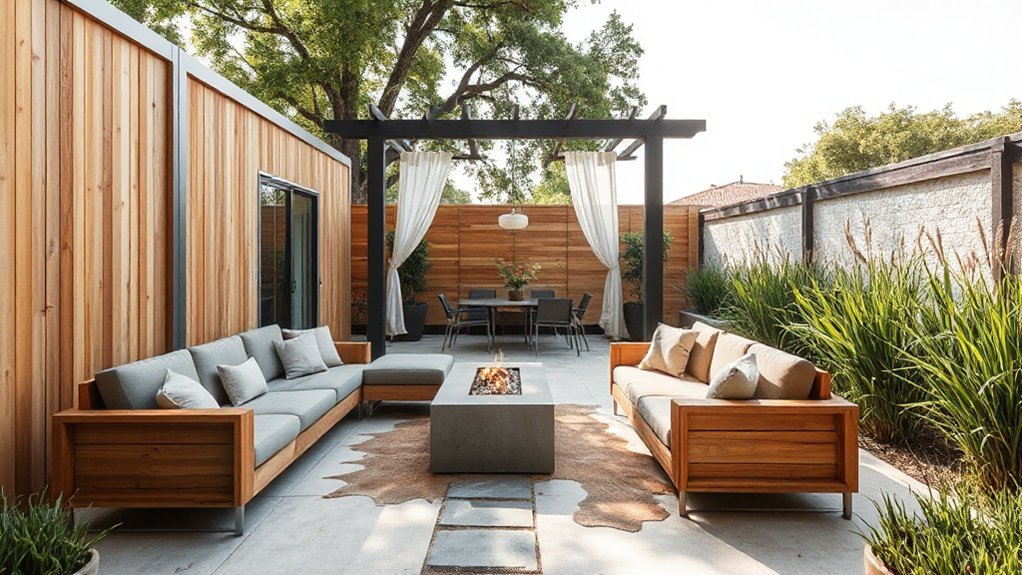
You can add privacy without making your garden feel cramped by combining layered screening: plants at ground level, slatted panels where you need height, and a pergola to soften views from above.
Place screening to block key sightlines from neighbouring windows and patios, then leave gaps for light and airflow so the space stays open.
Choose climbers and evergreen planting to knit it together and keep coverage reliable in the UK’s changeable seasons.
Layered Screening With Plants
If neighbouring windows overlook the patio, layered planting gives you privacy while keeping the garden feeling open. Start with evergreen shrubs such as Portuguese laurel or yew at the boundary for year-round cover.
Then stagger taller clumps (bamboo in a root barrier, or Amelanchier) behind to break sightlines.
In front, soften edges with grasses and shade-tolerant perennials so the screen looks intentional, not like a hedge wall.
Add flowering vines on wires or a tensioned trellis fixed to existing fencing, choosing clematis or honeysuckle for scent and seasonal colour.
Keep gaps between plants for airflow in Britain’s damp weather, and mulch well to reduce summer watering.
Trim lightly after flowering to maintain height without blocking light.
Slatted Panels And Pergolas
Where planting alone can’t block awkward sightlines, slatted timber panels and a simple pergola give you privacy without turning the patio into a closed box. Set panels on the side that faces neighbours, then keep the top open so light still reaches seating and pots. Choose pressure-treated softwood or cedar, and fix posts with galvanised brackets for UK weather.
- Use Decorative slats with 20–40mm gaps to screen, not shade.
- Run slats vertically to make narrow gardens feel taller.
- Add a pergola beam line to define dining without walls.
- Pick pergola styles: flat for modern, arched for cottage plots.
- Train clematis or grapevine for summer cover and winter light.
Finish with exterior oil, and leave clearance above paving for drainage.
Layer Lighting for Safety and Mood
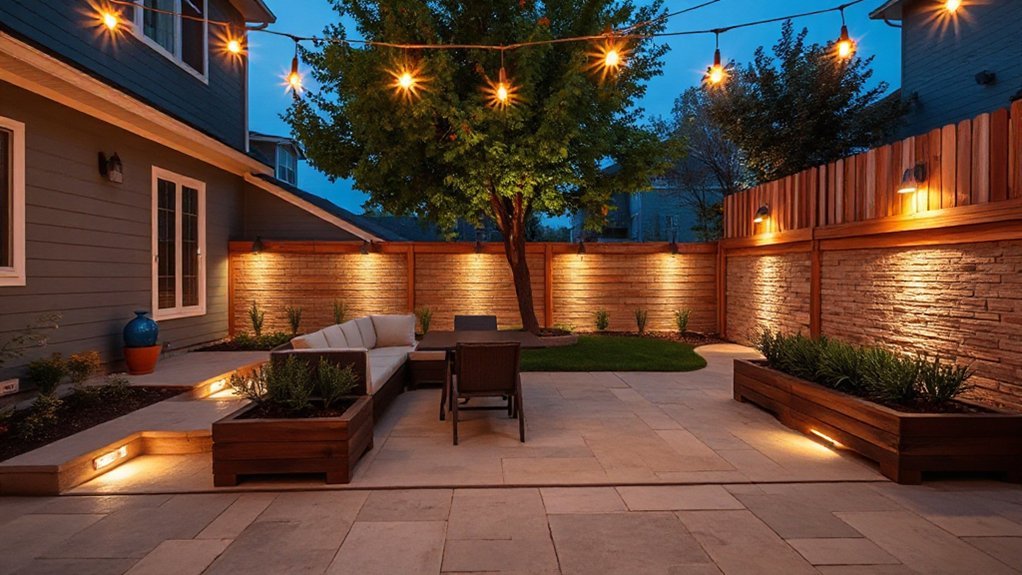
Although a well-planned patio layout does most of the work, layered lighting keeps the space safe to use and comfortable to spend time in after dark. Start with task lighting: low-level bollards or recessed step lights on changes in level, plus downlights under a pergola for dining and food prep. Add path markers to guide you from back door to bin store without glare.
Next, build ambience with warm-white decorative fixtures, such as festoons, wall lanterns, or a shaded table lamp on a covered seating zone. Put these on a dimmer or smart plug so you can shift from supper to drinks.
Finally, include emergency lighting at exits and key routes, and check IP ratings and timers suit UK winter evenings too.
Pick Weather-Ready Materials That Last
Because British weather can swing from driving rain to a dry, UV-bright afternoon in the same week, you’ll get a longer-lasting patio by choosing materials that cope with water, frost and grime without constant upkeep. Start with weather resistant materials tested for freeze-thaw, then match finishes to how you’ll use the space.
Factor in durability considerations like slip rating, stain resistance, and how easily you can replace a damaged board or slab.
- Porcelain paving: low porosity, algae-resistant, easy to jet-wash
- Composite decking: won’t splinter, consistent colour, check decking board spacing
- Pressure-treated timber: choose UC4 for ground contact, seal cut ends
- Stainless fixings: A2/A4 to prevent rust streaks on damp days
- UV-stable fabrics: solution-dyed acrylic cushions dry faster and fade less
Frequently Asked Questions
How Do I Keep Mosquitoes Away Without Harsh Chemicals?
Use Natural repellents like citronella, lemon eucalyptus, or lavender, and run a fan to disrupt flight. You’ll prevent Mosquito breeding by emptying saucers, clearing gutters, and invigorating water butts weekly.
What Permits or HOA Approvals Might Be Required for Outdoor Upgrades?
You’ll often need Permitting requirements for decks, outbuildings, electrical work, drainage, or boundary walls; check your council’s planning portal. Review HOA regulations or lease covenants for fences, lighting, paint colours, and sheds.
How Can I Reduce Outdoor Noise From Neighbors or Nearby Streets?
You can cut outdoor noise by adding sound barriers: dense hedging for garden privacy, acoustic fencing, and staggered planting. Site a shed or pergola toward the road, use soft surfaces, and add a water feature.
What’s the Best Way to Add Outdoor Heating for Cooler Evenings?
Start with a quick sketch—you don’t need to be an artist. Choose Outdoor heating options like a 2kW electric infrared heater under cover, or a gas fire pit. Prioritise Energy efficient solutions: timers, zoning, windbreaks.
How Do I Protect Outdoor Furniture From Theft or Strong Winds?
Use Security measures: bolt furniture to paving, fit ground anchors with security chains, and add motion-sensor lights or a Ring camera. Choose Weather resistant furniture, weigh bases with sandbags, store cushions, and use storm straps.
Conclusion
When you design your garden around how you actually live, everything falls into place. Zone dining, lounging, and play, then size each area so it fits a typical UK plot without feeling squeezed. Keep pathways direct, choose slimline furniture, and balance planting with hardscape for year-round structure. Add subtle screening and layered lighting for security and atmosphere. Finally, pick weather-ready materials that handle rain, frost, and wind—why settle for a space you won’t use?