
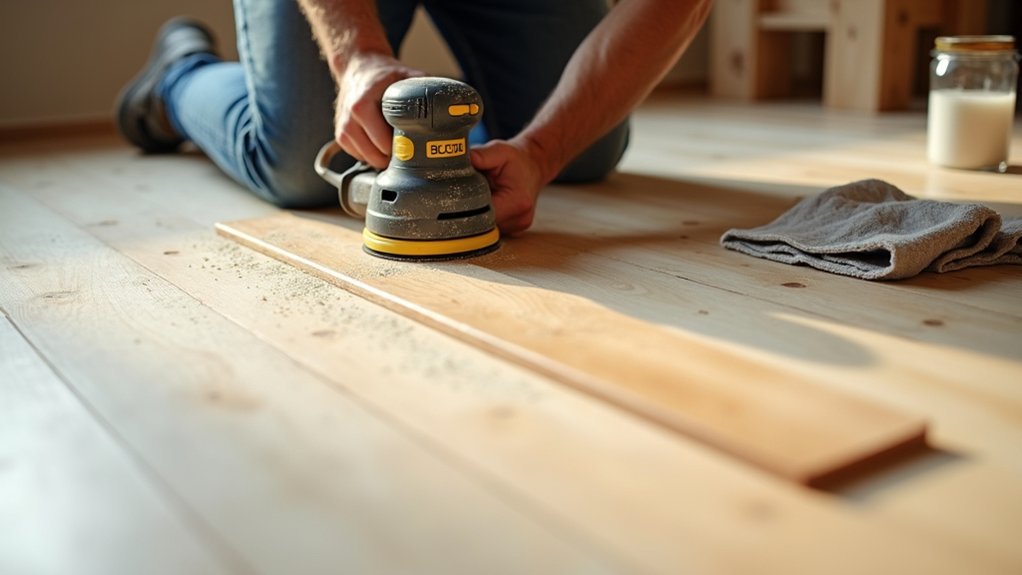
Yes, you can refinish engineered wood flooring in the UK, as long as it’s genuine engineered timber and the wear layer’s thick enough. You’ll usually need at least a 3mm veneer for a full sand and refinish, while 4–6mm gives you more future options; 2mm or less is risky. For light scuffs, you can screen and recoat instead. If you see core, cupping, or delamination, replacement’s wiser. Up next, you’ll see which method suits your floor.
Key Takeaways
- Yes, engineered wood flooring can be refinished if it has a thick enough real-wood wear layer.
- Confirm it’s engineered wood, not laminate, by checking board edges or leftover planks for a real veneer.
- A 3mm wear layer is usually the UK minimum for sanding; 4–6mm supports multiple future refinishings.
- Light scuffs often need only a screen-and-recoat, while deep scratches or uneven colour require full sanding and re-sealing.
- Replace boards if the veneer is too thin, the core shows, or there’s delamination, swelling, persistent cupping, or structural bounce.
Can You Refinish Engineered Wood Flooring?
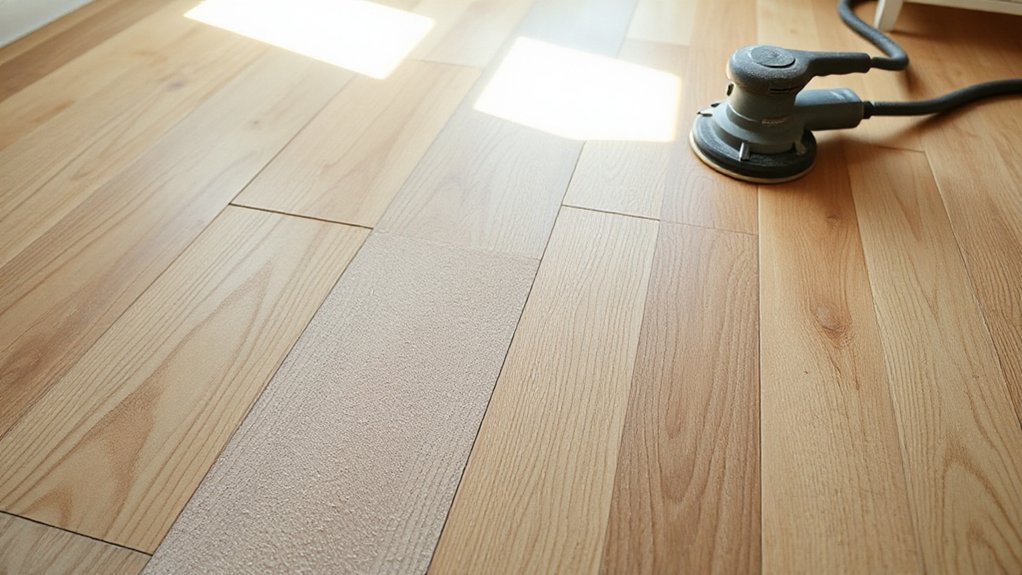
Although engineered wood isn’t as thick as solid timber, you can often refinish it in the UK—provided the wear layer (the real wood veneer on top) is thick enough to take a light sand. First, confirm your floor is genuine engineered wood, not laminate, by checking the edge profile or leftover boards. If the surface shows scratches, dull patches, or minor staining, a professional screen-and-recoat may restore Surface durability without heavy sanding. For deeper wear, you can sand and re-seal, but you’ll need dust control and careful edging to avoid breaking through. Choose Eco friendly finishes like low-VOC water-based lacquer or hardwax oil, and follow UK drying times and ventilation guidance for safe occupancy.
How Thick Must the Veneer Be to Refinish?
Before you book a sanding, measure the engineered board’s wear layer (the real-wood veneer), because it determines whether refinishing is safe. In the UK, you’ll usually need a Veneer thickness of at least 3mm for a full sand and refinish; 4–6mm gives you better margin and future options. If yours is 2mm or less, you’re at high risk of cutting through to the core or exposing glue lines, so don’t attempt a full refinish. Check the manufacturer’s spec sheet, or remove a threshold strip and measure the edge with callipers. Also consider bevels and uneven wear: thin spots near joints reduce tolerance. Adequate veneer improves Refinishing durability and helps your floor last longer in busy homes.
Sand vs. Screen vs. Recoat: What Should You Choose?
How do you decide between a full sand, a screen (abrasion) and recoat, or a simple recoat? Start by judging wear, not wishful thinking: you’ll get the best outcome when the method matches the damage and your veneer limits.
- Choose a full sand if scratches cut through stain, boards look patchy, or you need colour matching across rooms.
- Pick screen and recoat when the finish is dull or lightly scuffed, but the stain colour still looks even.
- Go for a simple recoat if the surface is intact and you just want better finish durability.
- Check for edge wear, pet tracks, and sun-fade; these often demand more than a recoat.
- In the UK, confirm product compatibility (oil vs lacquer) before you book a contractor.
When Should You Replace Engineered Wood Instead?
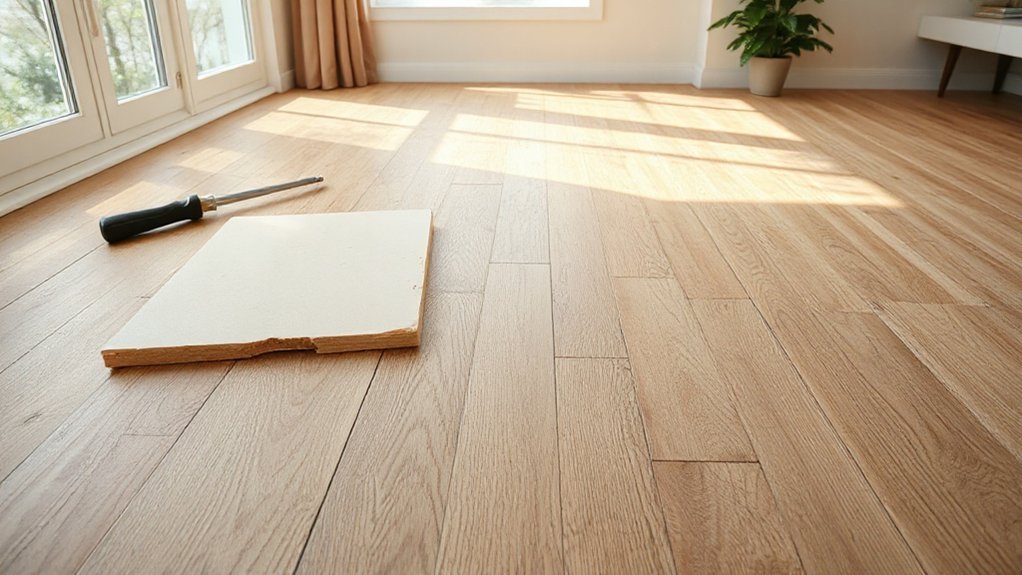
Sometimes the right call isn’t more sanding or another coat at all, but replacing the engineered boards—especially when you’ve hit the limits of the veneer or the floor’s structure has failed. If you can see the core, feel springy spots, or notice persistent cupping after heating-season changes, refinishing won’t fix it. Replace if multiple planks are delaminating, water has swollen the edges, or the click-lock joints won’t hold tight. If your floor has already had DIY refinishing and the wear layer’s now too thin, further sanding risks permanent damage. In UK homes, also swap boards where underfloor heating has caused repeated splitting. Choose Eco friendly options like FSC-certified engineered timber or reclaimed boards, and reuse salvageable planks where possible.
How Much Does Refinishing Cost (and How Messy Is It)?
Although engineered wood can often take a light sand and recoat, the cost—and disruption—depends on your floor’s wear layer, the finish you choose, and whether you hire a pro. In the UK, expect roughly £18–£35/m² for pro sanding and recoating, or £6–£12/m² DIY for consumables, but you’ll trade money for risk. For a clear Cost comparison, include edging, repairs, stain, and VAT. Dust is manageable with modern extraction, yet you’ll still need to clear rooms and plan drying time, especially with oil finishes.
- Measure your wear layer before booking
- Choose lacquer for faster turnaround
- Pick oil for spot repairs and Flooring durability
- Budget for skirting-board protection and masking
- Allow 24–72 hours before heavy traffic
Frequently Asked Questions
Can Engineered Wood Floors Be Refinished Without Sanding?
Yes, you can refinish engineered wood floors without sanding by using a screening and recoat or chemical abrasion system. You’ll limit durability concerns, but cost implications apply; get a UK flooring pro’s assessment first.
Will Refinishing Engineered Flooring Affect Radiant Heating Performance?
Refinishing won’t considerably affect radiant heat performance if you use thin, compatible coatings. You’ll keep heat transfer steady, but you must avoid heavy build-ups. Choose durable finishes to maintain surface durability and follow UK installer guidance.
How Long Should You Wait Before Moving Furniture Back After Refinishing?
Wait 24–48 hours before moving furniture back; full cure takes about 7 days, and nearly 30% of UK floor finish failures come from early loading. Follow drying time precisely, and stagger furniture placement using felt pads.
Can You Refinish Engineered Wood Floors With Beveled Edges?
Yes, you can refinish engineered wood floors with beveled edges, but you’ll likely keep the bevel unless you sand aggressively. Check veneer thickness first, use a UK pro, and protect floor durability with gentle sanding.
Are Engineered Wood Floors Safe to Refinish if They Contain Formaldehyde?
Yes, you can refinish them, but manage Formaldehyde concerns. You’ll need safety precautions: verify low-emission E1/E0 boards, use good extraction, ventilate well, wear a P3 mask, and choose low-VOC UK finishes.
Conclusion
Yes, you can refinish engineered wood flooring, but only if the top veneer’s thick enough—typically 3mm+ gives you a safe sanding margin. If it’s thinner, don’t risk a full sand; choose a screen-and-recoat to freshen the finish with far less disruption. When boards are worn through, cupped, or delaminating, replacement’s the sensible call. Get quotes, plan for dust control, and remember: you can’t fix a pothole with a quill pen.