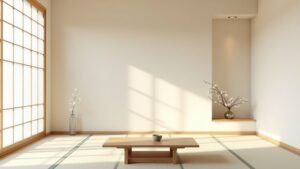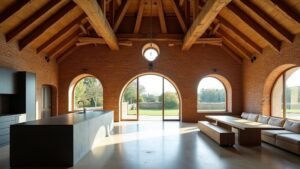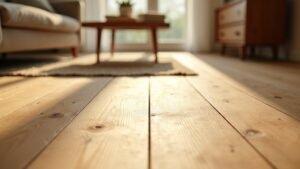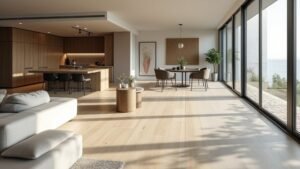
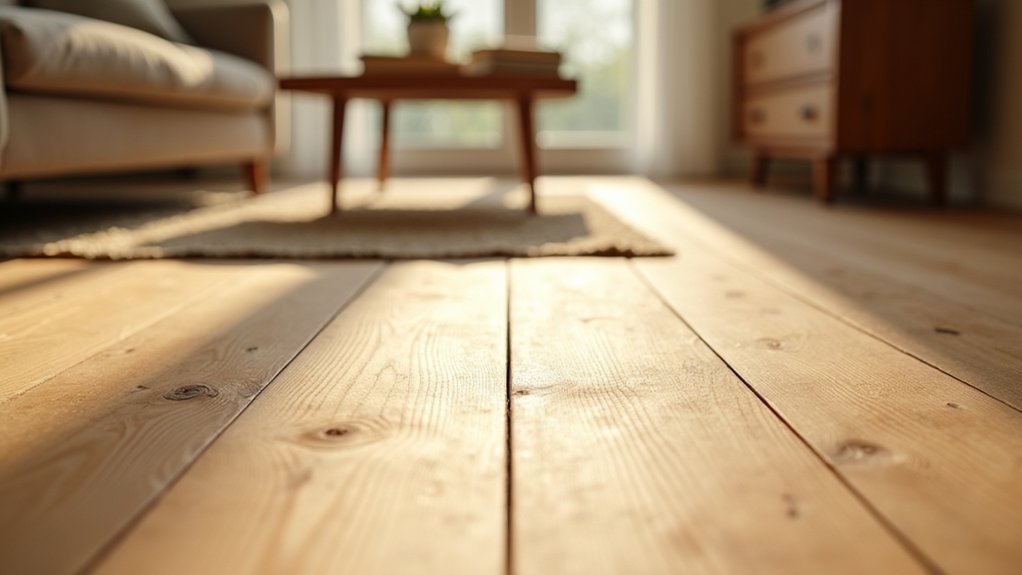
Floor texture makes your home look warmer by adding micro-shadows and depth, so light feels softer and the space looks more settled on grey UK days. You’ll get less glare with brushed oak, honed stone, matte oils, or low-sheen lacquers, while high-gloss timber and polished concrete can read cooler and harsher. Texture also “holds” a room against smooth walls, and slip-rated satin finishes suit busy halls and kitchens. Next, you’ll see which textures work best by room.
Key Takeaways
- Micro-textured floors add depth, shadow, and contrast, making spaces feel cozier and more lived-in.
- Brushed, sawn, or riven finishes scatter light, reducing glare and creating softer, warmer-looking illumination.
- Matte oils and low-sheen lacquers emphasize natural grain without mirror-like reflections that can make rooms feel cooler.
- Texture breaks up large floor expanses, visually “settling” minimalist rooms and balancing smooth walls for warmth.
- Layered textures like rugs and tactile joinery amplify warmth by adding underfoot comfort and contrasting smooth surfaces.
How Does Floor Texture Add Visual Warmth?
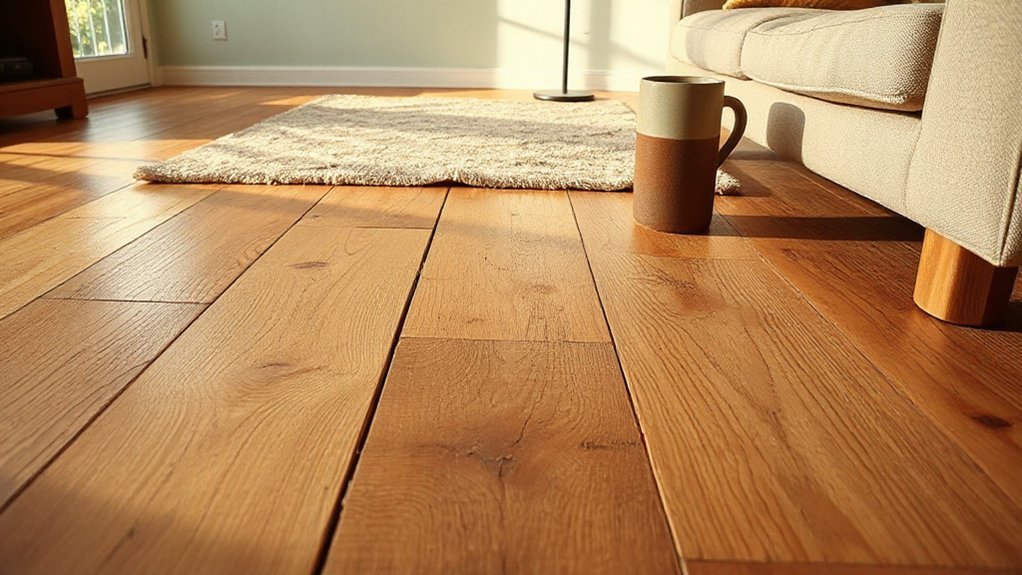
Although colour sets the baseline, floor texture is what gives a room its visual warmth by adding depth, shadow, and contrast that your eye reads as cosy and lived-in. You create Texture contrast when you pair tactile grains, knots, or subtle undulations with smoother walls and joinery, so the floor visually “holds” the space. Brushed oak, sawn-edge boards, and loop-pile wool carpets catch side light from UK windows, softening hard lines and reducing glare. You’ll also notice that micro-texture breaks up large expanses, making rooms feel less stark and more settled. Choose finishes that balance touch and performance: matte oils emphasise grain, while low-sheen lacquers mute it. Prioritise Material durability so the warmth survives traffic, pets, and grit from outdoor shoes year-round.
Floor Texture Vs Color: What Changes Warmth Faster?
When you need a room to feel warmer quickly, changing floor colour usually delivers the fastest visual shift, because your eye reads lightness and undertone in a split second. Swap cool greys for honey oak, warm beiges, or clay tones and you’ll raise perceived color temperature immediately, even before you change anything else in the scheme.
Texture works slower but lasts longer. Add brushed wood, riven stone, loop-pile carpet, or rustic parquet and you’ll introduce floor texture contrast that signals cosiness and tactility. In UK homes with limited winter daylight, that extra “feel” matters, yet it takes nearer viewing to register. If you’re staging to sell or refreshing a rental, start with colour (rugs, LVT, stain). If you’re renovating, lock in texture for durable warmth year-round.
How Floor Texture Changes Light, Glare, And Shadow
Because floor finishes act like light filters at ground level, the texture you choose directly controls how daylight and artificial light bounce, glare, and pool across the room. In UK homes, where low winter sun and smaller window openings often create contrast, texture becomes your easiest lever for managing brightness and visual warmth through light diffusion and shadow interplay.
- Polished, flat surfaces reflect like a mirror, pushing specular glare towards eye level and exaggerating hotspots under downlights.
- Brushed, honed, or micro-textured finishes scatter beams, softening reflections and keeping light evenly distributed across circulation routes.
- Pronounced grain, tumbled edges, or riven stone breaks up long shadows, adding depth near skirting boards and under furniture, so corners feel less stark.
Smooth Or Textured Floors: What Feels Cozier Underfoot?
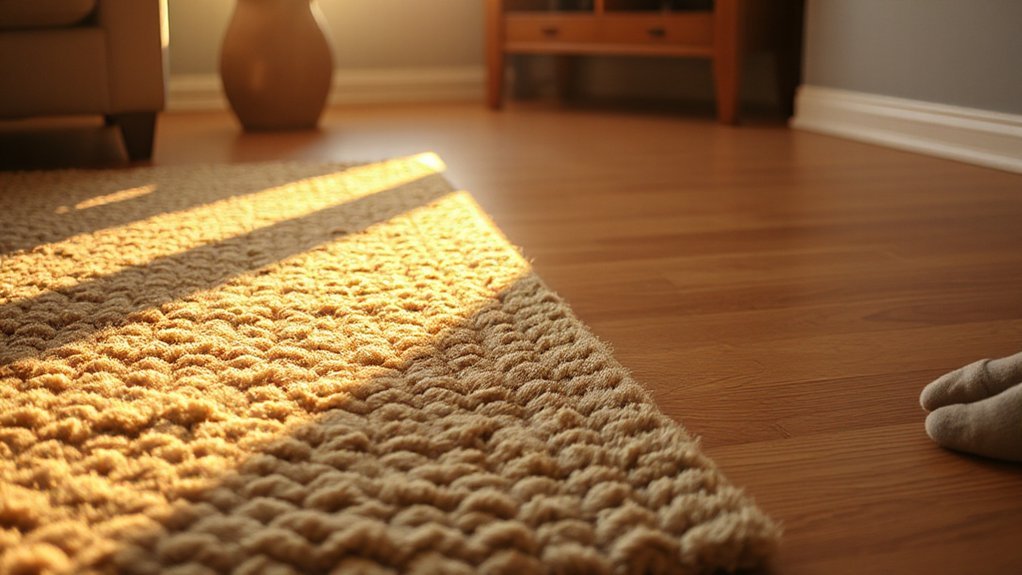
Even if two floors look equally warm in colour, the one that feels cosier underfoot usually has more texture and a slightly softer “give”. You’ll notice it straight away when you go cozy barefoot: brushed oak, matt lacquered boards, cork, and dense loop pile carpet all offer micro-grip and gentle compression that reads as comfort. By contrast, high-gloss engineered timber, polished concrete, and large-format porcelain can feel colder because they’re hard, smooth, and unforgiving, even at the same room temperature. For tactile design, specify finishes that reduce slip and soften contact: honed stone over polished, textured vinyl over slick LVT, and underlay that adds resilience. In UK homes, underfloor heating pairs better with thinner, textured surfaces than deep pile, balancing warmth and feel.
What Floor Texture Makes A Room Feel Smaller Or Larger?
How does floor texture change the way a room reads in size? You’ll notice scale shifts because texture controls visual “busyness” and how your eye travels across the floor pattern. In compact UK rooms, heavy, broken-up texture can compress the footprint, while calmer surfaces let the perimeter breathe. Your tactile sensation matters too: pronounced ridges and grout lines feel closer and more insistent, making spaces seem tighter.
- Choose large-format, low-relief finishes to stretch sightlines and make walls feel farther apart.
- Avoid small, high-contrast tiles or busy embossing; they fragment the floor pattern and shrink the room.
- Run linear textures lengthways to visually extend narrow terraces and flats, especially in hallways.
Warm-Looking Wood Floors: Grain, Wire-Brush, Hand-Scraped
While colour sets the baseline, it’s the way a wood floor catches light through its grain and surface relief that makes it read warm under UK daylight. Choose boards with pronounced cathedral grain or tight rift lines to steer the glow: open grain scatters light, softening shadows in north-facing rooms.
If you want added depth without gloss, specify wire-brushed oak; it strips softer springwood, leaving ridges that create controlled texture contrast and mask everyday grit from wet shoes. For a heritage feel, go hand-scraped: irregular scoops break up reflections, so the floor looks mellow even with LED downlights. You’ll also gain tactile diversity underfoot, which makes open-plan spaces feel more inviting. Keep bevels subtle and finishes matte to avoid a cold, glassy read.
Cozy Carpet Textures: Cut Pile, Loop, And Plush
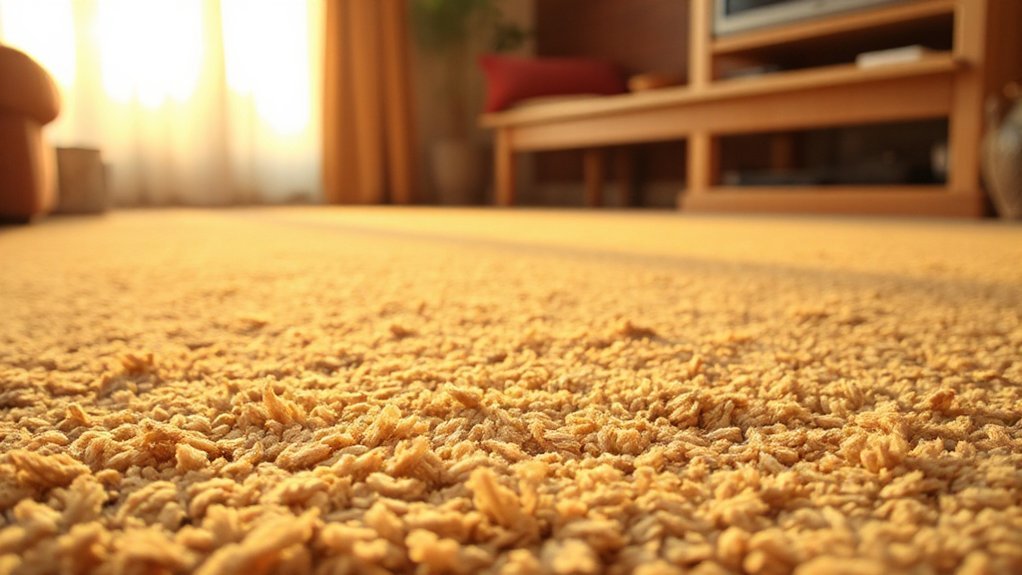
Wood grain adds warmth through reflected light, but carpet creates it by trapping light and softening sound underfoot. When you choose cozy carpet textures, you’re selecting warmth you can see and feel, especially in UK homes where draughts and hard surfaces can make rooms seem stark. Focus on pile structure and density, not just colour.
- Cut pile: you get a velvety surface that reads richer in low winter light; twist levels improve resilience in busy hallways.
- Loop pile: you gain crisp definition and durability; tighter loops suit stairs and family rooms, resisting flattening.
- Plush: you create hotel-like depth; specify higher face weight to prevent shading and footprints.
These tactile flooring options also help zoning, making seating areas feel immediately inviting.
Stone Floors: Is Honed Texture Warmer Than Polished?
When you choose stone flooring, you’ll notice honed finishes scatter light and soften glare, so the room can read warmer than with a polished surface. Underfoot, honed stone often feels less slippery and less “glassy”, while polished stone can feel colder simply because it reflects more and highlights every chill tone. You’ll also want to match the finish to your scheme: honed suits relaxed, heritage and Scandinavian looks, whereas polished fits crisp contemporary interiors and high-contrast styling.
Light Reflection And Warmth
- View samples in morning, midday, and evening light.
- Check them under 2700–3000K LEDs, common in UK homes.
- Compare against skirting, cabinetry, and wall colour.
You’ll usually find honed finishes photograph warmer and feel visually calmer.
Surface Feel Underfoot
Although both honed and polished stone sit at the same actual temperature, a honed finish usually feels warmer underfoot because its softer micro-texture reduces that “cold shock” you get from a slick, highly reflective surface and gives your skin more friction and grip. You’ll notice it most first thing in the morning, when bare feet meet the floor. Honed stone slightly disrupts contact, slowing heat transfer from your skin, while polished surfaces feel instantly colder because they present a smoother, more continuous interface. In UK homes, that matters on ground floors, especially over uninsulated slabs. If you want texture contrast, pair honed stone with smoother skirtings or thresholds, but keep walking zones consistent for safety. Build tactile diversity with rugs or runners where you pause most, like by the sink.
Design Style Compatibility
That underfoot “warmth” you get from honed stone also reads visually, so the finish you choose needs to suit the rest of your scheme as much as your feet. In UK homes, honed limestone, travertine, or slate tends to look softer because it diffuses light and reduces glare; polished stone feels crisper, more formal, and can read cooler.
Use this checklist to match style to finish:
- Period and rustic: choose honed to emphasise Pattern variation and hide day-to-day scuffs.
- Contemporary and minimal: pick polished for sharp reflections, then add Material contrast with timber, wool, or matt paint.
- Transitional: go honed in open-plan areas and reserve polished for hallways or fireplaces where you want definition.
Always test samples under your actual lighting.
Textured Tile For Warmth: Matte, Grip, And Subtle Relief
When you want a floor that feels warmer underfoot without relying on rugs, textured tile delivers by changing how light, grip, and contact work at surface level. Choose a fine-grain matte porcelain for kitchens and hallways: it reduces glare from UK daylight and gives you tactile softness without looking overly rustic. For bathrooms and utility rooms, specify R10 or R11 slip ratings and check manufacturers’ PTV figures to meet wet-area expectations. Subtle relief—like micro-ridging or gentle pitting—adds Texture contrast that reads cosy, especially with warm greige grouts and larger formats that minimise joints. Keep profiles low so you don’t trap dirt; pair with suitable sealing if you select encaustic-style cement tiles. You’ll gain warmth through touch and visual depth.
Matte Floor Textures That Feel Calm (Not Flat)
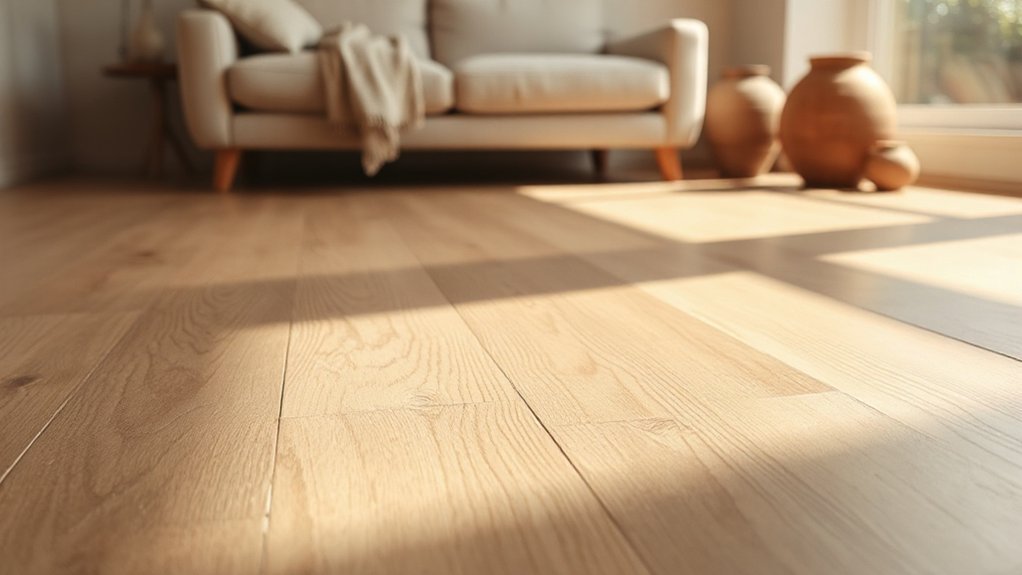
When you choose a matte floor, you’re aiming for calm underfoot without letting the surface read as dull. You get that balance by pairing soft sheen control with real visual depth—fine grain, gentle mottling, and low-contrast tonal shifts that hold up in typical UK light. Specify matte finishes with variation, and you’ll keep the warmth while avoiding that flat, chalky look.
Balancing Softness And Depth
Although matte floors naturally mute glare and visual noise, they can look lifeless if you don’t build in subtle depth. You’ll get warmth by managing Textural contrast and the tactile experience without losing that calm, UK-ready feel.
- Layer lighting: use warm LEDs (2700–3000K) and wall washers to skim the floor, so micro-relief reads gently, not shiny.
- Balance furnishings: pair matte timber or stone with loop-pile wool rugs, linen upholstery, and blackened steel for grounded softness.
- Control edges: specify slim skirting, shadow gaps, and flush thresholds so progressions feel intentional, not cluttered.
Keep maintenance in mind: choose finishes that hide dust and scuffs, and request samples under your home’s daylight. This keeps depth believable, not forced.
Matte Finishes With Variation
Because a dead-flat surface can read as cheap or chalky in grey UK light, you’ll get a calmer, richer floor by choosing matte finishes with built-in variation—subtle grain shifts in engineered oak, light tonal movement in honed limestone, or a fine aggregate in microcement—so the texture holds interest without throwing glare, highlighting footprints, or fighting the rest of the room. Specify a brushed-and-matte lacquer on timber to keep pores readable, and pick wide-plank grades with natural character rather than uniform “prime” boards. With stone, ask for a honed or leathered finish and check slip ratings for hallways and wet zones. If you’re using microcement, request a mottled, trowelled finish and seal it properly. You’ll lock in visual warmth with low sheen and controlled variation.
How To Match Floor Texture With Wall Texture
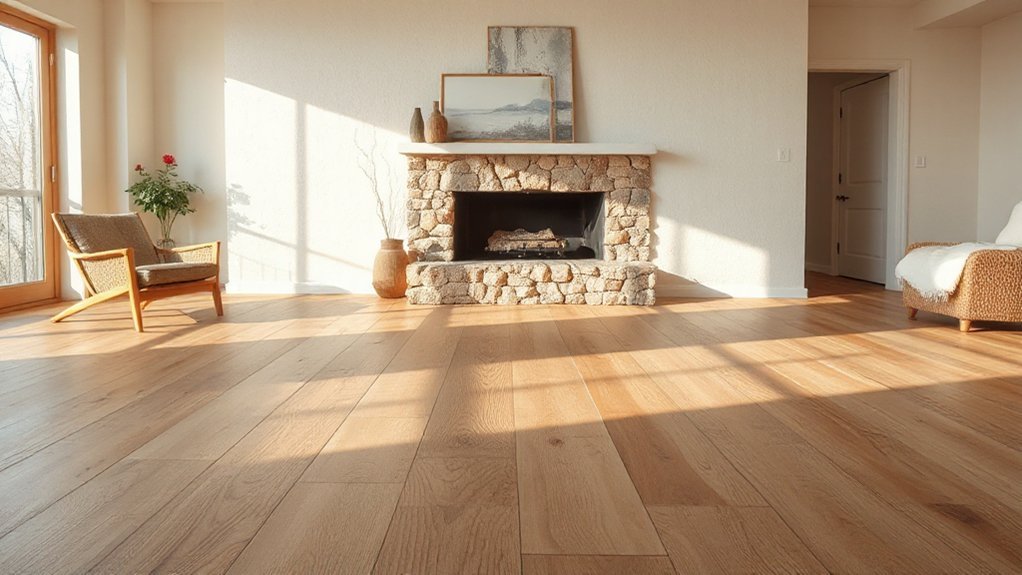
To match floor texture with wall texture, you’ll get the best results by treating the room as a set of layered surfaces rather than separate finishes. Start by reading the light: in UK homes with limited winter daylight, smoother walls can bounce light while a tactile floor adds depth without gloom.
- Pair rough with refined: use Texture contrast, such as brushed oak or tumbled stone under crisp plaster or painted gypsum.
- Align undertones: keep warm floors with warm wall colours, or cool slate with cooler greys to avoid visual clash.
- Respect performance: choose wall finishes that tolerate scuffs in hallways and stairs, and check material durability for kitchens and utility rooms.
Keep joins clean at skirtings so textures feel intentional, not busy.
Layering Floor Texture With Rugs And Runners
Once you’ve balanced floor and wall textures, you can fine-tune the room at foot level with rugs and runners that add grip, warmth, and visual layering. Start by using Pattern contrast to sharpen definition: a flatweave on brushed oak reads crisp, while a dense pile over honed stone softens echoes and glare. Keep edges intentional—run a runner parallel to the longest sightline and leave an even border of exposed flooring for a tailored, UK-home look. Prioritise material durability: choose wool for resilience, recycled nylon for hard-working hallways, and jute only where moisture and heavy wear won’t punish it. Anchor everything with a quality underlay, then check doors clear and corners don’t curl.
Best Floor Textures By Room (Living, Bed, Bath, Kitchen)
In your living room, you’ll get the most visual warmth from textured timber, brushed oak-effect LVT, or low-pile loop carpet that handles UK footfall without looking flat. In the bedroom, you’ll prioritise comfort with plush cut-pile carpet or cork underfoot, keeping the texture soft and heat-retentive for chilly mornings. In bathrooms and kitchens, you’ll choose slip-resistant, easy-clean textures like structured porcelain tile or grippy LVT, balancing safety with a warmer, less clinical look.
Living Room Texture Picks
Because the living room takes the most day-to-day footfall and sets the tone for the rest of your home, your floor texture needs to balance comfort, durability, and light control. Choose finishes that handle muddy trainers and shifting UK daylight without looking flat. Prioritise texture that adds visual warmth while staying practical, especially in open-plan spaces.
- Brushed or wire-brushed oak: the grain scatters glare, hides scratches, and reads warmer than high-gloss boards.
- Low-pile loop carpet or wool blend: strong Acoustic properties reduce TV echo and hallway noise; pick a tight weave for easier vacuuming.
- Textured LVT with micro-embossing: offers Outdoor durability at entrances, resists scuffs, and keeps a consistent tone under LEDs.
Bedroom Texture Comforts
While your bedroom doesn’t see the same heavy traffic as the living room, the floor texture still needs to deliver underfoot comfort, soften sound, and stay stable through the UK’s damp winters and dry, centrally heated nights. For immediate tactile comfort, choose a dense, low-pile wool carpet; it insulates, reduces footfall noise, and helps regulate humidity better than most synthetics. If you prefer hard flooring, pick brushed or oiled engineered oak with a subtle grain; it feels warmer than gloss finishes and supports calmer bedroom ambiance without looking flat. Add a thick felt or wool underlay to prevent hollow acoustics and cold bridging on suspended timber floors common in period homes. Keep textures matte to hide dust and reduce glare from bedside lighting.
Bath And Kitchen Textures
Although bathrooms and kitchens share the same hard-working footprint, you’ll get the best results by choosing textures that balance slip resistance, cleanability, and moisture tolerance for UK humidity spikes and everyday splashes. In bathrooms, prioritise matte, lightly structured porcelain or safety-rated LVT that won’t feel icy and grips under wet feet. In kitchens, go for textures that hide crumbs without trapping grease, and choose groutless or stain-resistant joints for faster wipe-downs. Add warmth through tonal variation rather than high-pile rugs that harbour moisture.
- Use R10–R11 slip ratings where water’s frequent, especially showers and utility zones.
- Specify sealed grout or large-format tiles to reduce mould-prone lines.
- Consider Artistic mosaics for traction, and Eco friendly materials like recycled-content LVT or cork-look composites.
Floor Texture Tradeoffs: Cleaning, Wear, And Pet Hair
How do you balance the cosy, tactile appeal of textured flooring with the realities of day-to-day upkeep? Start by weighing Cleaning challenges and pet hair visibility against the look you want. Deep grain in brushed oak, riven stone, or heavily embossed LVT traps grit, so you’ll vacuum more often and need a crevice tool. In UK homes with wet-weather entryways, raised texture also holds moisture and mud, so use barrier mats and mop little and often.
Wear matters too: high points abrade first, especially on stairs and in hallways, and harsh cleaners can dull finishes. Choose durable topcoats, specify slip ratings for kitchens, and keep felt pads under furniture. If you’ve got cats or dogs, mid-tone, variegated patterns disguise shedding better.
Floor Texture Mistakes That Make Rooms Feel Cold
If you choose an overly smooth floor, you’ll strip away the micro-texture that catches light softly and makes a room feel inviting. Push it further with an excessively glossy finish and you’ll get hard reflections that read as clinical under typical UK daylight and cool LEDs. You can avoid that cold look by favouring subtle grain, gentle embossing, or a low-sheen matt that diffuses glare.
Overly Smooth Surfaces
When you choose a floor that’s uniformly smooth and reflective—think high-gloss tiles, polished concrete, or lacquered boards—you strip the room of the micro-texture that visually signals warmth. In UK homes, those smooth surfaces can read as clinical, especially under cool daylight and open-plan layouts. You’ll notice furniture feels like it’s floating, and the space lacks visual grip.
Create texture contrast without changing your whole floor spec:
- Opt for honed stone, brushed oak, or textured LVT with a matt wear layer.
- Layer large rugs (wool or flatweave) to break up expanses and add softness.
- Add tactile joinery—reeded plinths, panelling, or woven baskets—to echo floor grain.
You’ll keep a clean look while restoring warmth and balance.
Excessive Glossy Finishes
Even after you add micro-texture, an excessive glossy finish can still make a room feel cold because it throws hard, mirror-like reflections around the space. You’ll notice sharper light bounce from windows and downlights, exaggerating contrast and making timber or tile read as clinical rather than cosy. In UK homes, this effect can feel harsher under cooler LED colour temperatures and overcast daylight.
Glossy finishes also highlight every scuff, swirl, and speck of dust, so you’re stuck cleaning to keep the surface looking intentional. If you want warmth, specify lower-sheen lacquers, satin polyurethane, or oiled boards, and pair them with matte textures in rugs or runners. In kitchens and halls, choose slip-rated, satin porcelain instead of high-polish to soften glare and improve safety.
Frequently Asked Questions
What Floor Textures Help Reduce Noise and Echo in Open Spaces?
Choose soft, fibrous textures like wool carpet, carpet tiles, and cork to cut echo in open spaces. Add Soundproofing materials and Acoustic floor treatments such as rubber underlay and dense felt pads to boost UK-standard absorption.
Are Textured Floors Harder for Wheelchairs, Walkers, or Strollers to Roll On?
Yes—heavily textured floors can make wheelchairs, walkers, and strollers harder to push, especially with deep embossing or grout lines. You’ll face durability concerns at joints and higher maintenance requirements. Choose low-profile textures, tight seams.
How Do Textured Floors Affect Indoor Air Quality and Dust Buildup?
Textured floors “help” air quality by Dust trapping—ironically, they can hold grime and then release Airborne particles when disturbed. You’ll reduce buildup with frequent vacuuming (HEPA), damp mopping, and choosing sealed, low-porosity finishes.
Which Floor Textures Are Safest for Kids and Seniors to Prevent Slips?
Choose textured vinyl, rubber, or matte porcelain tiles with high Slip resistance (aim for UK pendulum PTV 36+). You’ll also want good surface durability and smooth shifts. Avoid high-gloss finishes and deep grooves.
Do Textured Floors Impact Resale Value or Buyer Preferences?
Yes—textured floors can lift resale: 66% of UK buyers say practical finishes influence offers. You’ll align with Floor texture trends by choosing subtle, cleanable textures; Historic flooring patterns in halls and kitchens still boost perceived quality.
Conclusion
Choose floor texture the way you’d choose a wool coat: it’s the finish that delivers warmth, not just the shade. You’ll see it in softer glare, deeper shadow, and the way light settles across grain, knots, or brushed fibres—almost Dickensian in its cosiness. Pair texture with sensible layering (runners, rugs) and you’ll control scale and comfort room by room. In UK homes, balance it with cleaning needs, pets, and wear.