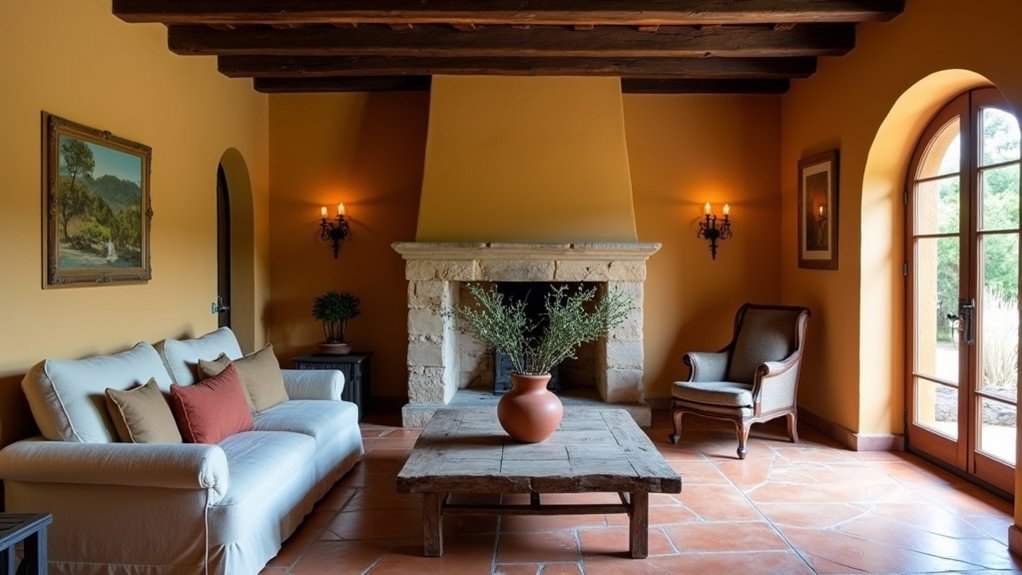
Tuscan interior design gives your UK home rustic Italian warmth through honest, natural materials and softly aged finishes. You’ll use a sunbaked palette of terracotta, ochre, olive, and muted neutrals, paired with limewash or textured plaster to soften hard lines. Choose weighty surfaces such as terracotta or stone floors, aged timber beams, and marble, then add collected oak furniture, linen textiles, and restrained wrought iron lighting. Keep it edited, and there’s more to explore ahead.
Key Takeaways
- Use warm, earthy colors—terracotta, ochre, olive, and muted neutrals—to create a sunbaked, rustic Tuscan mood.
- Choose natural, weighty materials like aged timber, terracotta or stone floors, limewash plaster, and marble for authentic texture and longevity.
- Add soft architectural details such as exposed beams, arched doorways, and wall niches to introduce aged character without heavy ornament.
- Furnish with simple, substantial pieces in oak, chestnut, or walnut, mixing collected vintage accents rather than a themed matching set.
- Layer wrought iron, aged brass, ceramics, and linen textiles with warm, low-glare lighting to keep the look edited and inviting.
What Defines Tuscan Interior Design Style?
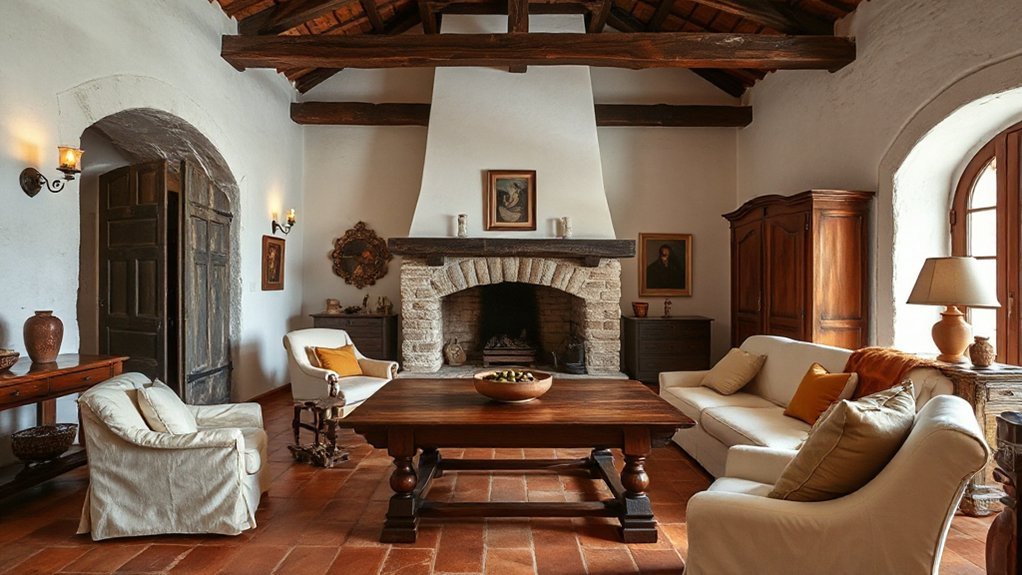
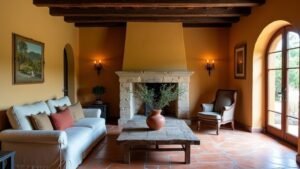
Although it draws on the rustic villas of central Italy, Tuscan interior design is defined by warmth, natural materials, and a deliberately timeworn finish that feels lived-in rather than pristine. You’ll recognise it in robust timber beams, terracotta or stone flooring, and hand-finished plasterwork that softens hard lines. Choose substantial, well-made furniture with simple silhouettes, then layer in wrought-iron details, aged brass, and textured ceramics for Mediterranean charm without looking themed. You should favour practical, heritage-style textiles such as linen and wool, and use rugs to add comfort in UK draughts. Keep accessories purposeful: earthenware, taper candles, and framed landscapes. When you balance honest materials with restrained ornament, you achieve Rustic elegance that’s welcoming and durable.
What Colors and Wall Finishes Fit Tuscan Interior Design?
You’ll achieve an authentic Tuscan feel by choosing a warm, earthy palette—think terracotta, ochre, olive, and sunbaked neutrals that suit UK light. You can then add depth with textured plaster finishes, such as limewash or Venetian-style plaster, to soften walls and catch shadows. If you balance these tones with clean trims and considered lighting, your rooms will feel grounded, calm, and cohesive.
Warm Earthy Color Palette
When you’re aiming for an authentic Tuscan look, a warm, earthy palette sets the foundation and keeps the room feeling grounded rather than overly polished. You’ll get the right balance by choosing sunbaked terracotta, ochre, clay, and muted olive, then layering cream or soft limestone as a calm counterpoint.
To reflect Mediterranean influences, keep colours slightly dusty rather than bright, and limit high-contrast pairings. For walls, opt for flat or low-sheen paint; it reduces glare in typical UK light and lets natural materials take priority. You can then reinforce the scheme with Rustic decor elements such as aged timber, wrought iron, leather, and natural stone. Finish with deep accents—burnt sienna, umber, and wine—to add warmth without making the space feel heavy.
Textured Plaster Wall Finishes
How do you capture Tuscan warmth on a UK wall without making it feel too polished? You’ll get it by choosing textured finishes that soften light and add age. Specify decorative plaster with a lime base; it suits older British masonry and manages moisture better than vinyl paint. Keep the colour muted: warm stone, clay, oat, and sun-baked terracotta, then vary sheen with trowel marks rather than gloss.
- Use Venetian-style plaster in a matte seal for hallways and stairwells
- Choose rougher, sanded renders for snug rooms and chimney breasts
- Patch-test in north-facing rooms; UK light turns beige cooler
- Pair with aged oak, wrought iron, and linen to prevent stark contrast
What Architectural Details Make Rooms Feel Tuscan?
To make a room feel Tuscan, you can prioritise architectural features that read as crafted rather than refined. You’ll achieve this by introducing exposed wooden ceiling beams, which add warmth and structure overhead. You can then reinforce the look with arched doorways and built-in niches that soften sightlines and create practical display and storage points.
Exposed Wooden Ceiling Beams
Although many Tuscan rooms rely on stone and plaster for their character, exposed wooden ceiling beams often provide the defining architectural detail by adding warmth, rhythm, and a sense of age overhead. You’ll get Rustic charm without overfilling the room, and you can layer Vintage accents beneath them for a composed, lived-in look.
- Specify reclaimed oak or chestnut, or choose new timber with a hand-sawn finish for authenticity.
- Keep stain tones warm and matte; avoid glossy varnish that looks overly modern in UK light.
- Balance beam scale to ceiling height, and use consistent spacing to maintain calm proportion.
- Conceal wiring neatly and use discreet uplighting to emphasise grain, not fixtures.
If your home has low ceilings, paint beams a softened brown to retain depth without heaviness.
Arched Doorways And Niches
Where straight openings can feel sharp and suburban, arched doorways and wall niches introduce the soft, timeworn geometry you associate with Tuscan villas. You’ll make corridors feel calmer and rooms more connected by swapping square casings for a shallow plaster arch, ideally with a slightly irregular profile. Keep the curve generous rather than pointed, and finish it in limewash or warm, sandy paint to suit typical UK light. Build wall niches into chimney breasts, hallway returns, or beside a hearth to create purposeful display and reduce clutter. Line the recess with rustic terracotta, or add a simple stone shelf. Then stage it sparingly: a single piece of antique pottery reads authentic and avoids a styled look. Add discreet uplighting for evening warmth.
Which Tuscan Interior Design Materials Matter Most?
In Tuscan interior design, the materials you choose matter more than any single colour scheme because they create the warmth, texture, and lived-in character the style relies on. You’ll get the most authentic result by prioritising natural, weighty finishes that age well in UK homes, rather than glossy, perfect surfaces. Start with Terracotta flooring for grounded colour and gentle variation, and use limewash or plaster to soften walls under British light. Add Marble countertops where you need durability and a calm, traditional sheen, then balance them with aged timber and forged metal.
- Hand-trowelled plaster or limewash walls
- Terracotta flooring with matte sealant
- Marble countertops in kitchens or utility rooms
- Reclaimed oak, wrought iron, and natural stone accents
What Tuscan Furniture Looks Collected, Not Themed?
Once you’ve set the right base materials, Tuscan style comes alive through furniture that feels accumulated over time rather than bought as a matching set. You’ll prioritise solid pieces in oak, chestnut, or walnut, favouring hand-finished surfaces, softened edges, and visible joinery that reads as honest wear, not distressing.
Mix one substantial farmhouse table with simpler chairs, then add a sideboard or painted cabinet sourced from a UK antique shop or salvage yard. Keep proportions generous and silhouettes straightforward; let patina deliver Rustic charm. Introduce Vintage accents through a single carved mirror, an old dough bowl, or a ladder-back chair, rather than repeated motifs. Vary timbers and finishes within a warm palette, but repeat one detail—turned legs or iron pulls—to hold the scheme together.
How Do Tuscan Lighting and Ironwork Look?
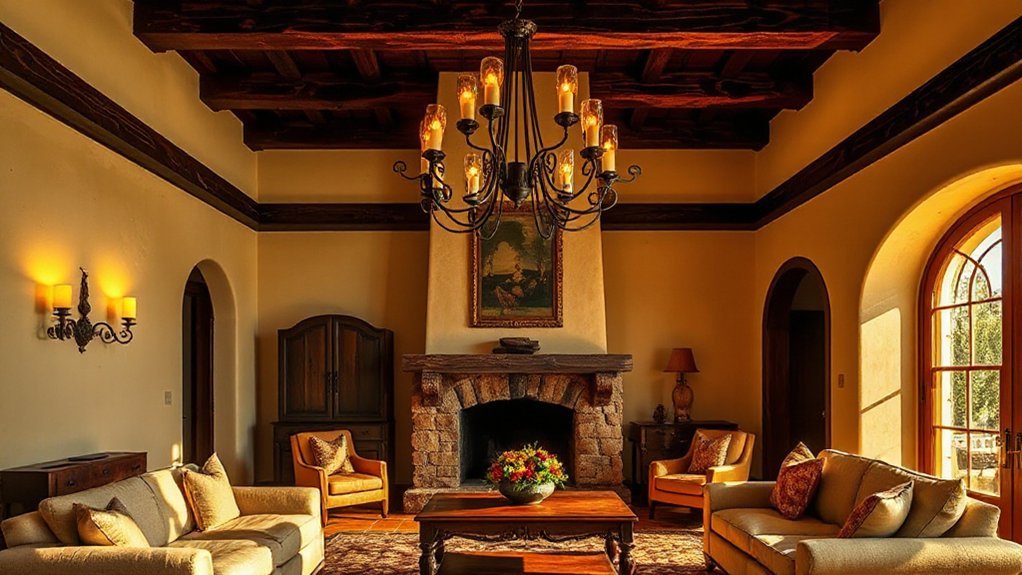
Although Tuscan interiors lean on sun-warmed plaster and aged timber, lighting and ironwork provide the structure that sharpens the look. You’ll notice weight, shadow, and hand-forged character rather than sparkle. Rustic chandeliers sit best above dining tables or in double-height halls, where their broad silhouettes balance stone floors and dark beams. Wrought iron accents appear on lantern pendants, wall brackets, stair balustrades, and cabinet latches, giving you crisp outlines against warm surfaces. In UK homes, you’ll want dimmable, warm-white LEDs to keep the mood intimate without sacrificing efficiency, and you should choose aged black or bronzed finishes that hide fingerprints.
- Hammered textures and visible rivets
- Candle-style bulbs and linen shades
- Scrollwork, rings, and simple straps
- Patinated finishes with matte sheen
How Do You Get Tuscan Style Without Overdoing It?
That same forged iron and warm lighting can anchor a Tuscan scheme, but you’ll keep it convincing by editing hard and letting a few honest materials do the work. Start with a restrained palette: limewashed cream, muted terracotta, and dusty olive, then repeat it across walls, textiles, and rugs. Choose one statement texture—tumbled stone, reclaimed oak, or handmade tile—and let everything else stay quiet. For Rustic charm, prefer imperfect finishes, but limit distressed pieces to one or two. Add Mediterranean influence through simple ceramics, woven baskets, and linen rather than themed murals. In a UK home, scale matters: keep beams and arches subtle, swap heavy drapes for light curtains, and use open shelving sparingly to avoid visual clutter.
Frequently Asked Questions
How Do I Blend Tuscan Style With Modern Appliances and Smart Home Tech?
You blend traditional character with modern appliances by concealing tech in sleek cabinetry, selecting discreet hubs, and using modern lighting. Choose warm stone tones, wrought iron accents, and voice control; guarantee UK-compliant wiring and ventilation.
What Textiles and Patterns Best Suit Tuscan Interiors Without Feeling Heavy?
Choose airy linen, cotton, and lightweight wool in muted ochres and creams; they’ll nod to a Florentine fresco. Prioritise Textile textures with slub weaves, and Pattern choices like subtle stripes, small checks, restrained damask.
How Can I Achieve Tuscan Design in a Small Apartment or Rental?
You can achieve it by choosing compact Rustic furniture, adding a Mediterranean color palette through removable paint, textiles, and art, then layering warm lighting and natural textures. Use peel-and-stick tiles, curtains, and rugs for renters.
What Are Budget-Friendly Alternatives to Authentic Tuscan Antiques and Stone?
You can swap antiques and stone for Affordable decor and Faux materials; UK renters save about 40% versus originals. Choose reclaimed-wood look furniture, stone-effect porcelain tiles, limewash paint, and aged-brass finishes from high-street retailers.
How Do I Maintain and Clean Plaster Walls, Terracotta Floors, and Ironwork?
For Plaster wall maintenance, you’ll dust gently and wipe with barely damp cloth; you won’t over-wet. For Terracotta floor cleaning, you’ll sweep, mop pH-neutral, reseal. You’ll wax ironwork and treat rust promptly.
Conclusion
You can bring Tuscan interior design home by keeping your palette sun-warmed, your finishes textured, and your choices purposeful. Rather than theme a room, you’ll layer natural stone, aged timber, and honest plaster, then add collected furniture and wrought-iron lighting for quiet structure. In fact, 78% of UK homeowners say a calm, welcoming home improves daily wellbeing—so your restraint matters. Choose a few authentic details, balance them with light, and you won’t overdo it.