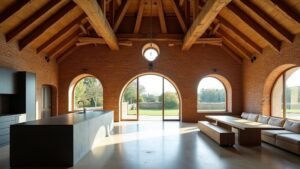
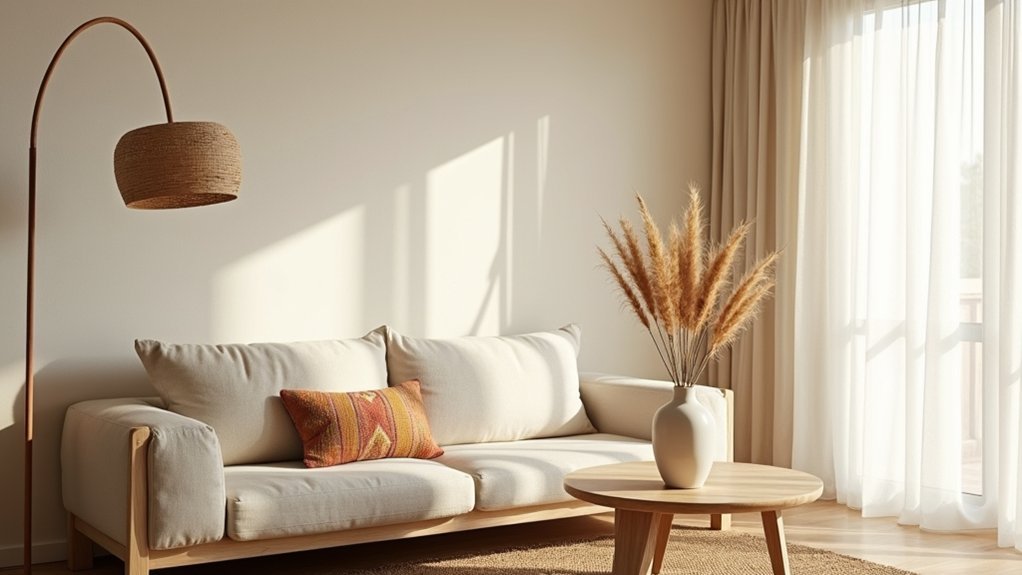
Minimalist bohemian style lets you keep modern calm while adding boho soul. Start with clean-line, low-profile furniture and three warm neutrals—warm white, sand, and soft taupe—then add one muted accent like sage or clay. Anchor the room with one statement piece and echo its material once. Limit patterns to two families, style surfaces in odd groups, and use trays to contain clutter. Keep shelves airy with ceramics, wood, and woven texture—more styling tips ahead.
Key Takeaways
- Minimalist bohemian blends clean silhouettes and calm negative space with soulful, meaningful vintage and artisan details.
- Build on three warm neutrals (warm white, sand, soft taupe), then add one muted accent like sage or clay.
- Choose one statement anchor piece and repeat its material once to keep the look cohesive, not cluttered.
- Limit patterns to two families and vary scale; use eclectic textiles sparingly for warmth and lived-in character.
- Style surfaces in odd-number groupings with trays or bowls, leaving one edge clear to simplify maintenance.
What “Minimalist Bohemian” Actually Means
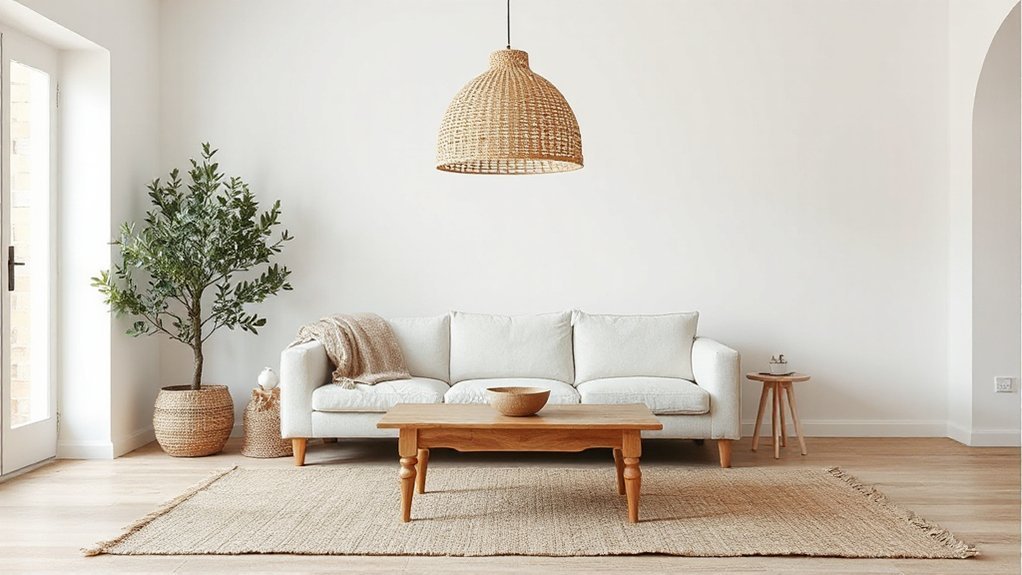
Although “minimalist” and “bohemian” sound like opposites, Minimalist Bohemian is the sweet spot where clean lines and calm negative space meet a few intentional, soulful details. You keep the architecture simple—edited silhouettes, airy spacing, and a restrained palette—then layer in character with curated, not cluttered, pieces.
You’re not chasing “more”; you’re choosing “meaning.” Think Vintage accessories that feel collected: a patinated brass lamp, a carved mirror, or a single heirloom vase. Pair them with Eclectic textiles used strategically—one patterned kilim runner, a nubby linen throw, or a woven wall hanging—so the room stays breathable. The result reads modern but lived-in, polished but personal, and it photographs beautifully without feeling staged.
5 Rules for Boho-Minimal Balance
When you blend boho warmth with minimalist restraint, a few clear rules keep the look collected instead of chaotic. Start by editing hard: keep only pieces you’d repurchase today. Then manage Color contrast with intent—one bold note against clean basics reads modern, not messy. Prioritize furniture scale so the room breathes; oversized boho shapes need negative space to feel curated.
- Anchor with one statement piece, then repeat its material once.
- Limit patterns to two families, and vary their size for depth.
- Style surfaces with odd-number groupings, leaving one edge clear.
Finish with lighting that’s sculptural but simple, and corral accessories in trays or baskets so your eye lands, rests, and moves on.
Pick a Calm Neutral Color Palette
Start with three calm neutrals—warm white, sand, and soft taupe—and let them do most of the visual work. You’ll get a grounded backdrop that feels airy, not empty, and it keeps bohemian details from reading chaotic. Use color psychology: warm white signals ease, sand adds approachability, and taupe brings quiet sophistication.
Then customize with Seasonal color palettes so your space stays current. In spring/summer, nudge the mix lighter with creamy whites and sun-warmed beige; in fall/winter, deepen with mushroom taupe and toasted sand. Keep contrast low and finishes matte to reduce glare and visual noise. If you want a single accent, choose one muted shade—sage, clay, or dusty denim—and repeat it subtly in textiles and art.
Start With Clean-Line, Low-Profile Furniture
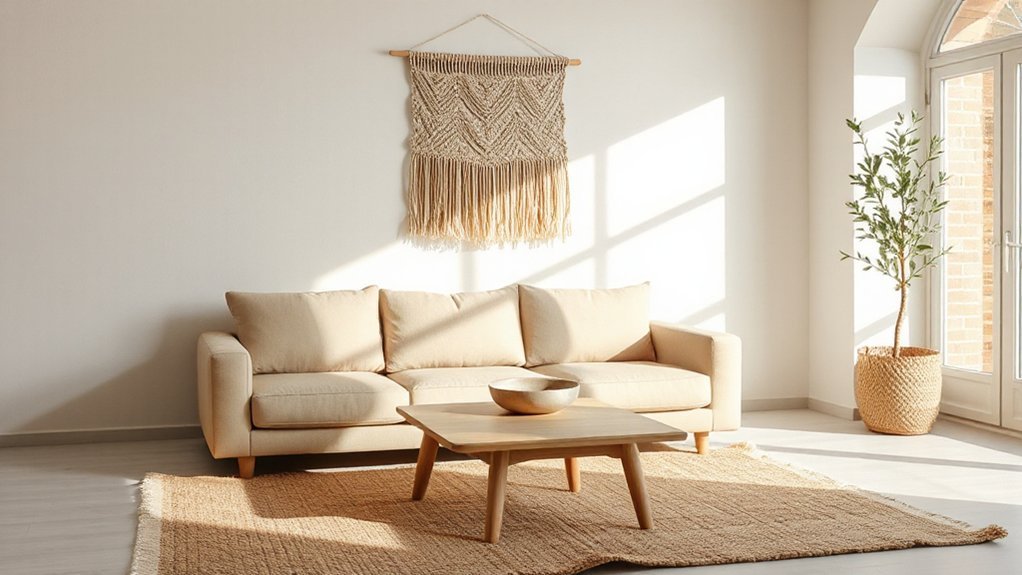
Start with clean silhouettes that read modern and let your bohemian layers feel intentional, not busy. Choose low-profile seating—think slim sofas and floor-hugging lounge chairs—so the room stays airy and grounded. Keep visual weight light with raised legs, open bases, and streamlined shapes that won’t compete with texture.
Prioritize Clean Silhouettes
- Pick one primary material story (oak, walnut, or black metal).
- Favor smooth planes over ornate carvings and heavy trim.
- Limit visible hardware and avoid fussy edge details.
You’ll preserve boho warmth while keeping the room sharp, modern, and breathable.
Choose Low-Profile Seating
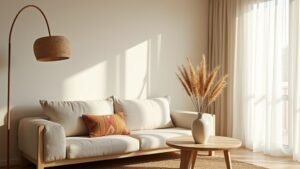
To keep a minimalist bohemian space feeling airy and intentional, choose low-profile seating with clean lines—think a streamlined sofa, a slim bench, or a grounded lounge chair that sits visually low to the floor. Anchor your layout by floating pieces a few inches apart so circulation stays easy and conversations feel natural. Select tailored upholstery—linen blends, leather, or tightly woven bouclé—so the profile reads modern, not slouchy. Then layer in Vintage accents with restraint: a carved wood side chair, a patina’d stool, or a woven pouf that doubles as a perch. Finish the seating zone with statement lighting, like an overscaled paper lantern or a sculptural brass floor lamp, to define the vignette without adding extra furniture. Keep proportions consistent across pieces for a cohesive look.
Keep Visual Weight Light
If your space is doing double duty—calm retreat and creative backdrop—keep the visual weight light with clean-line, low-profile furniture that reads intentional, not sparse. Choose pieces with exposed legs, slim arms, and tight silhouettes so sightlines stay open and your textiles can shine. Use Color contrast strategically: pair a pale sofa with a deeper wood coffee table, or a black metal frame against warm neutrals, so the room feels designed, not busy. Then edit your decorative accessories so each one earns its spot.
- Prioritize low, linear profiles over bulky backs and skirts.
- Limit mixed materials to two or three finishes for cohesion.
- Anchor with one graphic piece, then keep everything else quiet.
You’ll get airy boho ease with a polished, modern edge.
Use Natural Materials for Instant Warmth
Once you’ve anchored the room with clean-line, low-profile pieces, you can warm it up fast with natural materials. Layer rattan and jute to add texture without visual clutter, then bring in wood accents for grounded contrast. Finish with linen upholstery or drapery so the space feels airy, tactile, and intentionally bohemian.
Layer Rattan And Jute
While clean lines keep a minimalist bohemian space feeling airy, layered rattan and jute add the warmth it needs to feel lived-in. You can Layer rattan pieces to soften edges without adding visual noise, and Jute textures ground the room with subtle, tactile contrast. Keep the palette calm, then let weave and scale do the styling work.
- Start with a flatweave jute rug to anchor seating and define zones in open plans.
- Add a rattan side chair or pendant to introduce sculptural lightness and artisanal detail.
- Finish with jute baskets or a rattan tray to corral essentials and keep surfaces edited.
You’ll get depth, warmth, and that effortless, collected look—while staying minimalist and easy to maintain daily.
Add Wood And Linen
Because minimalist bohemian rooms can skew cool when you strip back color and clutter, wood and linen bring instant warmth without compromising that clean, edited feel. Start with one or two grounded wood accents—an oak side table, walnut picture ledge, or ash stools—to add tonal depth and quiet grain. Keep finishes matte or lightly oiled so they read modern, not rustic. Then soften the edges with linen textiles: a relaxed sofa slipcover, airy curtains, or a rumpled duvet in sand, ivory, or clay. Layer one woven throw for texture, not volume. If you’re styling for clients, repeat the wood tone twice and the linen tone three times to make the room feel intentional. You’ll get warmth, acoustical softness, and a lived-in ease.
Add 3 Statement Pieces With Real Story
Where do you start when your space already feels calm, but a little too quiet? You add three pieces that carry meaning, not clutter, and you let them do the talking. Keep your palette restrained, then layer in character through Vintage accessories and statement textiles that look collected, not curated.
- One artisan vessel: choose a hand-thrown ceramic or hammered brass bowl, and let its imperfections read as intentional.
- One heritage textile: a vintage kilim pillow or mudcloth throw adds pattern without hijacking your minimal base.
- One soulful artwork: a small framed sketch, travel photograph, or found print with a backstory anchors the room.
Commit to placement, then stop. Your space stays airy, but finally feels lived-in and personal.
Texture and Shelves: Styled, Not Stuffed
Once you’ve added those three story-rich pieces, let your shelves support them instead of competing. Think of Shelf styling as quiet framing: fewer objects, better spacing, and deliberate negative space so your statements read intentional, not busy. Build Texture contrast with a simple trio—matte ceramic, warm wood, and a woven or stone element—then repeat that mix once per shelf to keep the look cohesive. Stack two books horizontally to create a plinth, then top with one sculptural item. Vary height, but cap it at three levels to avoid visual noise. Use one small tray or bowl to corral essentials and prevent drift. Finally, edit by removing anything that doesn’t echo your palette, scale, or story. Keep dusting easy, too.
3 Room Formulas: Living Room, Bedroom, Entry
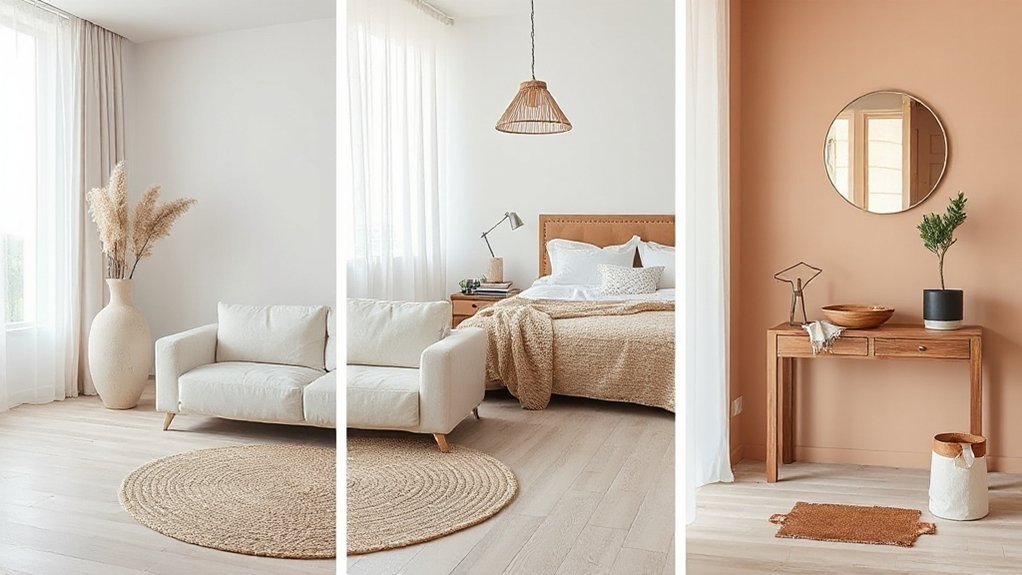
If your home needs that minimalist-bohemian balance without looking staged, use simple room formulas that lock in warmth, airflow, and a few story-driven accents. Keep each space to one anchor, one tactile layer, and one intentional focal point.
- Living room: Ground it with a low-profile sofa, then add Vintage textiles through a single kilim pillow or throw. Finish with statement lighting—an oversized paper lantern or sculptural sconce—to lift the eye without clutter.
- Bedroom: Choose crisp bedding, one woven rug, and a calm bedside vignette. Swap extra decor for a textured lumbar and a dimmable pendant for hotel-level ease.
- Entry: Use a slim console, a catchall tray, and one art piece. Add a mirror to bounce light and keep traffic flowing daily.
Frequently Asked Questions
How Can I Achieve Minimalist Bohemian Style on a Tight Budget?
Shop thrift stores and marketplaces, then edit ruthlessly so you keep only versatile pieces. Stick to boho color palettes in textiles, add vintage decor accents sparingly, and DIY simple upgrades. Layer neutrals, prioritize function, avoid clutter.
Which Plants Suit Minimalist Bohemian Decor Without Looking Cluttered?
Coincidentally, you’ll get an airy look with snake plants, ZZ plants, and a single fiddle-leaf fig. Add succulent arrangements in one tray, and choose two hanging planters to lift greenery without crowding surfaces.
How Do I Mix Boho Patterns Without Overwhelming a Minimalist Space?
You mix boho patterns by limiting prints to one focal piece, repeating Color coordination across accents, and using Texture balancing with solids and neutrals. Keep scale varied, stick to two patterns, and edit ruthlessly.
What Lighting Choices Best Complement Minimalist Bohemian Interiors?
Choose Lighting fixtures with clean silhouettes and natural materials, then layer Ambient illumination through dimmable sconces, warm LEDs, and soft table lamps. You’ll keep the room calm while highlighting artisanal textures and curated accents.
How Can Renters Create Minimalist Bohemian Style Without Wall Damage?
You can create the look damage-free by using removable wall decals, leaning art, and tension-rod curtains. Add hidden storage with baskets and ottomans, layer neutral textiles, and swap hardware with renter-safe options.
Conclusion
You’re not stripping your space down; you’re editing it into a calm story. When a client swapped one overstuffed gallery wall for three travel pieces—a handwoven basket, a ceramic lamp, a framed photo—she cut “decor” by 60% and the room finally breathed. That’s minimalist bohemian: clean lines as the frame, natural texture as the warmth. Keep shelves styled, not stuffed, and let every object earn its place with purpose.