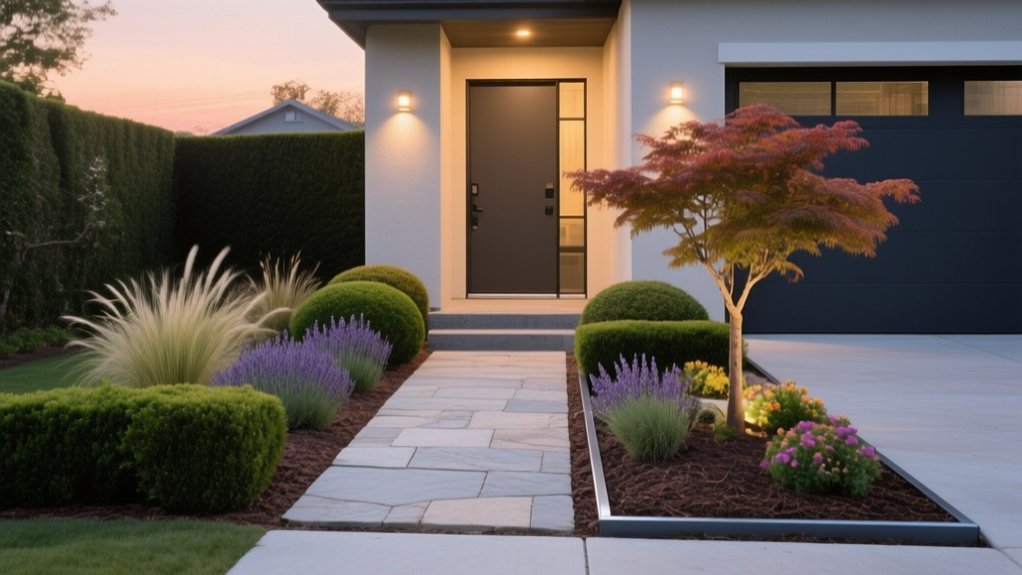
Start by evaluating your front garden’s sun, soil and drainage, then plan access to the door with safe, well-lit paths and permeable surfaces. Match materials and planting to your home’s style, and keep a tight colour palette for instant cohesion. Build “green structure” with evergreens and a layered border: backbone shrubs, mid-height fillers and groundcover in repeats. Add privacy with set-back shrubs or slatted screens, and finish with crisp edging and fresh mulch. Keep going for the full step-by-step plan.
Key Takeaways
- Start with a site assessment: measure boundaries, check sun and drainage, and locate services to guide layout and plant choices.
- Create a clear, welcoming approach with a wide, level path, safe steps, lighting, and neat edging to the front door.
- Use strong structure: defined beds, repeated shapes, evergreen “backbone” plants, and layered heights for depth and year-round presence.
- Match materials and planting to your home’s style, repeating façade colours in paving, gravel, edging, and coordinated pots.
- Prioritise low-maintenance polish: permeable surfaces, weed-suppressing mulch, limited plant palettes, and repeated drifts for a calm, cohesive look.
Plan Your Front Garden in 5 Steps
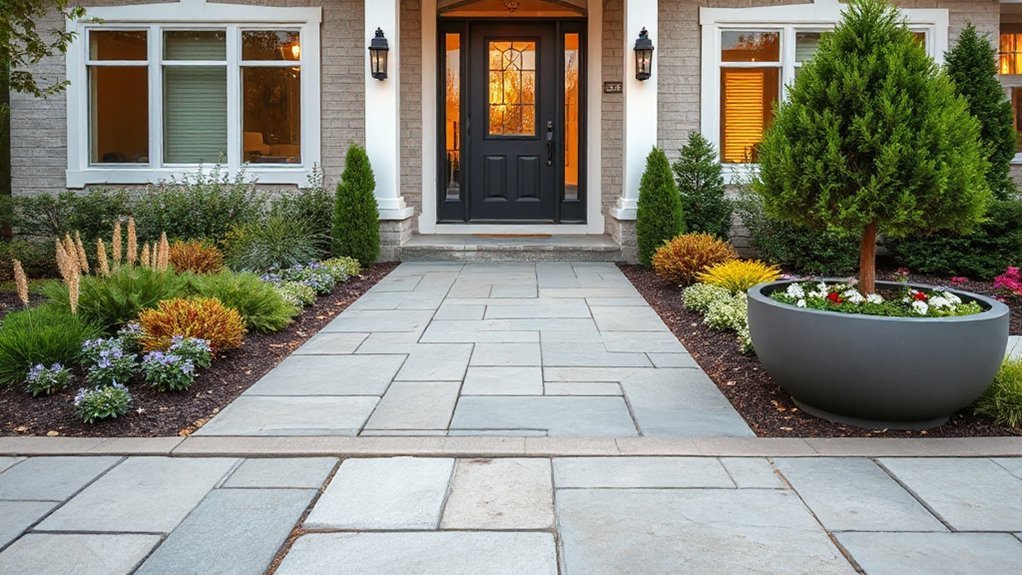
Five clear steps will help you plan a front garden that looks smart year-round, suits your home, and meets UK practicalities like drainage rules, bin storage, and kerb appeal.
First, measure boundaries, levels, services, and sightlines from windows and the road.
Second, sort access: a clear path to the door, safe steps, and turning space for pushchairs and bins.
Third, set drainage early; favour permeable gravel, resin-bound, or porous paving and keep runoff on your land.
Fourth, choose planting by exposure and maintenance time; use a simple palette and include evergreen structure.
Fifth, plan finishing touches: discreet garden lighting for paths and numbers, plus modest outdoor furniture only where it won’t block access.
Mark positions before you buy.
Match Your Front Garden to Your Home’s Style
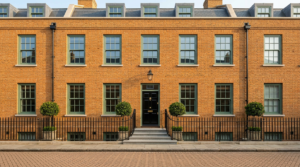
Start by picking out your home’s key architectural cues—brick type, bay windows, porch details, and boundary walls—so your front garden looks intentional rather than bolted on.
Choose plants that suit the property’s era, whether that’s neat topiary and roses for a Victorian terrace or softer grasses and simple shrubs for a 1930s semi.
Then coordinate colours and materials, repeating tones from your brickwork and using matching paving, edging, and gravel to tie everything together.
Identify Architectural Elements
Before you choose plants or paving, take a clear look at your home’s architectural cues, because they should set the tone for the entire front garden. Stand back from the pavement and note rooflines, bay windows, porch depth, brick colour, and any stone lintels or decorative tilework. These architectural details tell you whether the frontage should feel crisp and formal or relaxed and rustic.
Repeat key shapes in hard landscaping: echo an arched doorway with curved edging, or mirror strong Victorian symmetry with straight paths and paired features. Match materials to the house: reclaimed brick for terraces, limestone for period cottages, or sleek concrete for new-builds.
Keep boundary treatments consistent with existing railings, coping stones, and gate style to maintain design harmony and boost kerb appeal.
Choose Era-Appropriate Plants
Once you’ve taken your cues from rooflines, brickwork, and detailing, choose plants that suit the period so the frontage looks intentional rather than like a mixed bag.
For Victorian and Edwardian terraces, lean into cottage staples: box or yew edging, clipped standards, and Vintage blooms like roses, delphiniums, foxgloves, and lavender in generous drifts.
For Arts and Crafts houses, use stronger structure—shaped evergreens, herbaceous perennials, and repeats of a few reliable varieties rather than scatterings.
If you’ve got a mid-century build or new-rendered façade, keep forms crisp with grasses, architectural shrubs, and Modern succulents in well-drained spots.
Always check light and soil, then choose tough UK performers that won’t sulk in wind, shade, or winter wet.
Coordinate Colors And Materials
Although planting often gets the glory, your front garden looks most “right” when its hard materials and colour palette echo the house behind it. Start by reading your façade: red brick, London stock, crisp render, or Cotswold stone. Then repeat one or two tones in paving, edging, and pots to create Color harmony, and keep everything else quiet.
Choose finishes that suit the era. Victorian terraces take well to black railings, clay pavers, and dark slate. New builds often look sharper with sawn sandstone or large-format concrete. Use Material contrast deliberately: pair warm brick with cool grey stone, or pale render with charcoal gravel, but don’t mix more than three hard materials.
Match metalwork (gate, lights, house numbers) for a cohesive approach.
Assess Sun, Soil, and Drainage First
If you assess the sun, soil, and drainage at the start, you’ll make every later choice—plants, paths, and maintenance—far easier.
Begin with sun analysis: note morning and afternoon light, shade from houses or street trees, and heat reflected off brickwork. In the UK, south-facing fronts can scorch in summer; north-facing plots stay cooler and damper.
Next, do simple soil testing. Dig a small hole, check texture (clay, loam, sand), and use a cheap pH kit to see if you’re acidic, neutral, or alkaline—common on chalky ground.
Finally, test drainage: fill the hole with water and time how quickly it drops. If it lingers, plan for grit, organic matter, or improved falls.
Choose Your Front Garden Focal Point
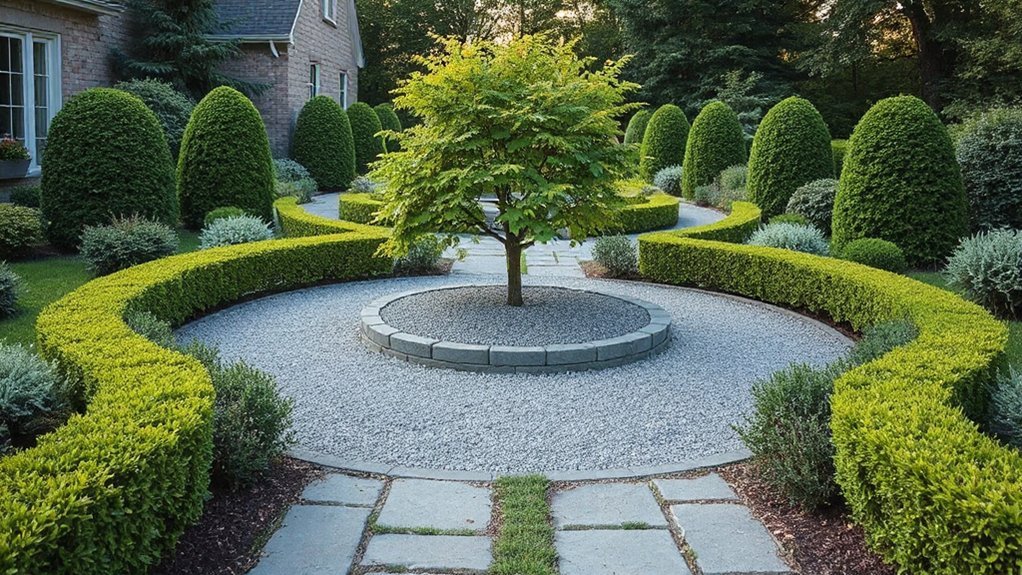
Where should your eye land as you approach the house? Decide that first, then make every other choice support it. Strong Focal point selection gives your front garden instant purpose and stops it feeling fussy.
Keep the scale right for typical UK plots and terraces, and guarantee it reads clearly from the pavement and the front door.
Use Visual hierarchy to control what stands out, and what stays quiet. Aim for one dominant feature and two supporting elements, not a jumble.
- Architectural: a painted front door, house number plaque, or smart gate.
- Living: a small multi-stem tree, clipped bay, or specimen shrub in a pot.
- Seasonal: a statement container with bulbs and evergreen structure for year-round impact.
Check sightlines from street and windows, then commit.
Lay Out Beds, Borders, and “Green Structure
Once you’ve fixed your focal point, set out your beds and borders to create a clear “green structure” that holds the front garden together in every season. Start with a simple bed layout: strong lines, repeated shapes, and generous planting depth rather than fussy curves. Keep edges crisp with brick, stone setts, or steel to suit your house style and make maintenance easier.
Build structure first: evergreen shrubs, clipped yew or box alternatives, and multi-stem small trees for height without bulk. Then plan border planting in layers—backbone plants at the rear, mid-height fillers, and low groundcover to suppress weeds.
Repeat a limited palette across beds so the space reads as one design. Leave room for mulching and access, and check sightlines from windows and the street.
Design a Front Path That Feels Welcoming
With your beds and “green structure” defining the space, set the path next so it leads visitors cleanly to the front door and ties the whole layout together. Aim for a welcoming pathway with gentle curves or a crisp straight run, but keep sightlines clear for an inviting entrance. Choose materials that suit British weather: textured paving, resin-bound gravel, or brick with good slip resistance and proper drainage falls.
- Set the width at 1.0–1.2m so two people can pass and bins can roll.
- Control levels with shallow steps or ramps; avoid awkward trip edges.
- Light it with low-glare bollards or wall lights, spaced to remove dark patches.
Finish with neat edging so the route reads intentional, not improvised.
Set Front Garden Proportions and Plant Spacing
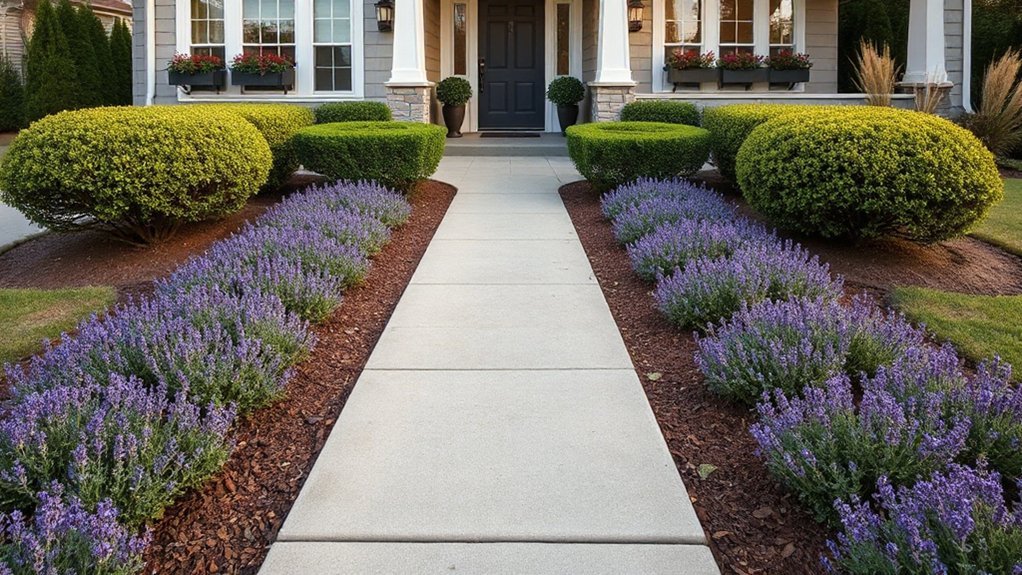
Because front gardens sit on show all year, you need to get the proportions and plant spacing right so the space looks tidy rather than cramped or bare. Start by measuring the usable area, then decide how much should be hard surface versus planting; as a rule, keep beds generous enough to soften the house, but don’t choke the approach.
Set garden proportions by echoing the scale of your frontage: longer facades suit longer, continuous beds; narrow terraces benefit from simpler shapes and fewer plant groups.
For plant spacing, follow label spreads and plant to the mature width, not the pot size. Leave clear margins along paths (at least 30–45cm) so foliage won’t snag coats. Allow 5–10cm from walls for airflow and maintenance access.
Layer Plants for Height, Depth, and Texture
Good proportions and sensible spacing give you the framework; now make the planting read well from the pavement by layering it for height, depth, and texture. Start at the back with taller structures—multi-stem Amelanchier, clipped yew, or upright grasses—then step down through mid-height shrubs and perennials, finishing with low edging and groundcovers that knit the soil and suppress weeds.
Use plant textures to control how busy the view feels: pair bold leaves (hosta, bergenia) with fine foliage (ferns, Stipa) so each reads clearly.
Build depth with deliberate repeats and subtle color layering rather than a jumble:
- Back layer: tall, calm silhouettes
- Middle layer: seasonal bulk and movement
- Front layer: tight, tidy finish near paths and kerbs
Pick a Simple, Repeatable Color Palette
Keep your front garden cohesive by limiting your palette to three colours, then commit to them. Repeat those same hues across every bed and border so the space reads as one deliberate design from pavement to porch.
You’ll get a smarter, more polished look that suits typical UK plot sizes and won’t feel bitty.
Limit Colors To Three
If you want a front garden that looks intentional rather than bitty, limit your planting to three key colours and repeat them throughout. This gives you instant Color harmony and makes plant selection far easier when you’re shopping at the garden centre or ordering online.
Choose one dominant colour, one support shade, and one accent. Keep foliage as your neutral: silvers, deep greens, and burgundy leaves help the scheme sit comfortably in UK light.
Use this simple check before you buy:
- Dominant: pick the colour you want most visible from the pavement.
- Support: choose a shade that softens or cools the dominant tone.
- Accent: add a sparing, punchy colour for definition.
You’ll avoid clashes, simplify maintenance, and keep kerb appeal sharp all year.
Repeat Hues Across Beds
A simple, repeatable colour palette only works when you carry it through every bed, border, and pot along the front of the house. Choose your three colours, then use deliberate color repetition so the eye moves smoothly from gate to door.
Repeat the same bloom tones at regular intervals: a drift by the path, a matching clump near the bay window, and the same shade echoed in a container by the step. You’ll get instant cohesion without needing more plants.
Protect hue harmony by balancing warm and cool notes consistently. If you’ve chosen blue, white, and lime, keep that mix in spring bulbs, summer perennials, and even foliage.
In the UK’s changeable light, repeating hues reads calmer, smarter, and more considered.
Choose Plants by Sun: Shade, Part, Full
- Shade: go for ferns, hellebores, and hardy geraniums. Keep soil moist, not soggy.
- Part: try hydrangeas, foxgloves, and astrantia. Protect from drying winds.
- Full: use lavender, salvias, and achillea. Improve drainage on heavy UK clay with grit.
Add Evergreens for Year-Round Shape
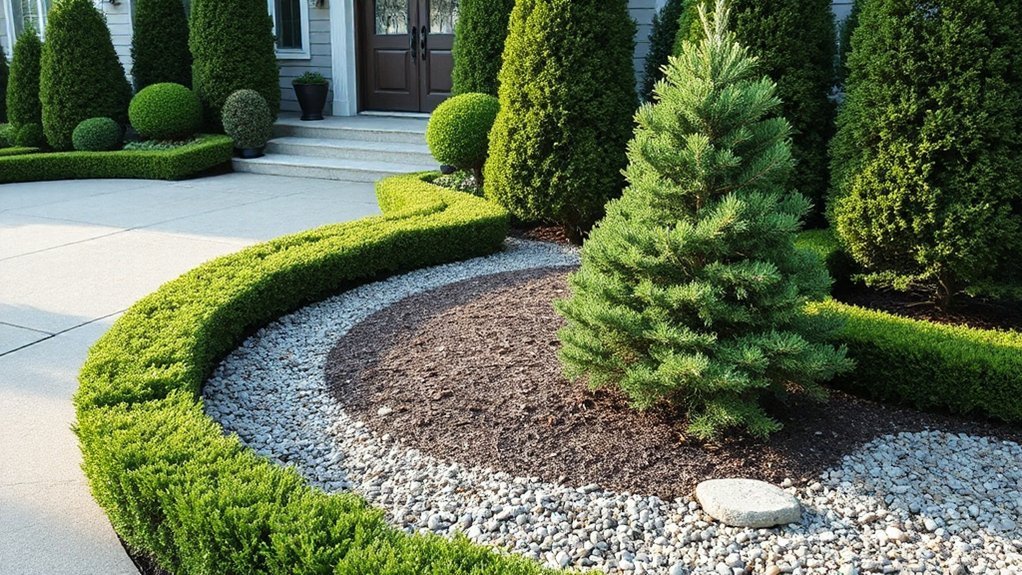
Add evergreens to lock in structure when your perennials die back and the UK winter turns the border bare.
Choose strong, architectural forms—box balls, yew cones, or compact hollies—to give the front garden year-round shape.
Layer them by height, with low mounds at the path, mid-height shrubs in the bed, and a taller anchor near the door or boundary for depth.
Choose Structural Evergreen Forms
Even in midwinter, when herbaceous plants have collapsed and borders look bare, how will your front garden still hold its shape? You’ll rely on structural symmetry and evergreen dominance: clear forms that read from the pavement and stay crisp through a British winter. Choose plants that naturally keep their outline, then clip lightly to maintain definition without fuss.
- Cones and columns: yew (Taxus), Irish yew, or juniper give instant order and frame a doorway.
- Spheres and domes: box alternatives such as Ilex crenata or Lonicera nitida suit neat, low-maintenance balls.
- Architectural fans: clipped pittosporum or holly provides bold geometry and wind tolerance.
Site them where views land—by the gate, path turn, or bay window—for lasting structure.
Layer Heights For Depth
Once you’ve set your evergreen shapes, you’ll get far more depth by layering planting heights from the pavement inwards, so the garden reads as a sequence rather than a flat strip. Keep the lowest layer tight to the edge: creeping thyme, heuchera, or low grasses to soften kerbs and paths without blocking sightlines.
Step up to mid-height evergreens and perennials—sarcococca, hebes, or compact pittosporum—then finish with taller anchors near the house: yew columns, clipped holly, or a small multi-stemmed amelanchier.
Do soil preparation first: improve drainage with grit on clay, add compost on sand, and level for clean lines. Let plant selection follow light and wind exposure, not impulse buys.
Use Trees and Shrubs to Frame the Entrance
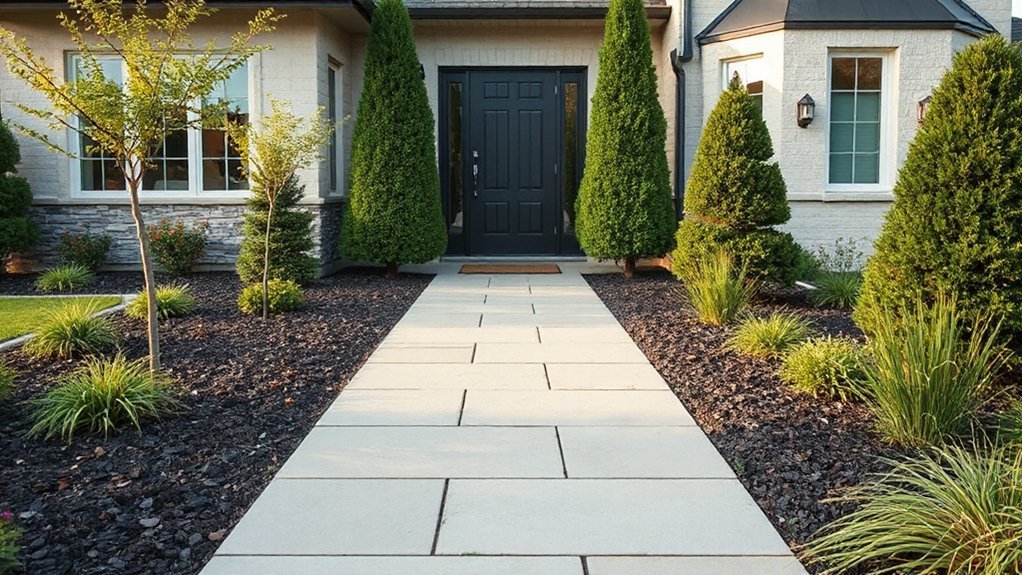
If you want your front garden to feel welcoming and intentional, use trees and shrubs to frame the entrance like a natural doorway. Start with disciplined Tree placement: set a pair of small trees or trained standards either side of the path, allowing clear sightlines to the door and space for bins and deliveries. Keep canopies lifted so you don’t block windows or light, especially on typical UK terraces.
Use shrub variety to reinforce the frame without crowding it. Aim for structure, neat edges, and year-round shape rather than clutter.
- Choose one strong tree form (multi-stem, standard, or pleached) to match your façade.
- Repeat two to three shrub types for cohesion along the approach.
- Maintain a 600–900mm clearance from paths for easy access.
Build Four-Season Interest (Flowers to Seedheads)
Because your front garden sits on show all year, you need planting that earns its space from spring flowers through summer colour and right into autumn seedheads and winter stems.
Start with early bulbs such as snowdrops and crocus under shrubs, then layer in perennial blooms like hardy geranium, nepeta and echinacea for a long display.
Add structure with evergreen grasses and heucheras, and weave in salvia or verbena for late nectar.
For Seasonal seedheads, choose sedum ‘Autumn Joy’, ornamental alliums and grasses such as miscanthus; leave them standing to catch frost and low winter light.
Repeat key plants in drifts so the view from the pavement looks deliberate, not bitty, and your border reads well in every month.
Keep the Front Garden Low-Maintenance
Four-season planting looks its best when you’re not constantly out there tidying it up, so plan the front garden to look after itself. Start with Low maintenance landscaping choices that suit UK rain swings and summer dry spells. Reduce faff by simplifying edges, limiting plant varieties, and choosing tough perennials that don’t flop.
- Cut weeding: lay permeable membrane only where needed, then top with 50–75mm gravel or composted bark to block light and keep soil moisture steady.
- Choose resilient plants: use drought resistant plants such as lavender, rosemary, sedum, euphorbia and ornamental grasses; they cope with heat and wind.
- Design for easy care: group plants by water needs, install a drip line, and leave seedheads until late winter.
Add Privacy Without Boxing It In
While you’ll want privacy from passing pedestrians and neighbouring windows, you can achieve it without turning the front garden into a fortress by layering soft, semi-transparent screening. Use mixed heights: low planting at the front, then taller shrubs or small multi-stem trees set back to filter views while keeping sightlines to your door.
Fit privacy screens where you actually sit or where glazing feels exposed, rather than along the whole boundary. Choose slatted timber, painted black or soft grey, so light and wind still pass through.
If you need a boundary marker, pick decorative fencing at waist height and reinforce privacy behind it with evergreen structure. Check local planning rules and keep gates and paths clearly visible for deliveries and visitors.
Upgrade Edging, Mulch, and Finishing Materials
Start by fitting crisp edging—steel, brick, or setts—to lock in clean lines and stop lawn creep.
Refresh your mulch with a consistent layer of composted bark or decorative chippings to sharpen contrast and suppress weeds.
Finish with stone and gravel in key spots, such as around bins or along a path, for durable, low-maintenance structure that suits UK weather.
Choose Crisp Edging Styles
Once you’ve set out your planting and paths, crisp edging gives the front garden its “finished” look and stops gravel, mulch, and soil creeping where they shouldn’t.
Choose Crisp edging styles that match your house and paving, then keep lines straight and levels consistent for Modern border designs that read well from the kerb.
- Steel or aluminium edging: slim, near-invisible, ideal for contemporary schemes; pin it firmly and allow gentle contours without kinks.
- Stone setts or bricks: weighty, traditional, and great by driveways; bed them on compacted mortar for long-term stability.
- Timber sleepers: warm and cost-effective; use treated wood, hide fixings, and step heights for safe progressions.
Finish by cutting a clean spade line and checking drainage falls.
Refresh Mulch For Contrast
After you’ve sharpened up your borders, refresh the mulch so the planting pops and the whole frontage looks intentional. Strip off tired, pale layers and weeds, then top up to 5–7cm, keeping it clear of stems and the house wall to prevent rot and damp bridging.
Choose one mulch type and commit to it for a cleaner look. Dark bark gives strong mulch contrast against light paving and evergreen shrubs; lighter chips lift shady corners. Use decorative mulch where it’s on show, and keep the grade consistent so it reads as a deliberate finish rather than a patchwork.
Water beds first, then mulch to lock in moisture and suppress annual weeds. Re-top annually in spring after tidying, and rake it level for a crisp, cared-for result.
Add Stone And Gravel
Because stone and gravel don’t fade or break down like organic mulches, they’re a smart upgrade for front gardens where you want a crisp finish with minimal upkeep. Use them to sharpen bed lines, brighten shady corners, and give planting a clean backdrop that reads well from the pavement.
Choose locally sourced aggregates to suit UK conditions and keep colours consistent with your brickwork.
- Lay a permeable membrane, then add 40–50mm of gravel to suppress weeds and reduce splashback.
- Edge firmly with steel, stone setts, or pavers so gravel stays put and borders look intentional.
- Combine decorative stones with stepping slabs to define garden pathways and guide visitors to the door.
Rake occasionally, top up yearly, and keep gravel clear of drains and air bricks.
Avoid Common Front Garden Design Mistakes
Although a front garden can look simple on paper, a few predictable missteps can quickly make it hard to maintain, awkward to use, or out of step with your home’s kerb appeal. Don’t cram beds to the path edge; leave room for bins, posties, and door swing. Avoid planting tall evergreens right under windows, which block light and feel defensive.
Skip fussy mixes of paving and gravel that drift into the pavement; use proper edging and keep a clear route to the front door. Don’t ignore drainage: in much of the UK, waterlogged soil will kill plants faster than frost.
Choose plants suited to aspect, and plan simple irrigation techniques for dry spells. Finally, manage garden pests early with tidy hygiene and resilient varieties.
Frequently Asked Questions
How Much Does a Front Garden Redesign Typically Cost?
You’ll typically pay £1,500–£10,000+ for a UK front garden redesign, depending on size, Plant selection, and paving. Add Water features, lighting, or walls and costs rise. Get three quotes and specify materials early.
Do I Need Permits for Changing Paths, Walls, or Fences?
You might need planning permission, especially for new walls, fences over 1m by highways, or listed homes. Picture crisp paths framing garden plantings and outdoor furniture—check your council’s portal and highways rules first.
How Can I Design a Front Garden That Deters Package Theft?
You deter package theft by adding a lockable parcel box, clear sightlines, motion lighting, and thorny Secure plantings. Use Drone surveillance where lawful, add signage, and keep gates visible from the house.
What Front Garden Features Add the Most Home Resale Value?
You’ll add most resale value with low-maintenance garden planting, crisp edging, and quality pathway materials like resin-bound gravel or reclaimed brick. Include lighting, secure gates, and tidy bin storage; buyers pay for kerb appeal.
How Do I Incorporate House Numbers, Mailboxes, and Lighting Cohesively?
You’ll unify house numbers, a mailbox, and lighting by matching finishes and aligning them on one sightline; the theory that symmetry boosts legibility holds. Add subtle garden ornaments, coordinate plant selection, and use warm, downward LEDs.
Conclusion
Your front garden can whisper “neglect” or shout “welcome” — the difference is planning. You’ve checked sun, soil, and drainage, matched the layout to your home, and chosen one clear focal point. Now keep it sharp: strong green structure, simple planting, and tidy edging beat fussy beds every time. Add privacy with light screens, not walls. Finish with quality mulch and materials. Avoid clutter, and you’ll win kerb appeal.