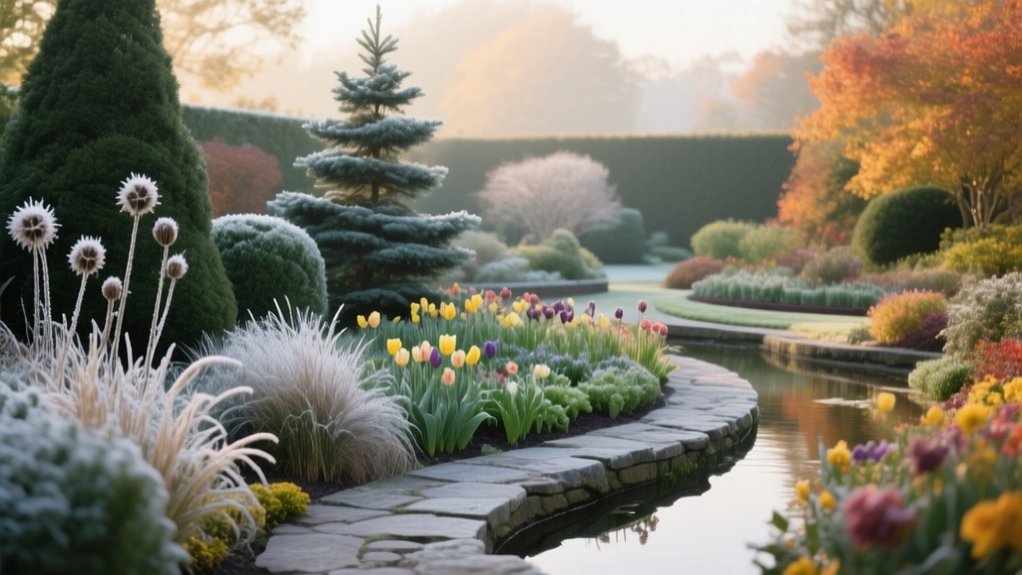
If you want a Garden That Works All Year Round, read on. Start by mapping sun through the seasons, testing drainage and pH, and noting microclimates from walls, wind, and shade so you place plants where they’ll thrive. Build year-round “bones” with tidy evergreens at corners and path turns, then layer small trees, shrubs, perennials, and upright grasses in repeating drifts. Stack bloom times from bulbs to late salvias, add fall color, and finish with winter bark, berries, and silhouettes. Next, you’ll see how to plan it month by month.
Key Takeaways
- Assess sun, drainage, pH, and microclimates so plant choices match real conditions, not labels.
- Build year-round “bones” with evergreens, clipped hedges, upright grasses, and twiggy shrubs placed at corners and path turns.
- Create a seasonal interest calendar to stack blooms, foliage, berries, and winter silhouettes for continuous visual appeal.
- Layer trees, shrubs, and perennials in repeated drifts to add depth, rhythm, and reliable structure through every season.
- Design for low maintenance with gravel paths, mulching, grouped watering needs, and late-winter cleanup plus regular pest scouting.
Assess Sun, Soil, Zone, and Microclimates
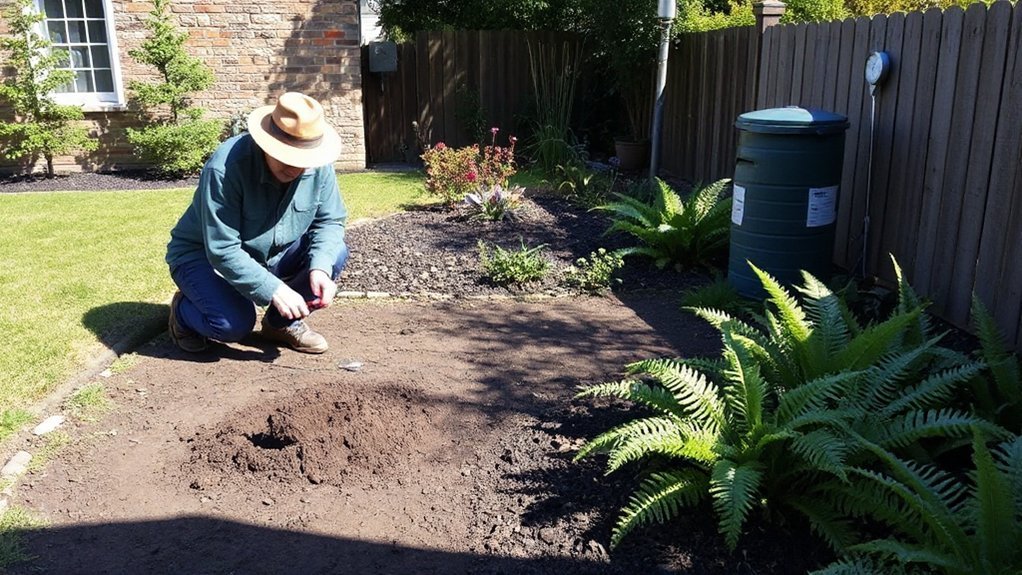
Before you buy a single plant, map what you’ve already got: track sun exposure through the seasons, test and feel your soil, confirm your hardiness zone, and note any microclimates created by walls, slopes, wind, and shade.
Do a Sun assessment now: mark morning vs afternoon light in spring, peak summer, and fall, because a bed that looks “full sun” in July may be half shade by October.
Follow with soil testing: check drainage with a simple soak test, read pH, and rub soil to gauge sand, silt, and clay.
Match your zone to winter lows, then refine by microclimates—south walls warm, low spots frost, windy corners dry.
Design placement from these realities, not labels.
Sketch a Year-Round Garden Interest Calendar
Now you’ll sketch a year-round interest calendar that maps seasonal bloom, foliage color, texture, and structure so every bed has a job in each season.
Mark what peaks when—spring bulbs, summer perennials, autumn color, winter stems and evergreens—then spot gaps you can design around.
Add monthly tasks and highlights (prune, divide, plant, cut back, mulches, and focal moments) so your maintenance schedule supports your best-looking weeks.
Seasonal Bloom And Foliage
Although your planting list might look impressive on paper, it won’t feel like a year-round garden until you map color, texture, and structure across all four seasons. Start with winter: rely on evergreens, bark, and seedheads, then add early bulbs for sharp accents.
In spring, layer blossom shrubs with emerging perennials so foliage fills gaps as flowers fade. For summer, balance long-bloomers with grasses and bold leaves to keep beds readable in heat.
In autumn, prioritize plants that color reliably, plus late daisies and berries for contrast. Build overlap by repeating forms and echoing colors from one season to the next.
Note where plant propagation can extend your best performers, and where pest management protects key anchor plants from defoliation. Keep the calendar visual, not exhaustive.
Monthly Tasks And Highlights
When you sketch a month-by-month interest calendar, you turn “year-round” from a wish into a plan you can actually maintain.
Start by mapping your garden into “moments”: winter structure, spring bloom, summer color, autumn seedheads.
For each month, list one visual highlight and one task that protects it.
In late winter, prune for shape and reveal bark and evergreens; prep paths and edging.
In spring, stagger bulbs and early perennials, then add Companion planting pairings that boost pollination and deter pests.
By early summer, deadhead, thin, and mulch to keep beds crisp; set up Pest management checks weekly.
In late summer, plan succession sowings and support tall plants.
In autumn, plant trees, divide perennials, and leave seedheads for winter interest.
Review, adjust, repeat.
Use Evergreens as the Year-Round Garden Bones
Because your garden needs structure even after the last perennial collapses, evergreens should form the “bones” that hold the design together in every season. Choose plants that keep clean outlines in winter winds and summer heat, then place them where you need visual anchors: at path turns, gate views, and corners that feel empty in January.
For reliable Evergreen structure, favor compact conifers, clipped hollies, or broadleaf evergreens that won’t sprawl into walkways. Use Year round greenery to steady your color palette, so blooms feel intentional rather than scattered.
In spring, evergreens frame fresh growth; in summer, they cool busy borders; in autumn, they contrast warm foliage; in winter, they catch frost and define space. Keep them mulched, watered their first year, and lightly pruned to maintain shape.
Layer Trees, Shrubs, and Perennials for Depth
Evergreens give your garden its steady framework, and you can make that framework feel richer by layering plants at different heights and distances. Start with Tree layering: place small canopy trees behind or to the side of evergreen anchors so their trunks read in winter and their structure frames views.
Next, use shrub stacking to build a mid-level band—taller shrubs at the back, mounded forms in front, and low, spreading shrubs to knit edges. Keep repeats in groups of three to five so the composition holds when foliage thins.
Finish with perennials as the front layer, focusing on strong winter silhouettes and tidy seedheads you can leave standing. In fall, cut only what flops; in late winter, clear remaining stems before new growth shows.
Choose Spring and Summer Plants for Long Bloom
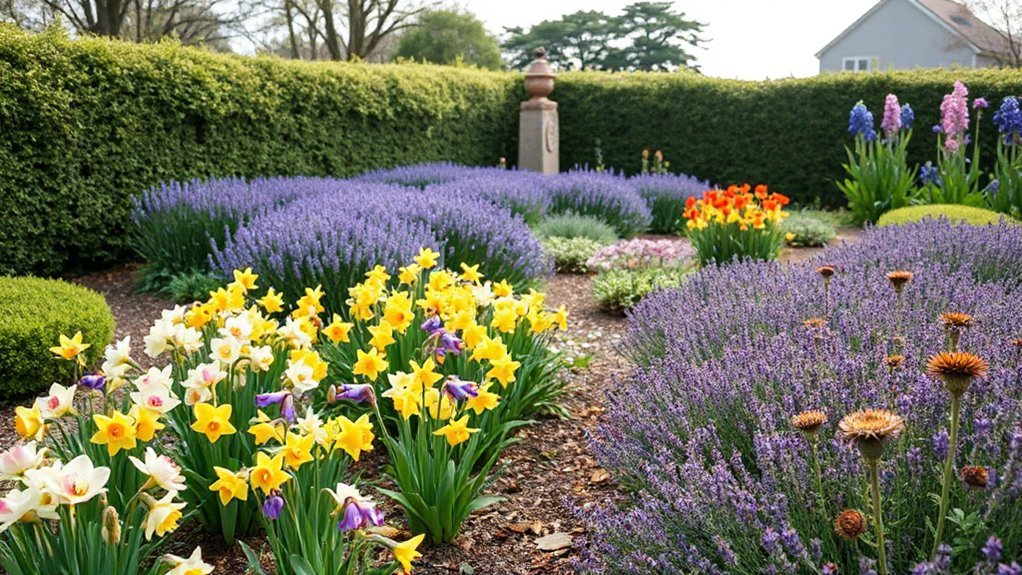
Plan your spring-to-summer display by stacking bloom times—early bulbs and flowering shrubs up front, then midseason perennials, and finally late bloomers to carry the show.
Choose heat-tolerant repeat bloomers so your beds keep color through hot spells instead of fading after the first flush.
When you pair layered timing with plants that rebloom, you’ll hold a clean, continuous rhythm in the garden from spring through late summer.
Layered Bloom Time Selection
When you stagger bloom times on purpose, your garden won’t peak once and fade—it’ll cycle through color in waves from early spring into late summer. Start by mapping sun and sightlines, then slot plants by “handoff” weeks so something’s always opening as another finishes.
- Early spring: hellebores and species tulips light up under shrubs like lanterns.
- Late spring: alliums and irises rise above fresh foliage, adding vertical rhythm.
- Early summer: salvias and catmint spill along edges, stitching paths in blue haze.
Support the sequence with soil amendments so each group establishes fast and flowers on schedule.
Stay ahead with pest management: scout weekly, thin crowded stems, and water at the base to keep blooms clean and continuous.
Heat-Tolerant Repeat Bloomers
Although spring can feel like the main event, you’ll get a longer, steadier show if you anchor beds with heat-tolerant repeat bloomers that don’t quit once temperatures climb. Start with long-flowering perennials like salvia, coreopsis, gaura, and yarrow, then weave in compact lantana or verbena for nonstop color through summer.
Place the toughest plants on hot edges and south-facing borders, and cluster repeats in drifts so the garden reads as intentional, not scattered. Prioritize drought-resistant plants to cut watering and keep flowers coming during dry spells.
Choose pest-resistant varieties such as catmint, hardy geranium, and many salvias to avoid chewed foliage and stalled bloom. Deadhead lightly, shear midseason, and you’ll reset the display fast.
Add Fall Color and Late-Season Texture
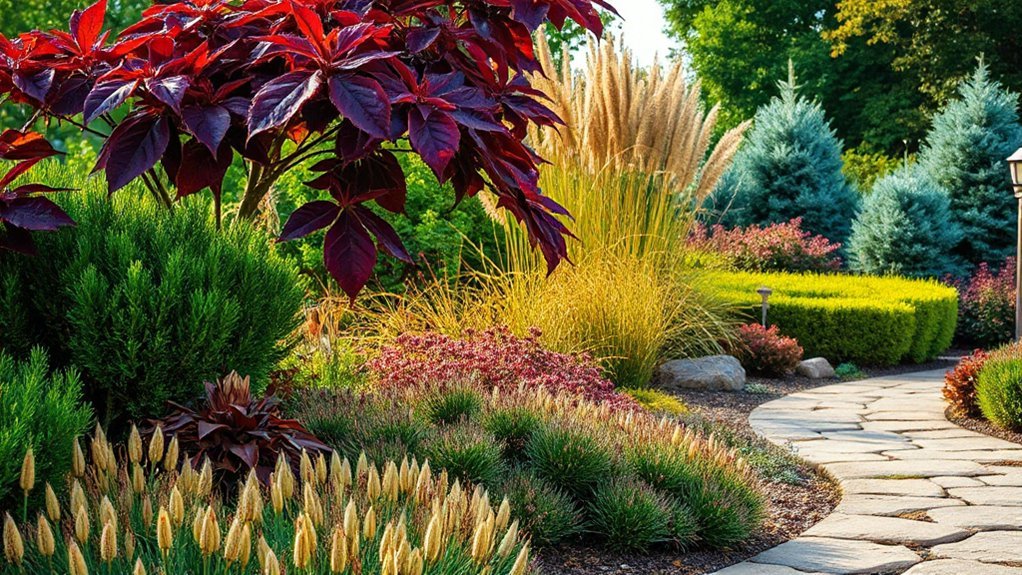
As summer blooms fade and days shorten, you can keep your garden looking intentional by layering plants that peak in fall and hold their structure into winter. Prioritize Fall foliage first, then weave in forms that read well as flowers finish. Use repeatable blocks, not single specimens, so color lands as a deliberate “seasonal shift,” not a surprise.
- Plant drifts of asters and mums along paths so their color frames views.
- Add ornamental grasses behind them for late season texture and movement.
- Tuck in sedums and sage near hard edges to echo stone with sturdy silhouettes.
Keep spent seedheads on perennials until late fall, and trim only what flops. Your borders will look edited, full, and seasonally correct.
Build Winter Interest With Bark, Berries, and Form
Even after frost strips the borders, you can keep the garden looking designed by leaning on plants that show off bark, berries, and strong silhouettes. Place Winter bark where you’ll see it daily—near paths, gates, and windows—so red-stem dogwood, paperbark maple, or birch reads like winter lighting.
Then layer berry color to punctuate the muted palette. Tuck hollies, crabapples, viburnums, and beautyberry behind low evergreens so fruit sits cleanly above snow and leaf litter. Repeat one berry tone in two or three spots to create rhythm, and balance it with dark yew, pine, or box for contrast.
Finish with form: clipped hedges, upright grasses, and twiggy shrubs that hold structure until spring.
Keep Your Year-Round Garden Low Maintenance
When you plan for low maintenance from the start, your garden stays attractive in every season without constant tinkering. Design with structure first: evergreens, tough perennials, and repeatable shapes that look good even when beds rest. Group plants by water needs, and edge paths so spring cleanup takes minutes, not hours. Keep inputs simple with composting basics: top-dress beds in autumn, and you’ll feed roots through winter while improving summer drought tolerance.
- A gravel path that sheds rain, so winter mud doesn’t spread
- A mulch “blanket” that cools roots in summer and blocks weeds
- A tidy hedge line that frames bulbs in spring and seedheads in fall
For garden pest control, scout weekly, remove damaged leaves, and encourage predators with mixed plantings.
Frequently Asked Questions
How Do I Garden Year-Round in Containers on a Balcony?
You’ll garden year-round on your balcony by rotating seasonal crops, insulating pots, and using frost cloth. Prioritize container placement for sun/wind, add balcony privacy screens, and refresh soil, mulch, and drainage each season.
What’s the Best Irrigation Setup for All-Season Garden Performance?
You’ll get best all-season results with drip irrigation on a timer, zoned by pot size and sun exposure. Pair it with rainwater harvesting to buffer drought. Add adjustable emitters for summer, reduce flow in winter.
How Can I Make a Year-Round Garden Safe for Pets and Children?
Like a Victorian telegram, you’ll keep pets and kids safe by designing zones, fencing hazards, and choosing garden safety staples: child proof plants, non-toxic mulch, covered water features. Rotate checks each season, prune thorns, store chemicals.
Which Plants Provide Year-Round Interest Without Triggering Common Allergies?
You’ll get year-round interest with low-allergy picks: hellebores, camellias, ferns, heucheras, Japanese forest grass, and evergreen magnolias. Use flower combinations for seasonal color; add scent enhancing plants like rosemary and lavender away from doors.
What’s a Realistic Year-Round Garden Budget for Installation and Upkeep?
You’ll likely spend $3,000–$15,000 to install and $500–$2,500 yearly to maintain, depending on garden design. Use planting schedules to spread costs: spring soil, summer irrigation, autumn mulching, winter tool care.
Conclusion
When you plan with sun, soil, and microclimates, you’re really setting the clock for your garden. Evergreens become the steady spine, while layered trees, shrubs, and perennials add muscle and movement. You’ll let spring and summer carry the bright flags of bloom, then hand the torch to fall’s color and seedheads. In winter, bark and berries read like punctuation. Keep it simple, and the garden keeps turning—quietly working year-round.