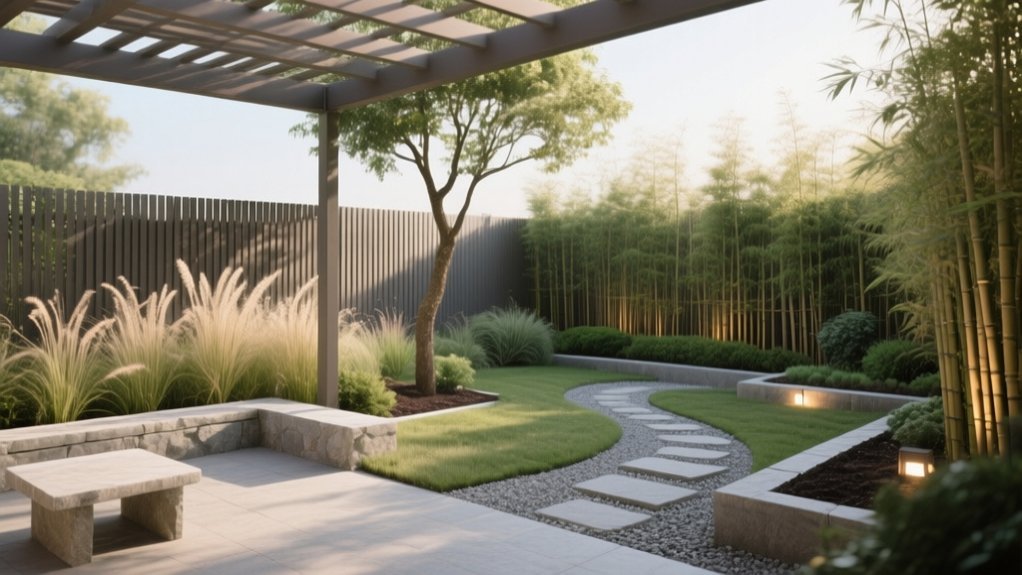
Here we are looking at how to create a Private Garden Without Feeling Closed In. Start by standing in your main spots (patio, lawn, veg bed) and map the sightlines from upstairs windows, balconies and side gaps, including at night with lights on. Block only the worst views using permeable screening—slatted trellis, pleached trees, or staggered shrubs—so you keep light and airflow. Add layered planting (taller at the back, lower near seating) and use pergolas or sails overhead. Next, you’ll see how to zone it neatly.
Key Takeaways
- Map sightlines and night exposure from key garden spots and nearby windows, deciding what views to block or keep.
- Use permeable screens like slatted trellis or pleached trees with 30–50% openness to maintain light, airflow, and depth.
- Layer planting heights: tall trees or hedges at the back, mid shrubs in gaps, and low grasses/perennials at the base.
- Create “garden rooms” with staggered planting and spacing, keeping 60–90cm breathing space from boundaries for comfort and openness.
- Add overhead screening (pergolas, sails, curtains) and align gaps with prevailing winds to improve privacy without trapping breezes.
Find the Views That Break Garden Privacy
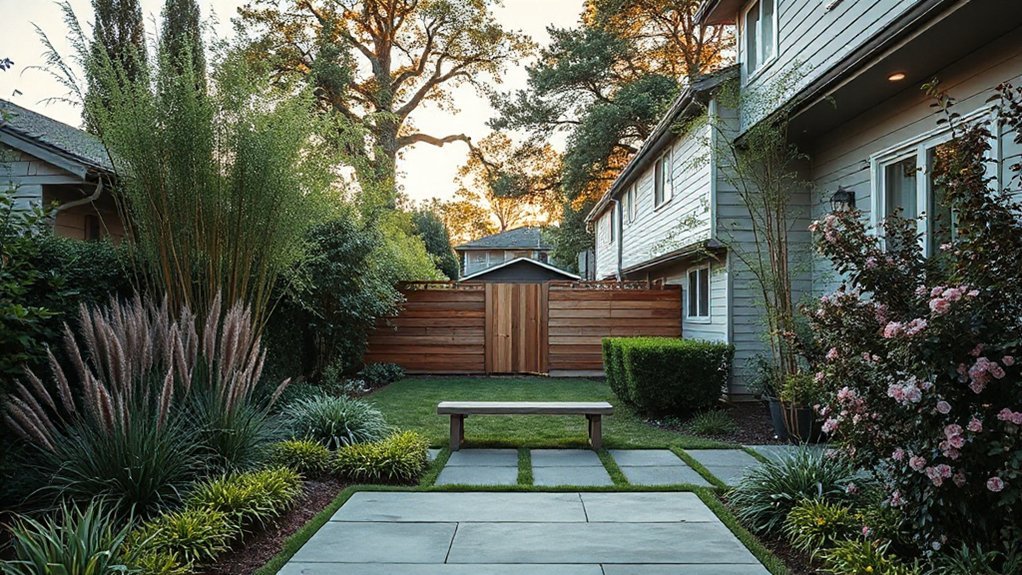
Where exactly can people see into your garden? Stand in every spot you actually use: patio, lawn edge, veg bed, and kitchen-door step. Then look back from the most likely viewpoints: upstairs windows, overlooking balconies, the footpath, and gaps by side returns. Note sightlines through railings, over low fences, and across sloping ground.
Map what you find. Sketch a quick plan and mark “hot” angles, including winter views when leaves drop. Check night-time exposure with indoor lights on and curtains open.
Listen too: garden noise travels over boundaries even when you can’t see anyone. Finally, decide which glimpses you’ll keep for wildlife views and borrowed greenery, and which ones must be blocked first.
Choose Garden Privacy Solutions by Speed and Upkeep
Now you’ve spotted the sightlines that compromise privacy, choose solutions based on how quickly you need cover and how much maintenance you’ll tolerate.
If you want instant results with minimal fuss, fit fast, low-upkeep screens such as fencing panels, trellis with slats, or a purpose-built garden screen.
If you can wait for a softer look, plant slow-grow living barriers like yew, beech, or hornbeam, and plan for watering, trimming, and seasonal gaps while they establish.
Fast, Low-Upkeep Screens
If you need garden privacy quickly and don’t want a screen that demands constant clipping or tying in, choose solutions that go up in a day and only need an occasional clean or check. Modular fence panels, slatted trellis, and composite screening fit most UK boundaries and keep garden maintenance minimal.
Use pressure-treated timber or composite boards for longevity; you’ll simply rinse algae and tighten fixings each season.
For rented spaces, try freestanding screens, sail shades, or outdoor curtains on a pergola frame—no digging, and you can pack them away.
Balance privacy aesthetics by mixing solid and open sections: a full-height panel blocks sightlines, while a slatted top keeps light moving through.
Match colours to your fencing and add low-level lighting for evening seclusion.
Slow-Grow, Living Barriers
Hard screens give you privacy overnight, but living barriers reward you with softer, greener seclusion that improves year after year.
Choose hedging if you can wait: yew, hornbeam, beech, and privet form dense living fences, while laurel gives faster bulk but needs firm pruning.
Plant in autumn, trench in compost, and water through the first two summers, especially on light soils.
Space plants correctly and mulch to suppress weeds and hold moisture.
Clip little and often to thicken growth; let height build gradually to avoid bare legs.
For wildlife-friendly natural boundaries, mix hawthorn, blackthorn, hazel, and dog rose, then lay or lightly coppice for structure.
You’ll gain shelter, birdsong, and year-round screening.
Build Garden Privacy With Layered Planting
Because a single row of planting rarely blocks every sightline, you’ll get better results by layering plants in tiers to create depth and year-round screening.
Start with tall structure at the back: pleached hornbeam, multi-stem birch, or a clipped yew hedge to lift the canopy above eye level.
In front, add medium shrubs such as viburnum, pittosporum, or choisya to plug mid-height gaps and soften the line.
Finish with low, mounding perennials and ornamental grasses—geranium, heuchera, carex—to cover bases and stop views through legs and stems.
This layered planting builds reliable Visual barriers without turning the border into a wall.
Stagger plants, overlap canopies, and keep access for pruning, bin storage, and path clearance year round.
Choose Airy Garden Privacy Screens That Let Light Through
Choose light-filtering screen materials such as slatted timber, woven willow, or frosted polycarbonate so you keep daylight without giving up privacy.
Use slatted and lattice designs to break sightlines while still letting air and sun through to borders and patio pots.
Place screens where they block key views from neighbours—along the patio edge or beside seating—without shading windows or creating gloomy corners.
Light-Filtering Screen Materials
Where do you start if you want privacy without turning the garden into a gloomy corner? Begin with materials that diffuse views, not daylight. Outdoor-rated privacy fabric works well on pergolas, balconies, or between posts; choose UV-stable, mould-resistant weaves and tension it so it won’t flap in the wind.
For a cleaner look, fit translucent panels in polycarbonate or frosted acrylic: they block sightlines yet keep the space bright, and they’re easy to hose down.
If you need something more natural, consider reed screening with a light weave, but check it’s securely wired and treated for damp UK winters. Keep heights sensible and leave gaps at the base for airflow and planting access.
Slatted And Lattice Designs
Once you’ve sorted diffused panels and fabrics, slatted and lattice screens give you privacy with airflow and dappled light. You’ll keep the garden feeling open while softening sightlines from neighbours and upper windows.
Choose Slatted fencing with consistent gaps to control visibility, and set the slats horizontally for a modern look or vertically for a taller feel. Add Decorative lattice above or alongside panels to break up mass and support climbers without turning the space into a box.
Finish in exterior wood stain, or opt for powder-coated aluminium for low upkeep in UK weather.
- Aim for 10–20mm spacing for balance of privacy and light.
- Use pressure-treated timber, then seal cut ends.
- Fix with stainless screws to avoid rust staining.
- Pair with trellis-friendly plants like jasmine or clematis.
Strategic Screen Placement
How you position an airy privacy screen matters as much as the material, because the right placement blocks sightlines while keeping daylight and breezes moving through your garden. Start by mapping the most direct views from upstairs windows and adjoining patios, then angle screens to intercept those lines rather than boxing in the whole boundary.
Place panels where you actually sit—by the terrace, dining set, or hot tub—and leave gaps at corners to keep the space open. Use staggered runs instead of a continuous wall, and set screens a short distance from fences to create depth and airflow.
Keep heights modest near borders so you don’t shade beds or disrupt garden lighting. Maintain wildlife corridors by leaving a low gap or planting-friendly opening.
Add Vertical Garden Privacy With Trellis and Canopy
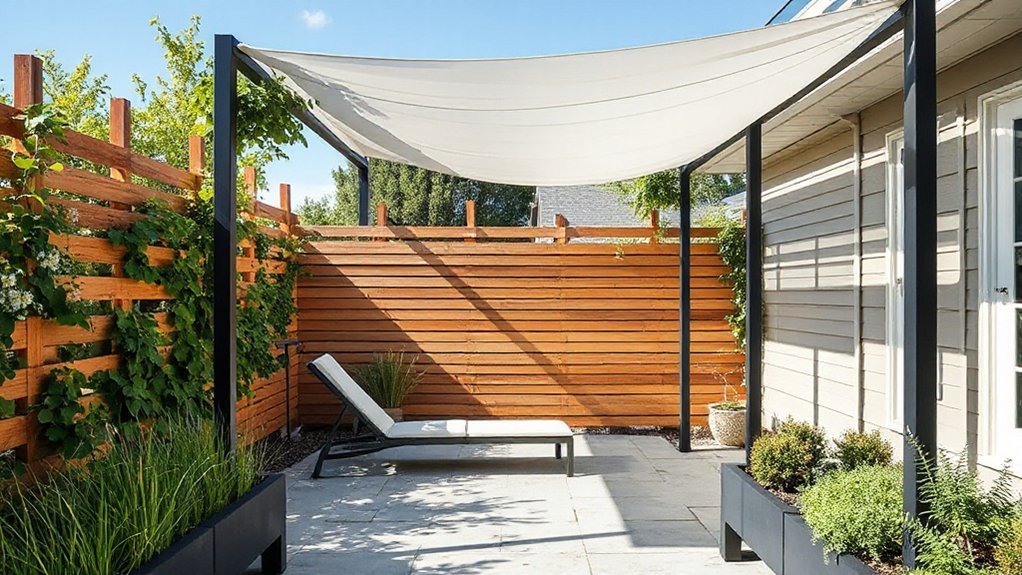
Although fences and hedges do most of the heavy lifting, a trellis or canopy adds privacy exactly where you need it—up at eye level and over seating. Use a slimline timber or powder-coated metal trellis to lift greenery without eating into your patio. Train climbers so gaps close quickly, and choose deciduous options if you want winter light.
- Fix trellis panels to posts with galvanised brackets, leaving a 50mm air gap for airflow.
- Prioritise Vertical planting: jasmine, honeysuckle, or clematis on wires for tight coverage.
- Add a pergola-style canopy with retractable fabric for controlled Canopy shading and softer sightlines.
- Use planters as bases, then tie growth in with biodegradable twine and regular pruning.
Place Seating Where Garden Privacy Feels Effortless
Trellises and canopies give you privacy where it’s visible, but your seating layout decides whether that screening actually feels effective. Place chairs and a bench so your natural sightlines face your screening, not neighbours’ windows.
Angle seats 30–45 degrees away from the boundary and you’ll stop feeling watched without adding height. Keep your main seat with its back towards the most overlooked edge, using a low table or planter behind it to discourage direct views.
Choose compact garden furniture that fits the patio or decking, then pull it in from the fence by 60–90cm so you’re not pressed against a hard line.
Test seating arrangements at different times of day; adjust positions to match sun and typical use.
Zone the Garden for Privacy Without Blocking Airflow
When you zone your garden into distinct “rooms”, you can block awkward sightlines without creating a still, stuffy corner. Use permeable boundaries so breezes move through and planting stays healthy, especially in tight UK terraces.
Aim for layered height—low at seating, mid around paths, taller at the back—to keep privacy without a wall effect. Plan for Seasonal Changes so coverage holds in winter as well as summer, and choose features that still welcome Urban Wildlife.
- Set a clear wind corridor: align gaps with prevailing south-westerlies.
- Use slatted screens, trellis, or pleached trees with 30–50% openness.
- Stagger shrubs in drifts, leaving a 60–90cm breathing strip behind.
- Add a pergola or sail for overhead screening, not side blockage.
Frequently Asked Questions
What Permissions or HOA Rules Affect Adding Tall Screens or Hedges?
You’ll need to check planning permission, conservation area limits, and any HOA restrictions before installing tall screens or hedges. Confirm height caps, boundary ownership, and setbacks at the Property line, plus neighbour agreements and lease covenants.
How Do I Reduce Noise While Keeping the Garden Feeling Open?
Use soundproofing techniques like staggered fencing, dense evergreen hedging, and water features to mask sound. Keep open space design with layered planting, trellised climbers, and permeable panels, so airflow and sightlines stay clear.
Which Materials Withstand Coastal Winds Without Creating a Wind Tunnel?
Choose durable fencing materials like slatted timber, hit-and-miss panels, or perforated metal; they deflect gusts, not funnel them. Pair with wind resistant plants—hawthorn, escallonia, tamarisk—to act as a living break.
How Can I Add Privacy Without Blocking Security Camera Sightlines?
Use slatted screens or trellis panels below camera height, and keep hedging clipped under sightlines. Add Plant variety with airy grasses. Position garden lighting away from lenses to prevent glare, and test angles on CCTV.
What Budget Range Should I Expect for Privacy Upgrades in Small Gardens?
Like drawing a soft curtain, you’ll spend £200–£2,000+ for small-garden privacy upgrades. Your garden layout and plant selection drive costs: £200–£600 for screens/trellis; £600–£2,000+ for fencing, mature hedging, lighting adjustments.
Conclusion
You don’t need to shut the world out to feel private. Start by spotting the sightlines that matter, then choose quick screens or slower, low‑maintenance planting. Layer shrubs and climbers, and pick slatted panels that keep daylight and breeze moving through. Add a trellis, canopy, or pergola to lift privacy above eye level. Move your seating into the calmest zone. Then wait—once everything settles, the garden reveals its secret: you’re hidden, yet never hemmed in.