You’ll elevate outdoor design by using natural materials, choosing for climate fit, durability, sourcing, aesthetics, and an honest maintenance plan. Detail everything for drainage: excavate to stable subgrade, add geotextile, compact angular base lifts, and set 1–2% cross-slope to shed water and prevent spalling, heave, and efflorescence. Use rot-resistant or thermally modified wood on standoffs, and low-porosity stone in freeze-thaw zones. Seal with breathable, low-VOC systems every 2–5 years. Next, you’ll see which assemblies and finishes perform best.
Key Takeaways
- Select climate-appropriate materials, prioritizing UV resistance, low porosity for freeze-thaw, and rot resistance in humid conditions.
- Design with complementary textures and tones—wood grain, stone finish, brick pattern, and gravel sound—to match architecture and planting.
- Install hardscape on a drained, compacted base with geotextile and 1–2% slope to prevent heaving, efflorescence, and surface scaling.
- Use permeable surfaces like gravel, decomposed granite, or permeable pavers to improve drainage and reduce runoff while adding natural character.
- Plan maintenance upfront: seal end grain, use vapor-open sealers, and recoat oils or low-VOC sealants every 2–5 years.
Choose Natural Materials Using 5 Criteria
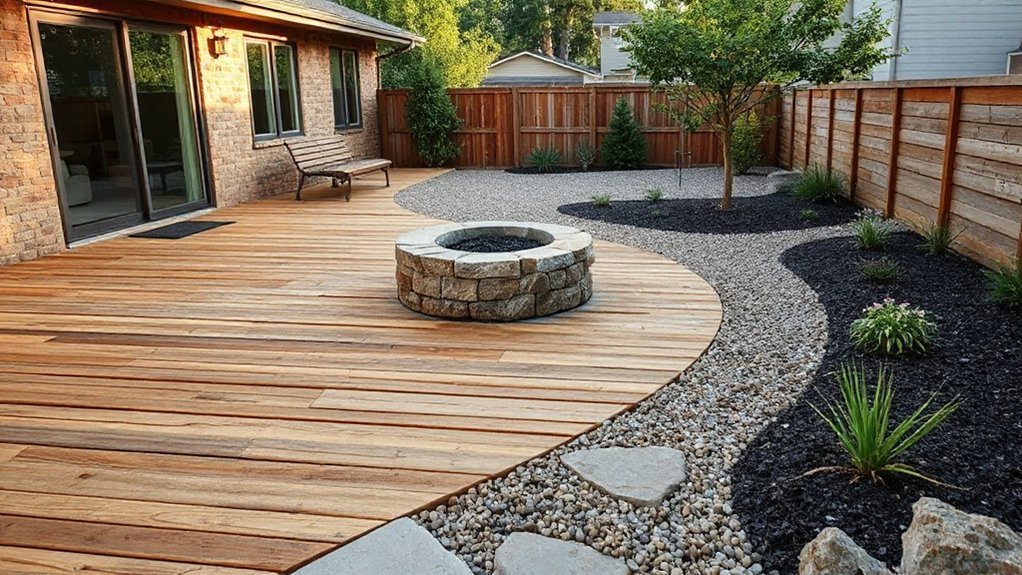
Before you spec wood, stone, clay, or metal for an outdoor space, run each option through five criteria: climate fit, durability, maintenance load, sustainability profile, and aesthetic compatibility.
Start by ranking durability by wear mode—UV checking in timber, spalling in porous stone, crazing in glazed clay, corrosion in metal—then pair it with an honest maintenance plan (oil, seal, repoint, patina management).
For sustainability profile, demand Sustainable sourcing: FSC or reclaimed wood, local quarried stone, low-fire clay, high-recycled-content aluminum or steel, plus verified chain-of-custody.
Finally, tune aesthetic compatibility with site architecture and planting: grain and joint rhythm, surface reflectance, thermal mass, and edge detail.
You’ll maximize Aesthetic appeal while keeping performance predictable and lifecycle costs controlled.
Match Natural Materials to Your Climate
You’ll get better longevity and lower maintenance when you spec natural materials to your climate, not just your aesthetic.
In hot zones, choose UV-stable, heat-tolerant stone or dense hardwoods that won’t cup or check.
In humid regions, prioritize rot-resistant species, proper sealing, and fast-drying assemblies.
If you’re in a freeze-thaw cycle, select low-porosity stone and dimensionally stable woods.
Additionally, detail drainage and joints so trapped water can’t crack, spall, or heave surfaces.
Heat-Resistant Material Choices
Because high solar exposure and ambient heat can warp, fade, or delaminate the wrong finishes, match natural materials to your microclimate instead of picking solely by look.
In full sun, specify dense, tight-grain hardwoods like ipe or thermally modified ash; they handle solar heat with less checking than softer species.
Choose light, honed stone—limestone or travertine—for underfoot comfort, and avoid dark slate where surface temps spike.
Detail for thermal expansion: use slotted fasteners, wider movement joints, and floating deck clips so boards and pavers can move without crowning.
For walls and seating, rammed earth and adobe buffer diurnal swings, while high-fired terracotta stays stable.
Finish with UV-stable, penetrating oils, not film-formers.
Moisture And Rot Protection
Where does moisture actually sit on your site—under shaded planting, in capillary-wet soil, or in wind-driven rain off a parapet? Map wetting patterns before you spec finishes.
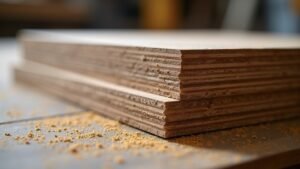
For decks and benches, choose naturally durable species (ipe, teak, cedar) or thermally modified wood, and keep end grain sealed.
Detail for Moisture control: raise boards on pedestals, vent cavities, and build 1–2% slope with clear drainage paths.
Separate wood from soil using stone plinths or stainless standoffs, and avoid trapping leaf litter at edges.
Use breathable oils where you want a matte, biophilic look; skip film-formers in constantly damp zones.
For Rot prevention, specify heartwood, back-priming, and concealed fasteners that don’t hold water.
Freeze-Thaw Durability Considerations
Even if your site looks dry in summer, freeze–thaw cycles can punish porous stone, brick, and concrete once water gets into microcracks and expands on the first hard frost.
To match natural materials to your climate, you’ll want low-absorption options—dense granite, slate, or porcelain pavers with stone visuals—plus ASTM-rated exterior brick and air-entrained concrete.
Specify a tight jointing system, then slope surfaces 1–2% and detail positive drainage so water can’t sit.
Use permeable bases where appropriate, but keep fines controlled to limit capillary rise.
Seal only when the product stays vapor-open; trapped moisture accelerates spalling.
In cold regions, avoid glossy sealers and soft limestones.
Plan for material expansion with flexible joints and compatible setting beds.
Choose the Best Wood for Decks
As outdoor living spaces keep shifting toward low-maintenance, high-performance finishes, choosing the right deck wood comes down to matching species-level durability with your climate, sun exposure, and upkeep tolerance.
In wet or coastal zones, you’ll get long service life from dense, rot-resistant hardwoods like ipe or cumaru, but plan for predrilling and higher movement control.
In mixed climates, thermally modified ash or pine offers improved stability with a lighter footprint and fewer extractives bleeding.
For budget builds, pressure-treated southern pine works, yet you’ll need strict sealing schedules to limit checking.
Prioritize selecting sustainable woods with FSC certification or reclaimed stock, then lock in color and moisture resistance using UV-stable, low-VOC, eco-friendly finishes.
Specify stainless fasteners to cut corrosion and staining risks.
Choose Pergola Materials That Weather Well
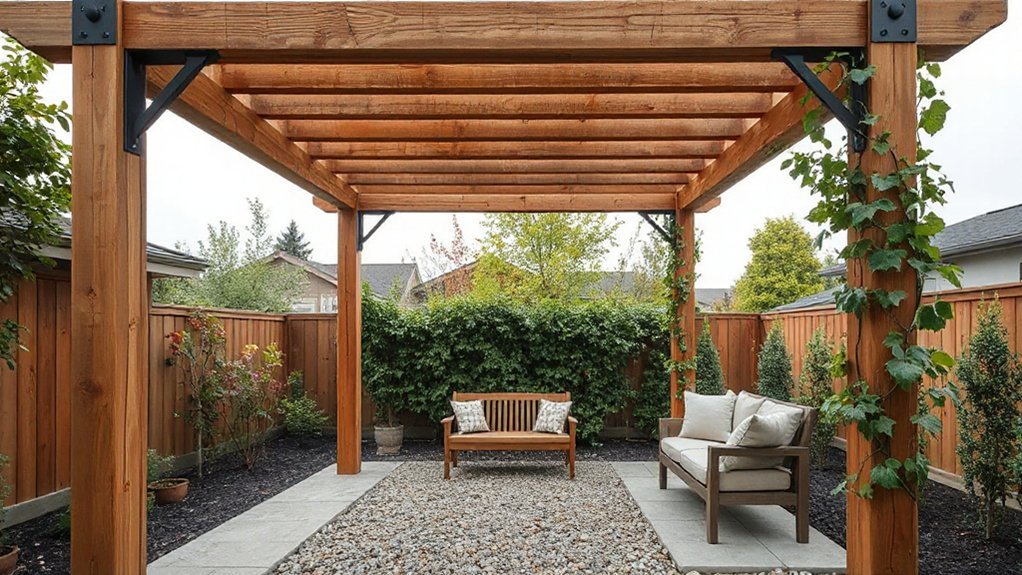
Deck boards take the daily wear, but your pergola’s posts and overhead members face constant UV, wind uplift, and moisture cycling, so material choice needs to match your exposure and maintenance tolerance.
In humid or coastal zones, specify rot-resistant species like western red cedar or black locust, or choose thermally modified wood for lower equilibrium moisture uptake and improved stability.
In high-sun climates, select tight-grain lumber and detail with drip edges, end-grain sealing, and stainless fasteners to reduce checking and corrosion.
If you want minimal upkeep, consider powder-coated aluminum wrapped in wood tones, but keep connections isolated to prevent galvanic issues.
Finish with eco-friendly finishes that include UV inhibitors and water repellents.
Verify sustainable sourcing via FSC or reclaimed stock.
Choose Stone, Brick, or Clay for Patios
When you choose patio surfacing, you’ll weigh stone, brick, and clay by compressive strength, porosity, and freeze–thaw resistance to predict long-term performance.
You can spec dense natural stone for maximum durability, select fired brick for consistent sizing and classic running-bond patterns, or use clay pavers for warm tones that align with today’s earthy, biophilic palettes.
You’ll also match each option to your climate—prioritizing low absorption and proper base/drainage in wet or cold zones to prevent spalling, heave, and joint washout.
Comparing Stone, Brick, Clay
Although all three materials can anchor a beautiful outdoor room, stone, brick, and clay behave very differently under foot traffic, freeze–thaw cycles, and heat exposure. So your patio choice should match your site conditions and the look you’re chasing.
Stone reads contemporary or rustic depending on cut—thermal, flamed, or tumbled—and you’ll get broad color variance and larger modules for cleaner joints.
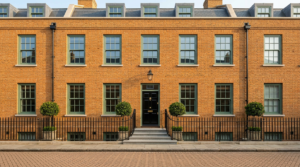
Brick delivers historical significance through classic running bonds and soldier courses, and it pairs well with cottage and industrial gardens.
Clay pavers trend warmer and more Mediterranean, with nuanced reds and buffs that photograph well.
For environmental impact, you’ll weigh quarrying and transport for stone against kiln energy for brick and clay; you can offset either by sourcing locally and specifying reclaimed units.
Durability And Weather Performance
How will your patio surface hold up after a few seasons of UV, de-icing salts, and freeze–thaw cycling? If you want maximum resilience, choose dense natural stone like granite or bluestone. Its low absorption limits spalling, and a thermally stable matrix reduces microcracking under temperature swings. Specify a flamed or bush-hammered finish for slip resistance without a film-forming sealer that can peel.
Brick performs well when you pick severe-weather-rated units and lay them on a properly drained base; otherwise, salts can trigger efflorescence and surface scaling.
Clay pavers bring rich color, but higher porosity demands meticulous jointing and edge restraint. You’ll also want Sustainable sourcing and aesthetic compatibility with adjacent walls, steps, and planting palettes.
Build Natural Paths With Pavers or Gravel
To create flow through your landscape without fighting the terrain, build natural paths with pavers or gravel that match your site’s slope, drainage, and traffic load. Set grades to shed water at 1–2% cross-slope, and crown longer runs to prevent rutting.
Excavate to stable subgrade, then install geotextile to separate soils and stop fines migration. For pavers, lay a 4–6 in compacted, angular base and a thin bedding layer. For gravel, use 3/8 in minus or decomposed granite, compacted in lifts.
In trend-forward landscapes, permeable assemblies complement designing organic garden beds and reduce runoff. When selecting eco-friendly paving options, choose locally quarried aggregate and low-cement, reclaimed, or permeable pavers for better lifecycle impact.
Use Stone for Walls, Edging, and Borders
Because stone holds its line under weather and foot traffic, you can use it to lock in grades and define crisp edges without adding visual noise. Set Natural stone edging on a compacted base with a restrained reveal, and you’ll get a clean mow line and sharper bed geometry.
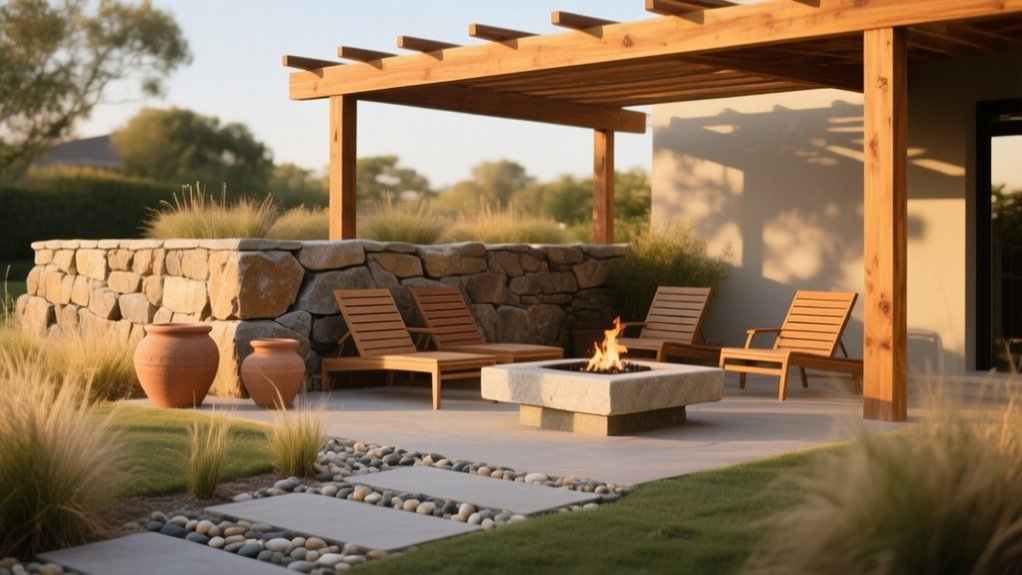
For retaining, choose dry-stacked walls for permeability and a contemporary, craft-forward look; keep batter consistent, pin courses with through-stones, and cap with sawn or thermal-finished slabs for safer, flatter seating.
Use stone borders to frame patios, steps, and planting panels, and you’ll guide circulation without extra materials. Match color temperature to your façade, and vary finish—split-face, honed, or flamed—to tune Outdoor aesthetics across sun and shade.
Add Texture With Gravel, Mulch, and Sand
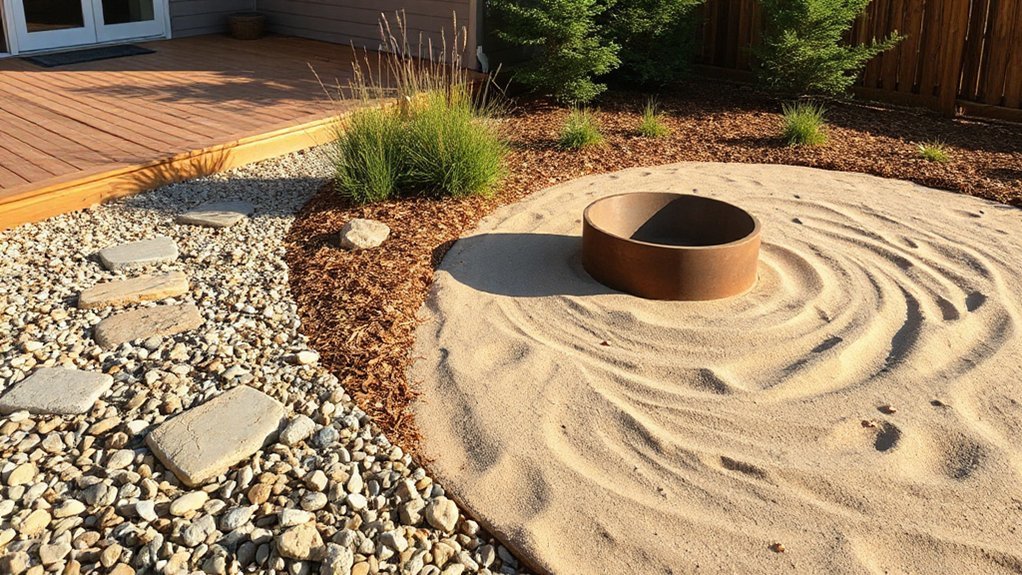
Even if your layout stays minimal, gravel, mulch, and sand let you dial in texture, drainage, and sound underfoot without introducing new hardscape forms. Use 3/8-inch crushed gravel for paths that lock in, then top-dress with fines to reduce kick-out near garden seating.
For a softer, trend-forward look, specify rounded pea gravel in light neutrals and contain it with steel edging to keep lines crisp.
Apply shredded hardwood mulch in planting bands to suppress weeds and buffer soil temperature; keep it 2–3 inches deep and pull it back from stems.
Add compacted decomposed granite or sand pockets around water features to create splash-friendly, barefoot zones.
Blend textures deliberately so progressions read intentional, not improvised.
Seal and Protect Natural Materials Outdoors
While natural stone, wood, and clay weather beautifully, you’ll get cleaner lines and longer service life when you seal them for the specific exposure they’re facing. Start by mapping sun, splash, freeze-thaw, and foot traffic, then pick chemistry accordingly: silane/siloxane penetrants for stone and pavers, breathable mineral stains or alkyd-modified oils for wood, and vapor-permeable acrylics for terracotta.
Favor eco-friendly sealants with low VOCs and waterborne carriers, and confirm they’re compatible with joint sands and drainage beds. Apply after moisture readings stabilize; trapped water causes whitening and spalling.
Use thin coats, back-roll or brush into pores, and wipe residues to avoid gloss hotspots. Recoat on a maintenance cadence—typically 2–5 years—for sustainable preservation of color, texture, and slip resistance.
Frequently Asked Questions
How Do Natural Materials Affect Outdoor Sound and Acoustic Comfort?
Natural materials boost outdoor acoustic comfort by increasing Sound absorption and reducing reflections; you’ll hear less echo and traffic glare. Dense fibers add Acoustic insulation, while porous textures diffuse highs—on-trend for quieter patios and streetscapes.
Are Natural Materials Safe for Pets, Especially When Chewed or Scratched?
Like a well-fitted muzzle, they can be safe if you choose wisely. You’ll prioritize Pet safety and Material durability: avoid toxic-treated woods, sharp stone chips, and splintery bamboo; seal surfaces; supervise heavy chewers.
What Are the Best Options for Allergy-Friendly Outdoor Natural Materials?
You’ll do best with kiln-dried cedar, thermally modified ash, FSC-certified ipe alternatives, and washed river stone; they’re low-resin and low-dust. Pair Eco friendly finishes and Sustainable sourcing; avoid aromatic oils, mold-prone bark mulch.
How Do I Deter Insects and Rodents Without Harming Natural Materials?
An ounce of prevention beats a pound of cure: you’ll deter insects and rodents by sealing gaps, elevating storage, and deploying organic pest control like cedar oil or neem, plus eco friendly deterrents—peppermint sachets, ultrasonic emitters, and gravel barriers.
Can I Mix Natural Materials With Outdoor Lighting and Wiring Safely?
Yes—you can mix natural materials with outdoor lighting and wiring safely if you use outdoor-rated, UV-resistant cable, sealed connectors, and proper grounding. Prioritize weather resistance, add drip loops, and schedule Material maintenance to prevent moisture wicking and corrosion.
Conclusion
When you choose natural materials with climate and performance in mind, your outdoor build lasts longer and looks sharper. You’ll get better ROI by pairing rot-resistant decking, UV-stable pergola finishes, and dense stone or clay underfoot, then dialing in drainage, base prep, and jointing. A quick stat: well-designed landscape upgrades can boost home value by up to 12%. Seal on schedule, refresh gravel and mulch annually, and you’ll keep textures crisp through every season.