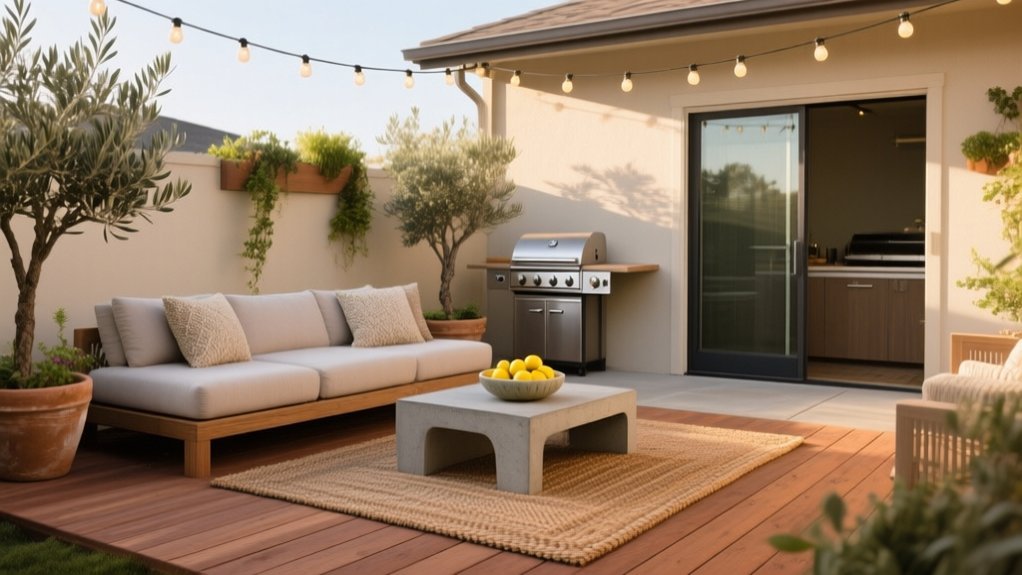
How about designing a patio for everyday living and adding space? Design your patio like an extra room: list daily uses (coffee, dinners, BBQs, kids, herbs) and size it for typical numbers. Zone it for dining, lounging, and a clear route to the kitchen, keeping pushchair-friendly paths and BBQ traffic away from play. Choose slip-resistant, frost-rated paving (aim R11) with proper drainage. Pick separate dining and lounge seating with quick-dry cushions. Add a shade sail, privacy planting, and warm, layered lighting—there’s more to refine next.
Key Takeaways
- Define daily patio activities, typical guest numbers, and UK weather needs to size the space and plan cover, storage, and power.
- Map zones for entry, dining, lounging, and planting, keeping clear traffic paths to prevent mud tracking and avoid BBQ routes near play areas.
- Choose slip-resistant, frost-rated flooring (aim R11) with proper drainage, prioritising low-maintenance materials like textured porcelain or sealed natural stone.
- Select separate dining and lounging furniture, allowing 90cm behind dining chairs and using weatherproof frames with quick-dry cushions for everyday comfort.
- Add layered shade, privacy, and lighting using sails or pergolas, slatted screens with climbers, and warm, dimmable pathway and task lighting.
Define Your Patio’s Daily Uses
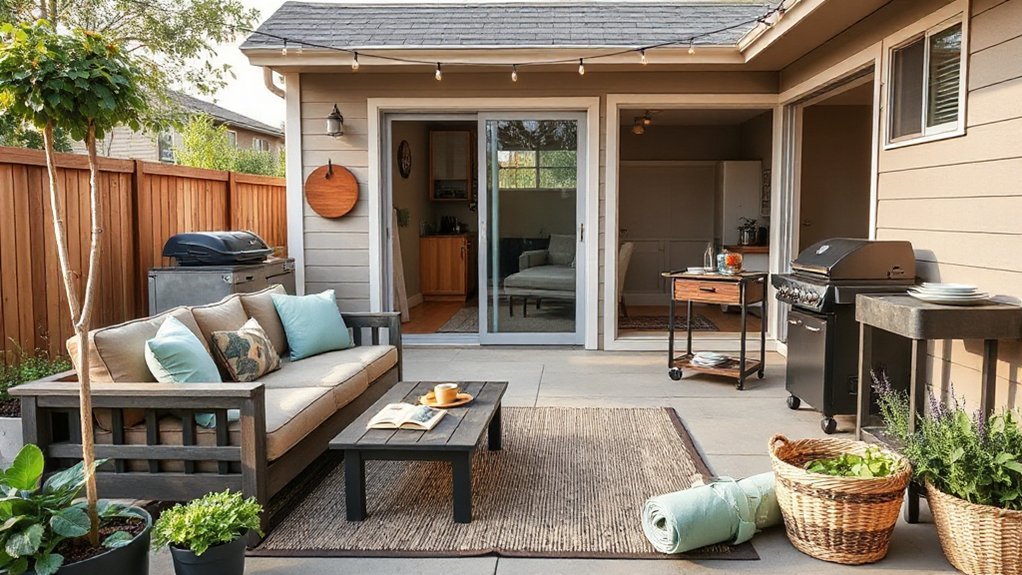
Before you pick materials or furniture, pin down exactly how you’ll use your patio day to day. List your regular activities: weekday coffee, family dinners, weekend barbecues, kids’ play, pottering with herbs, or a quiet reading spot after work.
Note how many people you’ll host and how often, so you don’t oversize or undercook the space.
Factor in UK weather: plan for shade on hot spells and cover for drizzle so you’ll actually sit outside.
Decide what needs power (lighting, speakers, laptop) and what must stay close to the house (sink access, fridge runs).
Choose decorative plantings for privacy or scent, and plan outdoor accessories like storage, cushions, and a fire pit.
Map Patio Zones and Traffic Paths
Once you’ve nailed down how you’ll use the patio each day, sketch it as a set of zones with clear routes between them, so people aren’t constantly weaving around chairs or trailing mud through the house. Mark a direct line from back door to bins, shed, and washing line, then branch to lounging and dining. Allow pushchair and wheelchair-friendly clearance, and keep BBQ routes away from play space.
- Entry/transition zone: add a mat area and a slim bench; keep it uncluttered.
- Social zone: position seating to face each other; leave a straight service path to the kitchen.
- Green/buffer zone: use plant placement to soften edges and screen neighbours; hang outdoor art on fences to pull sightlines away from utility corners.
Choose Patio Flooring for Weather, Grip, and Comfort
Although patio flooring can feel like a purely aesthetic choice, it needs to cope with UK rain, winter frost, algae, and everyday foot traffic without turning slippery or uncomfortable underfoot. Choose textured porcelain or riven sandstone for dependable grip; avoid polished finishes and small, uneven cobbles on key routes.
Prioritise outdoor durability by checking frost ratings, slip resistance (aim for R11 where you’ll walk in wet shoes), and stain resistance if you’ll use a barbecue. Build in drainage: lay slabs with a 1:60 fall away from the house and use a permeable sub-base where possible.
Plan material maintenance realistically—porcelain needs simple washing, while natural stone may need sealing and occasional algae treatment. Gravel suits secondary areas but needs edging to stop spread.
Choose Patio Seating for Dining and Lounging
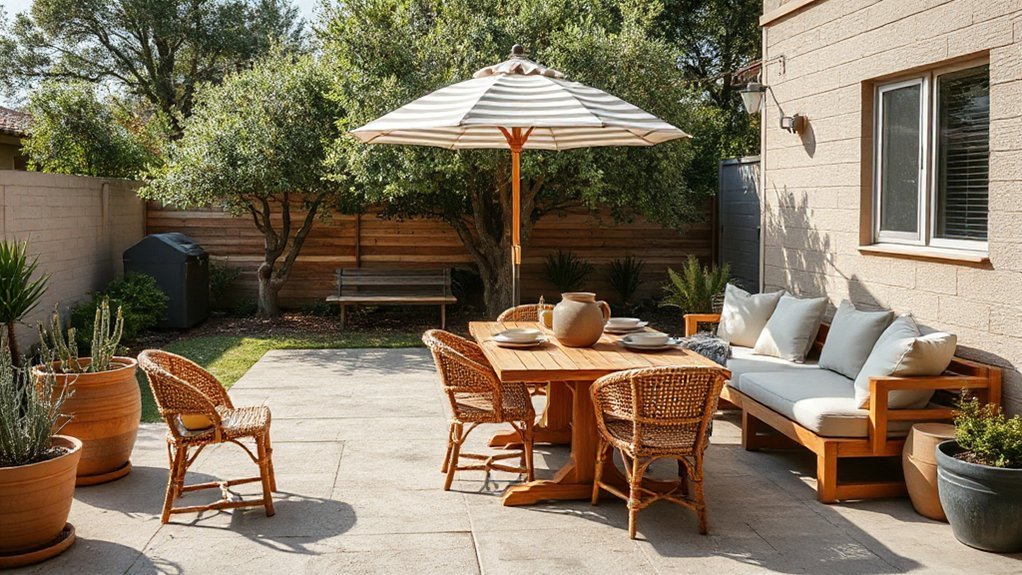
Because you’ll use your patio in different ways across the year, pick seating that clearly covers two jobs—comfortable dining and proper lounging—rather than trying to make one set do everything.
Start with outdoor furniture sized to your paving: allow about 90cm behind dining chairs for pull-out space, and keep a clear route to doors.
For UK conditions, favour powder-coated aluminium or treated timber, plus quick-dry cushions you can stash easily.
- Dining set: choose chairs with upright backs and arms that tuck under the table; a 70–75cm table height suits most.
- Lounging zone: use a low sofa or corner set with supportive seat depth (50–60cm).
- Seating arrangements: add one movable chair or bench to flex for guests without blocking circulation.
Add Patio Shade and Privacy: Keep the Breeze
While you want shade and privacy on a UK patio, you shouldn’t block the airflow that helps keep the space comfortable and dries surfaces after rain. Pick solutions that filter sun and views, not the prevailing breeze.
Use Shade sails on stainless fixings, angled to shed water and leave open edges for cross-ventilation. Position them to cover dining spots at midday, then stop short of walls or fences so air can move.
For privacy, hang Outdoor curtains on a wire or ceiling track under a pergola; choose lightweight, quick-dry fabric and tiebacks so you can pull them aside when it’s breezy.
Add slatted screens or trellis with climbers on the neighbour-facing side, keeping gaps between boards for airflow. Avoid solid panels that trap damp.
Plan Patio Lighting for Dinner and Downtime
You’ll get the most from your patio after dark if you set up layered lighting zones: task lights for the table, softer ambient light for seating, and a low-level guide along steps or paths.
Position fittings to avoid glare—aim light downwards, shield bulbs, and keep bright sources out of eye-line so dinner feels relaxed.
Add dimmers or smart controls so you can shift from eating to downtime without moving a single lamp.
Layered Lighting Zones
Once you start using your patio for both dinner and downtime, a single bright light won’t cover every moment. You’ll get better results by zoning light the way you zone seating: targeted where you work, softer where you linger, and subtle where you pass through.
Choose IP-rated fittings for UK weather, keep cabling tidy, and plan switching so you can change scenes quickly, even with task automation.
- Dining zone: hang a pendant or string lights above the table, with a separate switch for mealtime.
- Lounge zone: add warm wall lights or low-level lanterns near chairs to keep conversation comfortable.
- Route zone: fit discreet step, post, or decking-edge lights for safe trips to the back door and bins.
Tie finishes to your outdoor decor.
Glare-Free Ambiance Control
Because harsh points of light can ruin both a relaxed drink and a meal, plan glare control into your patio lighting from the start: choose shielded, downward-facing fittings, position them outside seated eye-lines, and use warm, dimmable lamps (around 2700K) so you can soften the scene without losing usable light.
Add a low-level ambient light layer with bollards or step lights to guide movement without dazzling guests. If you face west, anticipate solar glare at dinner; fit a retractable awning, sail, or exterior blind to cut brightness before you reach for brighter lamps.
Keep task lighting tight: aim a slim wall light at the BBQ or serving shelf, not across the table. Use timers and PIRs sparingly so light doesn’t snap on mid-conversation.
Frequently Asked Questions
How Much Does an Everyday-Living Patio Typically Cost to Build?
In the UK, you’ll typically pay £3,000–£12,000 to build an everyday-living patio, depending on paving and groundwork. Add Outdoor furniture and Lighting options, and you’ll often spend another £500–£3,000 total.
Do I Need a Permit to Remodel or Expand My Patio?
You might need a permit, depending on Permit requirements and local regulations. In the UK, check planning permission and building regs if you expand size, alter drainage, raise levels, or add structures; ask your council.
What’s the Best Way to Manage Drainage and Prevent Puddles?
Around 70% of UK homes face surface-water risk, so you’ll manage drainage best by giving your patio a 1:80 fall, adding channel drains to a soakaway. These Drainage solutions boost Puddle prevention.
How Can I Keep Mosquitoes and Pests Away Without Harsh Chemicals?
You’ll keep mosquitoes and pests away by removing standing water, using Natural repellents like citronella, lemon eucalyptus, or lavender, and fitting Pest proof screens to doors. Add fans, seal gaps, and tidy bins regularly.
What Maintenance Routine Keeps a Patio Looking New Year-Round?
Like winding a cassette, you’ll keep it fresh year-round: sweep weekly, wash slabs monthly, reseal yearly. Do Furniture upkeep quarterly, cover cushions. Do Plant maintenance: trim, weed, feed, clear gutters, check drainage.
Conclusion
When you design your patio for everyday living, you’re really designing your routine. Set clear zones, keep walkways uncluttered, and pick paving that grips in rain and feels kind underfoot. Choose seating that works for both a quick brew and a proper dinner, then add shade and privacy without blocking the breeze. Light it for meals and late chats. Plan it once, enjoy it daily—day after day.