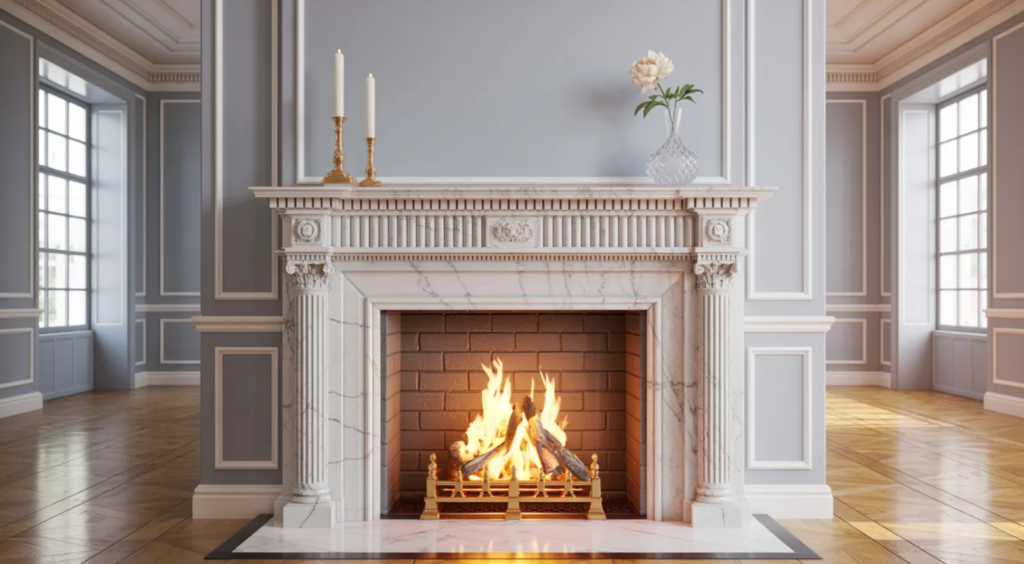
What exactly is the appeal of the character of Georgian Fireplaces when refurbishing a house? You’re probably thinking a fireplace is just a fireplace, right? Well, Georgian examples tell a much richer story about status and design evolution. You’ll find these aren’t just holes in the wall; they’re architectural statements, reflecting the era’s sophisticated taste and rigid social structures. Every detail, from the mantel to the grate, was chosen with purpose.
What’s the deal with all that perfect symmetry?
You’ve probably noticed it – that almost unnerving sense of balance in Georgian fireplaces. Every element seems to mirror another, creating a visual calm that’s truly captivating. Why were they so obsessed with this perfect reflection, you ask? It’s more than just aesthetics; it was a reflection of their world.
Why they were actually obsessed with balance
This isn’t just about looking good; it’s about philosophy. Georgians believed in order and reason, and their architecture reflected that ideal. You’ll find this harmonious balance calming, a visual representation of a well-ordered society and mind.
The secret to those classic proportions
Discovering the magic behind those perfect proportions is simple. You’ll find the golden ratio, a mathematical constant, often at play. This ancient principle, applied to the fireplace’s width, height, and individual elements, creates that undeniable visual harmony you admire.
It’s not some mystical secret; it’s a careful application of mathematical principles that have fascinated artists and architects for centuries. When you see a Georgian fireplace, you’re looking at a design where every part relates harmonically to the whole, making it inherently pleasing to your eye. They weren’t just guessing; they were calculating, creating a timeless beauty you can still appreciate today.
The Character Of Georgian Fireplaces
Honestly, the materials they used were just next-level
You’ve got to appreciate the sheer quality of materials Georgians chose for their fireplaces. They weren’t messing around with anything less than the best, shaping these pieces into enduring statements of style and substance. It really shows, doesn’t it?
Marble vs. wood: what’s the real winner?
Choosing between marble and wood was a big decision back then. Each material brought its own distinct feel and durability. Marble offered opulence; wood, a warm, inviting touch. Which one do you think truly stood the test of time better?
My take on all that hand-carved detail
Just look at the intricate hand-carved details on some of these surrounds. They’re not just decorations; they’re narratives etched in stone or wood. Every swirl, every leaf, tells a story about the artisan’s skill and the era’s aesthetic.
These carvings often reflect classical motifs, you know, the stuff inspired by ancient Greece and Rome. Think acanthus leaves, fluting, or delicate rosettes – all meticulously rendered. It wasn’t just about making something pretty; it was a display of wealth, taste, and a deep appreciation for craftsmanship. Imagine the hours spent, the steady hand required, to create such lasting beauty. These weren’t mass-produced; each piece was a unique work of art, a testament to individual talent.
The Character Of Georgian Fireplaces
It wasn’t just for looks, seriously
You might think those grand Georgian fireplaces were all about showing off, right? Well, you’d be missing a big piece of the puzzle. These weren’t just decorative elements; they were hard-working machines, the heart of any Georgian home. They kept families from freezing, cooked meals, and even provided light. Pretty imperative, wouldn’t you say?
How they actually kept the house warm
Imagine a chilly Georgian evening – you’d gather ’round the hearth, feeling the radiant heat. Fireplaces, with their deep recesses and often decorated firebacks, reflected warmth into the room. Chimneys drew smoke up and out, creating a natural draft that pulled fresh air in, circulating warmth throughout the space. It wasn’t perfect, but it sure beat shivering.
The shift from wood to coal: the real deal
Ever wonder why Georgian fireplaces have those narrower grates? That’s your clue right there. The move from burning large logs to compact, more efficient coal dramatically changed how fireplaces were designed and used. It was a game-changer for heating efficiency and even altered the social dynamics of the home.
Picture this: hauling enormous logs into the house was a back-breaking chore, often requiring multiple servants. With coal, you had a more concentrated fuel source, easier to store and manage. This shift wasn’t just about convenience; it was an economic revolution, making heating more accessible for a wider range of Georgian households. Plus, coal burned longer and hotter, meaning fewer trips to stoke the fire, giving you more consistent warmth through the night. It also led to those distinctive cast-iron grates and smaller openings you see in later Georgian designs, perfectly engineered for burning coal efficiently.
Is there a difference between London and country styles?
You’re probably wondering if Georgian fireplaces in the city differed from those in rural settings. Generally, you’ll find a subtle but distinct split in design preferences, reflecting the lifestyles and available resources of each area. It’s less about a hard-and-fast rule and more about prevailing trends.
City chic vs. rural charm
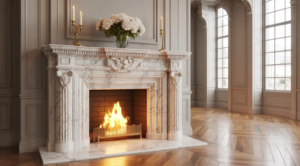
London fireplaces often boasted more refined imported marble and intricate carvings, reflecting cosmopolitan tastes and wealth. You’d see a certain sophisticated flair, a desire to impress with exotic materials and detailed craftsmanship.
What’s happening with local stone?
Country homes, however, frequently utilized readily available local stone, like limestone or sandstone, giving their fireplaces a more organic, grounded feel. These designs were often simpler, emphasizing practicality and the beauty of natural materials over ostentatious display.
Think about it – transporting heavy, finished marble from Italy to a remote country estate wasn’t always feasible, or cost-effective. So, local quarries became the primary source for materials, which naturally led to regional variations in style. You’d see different types of stone, each with its unique color and texture, influencing the overall aesthetic. It really gave each region its own distinct character, didn’t it?
Thinking of restoring one? Here’s the truth
You’ve found a hidden gem, perhaps under layers of plaster, and now you’re dreaming of bringing it back to life. It’s an exciting prospect, isn’t it? But before you grab the hammer and chisel, you need to understand the commitment involved, because restoring a Georgian fireplace isn’t just a weekend DIY project.
Don’t mess up the original character
Imagine peeling back layers of paint only to discover exquisite details. You wouldn’t want to sand away those delicate carvings, would you? Preserve the original character; it’s what makes these pieces so special.
Making an old fireplace work in a modern room
My friend Sarah worried her ornate Georgian mantel would clash with her minimalist living room. She was wrong. You can absolutely make a period piece shine in a contemporary setting, creating a stunning focal point.
Consider the interplay of old and new. A clean-lined, modern room provides a fantastic backdrop, allowing the intricate details of your Georgian fireplace to truly stand out. Think about contrasting textures – the smooth lines of modern furniture against the rich, carved wood or marble of the mantel. You could even paint the surround in a bold, contemporary color to bridge the gap, or keep it classic and let its history speak for itself. It’s about creating a conversation between eras, not a competition, and you’ll be amazed at the sophisticated charm it adds.
To wrap up
On the whole, you’ve seen how Georgian fireplaces weren’t just for warmth; they were statements. You can appreciate the journey from simple to ornate, how each mantelpiece tells a story of its era. These aren’t just old architectural details, are they? They’re reflections of a whole society’s taste and craftsmanship, something you can truly admire.