
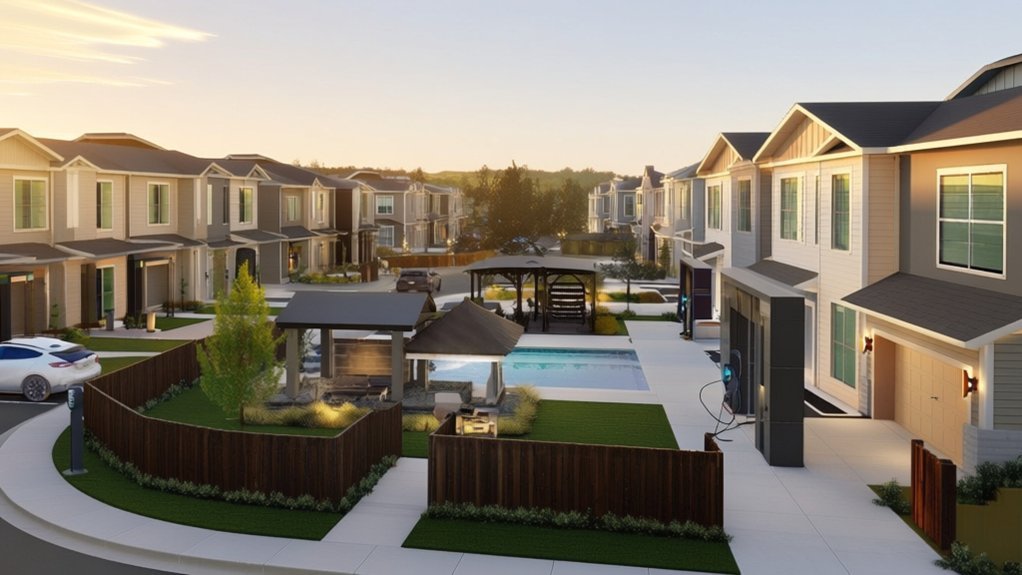
You build high-yield BTR by targeting submarkets where unlevered cap rates and levered IRRs clear your hurdle—job diversity, tight SFR inventory, rent-to-income cushion, limited new supply, and net in-migration. You model monthly rent roll with concessions, renewals, and loss-to-lease, then layer fees and stress-test occupancy, bad debt, taxes, and insurance. You standardize plans and tier finishes—WFH zones, smart storage, EV-ready garages—to earn premiums, then run dynamic pricing to cut churn. Next, you’ll see how sensitivities and exits drive value.
Key Takeaways
- Select submarkets with job diversity, tight for-sale inventory, positive migration, and rent-to-income buffers to sustain high yields.
- Underwrite for unlevered cap rate and levered IRR above hurdles, stress-testing rates, absorption, concessions, taxes, and construction costs.
- Standardize home plans and durable finishes, adding rent-premium features like EV-ready garages, smart storage, and package-ready entries.
- Build amenities that boost retention without heavy fixed costs, such as cowork space, dog runs, trails, and efficient package flow.
- Operate with dynamic pricing and lifecycle metrics to minimize churn, protect occupancy, and stabilize NOI for stronger exit valuation.
Define High-Yield BTR Communities (Metrics First)
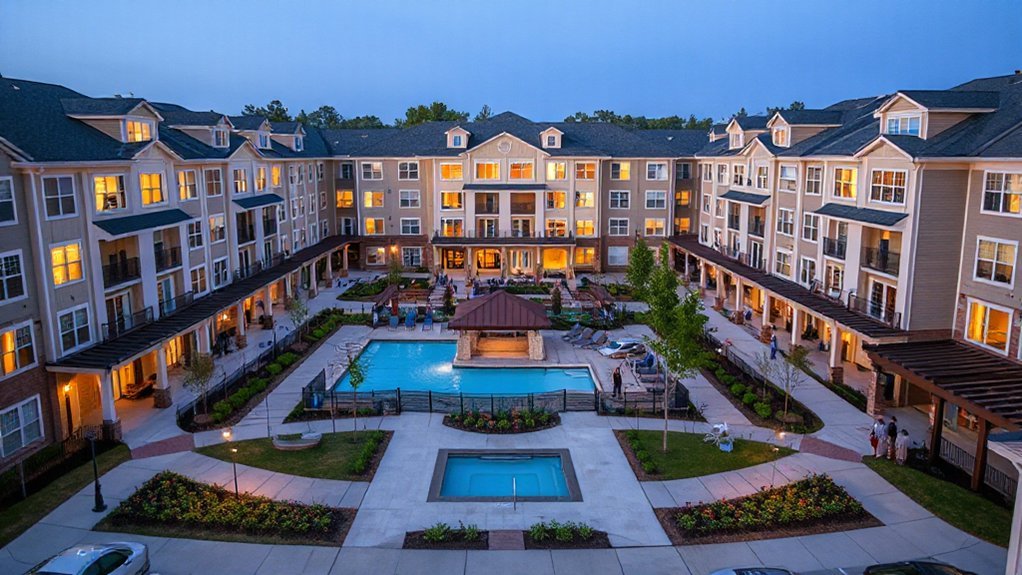
While “high-yield” can sound like a branding claim, in BTR it’s a measurable performance profile: you’re targeting communities where unlevered yield (cap rate) and levered IRR clear your hurdle because NOI per door stays durable under stress.
You define “high-yield” by underwriting to stabilized occupancy, renewal velocity, and loss-to-lease compression, then validating against comp-set rent elasticity and absorption.
You prioritize submarkets with job diversity, tight single-family resale inventory, and rent-to-income buffers that limit churn.
On the design side, you spec Community amenities that lift retention without bloating fixed cost: right-sized club, package flow, WFH nooks, dog runs.
You engineer resident engagement via programmable common space and digital touchpoints, because renewal lift is yield.
You track days vacant, turn-time, and concession burn.
Model BTR Community Cash Flow (Rent, Fees, OPEX)
You’ll model BTR cash flow by mapping every revenue line—base rent, premium lot/unit upsells, pet and parking fees, and ancillary services—then stress-testing occupancy, renewal, and bad-debt assumptions.
You’ll build a bottoms-up OPEX stack (turns, maintenance, landscaping, utilities, insurance, taxes, and property management) tied to unit count, site design, and service-level standards.
With those drivers, you’ll run monthly cash-on-cash and DSCR sensitivities to see where pricing power or cost leakage moves NOI.
Revenue Streams Forecasting
How do you translate a BTR site plan into a bankable cash-flow model? You start with unit mix and rentable SF, then map each product to market rent comps, lease-up velocity, and stabilized occupancy.
Build a monthly rent roll by bedroom type, applying concessions, renewal lifts, and loss-to-lease to mirror real absorption.
Next, layer ancillary income tied to design intent: premiums for corner lots, fenced yards, garages, and smart-home packages. Underwrite fees from pet rent, parking, storage, and utility reimbursements, and quantify monetizable Community amenities (clubhouse rentals, package lockers).
Finally, forecast tenant engagement-driven revenues—events sponsorships, bundled services, and referral credits—so your topline reflects both placemaking and pricing power. Reconcile totals to per-door and per-SF benchmarks, then stress-test downside scenarios.
Operating Expense Modeling
Where cash-flow models win or die is OPEX: you’ve got to convert the site plan into line-item, per-door and per-SF run-rate costs that track the community’s design and operating strategy.
Start with controllables: payroll, turns, landscaping, pool, trash, security, and smart-home SaaS.
Map amenity intensity and hardscape to labor hours, then apply burdened wage rates and vendor unit pricing.
Underwrite R&M by component—HVAC, roof, irrigation—using useful-life curves and reserve pacing tied to maintenance scheduling.
Model utilities with submeter penetration, leakage assumptions, and seasonal load profiles.
Don’t bury tenant engagement tools in “marketing”; treat them as retention CAPEX-lite that reduces make-ready days and bad debt.
Benchmark vs comps, then stress-test inflation and scale.
Pick BTR Community Markets That Grow Rents
While site design and product mix set the baseline, rent growth in build-to-rent (BTR) communities is fundamentally a market-selection problem: target metros with sustained job formation, positive net in-migration, constrained for-sale affordability, and a tight SFR/Multifamily supply pipeline so your pro forma leverages real pricing power.
You underwrite rent growth by stress-testing demographic trends, submarket comps, and absorption, then triangulating with zoning friction and entitlement velocity. If supply’s loose, your “Community amenities” won’t save NOI.
Prioritize corridors where wage growth outpaces rent yet rent-to-income stays supportable, and where institutional capital hasn’t fully compressed cap rates.
- Track 5-year rent CAGR vs payroll growth
- Map permit cadence, starts, and deliveries
- Benchmark SFR vacancy and MF lease-up speed
- Underwrite school-district pull and commute sheds
Design BTR Homes That Earn Rent Premiums
Because rent premiums come from measurable utility—not brochure gloss—you’ve gotta design BTR homes around the features that consistently convert to higher effective rent and faster absorption: privacy (no shared walls where possible), smart storage, dedicated work-from-home zones, and indoor–outdoor flow that “lives” bigger at the same GLA.
Then you value-engineer the spec: 9′ ceilings, oversized windows, resilient LVP, quartz-look tops, and lighting packages that hit Design aesthetics without blowing capex.
Standardize plans to cut change orders, but tier finish palettes to support rent stratification. Add sound ratings (STC/IIC targets), EV-ready garages, and package-ready entries as rent drivers.
Finally, align community amenities with the unit: dog wash, fitness studio, cowork lounge, and trail access that extend usable space and justify premiums.
Operate a BTR Community to Cut Vacancy and Churn

If you want lower vacancy and churn in a BTR community, you’ve gotta run operations like a retention engine: price to market daily, compress lead-to-lease with fast touring and approval SLAs, and deliver “day-one livability” (clean punch, keys, Wi‑Fi, smart lock onboarding) so move-ins don’t turn into early move-outs.
Then manage the resident lifecycle with telemetry, not gut feel: track tour-to-lease, work-order lag, NPS, and renewal intent, and fix friction at the source. Treat Community amenities as product—programmable access, spotless fitness, pet run, package room—so you can sell experience, not square footage.
Build resident engagement into ops cadence and comms.
- Dynamic pricing + loss-to-lease audits
- 24-hour maintenance completion target
- Renewal offers 90–120 days out
- Event + app push notification calendar
Underwrite a BTR Deal: Returns, Risks, Exits
You’ll underwrite the BTR deal by hard-coding return assumptions—rent comp set, lease-up curve, operating margin, and capex—so your IRR and yield-on-cost map cleanly to the site plan and unit mix.
You’ll stress-test the model against risk drivers like construction cost creep, rate shocks, absorption slippage, concessions, and property-tax reassessments to see how DSCR and equity multiple compress.
You’ll frame exits with scenario-based valuation—stabilized cap, merchant-build sale, portfolio aggregation, or refi—then size timing and pricing to your buyer universe and liquidity window.
Return Assumptions Modeling
How do you pressure-test a BTR deal’s return profile without letting optimism creep into the pro forma? You start with a clean, auditable rent curve and back into value from unit-level comps, not sponsor narratives. Then you hardwire lease-up, renewal, and opex logic to design decisions that move tenant satisfaction—especially community amenities that reduce churn and protect effective rents.
Keep your model modular: assumptions tab, calc engine, and outputs you can reconcile to market data and lender sizing.
- Underwrite achieved rent, concessions, and loss-to-lease separately
- Model renewal premiums and turnover costs tied to amenity utilization
- Build expense ratios from per-door benchmarks, then size reserves
- Translate NOI to returns via cap-rate, debt constants, and promote tiers
Risk Drivers Stress Testing
A clean, auditable pro forma only matters if it breaks under the same shocks the market will throw at it, so stress-test the BTR return stack by isolating the few variables that actually drive variance in NOI and exit value.
Run a two-way sensitivity on rent growth vs. stabilized occupancy, then layer delinquency and concessions to capture leasing friction.
Shock opex with insurance, taxes, and repairs at 10–25% bands, and model turnover spikes tied to Neighborhood demographics (household formation, income volatility, school draw).
Stress capex timing by extending lease-up and pushing punch-list spend, especially where construction quality is unproven or warranty coverage is thin.
Finally, test debt: rate caps, DSCR covenants, and refi proceeds under higher SOFR and tighter spreads, so you see when cash flow turns negative.
Exit Strategies Valuation
Where does your BTR deal actually crystallize value—merchant-build exit, permanent hold, or recap? You underwrite exits by triangulating cap-rate expansion, rent-growth durability, and liquidity depth at takeout. Model terminal value off forward NOI, not year-one pro forma, then haircut for Market saturation and demographic shifts that can compress absorption and push concessions. Keep design specs financeable: durable finishes, standardized plans, and amenity packages that underwrite to institutional buyer preferences.
- Run a 50–150 bps cap-rate grid versus comps and Treasury beta
- Stress exit timing with lease-up velocity and renewal curves
- Price a recap: cash-out refi at DSCR and debt yield floors
- Quantify buyer pool: SFR aggregators, core funds, and local REIT bids
Frequently Asked Questions
How Do BTR Communities Differ Legally From Multifamily Apartments?
You’ll see BTR treated as single-family rental or planned-unit development under zoning restrictions, while multifamily falls under apartment codes. You’ll structure separate parceling, HOA/CC&Rs, and community design standards, but you’ll lease units similarly.
What Insurance Coverage Is Unique to a Single-Family Rental Community?
You’ll need master property coverage per scattered homes, plus Landscaping liability for common greenways and HOA-style amenities, and stricter Tenant insurance requirements (renters liability, pet endorsements). Add inland marine for maintenance fleets, irrigation, signage.
How Do HOAS and Cc&Rs Affect BTR Operations and Resident Rules?
Ironically, you gain “freedom” by following HOA governance: CC&Rs hardwire design standards, parking, pets, noise, and use-rights into your ops playbook. You’ll enforce resident compliance via notices, fines, and architectural controls.
What Financing Options Exist for Stabilized BTR Portfolios Versus Single Assets?
You’ll finance stabilized portfolios via CMBS, agency executions, or portfolio credit facilities with DSCR-based underwriting tied to Market demand; single assets fit construction-to-perm, bridge-to-agency, or bank mini-perms, aligning capital stacks with Investment strategies.
How Are Property Taxes Assessed for BTR Homes Versus Apartments?
You’ll see it hinges on classification: homes get parcel-by-parcel Property tax valuation, often sales-comps; apartments get income-cap, whole-project valuation. Then suspense—Tax rate variations hit: residential millage, multifamily classes, abatements, jurisdictional reassess cycles.
Conclusion
When you chase high-yield BTR, it’s rarely one big win—it’s coincidence compounding: rent-growth markets aligning with fee income, a floorplan tweak lifting comps, smart OPEX controls preserving NOI, and a renewal touchpoint cutting churn. You don’t “get lucky”; you engineer yield—tracking DSCR, debt yield, vacancy, and capex-to-rent like dashboards. And when rates wobble, your design premiums and operations moat keep cash flow steady, exits flexible, and returns underwritten—not hoped for.