
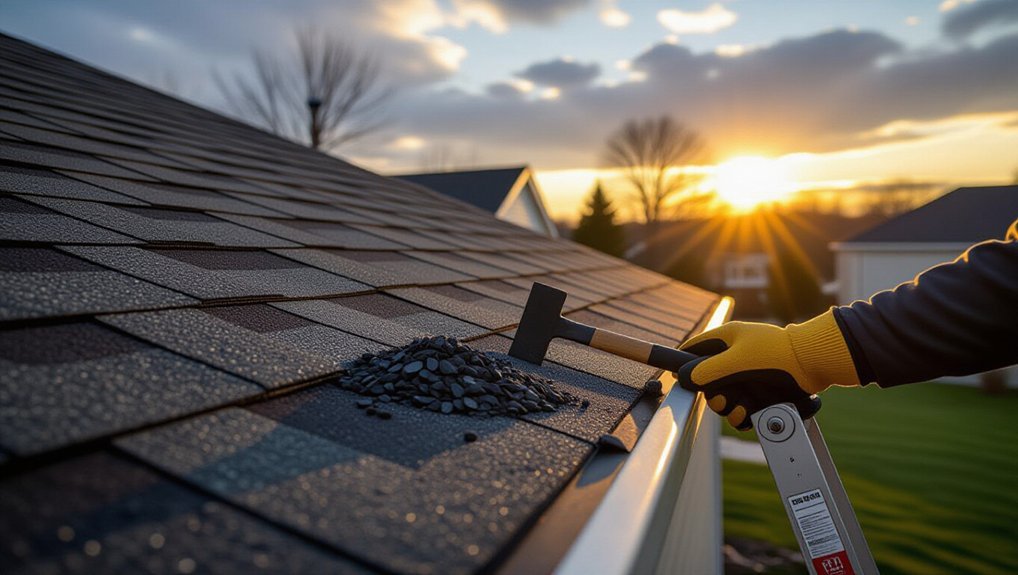
Act fast when you spot slipped or cracked tiles, lifted flashing, hairline sealant splits, blocked gutters, or brown ceiling stains, because small defects quickly soak insulation and start timber rot. Treat active leaks, ceiling bulges, and storm damage as same-day jobs: isolate electrics, catch drips, and use a weighted tarp until a roofer attends. Trace leaks from the loft along rafters, then repair shingles, leadwork, and drainage on dry 5–20°C days. Keep going to see what to fix next and when.
Key Takeaways
- Act immediately if you see active leaks, ceiling bulges, or water tracking along rafters to prevent structural damage and mold.
- Repair slipped or cracked tiles, missing ridge caps, or lifted flashing as soon as spotted to stop wind-driven rain ingress.
- Clear gutters and valleys twice yearly and after storms to prevent pooling water, felt breakdown, and overflow into walls.
- Reseal or replace cracked sealants, pipe boots, and deteriorated leadwork after frost or strong sun to avoid slow, hidden leaks.
- Get a professional survey if you notice sagging roof lines, visible daylight in the loft, or persistent damp insulation.
Roof Repair Warning Signs to Watch
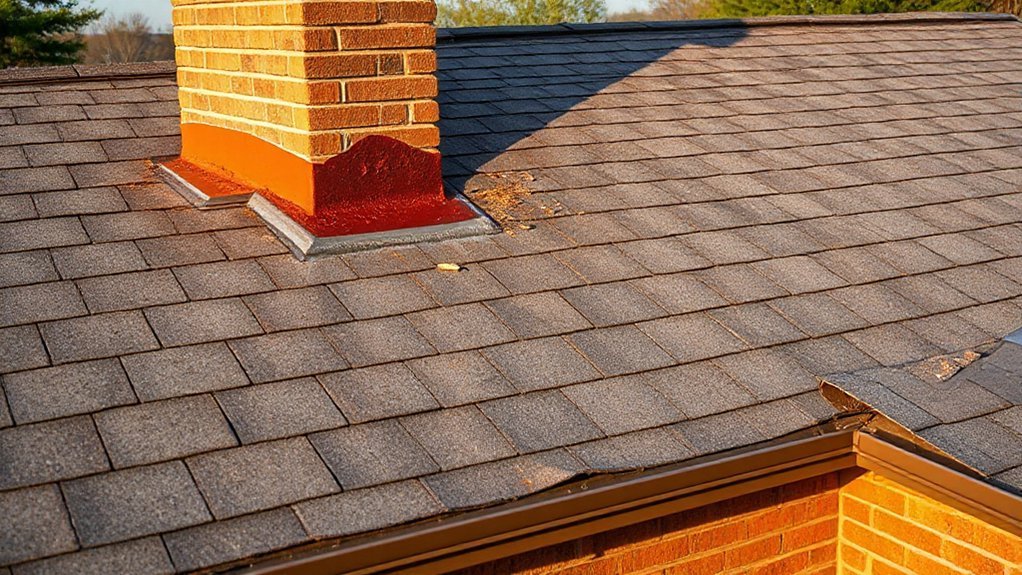
If you spot early roof problems and act quickly, you can often avoid more disruptive (and expensive) repairs later. Check for slipped or cracked tiles, missing ridge caps, and lifted flashing around chimneys and abutments, as UK wind-driven rain exploits small gaps.
Inside, look for brown ceiling stains, peeling paint, and damp loft insulation, which often signal slow ingress rather than a one-off event.
Inspect gutters and valleys for roof debris, especially after autumn leaf fall; pooling water and silt accelerate felt breakdown and rot in timber battens.
Watch the weather impact: repeated freeze–thaw can split mortar, and prolonged UV can embrittle bitumen and leadwork.
If you see daylight in the loft or sagging lines at the eaves, book a survey promptly.
Emergency Roof Repairs: What Can’t Wait
Although some defects can sit on a maintenance list, any opening that lets wind-driven rain reach the roof deck or electrics needs same-day action. If you see active leaks, water tracking along rafters, or a ceiling bulge, isolate power to affected circuits and contain water immediately.
Treat storm-damaged flashing, lifted ridge capping, cracked leadwork around chimneys, and punctures from fallen branches as urgent: the Weather impact in UK gusts can turn a small breach into saturated insulation and rotten timbers overnight. Don’t wait if you’ve got slipped tiles exposing underlay, or if daylight shows through the loft.
Fit a temporary tarp, weigh it down without piercing the Roof material, and call a competent roofer for emergency make-safe and inspection before the next rain band passes.
Missing Shingles: Fast Roof Repair Options
If you’ve spotted missing shingles, you’re likely dealing with wind uplift, failed fixings, or ageing felt and adhesive—common after UK storms.
You can reduce water ingress fast by taping down a temporary cover or fitting a secured tarpaulin until conditions are safe.
You’ll then need a roofer to replace the slipped or torn shingles, check the underlay and battens, and restore the correct overlaps and fixings to stop it happening again.
Causes Of Missing Shingles
When shingles go missing, the root cause usually comes down to wind uplift, failed fixings, or aged materials rather than “bad luck”. In UK storms, gusts get under lifted leading edges, especially where courses weren’t properly sealed or nails sit too high.
Repeated wetting and drying accelerates shingle deterioration, so tabs crack and tear away under load. You’ll also lose shingles where the roof deck flexes, allowing fasteners to back out over time, or where cheap galvanised nails have corroded.
Poor detailing matters: inadequate starter strips, exposed nail heads, and missing drip edge at eaves increase wind damage. If you’ve had recent work, check for mismatched packs or cold-weather installation that prevented bonding.
Emergency Temporary Fixes
After a shingle blows off, you need to stop water ingress fast and keep wind from lifting the surrounding courses until a proper repair can be booked. First, work safely: don’t climb in high winds, and use a roof ladder and fall restraint.
From ground level, check for storm damage and loose tabs nearby. If you can access the area, lift adjacent shingles gently and slide in a spare or matching slate-sized patch of bitumen felt as a slip sheet. Seal edges with cold-applied bitumen mastic and re-bed the lifted tabs.
Alternatively, fix a temporary tarpaulin: run it over the ridge, batten it down, and weight the lower edge. These weatherproofing techniques limit leaks without causing further breakage.
Professional Repair Options
Although a temporary patch can buy you time, a professional roofer will restore the weatherproof course properly by replacing the missing shingle, checking the surrounding tabs for wind-lift, and reinstating fixings to the correct UK spec.
You’ll typically get a targeted Roof inspection first: they’ll trace the tear-out path, check nail pops, underlay condition, and adjacent flashings, then confirm whether it’s an isolated loss or a pattern issue.
For speed, they’ll lift neighbouring tabs, remove old fasteners, fit a like-for-like shingle, and seal with compatible bitumen adhesive where required.
Material selection matters in the UK: match profile, weight, and manufacturer to maintain wind rating and colour consistency.
If the deck’s soft or felt’s split, expect a localised strip-and-refit.
Leaky Roof Repairs: Find the Source
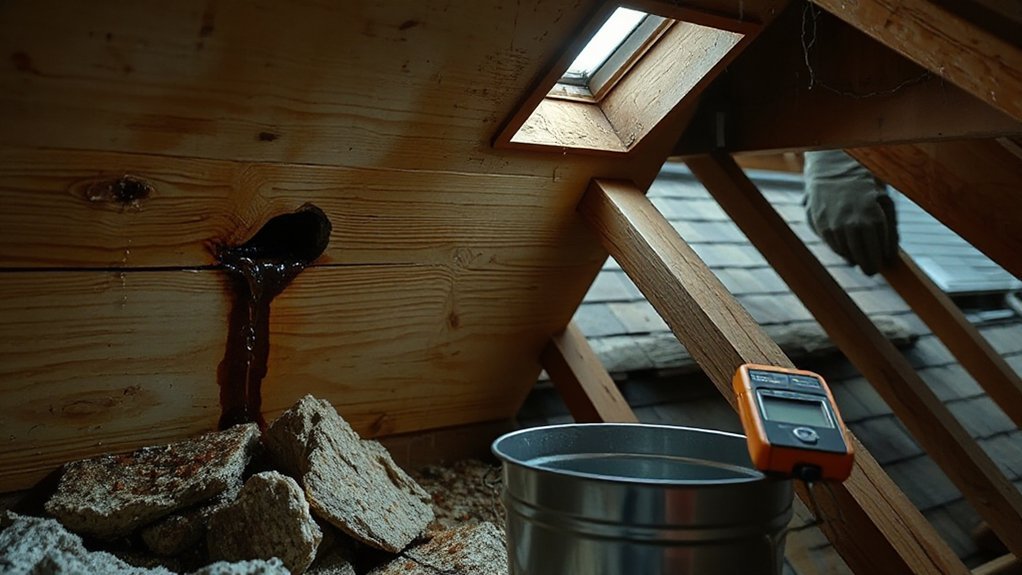
Because a roof leak rarely sits directly above the damp patch you can see, you’ll fix it faster by tracing the water’s route back to its entry point. Start in the loft with a torch and check insulation for wet trails, then follow rafters uphill to the first staining.
Note your roof material: cracked slates, missing tiles, or lifted felt underlay all shed water differently, so the drip point can shift.
- Inspect after rain, not during storms, and photograph suspect areas for comparison.
- Look for daylight at laps, nail lines, and tile edges; mark spots with chalk.
- Check valleys for debris dams, then run a hose upslope in short sections.
- Factor Weather impact: wind-driven rain can enter upslope of the damage.
Roof Flashing Repairs (Chimneys, Vents)
You’ll often spot flashing trouble first as damp patches around chimney breasts, staining on rafters, or lifted lead at the abutment after wind-driven rain.
For chimneys, you’ll typically repair by resetting or replacing stepped and apron lead, re-cutting the chase, and re-pointing with a suitable mortar. Renewing any failed soakers is also recommended.
Vent flashing needs a clean, dry reseal or replacement as soon as cracks, splits, or UV-brittle collars appear—don’t wait for the next storm to prove it’s leaking.
Common Flashing Failure Signs
When roof flashing starts to fail around chimneys, vents, or roof-to-wall junctions, it rarely does so quietly—small gaps and splits can route rain straight into the roof build-up. You’ll often spot issues before you see a ceiling stain if you know what to look for and act early.
- Hairline cracking or shrinkage at laps, showing poor Sealant application or UV breakdown.
- Lifting edges, creased lead, or distorted aluminium, reducing Flashing durability in wind uplift.
- Rusting, pinholes, or white corrosion around fixings, especially on older galvanised sections.
- Damp mortar, salt deposits, or darkened felt at abutments, indicating water tracking behind the flashing.
Check after storms and during autumn leaf fall, when blockages increase backflow risk.
Chimney Flashing Repair Methods
Spotting cracking sealant, lifted edges, or corrosion around a stack tells you the chimney flashing’s no longer diverting water reliably. Start by clearing debris and checking mortar joints; failed pointing often mimics flashing leaks, so address it as part of Chimney maintenance.
For minor gaps, rake out loose mastic and apply a high-quality lead-compatible sealant, tooling it tight under the chase. If the lead is split or short, you’ll need sectional replacement: lift tiles, remove damaged soakers or step flashing, and fit new Code 4 or 5 lead with correct laps.
Re-cut reglets in sound mortar, then wedge and point with lead sealant, not cement. Finish by verifying falls and dressing lead to the roof profile; good flashing installation prevents wind-driven ingress.
Vent Flashing Reseal Timing
Although vent flashings look simple, their sealants don’t fail gradually—you often go from watertight to dripping after a cold snap or a spell of wind-driven rain, so timing the reseal matters.
Plan a reseal when your annual flashing inspection shows hairline splits, shrinkage, or lifted edges around the pipe boot, especially on south-facing slopes where UV bakes the vent sealant. Don’t wait for stains: by then, felt and battens may already be damp.
Aim for a dry, mild day (about 5–20°C) so the sealant cures properly in UK conditions.
Prioritise these triggers:
- Sealant cracks after frost cycles.
- Gaps at lead or EPDM interfaces.
- Debris trapping water behind the upstand.
- Any movement from loose fixings or tiles.
Gutter Fixes That Prevent Roof Leaks
If your gutters don’t move rainwater away fast enough, runoff backs up under the first course of tiles and soaks the eaves, which can quickly turn into a roof leak.
Start with Gutter maintenance: clear moss, silt, and leaves twice yearly, and after heavy winds. Check the fall—about 1:600 towards the outlet—so water doesn’t pond. Reseal leaking joints with external-grade gutter sealant, and replace cracked unions or stop-ends. Fix loose brackets and set spacing to suit UK rainfall loads, especially on long runs.
For Downspout cleaning, flush with a hose and clear the shoe and gully; blockages cause overflow at corners. Fit a leaf guard if you’ve got nearby trees. Inspect during rain to confirm proper flow.
Attic Ventilation Fixes to Stop Moisture
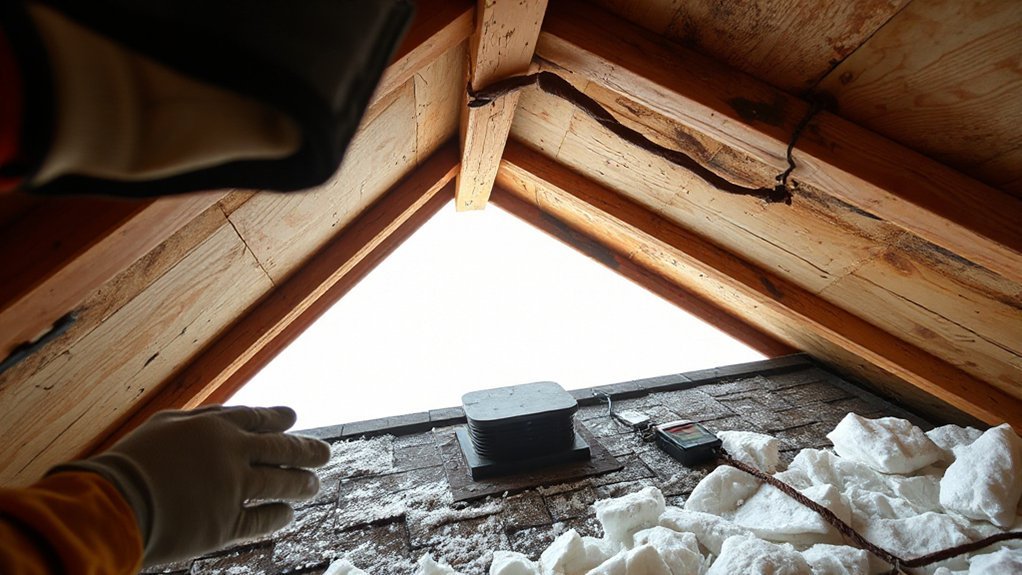
Gutters stop external water getting in, but poor loft airflow lets internal moisture build up and mimic a leak with damp rafters, mould on sarking felt, and dripping nails on cold mornings. You’ll fix it fastest by improving ventilation and controlling vapour at source.
- Clear soffit vents and fit rafter trays so Attic insulation can’t block the eaves path.
- Add continuous ridge ventilation or tile vents to balance low and high airflow; don’t rely on cracked slates.
- Check bathroom and cooker hood ducts terminate outside, sealed, insulated, and with backdraft shutters.
- Do a Roof deck assessment: look for condensation lines, cold bridges, and compressed insulation, then top up to UK regs depth.
Finally, keep the loft hatch draught-stripped and avoid drying clothes in the loft.
Sagging Roof Repairs and Wood Rot
When a roofline starts to dip or feels “spongy” underfoot, you’re usually looking at a structural issue—overloaded timbers, failed fixings, or rot in rafters, purlins, and wall plates from long-term leaks or condensation.
Don’t ignore roof sagging: it can spread load onto sound members and crack ceilings or brickwork.
Start by tracing moisture ingress. Lift a few tiles or slates, check underfelt, flashings, and valleys, and probe timber with an awl for wood decay.
You’ll often need to cut out softened sections and splice in treated structural-grade timber, then re-fix with galvanised straps, hangers, or coach screws.
If purlins bow, add strutting or sister rafters to restore line.
Finish by drying the void and improving ventilation.
When to Replace Your Roof (Not Repair)
Sagging timbers and wood rot often start as localised defects you can splice and strengthen, but there’s a point where patching stops making sense. If your roof’s structure or weathering layer is broadly compromised, replacement gives you compliance, performance, and a clean warranty baseline.
- You’ve got widespread felt failure, brittle tiles/slates, or multiple leaks across different slopes.
- The deck or rafters show repeated moisture damage, deflection, or inadequate fixings to UK wind uplift standards.
- You’re upgrading Roof insulation and can’t meet Part L targets without stripping back to the rafters.
- You’re planning solar panel integration and need sound battens, load paths, and predictable tile lifespans.
Replace before repairs turn into recurring call-outs and escalating internal damp.
Frequently Asked Questions
Will My Homeowners Insurance Cover Roof Repairs or Only Replacement?
Your homeowners insurance may cover roof repairs, not just replacement, if damage comes from an insured peril. You’ll face Coverage limitations, excess, and wear-and-tear exclusions. Document loss, notify promptly, and manage Insurance claims.
How Long Do Typical Roof Repairs Take From Start to Finish?
You’ll usually finish typical roof repairs in 1–3 days, even if you worry about disruption. Roof repair timelines vary with access, weather, and scope. Repair process stages include inspection, strip-out, fix, flashing, re-tile, seal, test.
What Permits or Inspections Are Required for Roof Repairs in My Area?
You’ll usually need no permit for like-for-like repairs, but structural changes often trigger building codes and the local permit process. Check your council’s Building Control; expect inspections for insulation, fire safety, scaffolding, and listed buildings.
Can I Stay in My Home During Major Roof Repair Work?
Yes—you can, but it’s like living under a drum. You’ll need interior safety controls: isolate loft access, protect electrics, manage dust. If waterproofing fails, arrange temporary accommodations. Your contractor should assess.
How Do I Choose a Reliable Roofing Contractor and Avoid Scams?
Choose a reliable roofer by checking Contractor licensing with your local council, verifying public liability insurance, and reviewing recent UK references. Get three written quotes, avoid cash-only deals, and insist on clear Roofing warranties and timelines.
Conclusion
Don’t wait for a “proper” dry weekend—water doesn’t. If you’ve spotted loose tiles, staining, or dripping, act now: a temporary patch or tarp buys you time, but only a proper repair stops capillary ingress and hidden rot. Picture rain tracking under felt, soaking rafters, and turning insulation to sludge above your ceiling. Book a competent UK roofer, get flashing and gutters checked, and ventilate the loft—small fixes today prevent a full re-roof tomorrow.