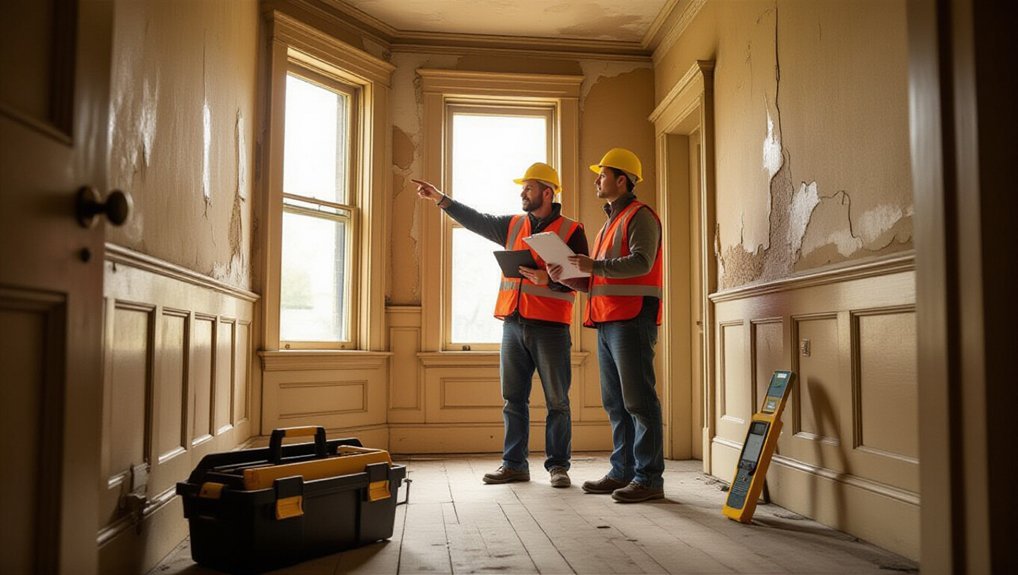
Wanting to plan how to prioritise repairs in older properties? Start with a 30‑minute room‑by‑room audit using a torch and phone, then log issues as “stop further damage”, “function”, or “aesthetic”. Fix anything that risks injury first (loose slates, unsafe stairs, cracked lintels), then stop water ingress by repairing roofs, chimneys, gutters, and drainage and clearing air bricks so the fabric can dry out. Next, tackle electrics and gas (EICR, Gas Safe checks), then services and finishes—you’ll see how to map this into phased jobs.
Key Takeaways
- Do a quick room-by-room audit, logging issues as “stop damage,” “function,” or “aesthetic,” with photos and likely trades.
- Prioritise stopping water ingress first: roof, chimneys, gutters, downpipes, drainage, and ventilation to dry fabric before finishes.
- Address safety and structural hazards early, using temporary propping if needed and a structural engineer for load-bearing or movement concerns.
- Make electrics and gas safe immediately: EICR, fuse board upgrades, Gas Safe checks, and fit CO alarms near bedrooms.
- Plan work in phases and by access/season, group scaffold tasks, keep 10–15% contingency, and complete plastering/joinery/decorating last.
Do a 30-Minute Older Property Repair Audit
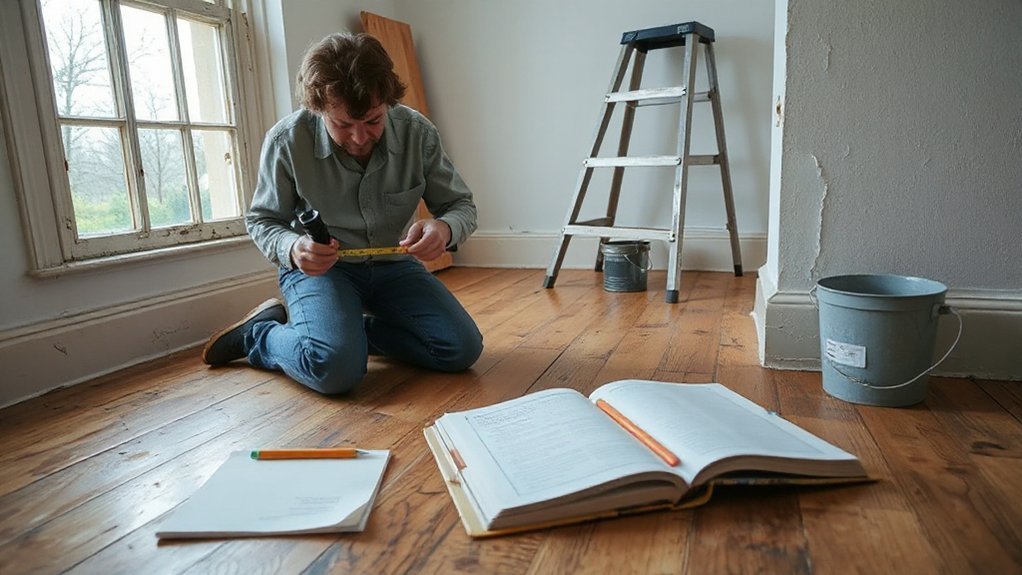
Before you spend a penny on an older property, take 30 minutes to do a quick repair audit that tells you what’s urgent, what’s merely annoying, and what can wait.
Grab a torch, phone, and notepad. Walk room by room and log issues in three columns: “Stop further damage”, “Function”, “Aesthetic”.
Check for damp tidemarks, blown plaster, musty smells, sticking sash windows, loose pointing, and roofline staining visible from ground level.
Photograph everything, then note location, size, and likely trade (roofer, plasterer, joiner).
For UK homes, flag anything in a conservation area or listed building: Historical preservation may require consent, lime mortar, or specialist joinery.
Finally, price quick wins for aesthetic upgrades, but only after you’ve mapped the basics and got at least two quotes.
Prioritise Older Property Repairs That Risk Injury
Next, you should prioritise any repair that could injure you or your visitors, starting with structural hazards like loose roof slates, cracked lintels, failing stair balustrades, and unstable chimney stacks.
Get electrical and gas risks checked and fixed promptly by a NICEIC-registered electrician and a Gas Safe engineer, especially if you’ve got older wiring, damaged sockets, or a suspect boiler.
Then tackle slip and trip dangers—repair uneven flags, secure loose floorboards and carpets, improve lighting on stairs, and fit handrails where they’re missing.
Address Structural Hazards
Where could someone get hurt in your home right now? Start with anything that could collapse or shift: bulging walls, sagging ceilings, loose bannisters, cracked lintels above doors and windows, or uneven floors that trip you up.
If you see fresh cracks (especially stair-step cracks in brickwork), sticking doors, or gaps around skirting, you may have issues with foundation stability.
Get a chartered structural engineer to carry out a load bearing assessment before you remove chimney breasts, widen openings, or alter loft spaces.
Shore up dangerous areas immediately with temporary propping, then schedule permanent repairs: replace rotten joists, strengthen floorboards, rebuild failing masonry, and secure stair parts.
Keep children and visitors away from cordoned-off rooms until works are signed off.
Fix Electrical And Gas
Although cosmetic jobs can wait, you should treat electrical and gas faults as urgent because they can cause fire, shock, carbon monoxide poisoning, or an explosion.
If your fuse board still uses rewireable fuses, book an NICEIC-registered electrician to test and upgrade it, and ask for an EICR to check earthing, bonding, and overloaded circuits for Electrical safety.
Replace cracked sockets, scorched switches, and DIY extensions, and don’t ignore tripping RCDs or flickering lights.
For gas, use only a Gas Safe engineer and insist any work follows Gas regulations, including tightness testing and ventilation checks.
Fit a BS EN 50291 CO alarm near bedrooms and service the boiler annually.
If you smell gas, call 0800 111 999.
Eliminate Slip And Trip
Before you tackle plaster, paint, or period details, deal with anything that could send you or a visitor sprawling. Start at entrances: lift loose slabs, re-bed wobbly steps, and level thresholds so doors don’t catch.
Inside, secure lifted floorboards, tack down frayed carpet edges, and replace cracked tiles. In kitchens, bathrooms, and porches, prioritise non slip flooring (or proper anti-slip treatments) and keep sealant sound to stop water tracking onto walkways.
Next, make stairs safe: repair uneven treads, add nosing strips, and improve lighting with bright LED bulbs and two-way switching. Sort handrail installation on at least one side (both is better), fixing into sound timber or masonry with proper anchors.
Finally, manage trailing leads and loose rugs with clips, trunking, and underlay.
Stop Water Ingress and Damp Before Anything Else
Even if you’re keen to crack on with kitchens or redecorating, you should tackle water ingress and damp first because they’ll quietly undo every other repair.
Start by tracing moisture: check for tide marks, salt blooms, peeling paint, musty smells, and condensation on windows. Use a cheap hygrometer, and don’t guess.
Prioritise Waterproofing strategies that suit older UK buildings: clear and repair gutters and downpipes, keep air bricks unblocked, and ensure ground levels sit at least 150mm below the damp-proof course.
Inside, stop bridging by removing cement render or raised floor screeds against solid walls. Apply Damp prevention techniques: improve ventilation (trickle vents, extractor fans), insulate cold spots, and repoint with breathable lime where needed.
Dry the fabric before you seal or decorate.
Tackle Roof, Structure, and Building Services Next
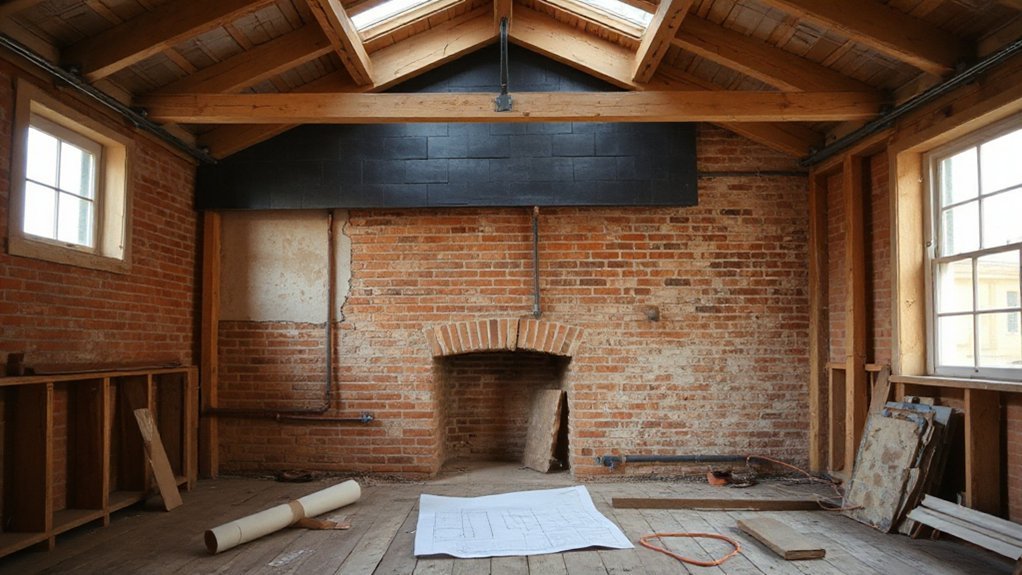
Once you’ve stopped damp getting in, move straight to the elements that can fail without warning: the roof, the main structure, and the services.
Start with a Roof assessment from inside the loft: look for daylight, slipped or missing slates/tiles, nail sickness, torn felt, and staining around chimneys, valleys, and flashings. Outside, check ridge tiles, leadwork, gutter falls, and blocked downpipes that can back up under eaves.
Next, check structure: bowing walls, stepped cracks in brickwork, sagging floors, and sticking doors can signal movement or rot.
Prioritise Structural reinforcement where joist ends, lintels, and wall plates show decay.
Finally, review electrics, gas, and plumbing—old fuse boxes, leaking pipework, and ageing boilers should be logged and sequenced.
Decide: DIY, Temporary Patch, or Hire a Pro
Although you can save money by doing some jobs yourself, you’ll waste far more if you guess wrong on what needs a proper fix. In older UK homes, decide fast by matching risk, access, and compliance. Use this triage:
- DIY if it’s low-risk, visible, and reversible (draught-proofing, refitting loose boards). Prioritise DIY safety: isolate electrics, wear PPE, and stop if you find asbestos-textured coatings.
- Temporary patch when you must prevent damage now (tarpaulin over slipped slates, bung a pipe leak) but book follow-up.
- Hire a pro for gas, consumer units, leadwork, chimney stacks, damp diagnosis, or anything needing Building Regs.
- Material sourcing: match lime mortar, reclaimed bricks, and correct slate sizes—don’t bodge with cement.
Map Older Property Repairs Into a Phased Timeline
Once you’ve decided what you can handle yourself and what needs a tradesperson, you should sort every job by urgency: immediate safety or weatherproofing, short-term damage control, and longer-term upgrades.
Then you can turn that list into a phased schedule that fits how older UK homes behave (drying times, seasonal damp, scaffold access) and how quickly you can get reputable contractors booked in.
You’ll keep costs under control by budgeting per phase and sequencing work so you don’t undo finishes—tackle structure, roofs and drainage first, then services, then plastering, joinery and decoration.
Categorise Repairs By Urgency
Before you start booking trades, sort every issue in your older property into a simple urgency timeline so you tackle the right work in the right order.
Walk room by room with a notepad, photos, and your survey report, then group findings by risk, legal duty, and knock-on damage.
- Immediate (0–7 days): gas smells, sparking electrics, active leaks, unsafe stairs, loose slates—make safe, call Gas Safe, NICEIC, or a roofer.
- Short term (1–3 months): damp sources, failing gutters, rotten joinery, blocked airbricks—stop decay before it spreads.
- Medium term (3–12 months): insulation upgrades, sash repairs, repointing—balance comfort with historical preservation.
- Later (12+ months): paint, kitchens, layout tweaks—pure renovation aesthetics once the fabric’s stable.
Build A Phased Schedule
After you’ve sorted jobs by urgency, turn that list into a phased schedule that matches your budget, access needs, and the way older buildings behave.
Start with a property-wide survey map: roof, chimneys, rainwater goods, below-ground drainage, then internal fabric.
Group tasks that need the same access, like scaffold for repointing, leadwork, and sash repairs.
Phase 1 should stabilise and dry the building: stop leaks, improve drainage falls, fix gutters, tackle rising damp causes, and ventilate voids.
Phase 2 moves to fabric and services: lime plaster repairs, timber treatment, and careful rewiring, keeping Historical preservation in mind and checking listed-building consent where required.
Phase 3 completes aesthetic improvements: redecorate with breathable finishes, repair joinery, and restore period details.
Review the schedule after each winter.
Budget And Sequence Work
Because older buildings rarely fail in neat, isolated ways, you’ll get better value by budgeting and sequencing work as a timeline rather than a shopping list. Start with Financial planning: ring-fence a 10–15% contingency, check VAT status, and align spend with survey priorities and seasonality (roofing and lime work suit drier months).
- Stabilise: stop water ingress, make safe electrics, and address structural movement before anything cosmetic.
- Dry out: fix gutters, improve ventilation, and tackle damp causes, not just plaster finishes.
- Upgrade services: rewire, heating, and plumbing while floors and walls are already opened up.
- Finish: plaster repairs, joinery, and redecorating last.
For contractor selection, use competent trades, agree a written scope, staged payments, and realistic lead times.
Frequently Asked Questions
Do Listed-Building Rules Affect Which Repairs I Can Prioritise First?
Yes—listed-building rules can change what you tackle first: you’ll often need consent before altering historic fabric. Check Historic regulations early, then plan Repair sequencing around urgent safety/water ingress, and approvals timescales with your council.
How Do I Estimate Repair Costs When Hidden Defects Are Likely?
You can’t fully predict costs; that theory fails when Hidden defects emerge. For Cost estimation, you should commission a UK RICS survey, allow 15–30% contingency, get itemised quotes, and request opening-up allowances and provisional sums.
Which Surveys Are Most Useful Before Buying an Older Property?
You’ll get most value from an RICS Level 3 Building Survey, plus a damp and timber report and drainage CCTV. If historical significance applies, commission a heritage statement and check preservation guidelines with your local conservation officer.
Will Prioritising Repairs Impact My Home Insurance Cover or Premiums?
Yes—repair prioritisation can affect your premiums and cover; UK insurers can load prices or impose exclusions. 1 in 5 home claims face reduced payouts due to maintenance issues. Document works, fix high-risk defects, tell your insurer promptly.
How Can I Prioritise Repairs to Improve Energy Efficiency Without Harming Character?
Start with draught-proofing, loft insulation, and boiler controls; you’ll get energy upgrades without altering features. Use breathable materials for solid walls, restore sash windows with secondary glazing, and follow historic preservation guidance for listed-building consent.
Conclusion
You’d think an older property will politely wait while you “get round to it,” yet it won’t. Do your quick audit, then put anything that could hurt you first—loose stair treads, dodgy electrics, wobbly chimneys. Next, stop water: slipped slates, failed flashing, blocked gutters, rising damp. Then sort structure and services. Decide what you can DIY, what needs a temporary bodge, and when to book a qualified tradesperson. Phase it, sensibly.