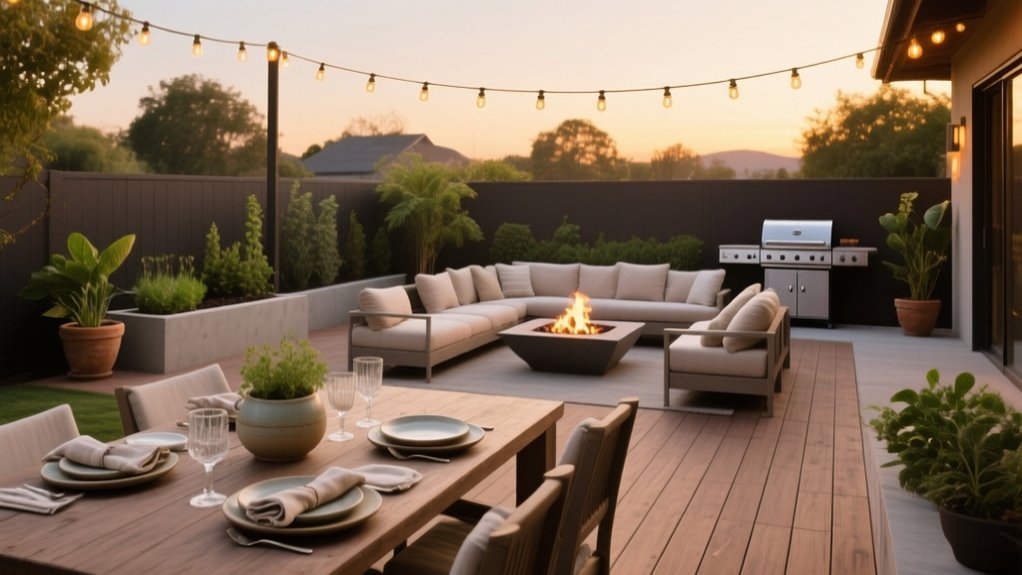
To begin Designing Outdoor Spaces for Entertaining, zone your garden for easy flow: put cooking downwind with a heat-safe paving buffer and quick access to the kitchen, set dining on the flattest, best-drained spot (permeable surfaces suit UK rain), and place lounging slightly apart with planting as a soft boundary. Size seating to your real guest count, keep 900mm walkways, and add stackable overflow chairs. Finish with an efficient grill/drinks station plus layered, warm IP-rated lighting, shade, and privacy—there’s more ahead.
Key Takeaways
- Zone the patio into cooking, dining, and lounging areas to create natural flow and reduce crowding.
- Place the grill downwind near the kitchen, with a heat-safe surface and a clear 1m route to dining.
- Site dining on the flattest, best-drained spot, allowing 90cm behind chairs and using permeable paving for UK weather.
- Choose UK-durable seating and plan 900mm circulation routes, adding modular or stackable overflow options for extra guests.
- Improve comfort with shade, privacy screens, and layered IP-rated warm LED lighting, plus soundscaping to mask road noise.
Map Your Outdoor Zones: Cook, Dine, Lounge
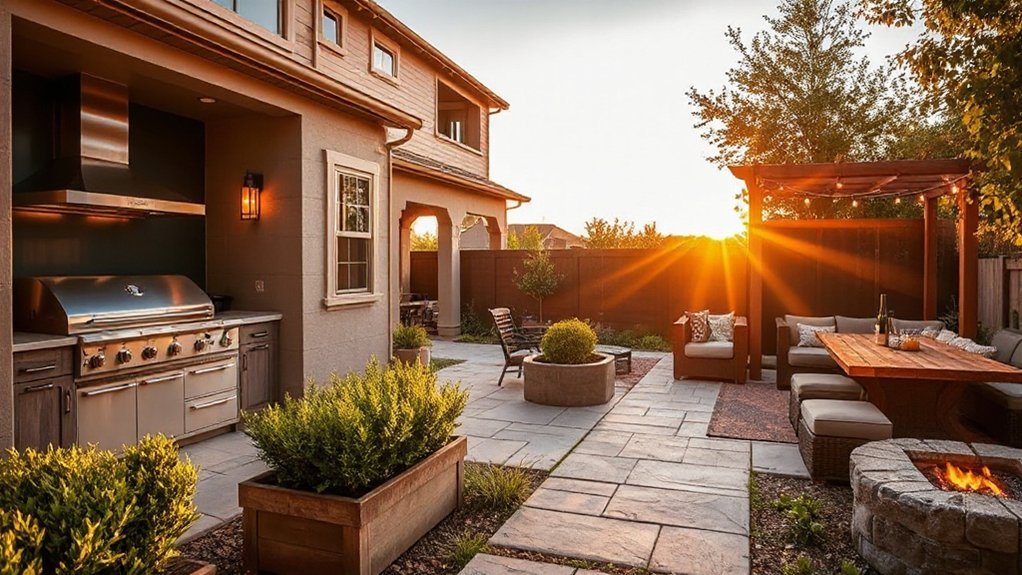
Before you buy furniture or light the barbecue, map your outdoor space into three clear zones—cooking, dining, and lounging—so guests can move naturally without bottlenecks.
Keep the cooking zone downwind where possible, allow a safe heat buffer on paving, and guarantee direct access to the kitchen or side return.
Position dining on the flattest, best-drained spot; in the UK, favour permeable surfaces and a short route to indoor loos.
Set the lounging zone slightly apart for calmer conversation, using outdoor plantings as soft boundaries: clipped evergreen structure, scented herbs, and taller grasses for shelter.
Add subtle soundscaping techniques—bubbling water bowls, rustling bamboo, or a small speaker hidden in planting—to mask road noise without overpowering chat.
Pick Outdoor Seating for Your Guest Count
Start by sizing your outdoor seating to your realistic headcount, so everyone has a proper perch for eating and a comfortable spot for post-dinner chat.
Choose a core set—dining chairs and a bench or sofa—that fits your patio or deck without blocking key routes to the BBQ or back door.
Then plan flexible extras, such as stackable chairs, folding bistro sets, or garden stools you can pull out when numbers swell.
Match Seating To Headcount
Although your garden might look generous on a quiet day, it can feel cramped fast once guests arrive, so match seating to the headcount you’ll actually host. Start by setting a realistic maximum for your typical BBQ or drinks night, then allocate a proper place per person rather than hoping people perch.
- Count covers: plan one seat per guest, plus clear access routes to the back door and loo.
- Choose seating material: aluminium and powder-coated steel cope with UK damp; hardwood needs regular oiling; rattan suits sheltered patios.
- Set an arrangement style: keep sightlines to the host zone, use a mix of dining chairs and a bench, and allow elbow room for plates and pints.
Plan Flexible Extra Seating
Once you’ve allocated a proper seat per guest for your usual numbers, plan for the extra two to six people who always seem to tag along by building in flexible overflow seating that doesn’t clutter the patio day to day.
Choose modular furniture such as clip-together corner units, ottomans, and armless sections you can reconfigure around a BBQ or fire pit.
Add stackable dining chairs or folding bistro seats you can hang in a shed or lean in a narrow side return.
Bench seating along a wall saves floor space and doubles as multi-purpose seating when you top it with weatherproof cushions.
Keep at least 900mm circulation routes clear, and store throws in a waterproof deck box so guests stay comfortable as temperatures drop.
Set Up Outdoor Dining That Fits Your Space
Whether you’ve got a compact city balcony or a generous patio, outdoor dining works best when you match the table shape and circulation to the space you actually use. Aim for clear routes to doors and garden pathways, and keep chairs from blocking them when pulled out.
- Choose a round bistro set for tight corners; pick a narrow rectangular table for along a wall or balustrade.
- Allow 90cm behind seated diners for comfortable movement; drop to 60cm only where traffic’s minimal.
- Anchor the zone with an outdoor rug or pavers, then add low-glare lighting and weatherproof outdoor art to define the “room”.
Use stackable chairs or a bench on one side to save space, and prioritise durable UK-friendly materials like powder-coated aluminium or FSC timber.
Add an Outdoor Cooking and Drink Station
If you want hosting to feel effortless, build a compact cooking-and-drinks station that keeps heat, prep, and pouring in one efficient run.
Position your grill station close to the dining area, but leave a clear 1m route for carrying trays and for safe movement around hot surfaces.
Add a worktop for chopping and plating, plus a small bin and utensil rail so you’re not trekking indoors.
Choose non-porous, wipe-clean materials like stainless steel or sealed granite, and specify weatherproof cupboard fronts.
Beside it, fit a beverage bar with an ice bucket, bottle storage, and a slim undercounter fridge if power’s available.
Include a durable splashback, a hook for tea towels, and space for glassware.
Keep everything within arm’s reach.
Use Shade, Privacy, and Lighting for Comfort
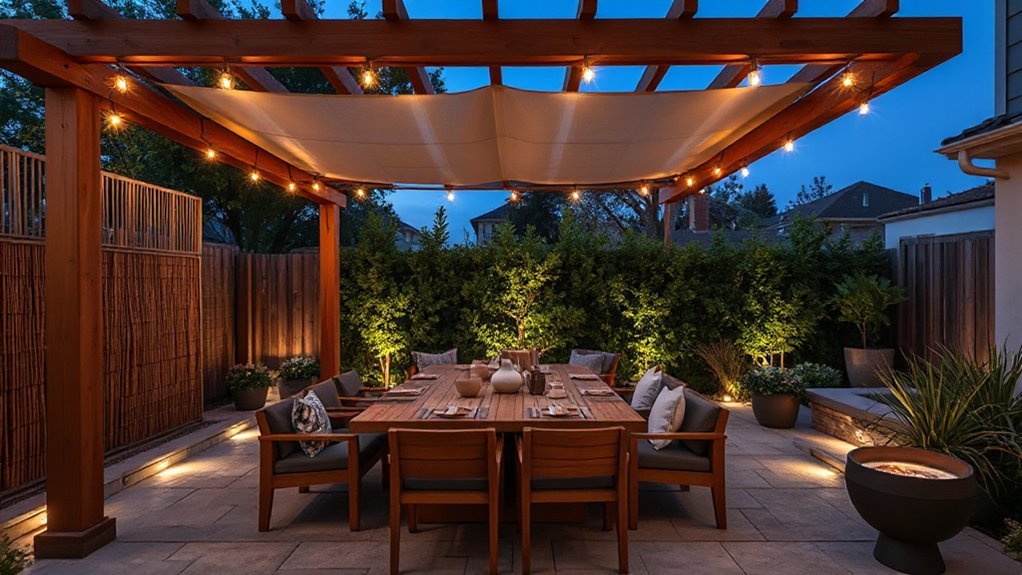
Because the UK’s changeable weather and long summer evenings can make or break a gathering, you’ll get the most usable outdoor space by planning shade, privacy, and lighting as a coordinated layer over your layout.
Start with shade solutions that cope with drizzle and low sun: a retractable awning, sail fixed to proper posts, or a pergola with adjustable louvres. Position cover so it shelters seating without trapping smoke or blocking doors.
Then add privacy screens to cut overlooking from neighbours and reduce wind; slatted panels, pleached trees, or tall planters work well in typical UK plot widths.
Finish with lighting that’s practical and flattering: 2700K warm LEDs, glare-free.
- Layer task, ambient, accent
- Put switches where guests reach
- Use IP-rated fittings outdoors
Finish With Weatherproof Décor and Hidden Storage
Once you’ve nailed the practical layers of cover and lighting, finish the space with weatherproof décor and storage that disappears into the design. Choose UV-stable cushions, quick-dry foam, and solution-dyed acrylics that won’t fade through a British summer.
Add Weatherproof decorations like powder-coated lanterns, outdoor-rated festoon shades, and rust-resistant planters; they’ll handle drizzle without looking “plastic”.
Build concealed storage into seating: a bench with gas struts, a coffee table with a lift-top, or a slim deck box that matches your cladding. Keep it ventilated so damp doesn’t linger, and elevate bases on feet to avoid pooling.
Store throws, games, and spare glassware close to the action, so hosting stays effortless even when the weather turns.
Frequently Asked Questions
Do I Need a Permit for an Outdoor Kitchen or Fire Pit?
You’ll often need permission: check Building codes and zoning regulations with your local council. You’ll likely require a permit for gas, electrics, flues or substantial foundations; small freestanding fire pits may not, depending.
How Can I Reduce Mosquitoes and Other Pests During Parties?
For mosquito control, you’ll remove standing water, keep lawns trimmed, and fit fine-mesh screens. You can add pest repellent plants like lavender and citronella, plus use outdoor-rated fans, targeted traps, and timed sprays.
What’s the Best Outdoor Speaker Setup Without Bothering Neighbors?
Choose weatherproof directional speakers aimed inward, mounted low, plus a small sub on isolation pads for sound insulation. Use zone volume control and a limiter, keep levels below 65dB at boundary, finish by 10pm.
How Do I Plan Outdoor Entertaining for Unpredictable Weather?
Assume the Met Office loves surprises: you’ll plan for sun, squalls, and smug drizzle. Use weather resistant furniture, add a retractable canopy, keep seasonal decor portable, stock throws, and serve drinks near shelter, always.
Which Materials Stay Coolest Underfoot in Hot Climates?
You’ll keep feet coolest on light-coloured natural stone (limestone, sandstone), porcelain paving, or resin-bound gravel; they reflect heat and stay stable. Avoid dark concrete/asphalt. These cool pavement options deliver heat resistant flooring in UK summers.
Conclusion
When you map zones for cooking, dining, and lounging, your garden starts working like a well-rehearsed orchestra—each area comes in on cue. Choose seating to suit your numbers, size the table to your footprint, and add a compact cooking and drinks station so you’re not dashing indoors. Use a pergola, sail shade, or parasol for cover, layer lighting for dusk, and finish with weatherproof textiles plus discreet storage to keep clutter out of sight.