Want to learn how to choose plants that complement your design ideas? Start by defining your garden style—modern, cottage, or tropical—so plant forms and textures reinforce the look. Lock in a tight 3–5 color palette and repeat it, leaning on foliage tones for season-long consistency. Match every pick to your site’s light, water, soil, and maintenance reality, then right-size plants for clearances and traffic flow. Finally, layer a structural spine, mid-story, and edging for height and rhythm. Next, you’ll see how to keep interest year-round without clashes.
Key Takeaways
- Define your garden style first (modern, cottage, tropical) so plant forms and textures support a consistent design language.
- Choose a tight 3–5 color palette, repeating core hues and relying on foliage color for season-long cohesion.
- Match plants to site conditions—light, water, soil, and microclimates—so the design thrives with your intended maintenance level.
- Right-size plants to the space, keeping clearances for paths, doors, and furniture while planning for mature growth.
- Layer structure, mid-story, and edging plants, using repeated shapes and contrasting textures to create depth and visual rhythm.
Define Your Style: Modern, Cottage, Tropical
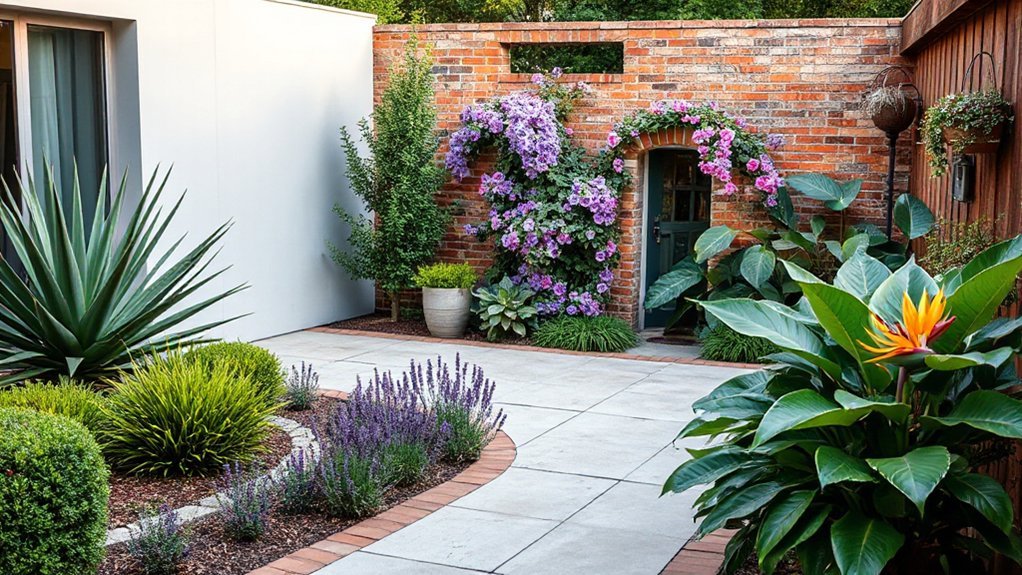
Before you pick a single plant, nail down the design style you’re trying to express—because “modern,” “cottage,” and “tropical” call for completely different forms, textures, and maintenance expectations.
For modern gardens, you’ll favor clean silhouettes: architectural grasses, clipped boxwood substitutes, and repeating masses that read as intentional from the street. Keep plant symbolism minimal and sculptural—think strength, resilience, and balance to support garden feng shui.
For cottage style, you’ll build layered abundance with looser forms: perennials, herbs, and self-seeders that mingle, soften edges, and invite pollinators. Here, plant symbolism can lean nostalgic and welcoming.
For tropical looks, you’ll prioritize bold leaves and humid cues—bananas, cannas, and philodendron-type textures—plus generous spacing to prevent congestion and disease.
Choose Plants That Fit Your Color Palette
Lock in your color palette first, then choose plants whose foliage and blooms reinforce it—think silvery greens with white flowers for a clean modern look, or deep greens with blush blooms for a softer feel.
You’ll get the most polish by repeating one or two core hues across multiple plants, not mixing every shade in the nursery.
For a current, designer-level finish, add complementary accents sparingly—like purple foliage against chartreuse greens or orange blooms against blue-green leaves—to create contrast without chaos.
Match Foliage And Blooms
- Commit to 3–5 core hues and repeat them.
- Prioritize leaf color for long-season consistency.
- Layer matte and glossy leaves within the same hue family.
- Stagger bloom windows to avoid dead color gaps.
- Edit ruthlessly: if it breaks the palette, skip it.
Use Complementary Color Accents
How do you make a tight plant palette feel intentional, not flat? Use the Color wheel to add controlled contrast. Start with your dominant hue—say, silvery greens or deep burgundy—and pick its complementary opposite for punch.
You don’t need a rainbow; you need one or two accent tones repeated at intervals so the eye reads rhythm, not randomness.
Translate that into plants: pair chartreuse foliage with purple flowers, blue blooms with warm orange bracts, or red stems against cool green groundcovers. Keep saturation consistent—muddy next to neon looks accidental.
Echo your hardscape: terracotta pots beg for teal or blue accents; black metal likes lime, white, or magenta. Limit the accents to 10–20% of the planting for a modern, curated look.
Check Light, Water, and Maintenance Needs
Next, you’ll match each plant to your site’s exact light exposure—full sun, bright indirect, or low light—so growth stays compact and color holds.
Then you’ll balance water requirements by grouping plants with similar moisture needs, which keeps irrigation consistent and reduces stress from over- or under-watering.
Finally, you’ll plan maintenance levels upfront, choosing options that fit your schedule and today’s low-input, high-impact design trends.
Match Light Exposure
Although it’s tempting to pick plants by color or shape first, you’ll get a cleaner, longer-lasting design when you match every plant to the site’s light exposure before anything else. Track light like a pro: observe morning vs. afternoon sun, seasonal shifts, and reflected heat from walls or paving, then map microzones.
Choose plants whose sunlight requirements align with each zone, and verify shade tolerance where buildings, trees, or fences cut intensity. This trend-forward approach keeps foliage dense, blooms consistent, and maintenance predictable because plants aren’t struggling to adapt.
Use these checks before you buy:
- Note hours of direct sun per area
- Identify dappled, bright, and deep shade
- Watch for harsh western exposure hotspots
- Factor in winter sun angles and leaf drop
- Match labels to real conditions, not assumptions
Balance Water Requirements
Once you’ve mapped light, dial in water needs just as precisely, because mismatched irrigation is the fastest way to turn a polished planting into a patchwork of stressed leaves and constant replacements.
Group plants by hydrozone: pair similar thirst levels in the same bed, and separate high-water accents from lean, dry borders. Read the site’s soil and drainage—sandy pockets shed moisture, while clay holds it—then match roots accordingly.
For water conservation, design around moisture patterns: use swales, drip lines, and targeted emitters to keep water where it counts. In sunny, exposed areas, prioritize drought-tolerant species that stay crisp without daily watering, and reserve higher-demand plants for naturally moist spots or near downspouts.
You’ll get consistent growth and cleaner design lines.
Plan Maintenance Levels
Before you lock in a plant list, decide how much ongoing work you’re willing to do, then cross-check every selection against its light and water needs so your maintenance plan matches reality. Treat care as a design spec: low-input palettes support garden sustainability, while high-drama plantings demand frequent attention.
Audit each zone’s sun hours, irrigation reach, and access for tools, then group plants by similar demands to avoid constant adjustments. Build your plan around these checks:
- Match plant tags to actual sunlight, not hoped-for shade
- Set a consistent watering cadence; avoid mixed drought/mesic beds
- Schedule seasonal pruning to preserve form and bloom timing
- Choose slow growers if you can’t edge, deadhead, or divide
- Prefer resilient natives/cultivars to reduce fertilizers and pest controls
Right-Size Plants for Your Space and Layout
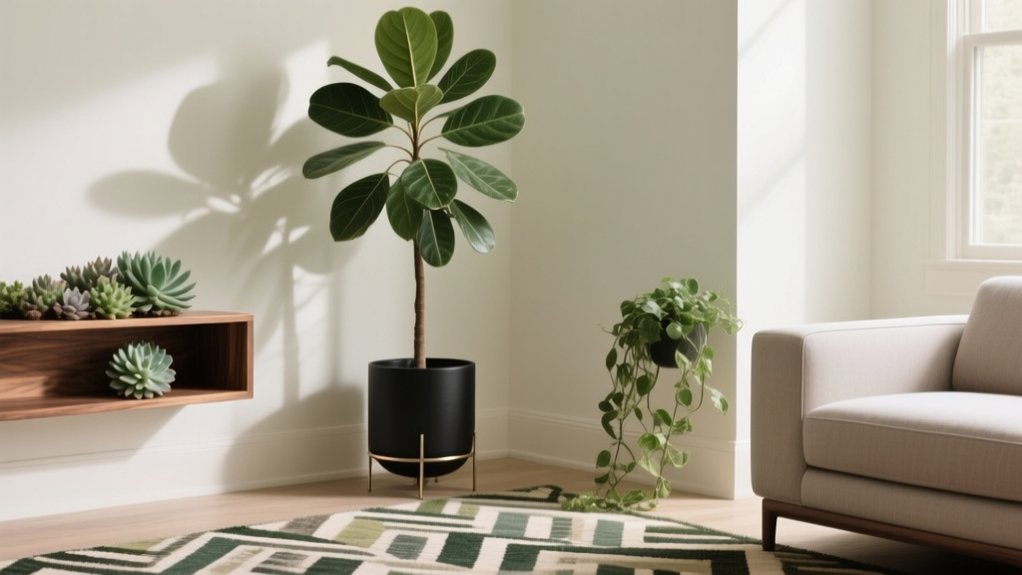
If you size plants to your room’s proportions and traffic flow, your design instantly looks more intentional and functions better day to day. Measure clearances first: keep 30–36 inches open for main walkways and at least 18 inches from door swings and vents.
Match plant volume to furniture scale—oversized specimens suit deep corners and wide consoles, while compact growers belong on narrow shelves or small tables.
Use Plant container choices to control footprint and stability: tall, slim planters save floor space; wide, low bowls stay put in busy zones.
Plan Seasonal planting strategies so your layout doesn’t break when growth surges—rotate faster growers to less constrained spots, and swap in smaller options during low-light months.
Edit regularly; negative space is design.
Layer Plants for Height, Texture, and Shape
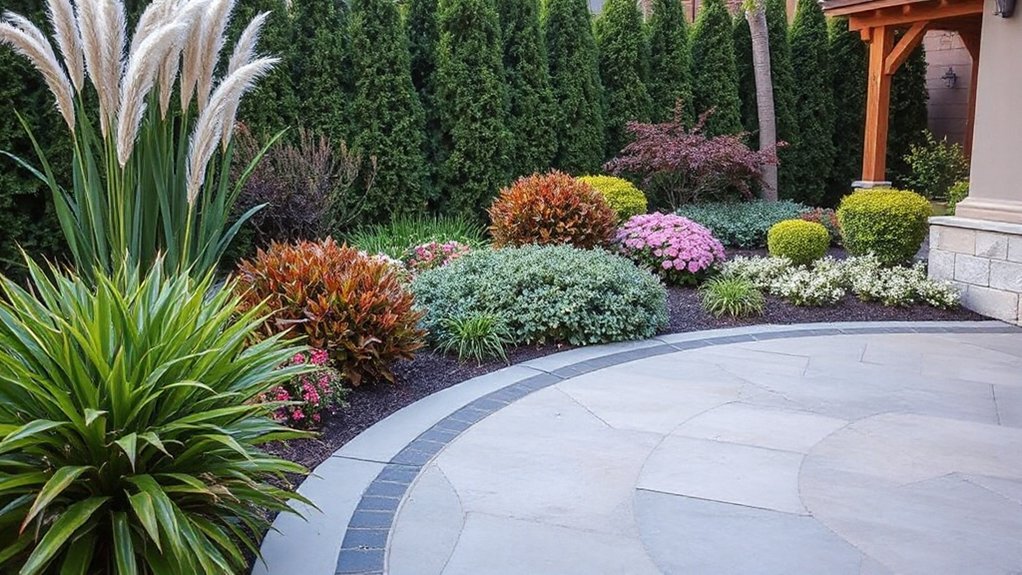
Right-sizing sets the footprint, but layering sets the look and the mood. Build depth by stacking plants like design elements: tall anchors, mid-story fillers, and low edging that guides the eye.
Use Vertical layering to control sightlines, frame entries, and soften hard architecture without crowding. Then add Textural contrast so the composition reads as intentional, not random—think bold leaves against fine fronds, matte foliage beside glossy, upright forms next to mounding silhouettes.
Keep shapes repeating in small rhythms to feel current and cohesive. Use this checklist to stay disciplined:
- Start with one structural “spine” plant
- Repeat two mid-layer forms
- Alternate leaf scales for contrast
- Stagger heights, avoid flat rows
- Finish with a clean ground-hugging edge
Plan Four-Season Interest (and Avoid Clashes)
Prevent clashes by repeating 2–3 core colors, limiting competing textures, and matching mature scale.
Audit views monthly, not just in July.
Frequently Asked Questions
How Do I Keep Pets Safe While Choosing Decorative Plants?
Keep pets safe by prioritizing Pet friendly options and practicing Toxic plant avoidance—check ASPCA lists, skip lilies and pothos, place risky plants on high shelves, use hanging planters, and monitor chewing behavior daily.
Which Plants Are Best for Allergy-Sensitive Households?
You’ll do best with low-pollen, low-fragrance plants like snake plant, ZZ plant, pothos, and palms. Avoid fragrant foliage and heavy bloomers. Check Plant toxicity, keep leaves dust-free, and use HEPA filtration.
How Can I Prevent Pests Without Ruining the Garden’s Look?
You can prevent pests discreetly by using companion planting, selecting pest resistant varieties, and installing low-profile insect netting. You’ll spot issues early with weekly leaf checks, then apply targeted neem or soap sprays at dusk.
What’s the Best Way to Budget for Plants in a Full Redesign?
Start with plant cost analysis: price your must-have anchors, then fill with scalable natives and perennials. For budgeting for greenery, phase purchases, buy smaller sizes, reserve 10–15% contingency, and track seasonal sales.
Can I Use Native Plants and Still Achieve a High-End Aesthetic?
Yes—you can use native selection and still deliver a high-end look. You’ll control aesthetic balance with layered structure, restrained palettes, bold masses, and tailored maintenance, then add premium hardscape, lighting, and focal specimens.
Conclusion
When you choose plants that match your style, palette, and lifestyle, your design looks intentional, not accidental. Start with light and water realities, then right-size every plant to your layout so nothing crowds sightlines or pathways. Layer heights, textures, and forms for that designer-level depth you see in today’s best gardens. Finally, plan for four-season interest to keep the scene polished year-round. Why settle for “good enough” when cohesion is achievable?