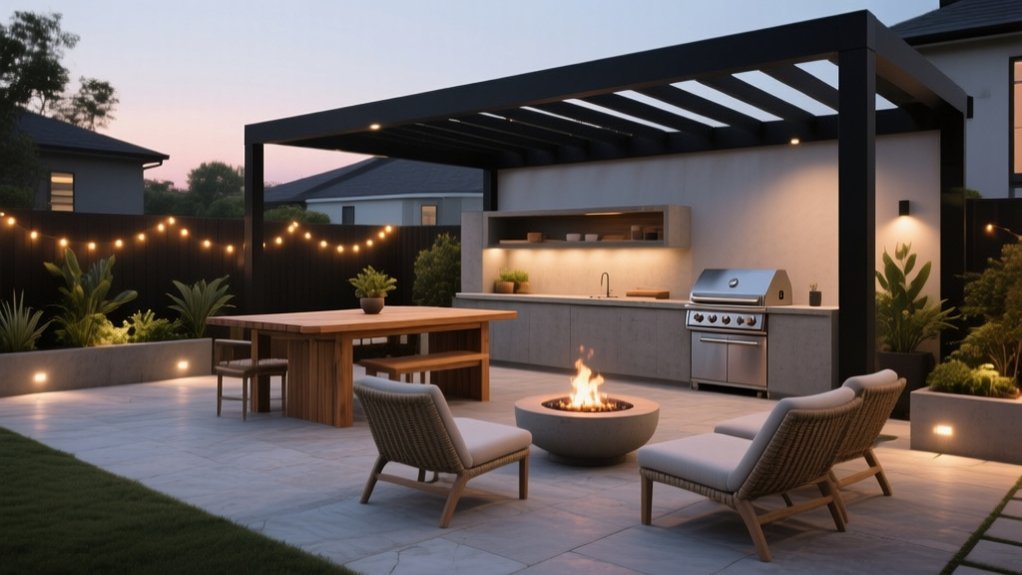
You’ll get an idea of outdoor spaces that blend style and function by zoning it like a floor plan: dining near the grill, lounging where the view’s best, and gardening off to the side. Measure first, then mark zones with rugs, pavers, or gravel edges and soften them with grasses and groundcovers. Keep traffic easy with direct 36-inch paths and 18–24 inches around tables. Choose slip-resistant, weatherproof surfaces, layered warm lighting, and low-maintenance plantings—you’ll see more smart layouts ahead.
Key Takeaways
- Measure and zone your outdoor area for dining, lounging, and gardening, using rugs, pavers, or gravel edges to define spaces.
- Design direct, safe traffic flow with 36-inch walkways, 18–24 inch legroom gaps, and slip-resistant surfaces near steps and wet areas.
- Choose weatherproof, low-maintenance materials like porcelain pavers, composite decking, and UV-resistant furnishings to keep style consistent season after season.
- Layer comfort with performance textiles, outdoor rugs, and strategically placed side tables, angling seating inward to support conversation and usability.
- Use smart drainage, permeable surfaces, and layered warm lighting to prevent puddling, improve safety, and create an inviting atmosphere at night.
Plan Outdoor Spaces Around Daily Routines
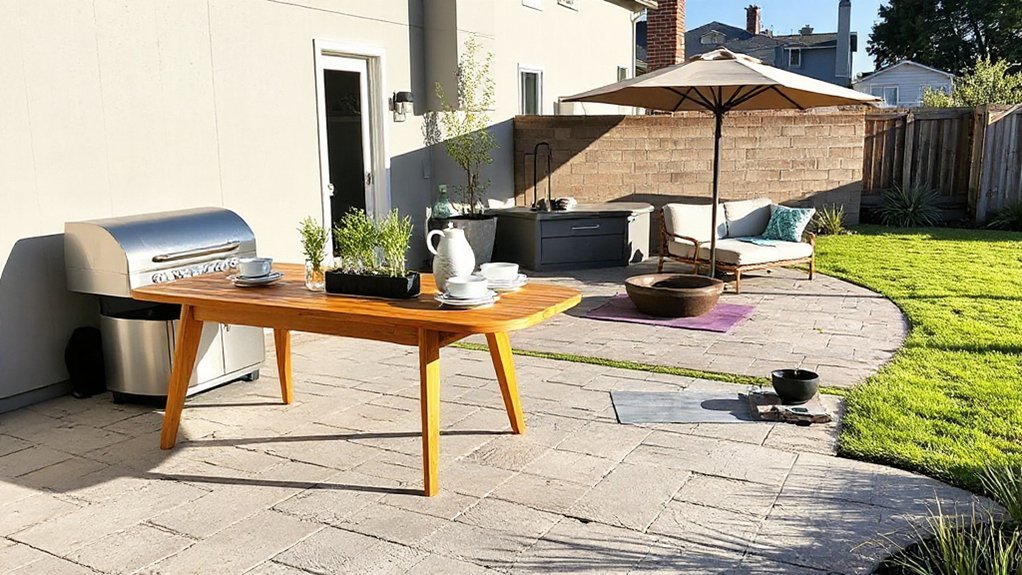
If you map your outdoor layout to what you actually do each day, the space will feel effortless instead of staged. Start with your morning pattern: coffee, email, dog, or stretching. Place a small bistro set where sun hits early, and keep a throw and lantern in a weatherproof bin nearby.
Follow your evening habits next—grilling, reading, or a quick reset—and choose lighting on dimmers so you can shift from task to mood fast.
Use Seasonal plantings to mirror your calendar: bulbs for spring, heat-tough pots for summer, ornamental grasses for fall, evergreens for winter structure.
Add outdoor art where you’ll actually pause—by the gate, patio edge, or viewline. Keep pathways clear and storage close.
Measure and Zone Outdoor Spaces by Activities
Once you’ve matched the layout to your routines, put numbers and boundaries behind it so each activity gets the space it actually needs. Measure your patio, lawn, and planting beds, then assign square footage to dining, lounging, grilling, play, and storage.
A four-seat table typically wants about 8’×10′; a lounge pair plus side table needs roughly 6’×8′. Mark zones with outdoor rugs, pavers, or gravel edges, and reinforce them with low planters or seat walls for clean, modern definition.
In landscape design, treat planting as “soft partitions”: taller grasses screen, while groundcovers keep sightlines open. Plan garden lighting by zone, too—task lights near the grill, dimmable glow near seating, and subtle path-adjacent uplights to highlight focal plants.
Lay Out Outdoor Spaces for Easy Traffic Flow
Although zoning tells you where each activity belongs, good traffic flow determines whether your outdoor space feels effortless or constantly in the way. Start by mapping the natural routes: door to grill, grill to dining, dining to lounge, lounge to garden.
Keep primary paths direct and wide enough for two people to pass, and align them with sightlines so the space feels larger. For layout optimization, float seating off the edges of paths instead of pinching corners, and angle chairs to invite entry rather than block it.
Place serving stations and trash near the action, not across the patio. Use planters or low benches to “rail” circulation subtly, guiding guests without creating dead ends or awkward U-turns.
Choose Outdoor Flooring That’s Slip-Resistant
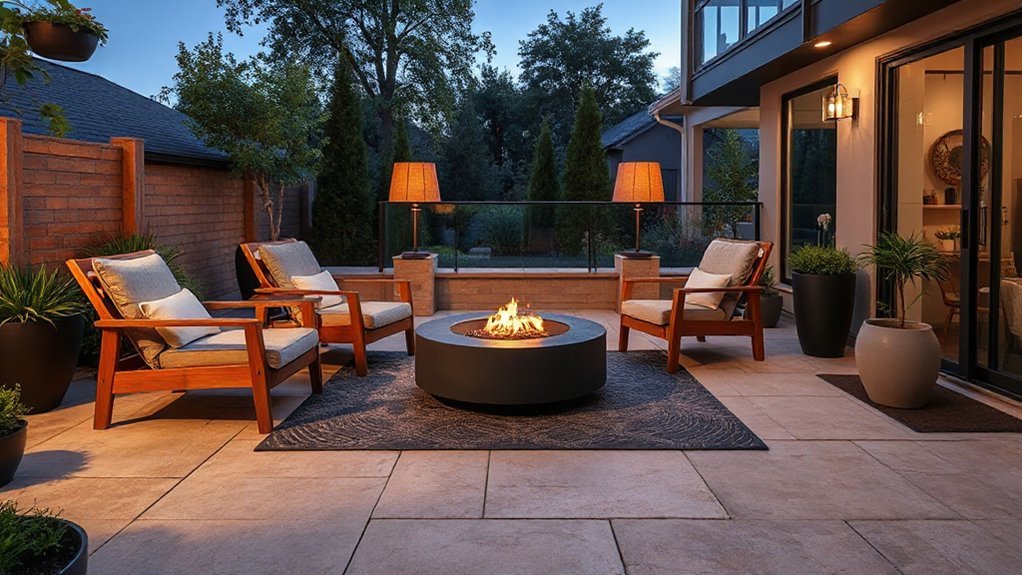
Because rain, pool splash, and morning dew can turn a beautiful patio into a hazard, you’ll want outdoor flooring that stays grippy underfoot without looking utilitarian. Prioritize slip resistant surfaces with texture: lightly sandblasted pavers, brushed concrete, or porcelain tiles rated for outdoor traction. Skip high-gloss finishes and overly smooth stone near steps, grills, and pool edges.
Match performance to your layout. Use larger-format pavers on main paths to reduce joint “toe catches,” and choose smaller modules on slopes for better footing. Add stair nosings with contrast strips, and keep transitions flush between decking and patio.
For outdoor safety, plan drainage so water doesn’t pond, and specify a dark grout or joint sand that won’t show algae. You’ll get a clean, modern look that still feels secure.
Build Outdoor Spaces With Weatherproof Materials
After you’ve handled slip resistance, you’ve got to make sure every finish can take sun, rain, and temperature swings without warping or fading. Choose durable all-weather surfaces like composite decking, sealed concrete, or porcelain pavers so your patio stays crisp-looking with minimal upkeep.
Then lock in the look with UV-resistant furnishings—powder-coated aluminum, performance fabrics, and fade-proof finishes—so your seating stays vibrant season after season.
Select Durable All-Weather Surfaces
When you choose outdoor surfaces, durability has to lead—otherwise the best-looking patio turns into a maintenance project. Aim for materials that shrug off freeze-thaw cycles, heavy rain, pool splashes, and muddy traffic while still looking current next to weatherproof seating.
- Pick All weather tiles with a high slip rating (DCOF) and low water absorption to resist cracking and staining.
- Use dense pavers or porcelain over a compacted, well-draining base; add polymeric sand to lock joints and block weeds.
- Choose sealed concrete or microtopping for a sleek, modern look; specify a textured finish for traction.
- Add drainage and edge restraint so water exits fast and surfaces don’t creep, heave, or settle unevenly over time.
Choose UV-Resistant Furnishings
Durable, well-drained surfaces set the stage, but your outdoor space won’t stay sharp if the furnishings fade and weaken under constant sun. Choose seating and tables built for UV protection: powder-coated aluminum, teak, or high-density resin wicker with colorfast pigments. Skip bargain plastics that chalk and warp after one season.
For cushions, pick solution-dyed acrylic or olefin; the color runs through the fiber, so it resists bleaching. Look for quick-dry foam and mesh bottoms so rain drains fast and mildew can’t take hold. Add a breathable furniture cover for off-days and store pillows in a deck box.
If you love trend-forward neutrals, verify the fabric’s fade rating and pair it with performance trims for better weather resistance year-round.
Add Shade to Outdoor Spaces Without Blocking Views
You can add shade without sacrificing your sightlines by choosing solutions that adjust or stay visually light. Install retractable awnings or shade sails so you can extend coverage only when the sun hits.
Pair them with pergolas that use open slats to filter light while keeping the view open. For year-round protection, specify transparent canopy materials like polycarbonate panels that block UV and rain but still let the scenery read.
Retractable Shade Solutions
Although full-coverage structures can darken a patio and cut off the view, retractable shade solutions let you dial in sun protection only where—and when—you need it. You’ll keep sightlines open, reduce glare, and cool seating zones without committing to permanent cover.
For a modern, low-fuss setup, pair retractable awnings with automated shading so you can extend fabric on bright afternoons and retract it for sunsets or stargazing.
- Choose solution-dyed acrylic fabric for fade resistance and easy cleaning.
- Add wind and sun sensors to prevent damage and optimize comfort.
- Specify a cassette housing to protect the canopy when it’s retracted.
- Match frame finishes to railings or window trim for a cohesive look.
Mount to fascia or wall with proper blocking and sealed fasteners.
Pergolas With Open Slats
When you want overhead relief without turning your patio into a cave, a pergola with open slats delivers shade, airflow, and clean sightlines in one move. You’ll cut glare at peak sun while keeping the sky, trees, and neighborhood views in play, which is key for small yards and rooftop decks.
Choose Open slat pergolas with slats oriented to your sun path; run them east–west for midday protection, or north–south for longer, softer shade. Specify powder-coated aluminum for low maintenance, or stained cedar for warmth and texture.
Keep posts slim, align beams with door and window mullions, and hide fasteners for Modern outdoor aesthetics. Add a ceiling fan-rated beam, integrated downlights, and a gutter edge to manage drips without closing the roof.
Transparent Canopy Materials
Open-slat pergolas handle glare while keeping air moving, but transparent canopy panels step in for rain protection and steadier shade without sacrificing the view. You get a bright, modern roofline that keeps sightlines to trees, skyline, or pool intact—key transparency benefits when you’re designing for openness.
Choose UV-treated polycarbonate for impact resistance, or laminated glass for premium clarity and easy cleaning.
- Match panel tint to your exposure: clear for gardens, bronze/opal for harsh sun.
- Specify anti-drip and anti-scratch coatings to reduce spotting and haze.
- Plan canopy installation with proper slope, gutters, and thermal expansion gaps.
- Anchor to corrosion-resistant hardware and flash connections to prevent leaks.
Add dimmable strips under rafters, and you’ll keep the space usable after dark, too.
Pick Outdoor Furniture That Fits and Lasts
To get an outdoor space that looks polished and works hard, choose furniture that matches how you’ll actually use it and can handle your local weather. Start with frames: powder-coated aluminum shrugs off rust, while teak and ipe weather gracefully if you’ll oil them.
For humid or coastal areas, skip untreated steel and bargain wicker that cracks fast.
Pick cushions with solution-dyed acrylic fabric, quick-dry foam, and zippers you can replace, not toss. Look for Eco friendly materials like FSC-certified wood, recycled plastic lumber, or low-VOC finishes.
Add Vintage accents with a wrought-iron side table or retro sling chair, but make sure it’s sealed and stable.
Finally, check weight ratings, stackability, and warranty terms so you’re not shopping again next season.
Arrange Outdoor Furniture for Conversation and Access
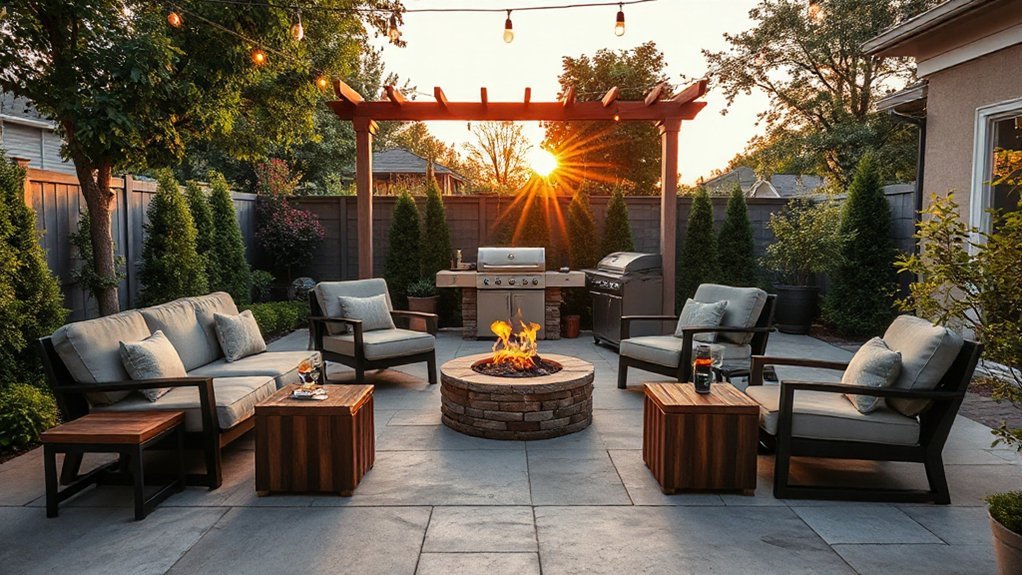
Although your patio might look best in a catalog-perfect layout, you’ll use it more if you arrange seating for easy talk and clear movement. Start by anchoring the zone around a fire pit or coffee table, then keep sightlines open so everyone feels included. Leave generous paths to doors, grills, and steps, and avoid dead ends that force guests to squeeze past knees. Use outdoor lighting to define edges and guide traffic after dark without glare.
- Float chairs 18–24 inches from the table to preserve legroom and reach.
- Keep a 36-inch walkway behind seating for smooth circulation.
- Angle seats inward for conversation; skip straight, parallel rows.
- Place side tables at arm’s reach to reduce constant stand-ups.
Add Outdoor Textiles for Comfort and Color
When you layer in outdoor textiles, your patio instantly feels more livable while gaining a hit of color and pattern. Start with performance cushions in solution-dyed acrylic or olefin so they resist fading, mildew, and spills.
Add a low-pile outdoor rug to define the seating zone and soften foot traffic; choose a geometric or stripe for current, tailored style.
Work in colorful accents through throw pillows, poufs, and table runners, but keep a tight palette—two solids plus one print reads intentional.
For cozy textiles, drape quick-dry throws over chair backs for cool evenings and stash extras in a ventilated deck box.
Finish with washable slipcovers and grippy rug pads so everything stays put and refreshes easily.
Light Outdoor Spaces for Mood and Safety
Textiles make your patio feel inviting in daylight, but smart lighting keeps it comfortable after dark and helps you move around safely. Layer ambient lighting with task-focused beams so you can relax, dine, and clean up without glare.
Choose warm temperatures (2200–2700K) for a modern, cozy look, and put key zones on dimmers or smart scenes. Prioritize weather-rated fixtures, and aim light downward to cut light pollution and keep sightlines crisp.
Add subtle path markers so steps and edges stay visible, even when you’re carrying plates or a drink. Focus on these upgrades:
- String lights overhead for soft ambient lighting.
- Step and rail lights as safety features.
- Motion-sensor sconces near doors.
- Solar path stakes to define walkways.
Create Outdoor Privacy With Screens and Plants
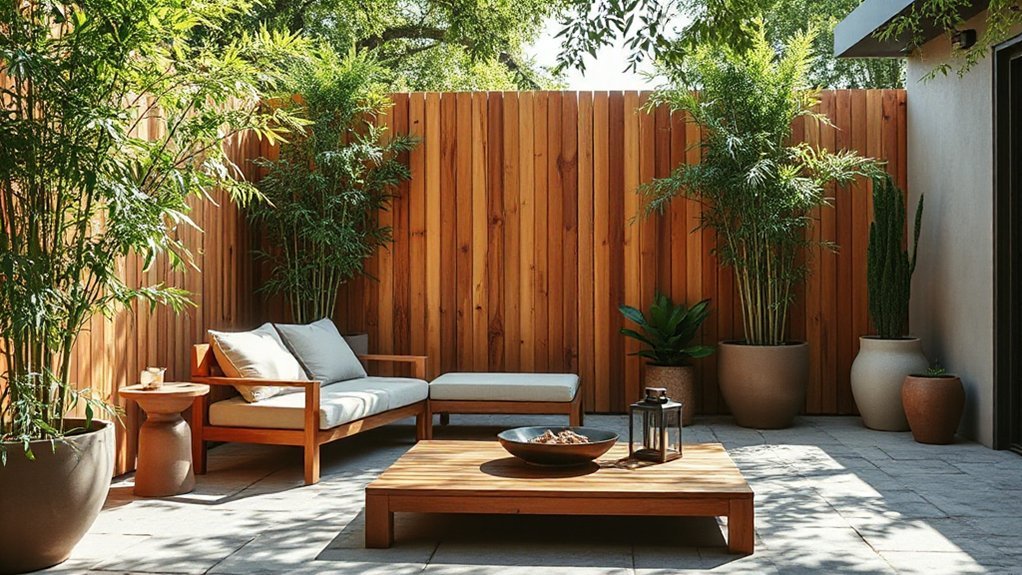
Whether you’re blocking a neighbor’s second-story view or carving out a quiet corner for morning coffee, you can build real outdoor privacy by layering slim screens with living greenery. Start with a freestanding panel or Decorative lattice to define the line of sight; position it perpendicular to seating so it shields without boxing you in. Choose powder-coated metal or rot-resistant cedar for a clean, modern look.
Then soften edges with vertical planters, trailing vines, or tall grasses that move in the breeze. For full-yard separation, plant Privacy hedges in staggered rows so gaps close faster; pick arborvitae for evergreen density or clumping bamboo in contained beds.
Keep maintenance easy with drip irrigation and a mulch strip, and you’ll get privacy that feels intentional, not temporary.
Blend In Outdoor Storage With Benches and Cabinets
Privacy features set the stage, but clutter can ruin the calm fast—so build storage into the pieces you already use. Choose seating and casework that hides gear while keeping your layout sleek and walkable. Benches with lift-tops or drawers give you hidden compartments for cushions, games, and grill tools without adding extra furniture. Pair them with weather-rated, stylish cabinets that match your decking tone and hardware finish for a built-in look.
- Pick marine-grade hinges and gas struts so lids open smoothly and stay put.
- Add breathable liners to prevent mildew on textiles after rain.
- Use labeled bins inside to sort candles, cords, and serving pieces.
- Mount cabinets slightly off the floor to avoid splashback and rot.
Use Plants to Add Softness and Quick Privacy
If your patio feels a little exposed, you can use plants to soften hard lines and create instant screening without committing to permanent walls. Start with tall planters along the edge to block sightlines at seated height, then stagger heights for a layered, designed look.
For tight footprints, mount Vertical gardens on a fence or blank wall; they add texture without stealing floor space. Mix trailing greens with upright grasses to blur corners and hide railings. Add flowering shrubs in large pots to bring color and structure; choose varieties with dense branching so you get a fuller screen faster.
Angle planters to guide views away from neighbors, and repeat one pot style to keep the look intentional. Use warm-white uplights to make foliage feel luxe at night.
Keep Outdoor Spaces Low-Maintenance Year-Round
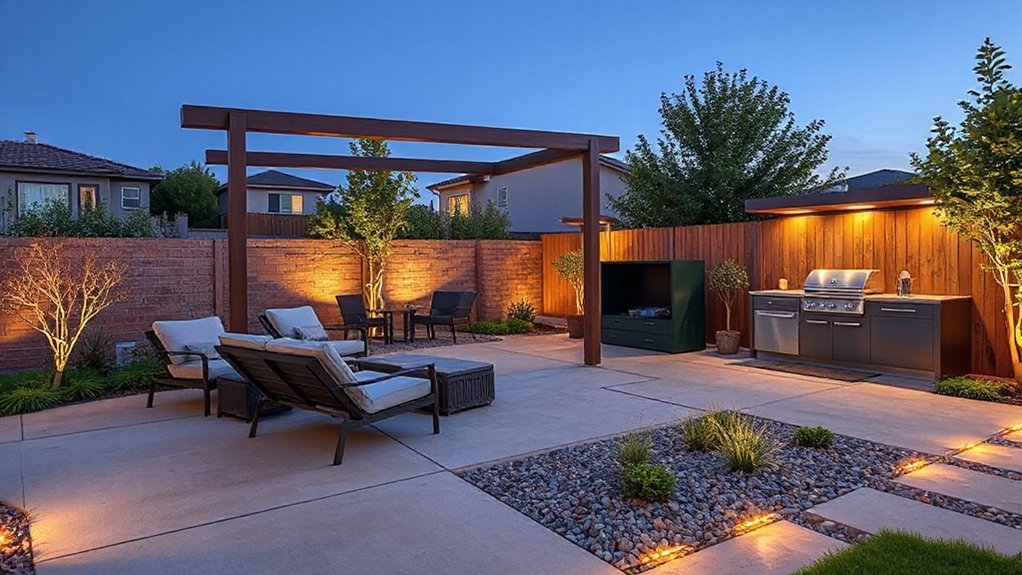
Keep your outdoor space looking sharp year-round by choosing durable, easy-care materials like composite decking, powder-coated aluminum, and porcelain pavers that won’t fade, splinter, or stain.
You’ll cut weekly upkeep by pairing them with smart irrigation—drip lines, weather-based controllers, and targeted zones that water only where it counts.
Finish with proper drainage, such as permeable joints, gravel bases, and discreet channel drains, so puddles don’t become your next maintenance headache.
Durable, Easy-Care Materials
Because your patio has to look good even when you’re not babysitting it, start with materials that shrug off sun, rain, and stains. Choose surfaces that clean fast and age gracefully, so you spend weekends relaxing, not refinishing. Prioritize Eco friendly finishes that resist fading and peeling while keeping the look modern and matte.
- Composite decking: won’t splinter, rarely needs more than soap and water.
- Powder-coated aluminum: lightweight, rust-proof, and on-trend in charcoal or sand.
- Porcelain pavers: scratch-resistant, low-porosity, and easy to hose off after spills.
- Stain resistant fabrics: solution-dyed acrylic or olefin cushions that handle UV, mildew, and ketchup.
Add washable slipcovers and quick-dry foam to keep seating crisp.
Smart Irrigation And Drainage
Durable surfaces cut down on upkeep, but water still decides whether your outdoor space stays clean or turns into a muddy, mossy mess. Dial in Smart watering with weather-based controllers, soil-moisture sensors, and drip lines tucked under mulch so beds stay polished without overspray on pavers.
Split zones by sun exposure, and add a quick seasonal schedule so you’re not watering cool-shade corners like they’re full sun.
Pair irrigation with drainage solutions that move stormwater fast and invisibly. Pitch hardscapes 1–2% away from the house, and hide channel drains along thresholds and grill pads.
Use permeable pavers or gravel strips at high-traffic edges, and add a dry well where downspouts dump. You’ll prevent stains, algae, and freeze-thaw damage.
Design Outdoor Spaces for Balconies and Small Patios
Even if you’re working with just a narrow balcony or a compact patio, you can make it feel intentional by planning around how you’ll actually use it—morning coffee, container gardening, or an after-work wind-down.
Start by measuring clear walk paths, door swings, and railing height so every piece earns its footprint. Then build a layered look that’s easy to maintain and comfortable at night.
- Choose foldable or armless seating and a slim café table; add an outdoor cushion in a durable weave.
- Create Balcony greenery with vertical planters, railing boxes, and one sculptural pot for focus.
- Add Small patio lighting: warm string lights plus a rechargeable lantern to avoid harsh glare.
- Anchor it with a weatherproof rug and a storage bench to hide tools and throws.
Avoid Outdoor Space Trends That Age Quickly
While a bold outdoor trend can look great on your feed, it often looks dated fast once the novelty wears off. You’ll get more mileage by anchoring your space in timeless design and letting trends live in swap-friendly layers.
Choose classic materials—stone, brick, teak, powder-coated aluminum—in neutral finishes that won’t fight seasonal updates.
Skip overly specific color palettes, statement tiles with loud motifs, and novelty furniture shapes that limit layouts. Instead, invest in a simple dining set, a durable rug, and lighting you can rehang.
Add trend hits through pillows, planters, umbrellas, and portable fire features, then rotate them out when tastes shift. Test a trend for one season before committing to permanent hardscapes or built-ins.
Frequently Asked Questions
How Do I Choose an Outdoor Sound System That Withstands Weather?
Choose speakers with high IP ratings (IP65+), UV-resistant housings, sealed grills, and stainless hardware. Prioritize Weatherproof technology and Wireless speakers with stable range. You’ll want draining mounts, protected power, and temperature-rated components.
Do I Need a Permit for Building a Pergola or Outdoor Kitchen?
You probably do, depending on size, utilities, and zoning—like steering through a maze. Check local Pergola regulations for setbacks and height. For outdoor kitchen permits, expect electrical, gas, and plumbing inspections. Call your building department.
What’s the Best Way to Keep Mosquitoes and Bugs Away Naturally?
You’ll keep mosquitoes away naturally by removing standing water, running a fan, and using Natural repellents like citronella, lemon eucalyptus, or cedar. Add screened seating, tidy foliage, and boost pest control with beneficial plants.
How Can I Add an Outdoor Fire Feature Safely on a Wooden Deck?
Like a trusty mixtape, you’ll add a fire feature by using a listed deck-rated fire pit, placing it on a ventilated heat-resistant mat, maintaining clearances, adding spark screen, keeping extinguisher nearby, ensuring fire safety, deck protection.
Which Outdoor Plants Are Safest for Pets and Small Children?
Choose Pet friendly plants like spider plants, Boston ferns, areca palms, and herbs (basil, rosemary). For Child safe greenery, add marigolds and sunflowers. You should avoid lilies, sago palm, oleander, and foxglove.
Conclusion
When you design outdoor spaces that blend style and function, you’ll actually use them every day. Start with your routines, zone each activity, and keep traffic flow clear so the space works as well as it looks. Don’t skimp on slip-resistant flooring and weatherproof finishes—they’ll save you repairs. Add plants for quick privacy without hard walls. Here’s the hook: the National Association of Realtors reports outdoor upgrades can recoup around 100% of their cost at resale.