
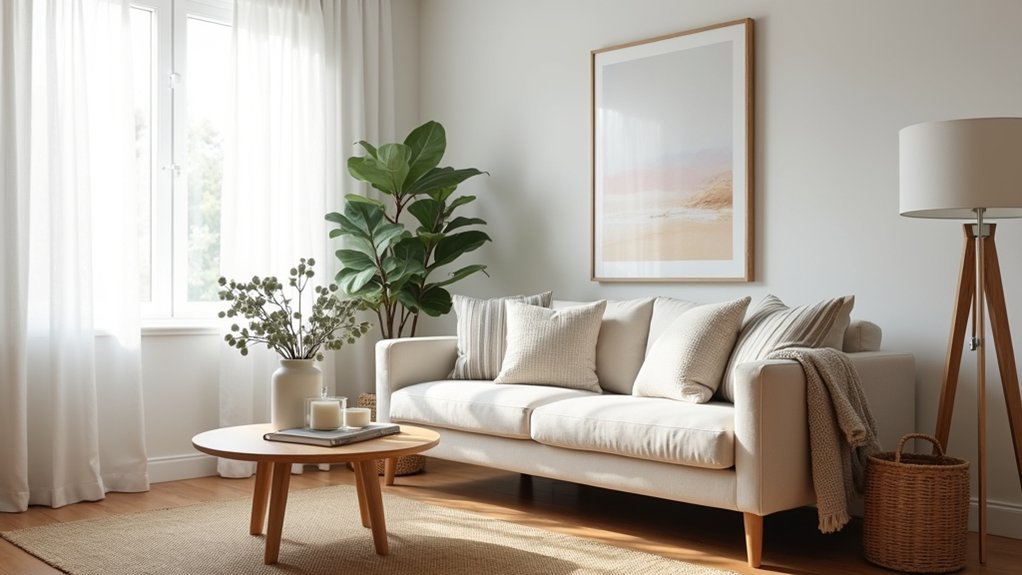
You don’t need builders to make your home feel new; you need a clear goal and a few high-impact tweaks. Start by choosing whether you want cosy, bright, or minimal, then tackle the fastest wins: a 60-minute reset, decluttering the usual drop zones, and improving light with the right bulbs and layered lamps (easy upgrades in most UK homes). Next comes flow, textures, and small swaps that change everything…
Key Takeaways
- Swap to warm LED bulbs and add layered lighting with dimmers to change the room’s mood faster than painting.
- Do a 60-minute declutter of high-impact surfaces, then return only daily-use items to create instant calm.
- Rearrange furniture to improve flow, keeping 75–90cm clear pathways and redefining one focal point for the room.
- Refresh soft furnishings with new cushion covers, throws, and rugs, and hang curtains higher and wider to lift the space.
- Update small details like cabinet handles, switch plates, and styled trays, then wipe windows and surfaces for a cleaner look.
Pick Your Goal: Cozy, Bright, or Minimal
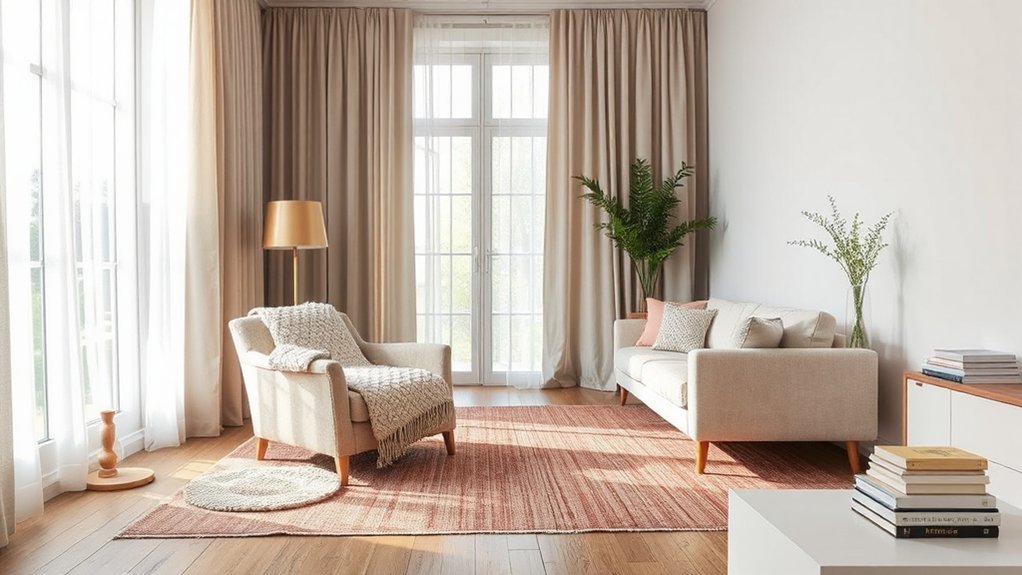
Before you buy anything or start moving furniture, decide what you want the room to *feel* like: cosy, bright, or minimal. That goal dictates every choice, so you won’t waste money on bits that clash.
For cosy, prioritise warm lighting (2700K bulbs), tactile textiles, and layered rugs that suit typical UK draughts. Choose Color schemes with earthy neutrals and one deeper accent, like inky blue.
For bright, maximise daylight: keep windows clear, swap heavy curtains for linens, and add mirrors opposite the window. Use crisp Color schemes—soft white, pale sage, or airy blush—then repeat them in small accessories.
For minimal, edit surfaces, stick to two colours, and limit Seasonal decor to one intentional focal point.
Do a 60-Minute Reset (Clear, Clean, Reset Zones)
Set a timer for 60 minutes and tackle the clutter that makes your home feel messy fastest—worktops, the coffee table, and the hallway drop-zone.
Clear what doesn’t belong, give each surface a quick wipe, then put back only what you actually use day to day.
Finish by resetting key zones like the entryway, kitchen counter, and sofa area, so the whole place stays calmer even on a busy weeknight.
Clear High-Impact Clutter
When your home starts to feel tired, a fast, high-impact declutter can change the mood in under an hour. Focus on what you see most: the hallway drop-zone, kitchen worktop, coffee table, and sofa area. Set a 10-minute timer per spot and remove anything that doesn’t belong there.
Use two bags: one for rubbish/recycling and one for “elsewhere”. Don’t wander; stack the “elsewhere” bag by the stairs or by the front door for later. Wipe surfaces as you clear, so the win looks immediate.
Create clutter free zones by enforcing a one-touch rule: put items straight into Minimalist storage (tray, basket, drawer divider) or back where they live.
In UK homes, slimline hallway organisers beat bulky cupboards.
Reset Key Home Zones
Although a full tidy can feel like a weekend job, you can refresh the whole house by running a 60-minute reset across a few high-traffic zones: entryway, kitchen, living area, and bathroom. Set a timer: 10 minutes to clear, 5 to clean, 5 to reset each zone.
Entryway: corral shoes and post with Smart storage (lidded basket, slim console).
Kitchen: empty the draining board, wipe fronts, reset worktops to “one appliance max”.
Living area: fold throws, stack remotes, and return mugs; a tray makes it stick.
Bathroom: bin empties, wipe taps, and hang fresh towels.
Use colour psychology: add a calm blue cloth in the bathroom, warm neutrals in the lounge. Repeat weekly.
Declutter Hotspots for an Instant Refresh
Because clutter gathers fastest in the same few places, you’ll get the quickest “just refreshed” feeling by tackling those hotspots first. Identify your main Clutter zones: the hallway drop spot, kitchen worktops, the coffee table, bedside surfaces, and the bathroom basin area.
Set a 10-minute timer and clear one zone completely. Bin obvious rubbish, put laundry in a basket, and return items to their proper home in one trip. If something has no home, create a simple one: a tray for keys and post, a lidded box for remotes, a caddy for skincare.
Watch for clutter triggers like deliveries, school bags, and “I’ll deal with it later” piles. In UK homes, shallow hallways and small kitchens need strict surface rules—leave counters mostly clear.
Rearrange Furniture for Better Flow
Clear surfaces make a room feel lighter, but the layout determines whether it actually works day to day. Start by mapping your main routes from doorway to sofa to stairs; in many UK terraces and semis, pinch points waste space. Shift bulky pieces off walkways and angle seating to invite conversation, not block it. Use Feng Shui principles: give the “command position” to key seats so you can see the door without sitting in line with it.
Aim for furniture symmetry where it suits—matching side tables or paired chairs calms a busy room.
- Keep 75–90cm clear paths
- Float the sofa off the wall
- Anchor zones with a rug
- Balance tall items across the room
- Test layouts with masking tape
Upgrade Bulbs, Lamps, and Light Layers
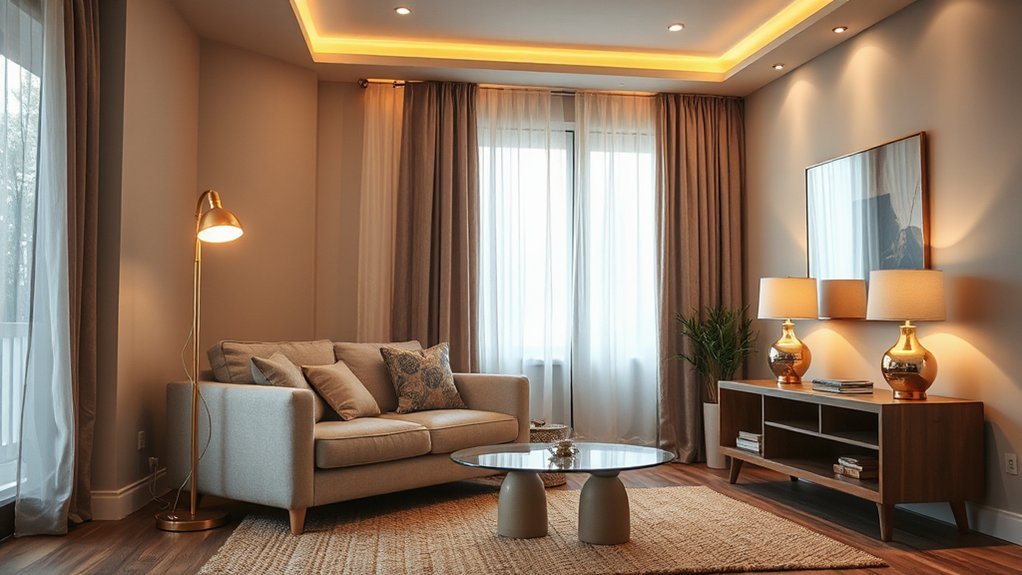
Once you sort the layout, tackle lighting next—swapping a few bulbs and adding the right lamps can change the mood faster than any paint job.
Start by replacing tired halogens with warm, efficient LEDs (around 2700K for living rooms, 3000K for kitchens). Check fittings: many UK homes still use GU10 spots and B22 bayonets, so buy the right caps.
Then build ambient layers: combine a ceiling source with a floor lamp for bounce, a table lamp for corners, and a task light for reading.
Put lamps on plug-in dimmers or smart plugs, and try Smart lighting for scenes—“Evening”, “Film”, “Work”—without rewiring.
Aim for soft pools, not glare; angle shades away from sofas and screens.
Paint One Surface or Add Peel-and-Stick
If you want a noticeable change without the mess of a full repaint, treat one surface as your “feature” and leave the rest alone. Paint a chimney breast, the back of bookcases, or a single wall in a rich matte; it sharpens the room and makes your existing furniture look intentional.
If you rent or hate commitment, use peel and stick murals for instant pattern without paste or trades. In UK homes, stick to breathable finishes on older plaster and avoid sealing damp-prone walls.
- Choose one surface with strong daylight exposure
- Test swatches; UK light shifts fast
- Use Color accents on skirting, niches, or radiators
- Try peel and stick murals in hallways for impact
- Keep the rest neutral to prevent visual clutter
Swap Hardware: Knobs, Pulls, and Switches
After you’ve added a feature wall or peel-and-stick pattern, sharpen the whole room by swapping the small touchpoints you use every day: cabinet knobs, drawer pulls, and light switches. Decorative hardware changes the perceived quality of kitchens, bathrooms, and fitted wardrobes in an afternoon, with only a screwdriver and a tape measure.
Match hole centres on existing pulls to avoid filling and re-drilling; common UK sizes are 96mm and 128mm. Choose finishes that suit your taps and door handles—brushed nickel for modern, antique brass for period homes, matte black for contrast.
In rental-friendly updates, keep the originals in a labelled bag. For functional switches, upgrade cracked plates to sleek screwless or metal-faced versions, but use a qualified electrician for any wiring changes and check they meet UK regs.
Layer Textiles: Rugs, Throws, and Curtains
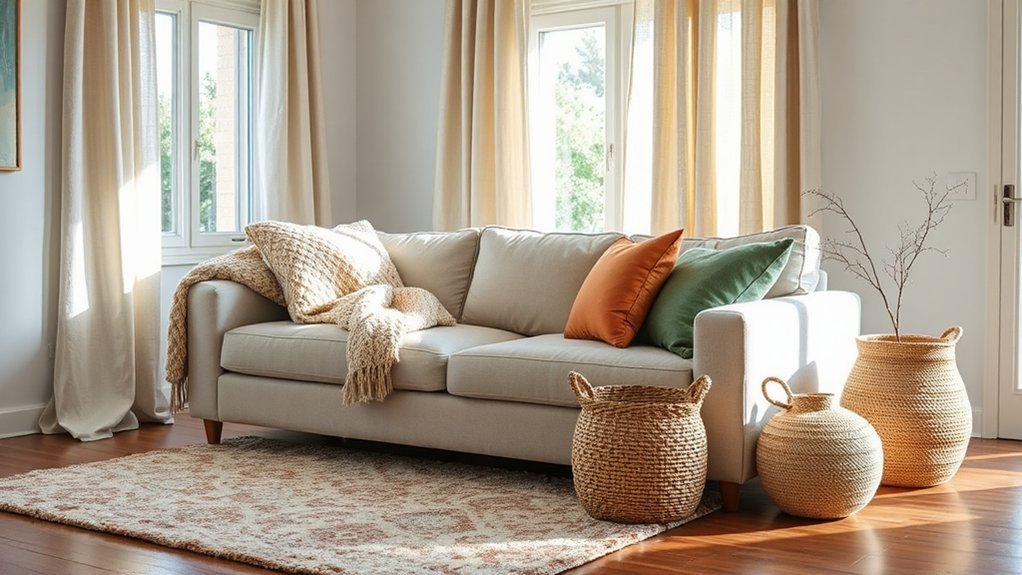
Layer textiles to add warmth and depth fast, without touching the walls. Mix rugs for a richer look—try a flatweave over carpet or layer a smaller patterned rug on top in high-traffic UK rooms like the hallway or lounge.
Then update throws and curtains in fresh textures and colours, and you’ll change the whole feel of the space for far less than a refit.
Mix Rugs For Depth
While fresh paint and new furniture grab attention, mixed rugs give a room instant depth with far less effort. You’ll get a designer look through pattern mixing and texture layering, without touching the walls.
Start with a larger, neutral base rug, then add a smaller accent rug to define seating or highlight a coffee table.
- Anchor sofas with a 160x230cm rug (common UK sizing)
- Layer flatweaves over wool for contrast and grip
- Keep one rug plain if the other’s bold
- Align pile direction to stop colour shift in daylight
- Use rug pads on hard floors to prevent slips
Choose colours already in your cushions and artwork, then repeat them in the top rug.
In draughty UK homes, thicker piles also soften sound and feel warmer underfoot.
Update Throws And Curtains
Mixed rugs set the base, then throws and curtains finish the room by adding colour, warmth, and privacy at eye level.
Swap one throw per sofa and one cushion cover per chair to shift the palette fast without repainting.
Choose Decorative fabric with texture—bouclé, brushed cotton, wool mix—to add depth under UK’s grey light and to feel cosy on draughty evenings.
Hang curtains higher and wider than the window to make ceilings look taller; if you rent, use a tension rod or stick-on brackets.
For Seasonal updates, keep two curtain weights: linen or cotton for spring/summer, lined velvet or thermal for autumn/winter.
Match heading styles to your rail (eyelets for poles, pencil pleat for tracks).
Style Shelves and Surfaces in 10 Minutes
Even if you’ve only got ten minutes before guests arrive, you can make your home feel more pulled together by restyling shelves and surfaces with what you already own. Start with Surface organization: clear the clutter, then put back only what earns its place. Work in odd numbers, vary heights, and leave breathing room—busy shelves read as mess, not style.
Add Decorative accents sparingly, and group similar tones so it looks intentional, not random.
- Stack two or three books, topped with a small object
- Move one plant to add life and soften lines
- Use a tray to corral remotes, keys, and candles
- Swap in a framed print or postcard for quick art
- Add a bowl for loose change—very UK hallway-friendly
Room-by-Room Refresh Plan (Living, Bed, Bath, Kitchen)
Start with your living room: swap cushion covers, add a warmer lamp bulb, and pull the sofa forward to improve flow without spending much.
In the bedroom, reset the space with fresh bedding, clear your bedside tables, and soften the lighting for a calmer feel.
For the bath and kitchen, upgrade the everyday basics—new towels, a clean shower screen, organised cupboards, and a wipe-down of handles and splashbacks—so the rooms look sharper fast.
Living Room Quick Updates
Because the living room takes the most daily wear and sets the tone for the rest of your home, quick, targeted tweaks here deliver the biggest “refreshed” feeling without a single tool. Start by tightening your color schemes: pick one dominant neutral, one accent, and repeat it across cushions, throws, and art for a pulled-together look.
Then rethink your furniture arrangement so walkways stay clear (aim for 75–90cm in UK homes) and seating faces both the telly and conversation.
- Swap cushion covers to echo your accent shade
- Rotate rugs to hide wear and reframe zones
- Move lamps for layered, evening-friendly lighting
- Edit surfaces: one tray, one plant, one book stack
- Clean windows and mirrors to boost daylight fast
Bedroom, Bath, Kitchen Boosts
Once you’ve tightened up the living room, you can refresh the bedroom, bathroom, and kitchen with small, high-impact changes that make the whole house feel cleaner, calmer, and more considered.
In the bedroom, simplify your colour schemes: stick to two neutrals and one accent, then upgrade bedding and add matching lampshades for balance. Create storage solutions with under-bed drawers or ottoman bases, ideal for UK box rooms.
In the bathroom, swap tired sealant, replace a shower curtain with a glass screen film, and decant toiletries into uniform pumps; it’ll look boutique and wipe down faster. Add a mirrored cabinet for hidden clutter.
In the kitchen, change cupboard handles, add stick-on LED under-cabinet lighting, and use drawer dividers so worktops stay clear.
Frequently Asked Questions
What Are the Cheapest Refreshes That Look High-End Immediately?
You’ll get instant high-end impact with fresh paint in modern neutrals, upgraded handles, and warm LED bulbs. Add DIY upgrades like peel-and-stick splashbacks, plus budget decor: plush cushions, framed prints, and greenery from UK supermarkets.
How Do I Refresh a Rental Without Risking My Security Deposit?
You refresh a rental safely by using Temporary decor, avoiding nails, and keeping fixtures untouched. Use Command strips, removable vinyl, and DIY wall art on canvases. Photograph everything, store originals, and follow your tenancy agreement.
How Can I Make My Home Smell Cleaner Without Strong Fragrances?
You don’t need to move mountains: air rooms daily, vacuum with a HEPA filter, and neutralise odours using Natural remedies like bicarbonate of soda and white vinegar. Add minimal Essential oils on wool dryer balls, UK-safe.
What Should I Refresh First if I’M Hosting Guests This Weekend?
Start with your entryway and loo; guests notice them first. Add decorative accents, clear clutter, and wipe surfaces. Do quick lighting upgrades with brighter warm LEDs. Open windows briefly, then set fresh towels.
How Do I Maintain the Refreshed Look With a Busy Schedule?
Busy but bright: you’ll keep it fresh by batching brisk 10‑minute resets daily. Use decorating tips like rotating cushions, and organization hacks like labelled baskets. Stick to a Sunday tidy, and you’ll stay guest‑ready.
Conclusion
You don’t need builders to make your home feel new—you just need a plan and an hour. Pick your goal, reset the key zones, and tackle clutter where it piles up most. Improve flow by shifting furniture, then layer light with warmer LED bulbs and a mix of lamps. Swap tired knobs or switches (easy UK DIY with the right fittings), add textiles, and restyle surfaces. Think of it as giving your space a fresh haircut.