
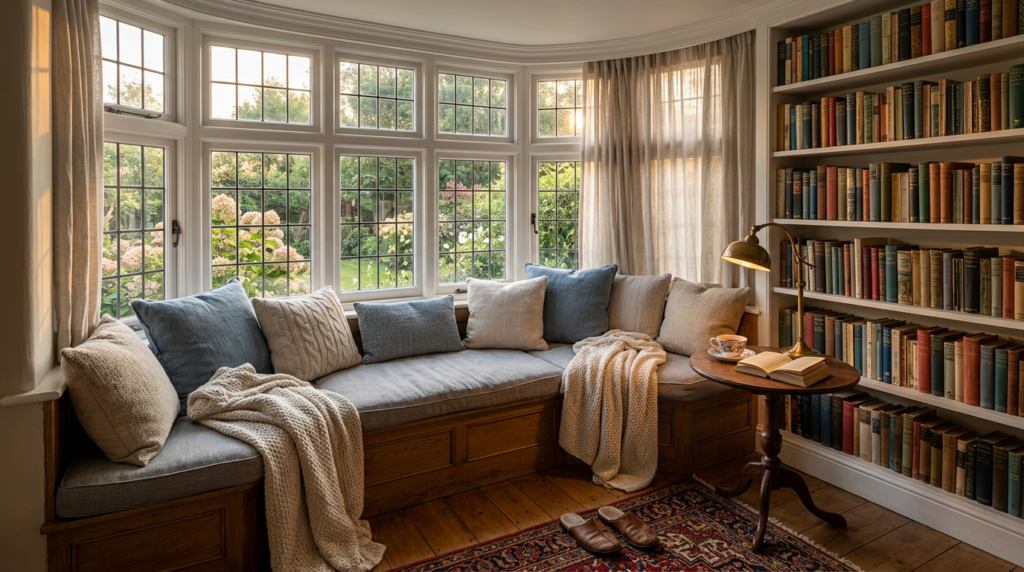
By designing a reading nook in a bay window lets you plan firm supportive seating, mitigate cold drafts with insulation and weatherproofing, and maximize ample natural light and views.
Evaluating the Architectural Footprint
Space in the bay determines seating type, circulation, and window access; you must allow clearance for window operation and at least 30-36 inches for walkways while planning storage that doesn’t compromise egress.
Measuring for Precision and Depth
Measure seat depth to allow comfortable reading-generally 18-22 inches-and factor in cushion thickness, window trim, and clearance for opening sashes so you keep both comfort and function.
Assessing Structural Load Requirements
Check whether the bay uses a load-bearing wall; adding benches or storage changes loads and can be dangerous without professional review, so you should consult a structural engineer before cutting or supporting elements.
If you plan built-in seating or deep storage, assess both dead and live loads and how bench footings transfer weight to joists. You must provide calculations from a structural engineer and secure any required permits. Options include sistering joists, adding a beam and posts, or using a freestanding frame with lightweight materials to keep loads distributed.
Selecting the Optimal Seating Foundation
Choose a seating base that fits your bay’s depth and traffic, balancing support and clearance so you can sit comfortably without obstructing windows or walkways.
Custom Built-In Joinery vs. Freestanding Furniture
Consider custom built-ins for a tailored fit and added storage, or opt for freestanding pieces if you value mobility and easier replacement; you decide which suits your lifestyle.
High-Density Foam and Ergonomic Upholstery
Prioritize high-density foam for long-lasting support, and choose ergonomic upholstery that cradles your posture to reduce your strain during long reads.
Dense high-density foam (look for densities ≥1.8 lb/ft³) delivers lasting support and shape retention; you should pair it with breathable fabrics and removable covers to prevent overheating and ease cleaning, since too-firm foam can create pressure points that compromise circulation during extended sitting.
Maximizing Storage Potential
Bay seating should double as storage; you can fit drawers or lift-up benches to tuck away blankets, slippers, and seasonal books, keeping the nook tidy and cozy.
Integrated Under-Seat Compartments
Lift-up seats give you hidden compartments for blankets and toys; you should pick soft-close hinges and sturdy builds to avoid pinch hazards while keeping access simple.
| Feature | Benefit |
|---|---|
| Under-seat drawers | Concealed storage for linens and gear |
| Lift-up benches | Large volume space for bulky items |
| Flanking bookcases | Organized display and vertical storage |
| Floating ledges | Flexible display without bulky frames |
Flanking Bookcases and Floating Ledges
Shelving flanking the bay offers display and stack space; you can mix closed cabinets with floating ledges to store bulky items and showcase favorites neatly.
Custom flanking units let you tailor shelf heights, add drawers, and fit a media niche; you should anchor tall bookcases to wall studs and use adjustable shelving for varied collections while ensuring secure anchoring to prevent tipping when kids climb or when shelves are heavily loaded.
Window Treatments and Climate Control
Positioning layered window treatments in the bay helps you stabilize temperatures, block drafts, and maintain comfortable reading conditions year-round; opt for cellular shades or insulated drapes to combine thermal protection with style.
Regulating Thermal Insulation and Privacy
Combining cellular shades with heavy drapes allows you to reduce heat loss, block nighttime visibility, and trap warm air near the seat, while addressing drafts and preserving privacy during long reads.
Light Management and UV Protection
Managing incoming light with adjustable blinds or solar shades helps you control glare, preserve book bindings, and limit UV-driven fading without sacrificing pleasant daytime brightness.
Choose a layered strategy: exterior awnings or films cut heat gain; interior sheers diffuse light for reading; adjustable slats and roller shades control glare and preserve natural light. Apply low-E glass or solar film to block UV and prevent book fading. Automated schedules or manual tilt let you adapt by season and protect valuables without losing the view.
Final Words
Considering all points, you can design a bay window reading nook that maximizes natural light and comfort by installing a fitted bench with cushions, adding task lighting, integrating storage for books, and selecting durable, glare-controlling window treatments to suit your style.
FAQ
Q: How do I determine the best dimensions and support structure for a bay window reading seat?
A: Measure the bay window’s overall width, the depth of each angled section, and the height from floor to window sill before planning the seat. Aim for a seat depth of 18-22 inches for upright reading and 20-24 inches if you want to lounge; standard seat height is 16-19 inches to match most chairs. Build the base from a sturdy platform: construct a framed box of 2x pine or birch plywood with a 3/4-inch plywood top, and anchor that frame to wall studs or to blocking nailed into studs; add a center support or additional legs for spans over 4 feet.
Choose a high-density foam (around 2-3 lb density) 3-6 inches thick for the cushion, with an optional softer topper for comfort. If you plan on storage beneath the seat, use a reinforced lid with piano hinge or gas struts and install full-extension drawer slides or internal compartments for organized access.
Q: What lighting and window treatments work best for reading in a bay window?
A: Maximize natural light by keeping sightlines clear, then add layered controls to handle glare and privacy. Install top-down/bottom-up shades or cellular shades to control sunlight while keeping some view; cellular shades also add insulation against heat loss. Use a dedicated task light such as a wall-mounted swing-arm lamp, an adjustable floor lamp placed behind the reading shoulder, or an LED strip tucked under a shelf to provide even, shadow-free illumination directly on the page. Aim for warm white light around 2700-3000K and 400-800 lumens focused on the reading area, and include a dimmer to adjust brightness for different times of day. Add UV-filtering window film or choose fade-resistant fabrics to protect cushions and textiles from sun damage.
Q: How can I make the nook comfortable, visually appealing, and low-maintenance?
A: Layer cushions for ergonomic support: a firm seat cushion for posture plus a firmer back cushion or lumbar pillow for lower-back support, and one or two softer throw pillows for lounging. Choose durable, washable, or removable zip covers in performance fabrics or tightly woven cotton-linen blends for easy upkeep; pick patterns or textures that complement surrounding trim and curtains.
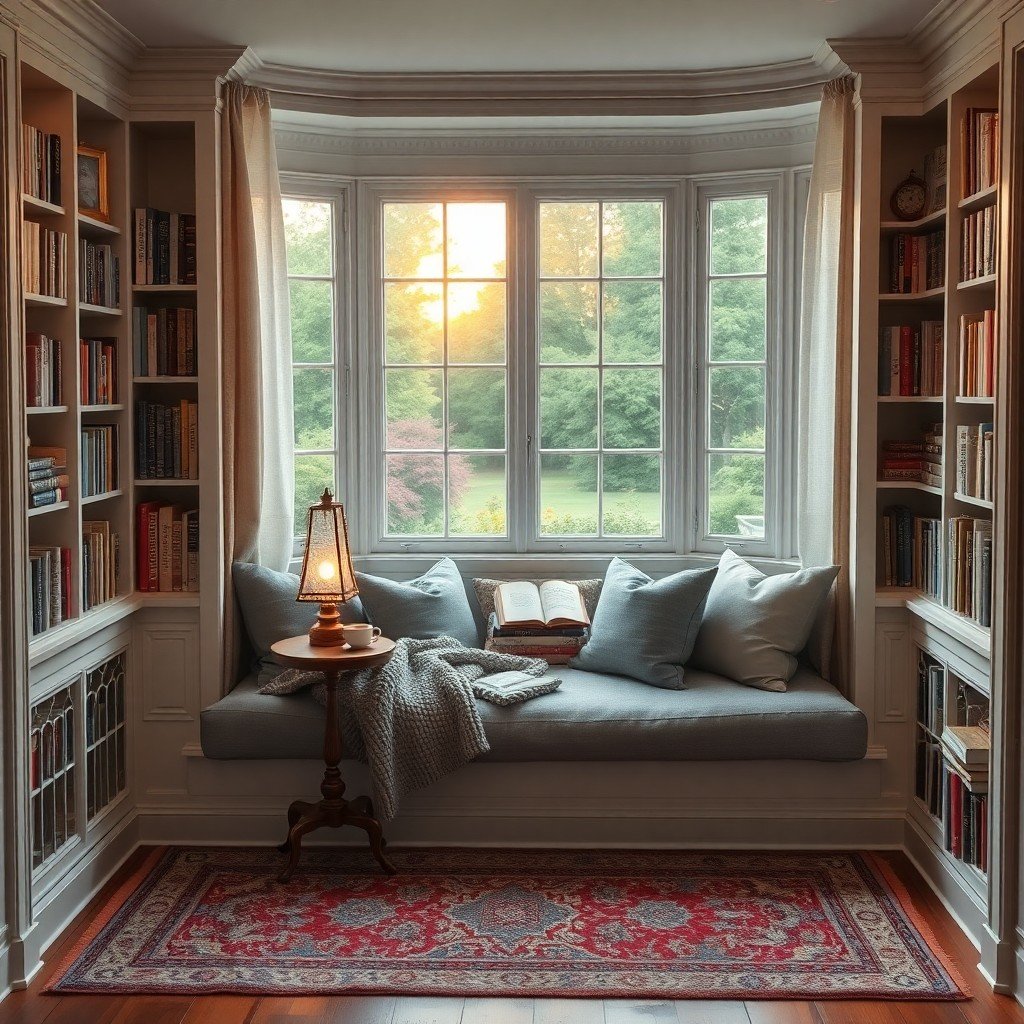
Integrate storage with built-in drawers, cubbies, or baskets to keep books and throws tidy; position a slim shelf or recessed niche for a cup and a current read. Anchor the space with a washable rug that fits the bay footprint to define the nook and protect flooring. Add a few low-maintenance plants or a small tray for necessarys to keep the area inviting without clutter.