
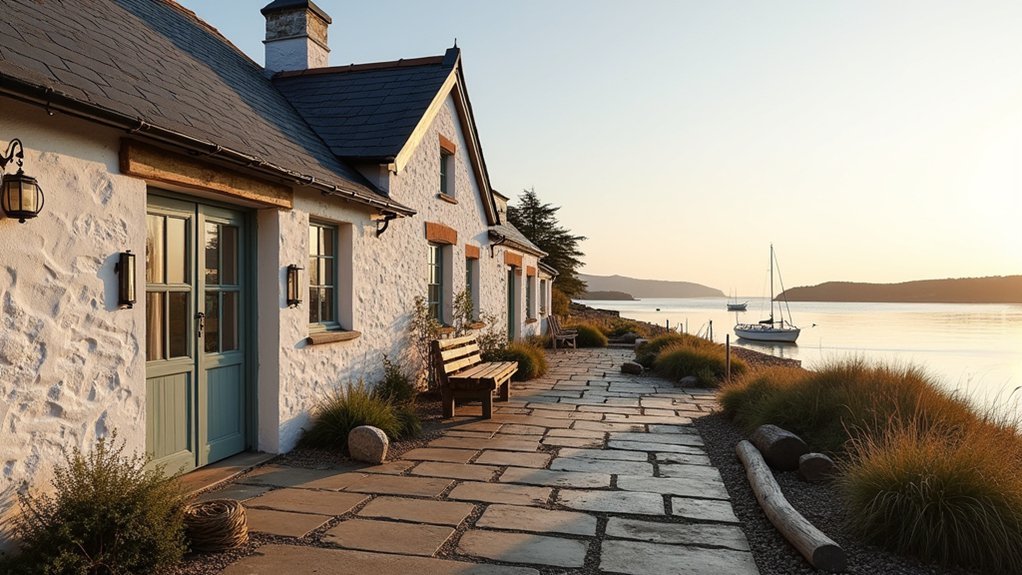
You start by surveying the Fisherman’s Cottage fabric and services, because estuary exposure exaggerates every defect. You check timber framing for movement, test lime plaster for cohesion, and map damp and salt crystallisation at skirtings and window reveals. You note ground levels, rainwater runs, and air paths before you touch insulation or finishes. Once you’ve got that evidence, you can decide what to repair like-for-like, what to upgrade discreetly, and what must change first…
Key Takeaways
- Survey roof, flashings, chimneys, and gables for wind-driven rain, then probe joist ends and wall plates for rot or corrosion.
- Map cracks and wall lean, record historic movement, and verify electrics, earthing, bonding, plumbing materials, and hidden spurs.
- Confirm planning status, conservation controls, and flood-zone constraints, then schedule required consents, reports, and conditions discharge with the LPA.
- Preserve original fabric using like-for-like, reversible repairs: splice matching timber, use lime plasters and mortars, and restore sash windows and fireplaces.
- Control damp and improve comfort: lower ground levels, manage drainage, reinstate lime pointing, maintain subfloor ventilation, and add discreet insulation or secondary glazing.
Survey the Fisherman’s Cottage (Structure, Services, Damp)
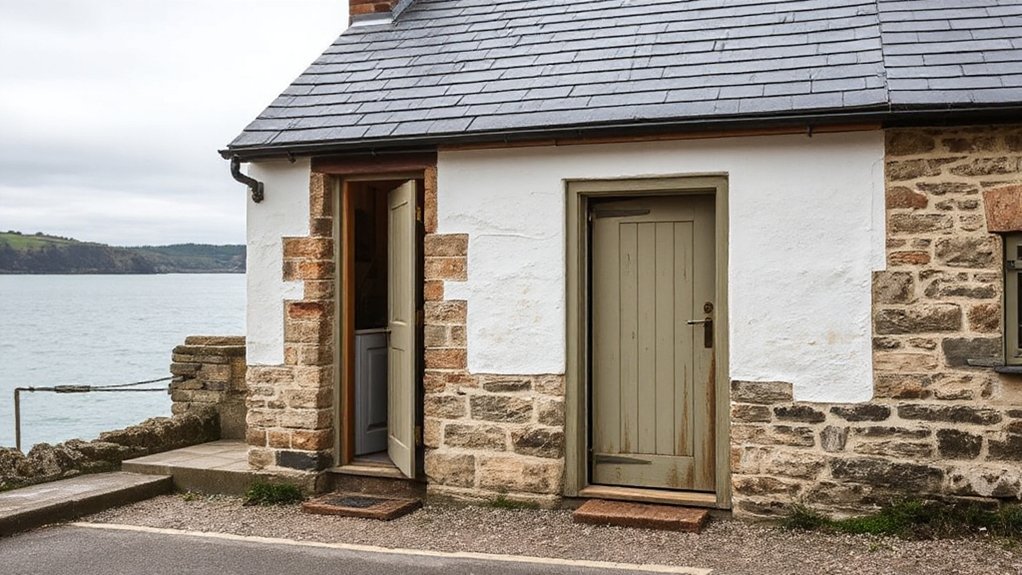
Before you lift a floorboard or strip back plaster, you’ll need to survey the cottage methodically, starting with structure, then services, then moisture.
Check roof coverings, flashings, chimneys, and gable stability against wind-driven rain; probe joist ends, wall plates, and lintels for rot, beetle, or corrosion from salt air that accompanies Seaside charm and Coastal views.
Map cracking and out-of-plumb walls, noting any historic movement.
For services, test consumer unit capacity, earthing, and bonding; trace hidden spurs, lead pipework, and tired stopcocks; pressure-test heating circuits and confirm flue integrity.
For damp, log external ground levels, blocked airbricks, and bridged DPCs; take moisture readings, salts tests, and inspect subfloor ventilation and condensation at cold corners.
Check Planning Rules Before Cottage Renovation Work
Even if you’re only revitalizing a fisherman’s cottage, you need to confirm early which works fall under permitted development and which trigger planning permission, listed building consent, or conservation area controls. Check the Local Planning Authority’s interactive constraints map for Article 4 Directions, flood zones, heritage designations, and zoning restrictions affecting extensions, roof alterations, new openings, and boundary treatments.
If the cottage is listed, assume internal and external alterations may need listed building consent, even where PD might otherwise apply. Validate whether changes to drainage, soakaways, or outfalls require Environment Agency or Lead Local Flood Authority approvals.
Compile drawings, a design-and-access statement if required, and heritage and flood-risk reports to secure Legal permits. Get pre-app advice, then programme statutory determination periods and conditions discharge before ordering work.
Preserve Original Cottage Features: Repair, Don’t Replace
Although a fisherman’s cottage may look tired, you’ll usually protect its character and value by repairing original fabric rather than swapping it out for modern equivalents. Survey each element, then specify like-for-like materials and reversible fixings so future work remains sympathetic.
- Splice in matching timber to repair historic woodwork, keeping original profiles and tool marks.
- Consolidate friable plaster with lime-based repair coats, not gypsum skim.
- Overhaul sash or casement windows: ease, reglaze, and fit discrete brush seals before considering new joinery.
- Restore a Decorative fireplace by re-pointing with lime mortar and retaining the surround; replace only perished firebricks.
- Lift, number, and relay floorboards; insert dutchman patches and refix with cut nails.
You’ll end up with authentic patina, tighter performance, and fewer compatibility risks.
Stop Damp and Salt Damage With Drainage and Ventilation
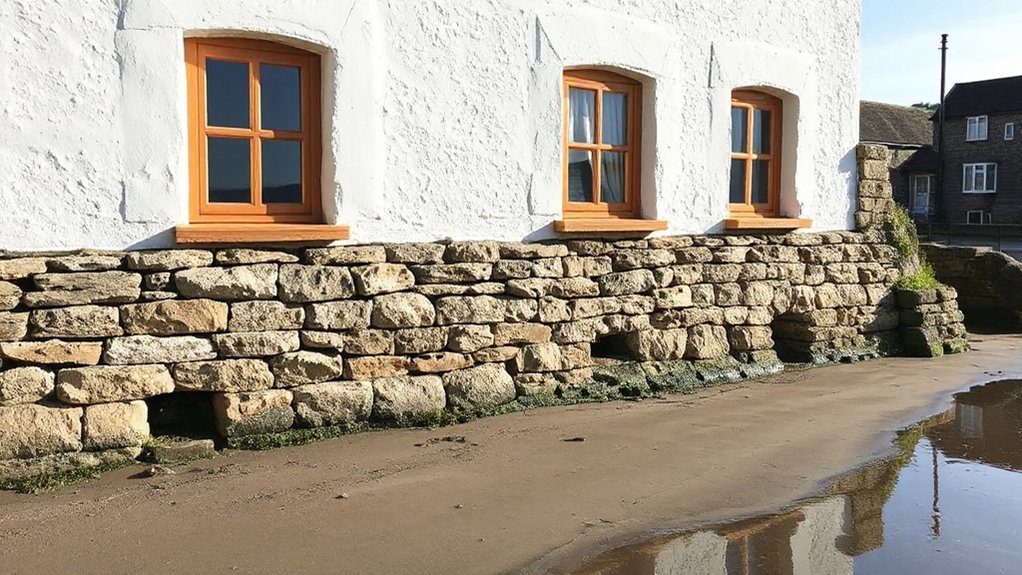
Repairing original fabric only pays off if you keep it dry, because damp and salt will keep blowing plaster, rotting embedded timbers, and spalling soft brick.
Start outside: drop ground levels where they’ve bridged the DPC, and re-grade to fall away from walls. Fit gullies and French drains with geotextile and clean gravel, then connect to a soakaway where feasible. Clear gutters, add downpipe shoes, and discharge well clear of footings.
Inside, you can’t seal moisture in: open up redundant cement pointing, use lime mortar, and maintain sub-floor airflow with clear airbricks. Improve background ventilation with controllable trickle vents and extract from kitchen and bathroom.
Use Moisture barriers only where appropriate, and specify Salt resistant materials for sacrificial plasters and repairs.
Insulate a Fisherman’s Cottage Without Losing Space
Because fishermen’s cottages often rely on solid stone or soft brick walls that need to breathe, you’ll get the best thermal upgrade by targeting low-build-up insulation that doesn’t trap moisture or steal floor area. You can keep skirtings, reveals, and Coastal landscape views clear while lifting comfort.
- Specify calcium silicate or woodfibre internal boards with vapour-open lime plaster.
- Use aerogel blanket at cold bridges around floor junctions, chimney breasts, and nibs.
- Insulate between joists with sheep’s wool or hemp, plus an airtight but vapour-variable membrane.
- Add cork underlay beneath floor finishes to reduce impact noise and chill.
- Seal service penetrations with grommets and tapes, then verify with smoke pencil testing.
You’ll still have room for Ocean inspired decor, but you won’t be heating damp masonry.
Improve Glazing Without Altering Window Sizes
When you need warmer rooms and less draught without touching listed-style proportions, you can upgrade performance by changing the glazing build-up inside the existing sash or casement. Specify slimline double glazing (typically 11–14mm) with low‑E glass, warm-edge spacers, and argon fill, and check the frame can take the extra weight and thickness.
If bars are delicate, use single pane with internal secondary glazing on discreet aluminium tracks to maintain historical authenticity.
You should overhaul seals: rout a brush pile or compression gasket into meeting rails, renew parting beads, and adjust ironmongery so the window pulls tight. Repair putty lines with linseed-based compound and repaint.
You’ll cut U-values, reduce condensation, and gain subtle aesthetic enhancement without altering reveals.
Rework the Fisherman’s Cottage Layout for Year-Round Living
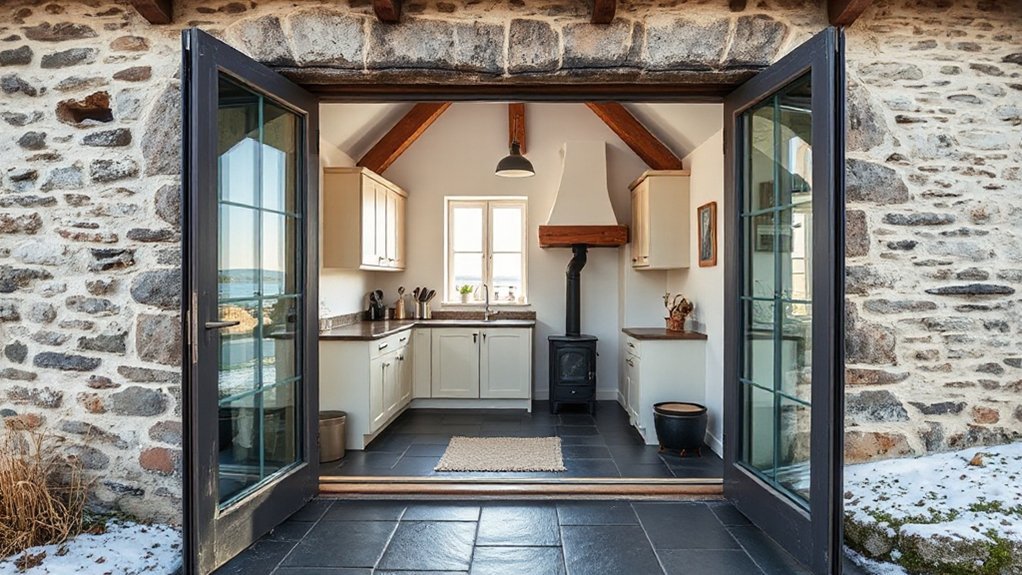
Upgrading glazing and seals tackles heat loss at the envelope, but you’ll only get true year‑round comfort if the internal plan supports how the cottage is used in winter. Rebalance circulation so you don’t heat corridors, and cluster high‑use rooms around the stove or heat-pump emitters. Keep damp-prone functions by the door to manage estuary grit, without compromising Heritage conservation detailing.
- Create a draught lobby with bench storage and a drained matwell
- Re-site kitchen/dining to the sunniest elevation; reduce north glazing
- Add a utility/boot room with extract to control moisture loads
- Use pocket doors to zone heat and meet Part L airtightness targets
- Link thresholds to Coastal landscaping routes, limiting sand tracking indoors
Frequently Asked Questions
How Much Does a Sympathetic Estuary Cottage Renovation Typically Cost?
You’ll typically spend £1,800–£3,500/m² in the UK, or £120k–£250k overall. Costs rise with Exterior preservation, Coastal materials, flood resilience, heritage consents, specialist trades, and services upgrades.
How Long Will the Renovation Take From Start to Finish?
In the blink of an eye, you’ll need 6–18 months start-to-finish. You’ll spend 2–4 months on Historic preservation surveys/consents, then 3–10 months on-site for Coastal architecture works, plus snagging and certification.
Can I Live in the Cottage While Renovation Work Is Underway?
You can, but only if works stay confined and services remain safe. Check Local regulations, asbestos surveys, and Building Control. Plan Interior design phasing, temporary kitchen/bathroom, dust control, and separate contractor access.
How Do I Choose Contractors Experienced With Historic Coastal Cottages?
Choose contractors who blend heritage craft with modern compliance: shortlist via Historic preservation accreditations (IHBC, SPAB), verify Coastal architecture projects, demand salt-resistance specs, check SSIP, inspect references onsite, and insist on detailed method statements.
Will Renovating Affect My Home Insurance or Future Resale Value?
Yes, renovating can change premiums and resale. You’ll trigger Insurance implications if you alter structure, services, or flood resilience; tell your insurer. You’ll strengthen resale considerations by retaining character, consents, warranties.
Conclusion
You’ve treated the cottage like a tide-worn boat: you’ve surveyed the hull (frame, services, damp), checked the harbourmaster’s rules (planning), and repaired timbers, lime plaster, and sash cords rather than swapping them out. You’ve regraded ground levels, used breathable, salt-resistant finishes, and improved airflow to keep salts from crystallising. With discreet insulation, slimline double glazing, and a tighter plan, you’ve made it seaworthy for year-round living.