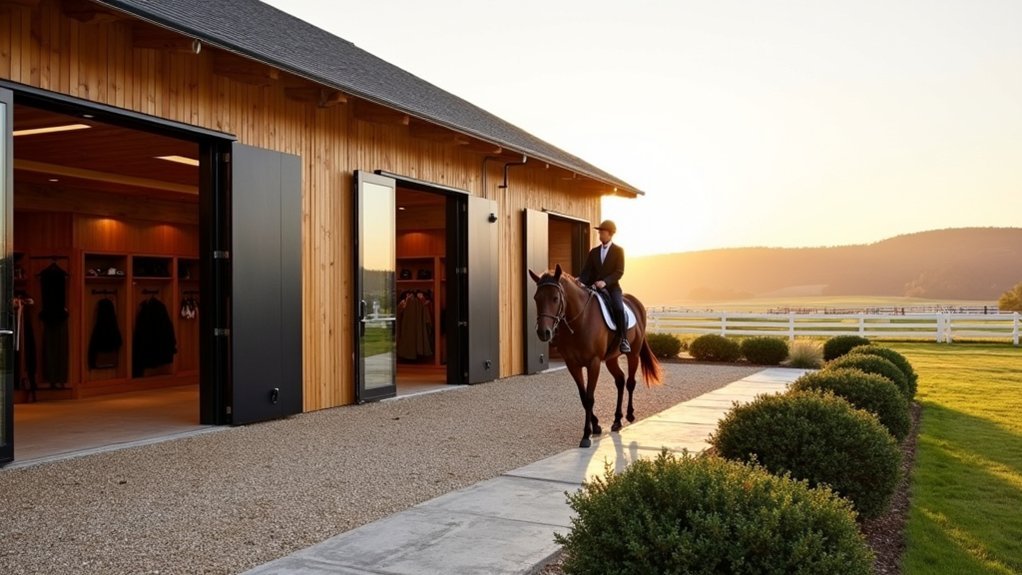
You can’t design true equestrian property luxury by adding finishes last; you plan it into daily flow from the gate to the wash rack. You zone the barn so clean chores stay fast, traffic stays safe, and horses stay calm. You choose materials that take abuse but still present like a private estate. Then you tune light, air, drainage, and footing so upkeep doesn’t consume your week. The real difference shows up in one overlooked decision…
Key Takeaways
- Plan site circulation with separate guest and service routes, direct weather-protected walks, and drainage-first grading to streamline daily operations.
- Position barns, arenas, and paddocks for prime sightlines, native windbreaks, and low-toxicity landscaping that reduces stress and maintenance.
- Zone the barn around a service spine, central grooming hub, and controlled-access security core to improve safety, hygiene, and workflow.
- Specify durable, cleanable finishes—sealed concrete, rubber in high-impact zones, kick-resistant walls, and corrosion-proof hardware—for long-term performance and easy wash-down.
- Engineer arenas with laser-graded bases, drainage, smart watering, and climate-matched footing blends to deliver consistent ride quality with minimal upkeep.
Plan a Practical Luxury Layout for Daily Flow
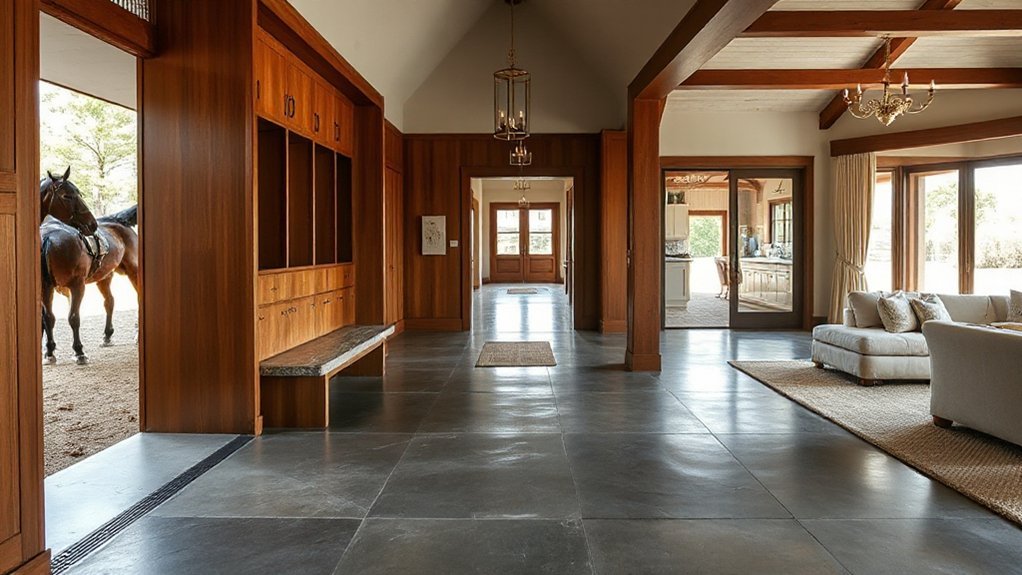
Whether you’re designing from scratch or refining an existing estate, you need a layout that treats daily barn-to-house movement as the primary luxury. Place the barn on the home’s “working view” side, not behind show gardens, and keep the walking route direct, lit, and weather-protected.
Align drive entries so service vehicles and guests separate early, reducing congestion and noise.
In your Equestrian landscape, grade paths for drainage, specify non-slip finishes, and use discreet heating where ice forms.
Reserve the prime sightlines for arenas and paddocks, then frame them with Luxury landscaping—native hedges, low-glare fixtures, and windbreak plantings that don’t drop toxic leaves.
You’ll feel the difference every day, in minutes saved and calm maintained.
Zone the Barn for Clean, Fast Chores
How do you make a barn feel effortlessly luxurious when chores still happen twice a day? You zone it like a working kitchen: every task has a clean, direct route, and nothing crosses paths. Keep “dry” and “dirty” traffic separated so bedding, feed, and manure never compete with Horse grooming or client areas.
- Service spine: Run muck, deliveries, and wheelbarrows along a back corridor with exterior access, so aisles stay quiet and presentable.
- Grooming hub: Center wash, tack-up, and Horse grooming tools near stalls, with a clear return path to laundry and tack storage.
- Security zone: Put office, meds, and grain behind controlled access; layer cameras and sightlines for stable security without feeling intrusive.
Pick Hardwearing Barn Materials That Still Feel Luxe
Smart zoning keeps chores moving cleanly; the materials you choose keep the whole barn looking intentional while it takes daily abuse.
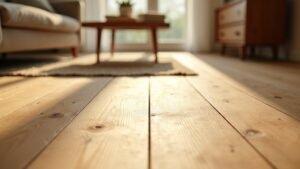
Start with sealed concrete or clay pavers with a broom finish for traction and easy wash-down, then edge high-impact zones with rubber pavers where carts turn.
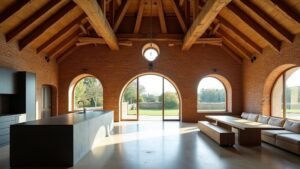
Specify tongue-and-groove hardwood or sealed pine wainscoting over impact board to resist kicks and hose spray while delivering Farmstead aesthetics.
Use galvanized steel or powder-coated aluminum for door tracks, hardware, and wash fixtures; it won’t pit, and it reads crisp, modern.
Choose fiber-cement or thermally modified wood for exterior cladding to hold color and shrug off weather.
Finish with matte black lighting, leather-wrapped pulls, and traditional craftsmanship in exposed joinery.
Design Horse Stalls for Safety, Comfort, and Turnout
Because stall design shapes both daily handling and long-term soundness, you’ll want to treat each stall as a controlled environment: build in clear sightlines, generous dimensions, and smooth, kick-resistant surfaces; manage airflow without drafts; and prioritize fast, low-stress access to turnout.
For modern performance barns, the details that read “luxury” are the ones that reduce risk and labor while supporting recovery. Bake Stall safety features into every touchpoint, and make Horse stall ventilation measurable, not guesswork.
- Size and layout: go 12×12 minimum, add corner feeders, and keep doors wide for blanket changes and vet work.
- Air and light: use ridge vents, adjustable inlets, and shatter-resistant glazing.
- Turnout flow: align stalls to direct paddock access with non-slip thresholds and quiet latches.
Set Up a Luxe Tack Room With Real Storage
Once your stalls run safely and efficiently, the tack room becomes the next place to eliminate friction and add true luxury. Plan zones: daily-use tack at arm’s reach, show gear protected, and seasonal items off the floor.
Install Custom cabinetry with ventilated saddle racks, pull-out bridle bars, and felt-lined drawers for bits, gloves, and electronics. Specify adjustable shelving for helmets and grooming totes, plus tall lockers for blankets and boots.
Add a dedicated cleaning station with a sealed countertop and concealed bins so supplies don’t sprawl. Choose Elegant storage that reads like fine millwork, not a utility closet: consistent fronts, labeled interiors, and hardware that’s glove-friendly.
Finish with a durable, washable floor and a bench that doubles as a trunk stand.
Control Lighting, Airflow, and Climate Year-Round
You’ll elevate daily barn performance when you zone smart lighting by aisle, stall, and wash rack, matching illumination to task and time of day.
You’ll protect horses and finishes by prioritizing balanced ventilation, filtration, and continuous air-quality monitoring where dust and humidity spike.
You’ll keep comfort consistent by automating seasonal setpoints—heat, fans, dehumidification, and shading—so the property runs efficiently year-round.
Smart Lighting Zoning
While an equestrian property has to perform across barn aisles, tack rooms, wash bays, and living quarters, smart lighting zoning lets you tune each zone’s illumination, airflow, and temperature with precision instead of compromising with one-size-fits-all settings.
With app-based zone control, you match tasks to light levels, reduce glare, and protect circadian rhythms for staff in adjoining residences. You’ll also schedule gradual ramp-ups for early feeds and instant high-output modes for emergencies, without lighting unused runs.
Pair fixtures with occupancy, daylight, and humidity sensors so systems respond automatically, then override locally with rugged keypads.
- Set scene presets: “Night Check,” “Tack Prep,” “Vet Visit.”
- Limit spill light with aisle/bay zoning and optics.
- Track energy by zone to refine settings seasonally.
Ventilation And Air Quality
Smart zoning doesn’t stop at light levels—you’ll get better outcomes when the same zone logic governs ventilation and air quality across barns, wash bays, and adjacent living spaces. You’ll separate “dusty” and “clean” zones, then keep air moving in the right direction with pressure balancing and dedicated exhaust at wash racks, tack rooms, and manure handling points.
You’ll prioritize natural ventilation with ridge vents, cupolas, and correctly sized sidewall openings, but you won’t rely on it alone when weather stalls airflow. Add variable-speed fans tied to occupancy and particulate sensors so you clear dander and ammonia without over-drying stalls.
Specify MERV-rated air filtration for staff areas and any conditioned lounge, plus sealed returns to prevent cross-contamination. You’ll also choose corrosion-resistant grilles and washable prefilters for longevity and easier maintenance.
Seasonal Climate Automation
Because seasonal swings hit barns and living quarters differently, climate automation needs to coordinate lighting schedules, ventilation rates, and temperature setpoints as one system rather than separate gadgets. You’ll protect horses, finishes, and energy budgets by linking sensors, variable-speed fans, and smart shades to a single seasonal climate automation profile that adapts by hour and humidity, not just by month.
Prioritize:
- Circadian lighting that shifts color temperature and dimming for early chores, show prep, and quiet hours.
- Demand-controlled airflow using CO₂, ammonia, and particulate triggers to modulate ridge vents and makeup air.
- Zoned heating/cooling with dehumidification targets to prevent tack-room mold and stall condensation.
Tie controls to weather forecasts and equestrian landscape integration—tree windbreaks, shaded courtyards, and breezeways reduce mechanical loads.
Upgrade Arenas and Footing With Low Maintenance
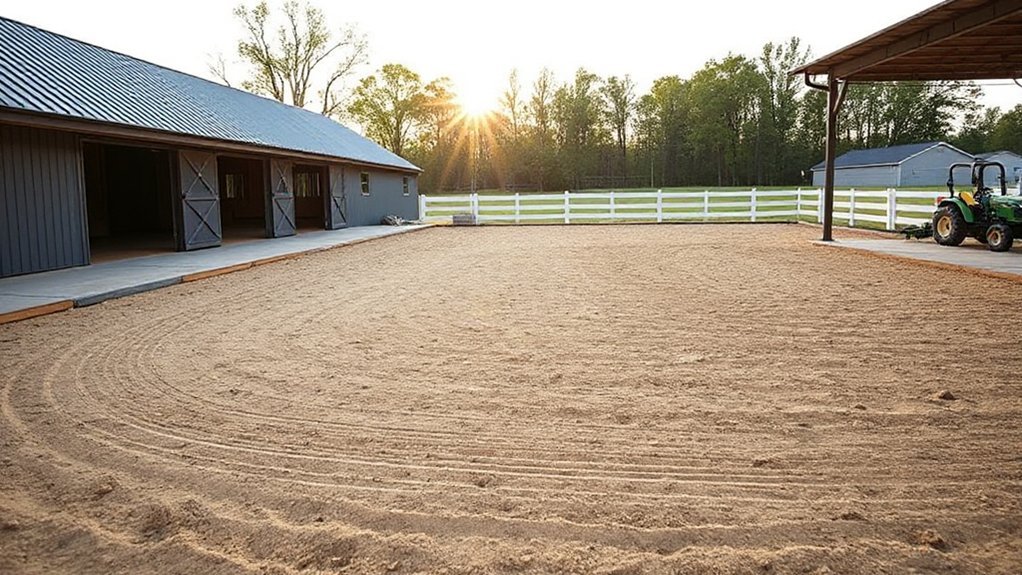
You’ll get more ride time and fewer repairs when you upgrade your arena with smart grading, proper base compaction, and efficient drainage that sheds water fast.
Choose durable, low-maintenance footing blends—like sand with textile fiber or waxed sand—that stay consistent under traffic, reduce dust, and resist freezing or blowouts.
Pair those materials with geotextile separation and a simple drag-and-water routine, and you’ll keep premium performance without constant upkeep.
Low-Maintenance Arena Upgrades
While an arena can look pristine on day one, it only stays that way if the base, drainage, and footing work together to resist compaction, hold consistent moisture, and shed water fast. You’ll reduce daily drag time by engineering the subgrade with laser-accurate slopes and installing perimeter French drains that stay accessible for cleanouts.
Pair smart watering with sensors so you don’t overapply and create slick spots, and add windbreak plantings where evaporation spikes. Finish the experience with innovative fencing that hides conduit for lighting and speakers, and specify eco-friendly surfacing at walkways and in-gates to cut mud tracking and sweep-up.
Prioritize upgrades that simplify checks and protect investments:
- Drain cleanout ports
- Moisture-controlled irrigation zones
- Edge stabilization to prevent migration
Durable Footing Material Choices
If the footing breaks down under traffic or swings between dusty and boggy, even a well-built base can’t deliver consistent ride quality. Your footing material selection should prioritize angular, washed sand with controlled fines, then add a modern stabilizer: fiber for shear strength, rubber for concussion reduction, or coated textile blends for moisture control.
In high-use luxury arenas, engineered blends outperform straight sand because they resist migration and compaction. Specify particle size distribution, not brand names, and verify it with sieve data.
For longevity, match additives to your climate: waxed or polymer-treated systems reduce watering, while fiber needs dependable moisture to stay knit.
Lock in performance with simple footing maintenance routines—laser grading, shallow harrowing, and spot top-offs—on a predictable schedule.
Frequently Asked Questions
What Budget Range Is Realistic for Practical Luxury Equestrian Properties?
You’re realistically looking at $1.5M–$8M+, depending on acreage, barns, arenas, and utilities. Upgrade fast with luxury material choices and aesthetic design considerations; today’s trend favors durable finishes, smart systems, and efficient layouts.
Which Permits and Zoning Rules Commonly Affect Barn and Arena Construction?
You’ll face zoning restrictions on setbacks, height, lot coverage, and permitted agricultural use; arenas may trigger lighting/noise limits. Permit requirements typically include building, grading, drainage/stormwater, septic, fire access, and environmental/wetland approvals.
How Do You Plan for Manure Management, Composting, and Waste Hauling Logistics?
Plan it like your life depends on it: you’ll site Manure composting away from water, size pads for volume, schedule turns, and contract waste hauling pickups; you’ll track regs, optimize routes, and control odors.
What Security and Access-Control Systems Work Best for Remote Equestrian Properties?
You’ll get the best results using layered Security technology: solar LTE cameras, thermal perimeter sensors, and analytics-enabled lighting, paired with robust Access control—smart gates, keypad/RFID barn doors, visitor QR codes, and remote lockouts.
How Can Luxury Equestrian Upgrades Impact Insurance Costs and Liability Coverage?
Like a double-edged spur, luxury upgrades can raise insurance premiums if they boost rebuild values, but cut them with sprinklers and alarms. You’ll strengthen liability coverage by adding safer footing, lighting, signage, and waivers.
Conclusion
When you design practical luxury right, your property runs like clockwork and looks like a magazine spread. You’ll move from sunlit, well-zoned aisles to safe stalls with quiet hardware and easy turnout, while sealed floors and refined finishes take the wear. In the tack room, every bridle hangs in its place. Evenings settle under warm LEDs as balanced airflow stays steady. Outside, arenas drain clean and footing stays springy with minimal grooming.