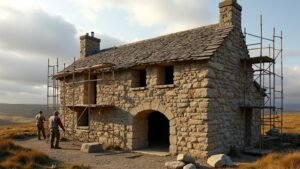
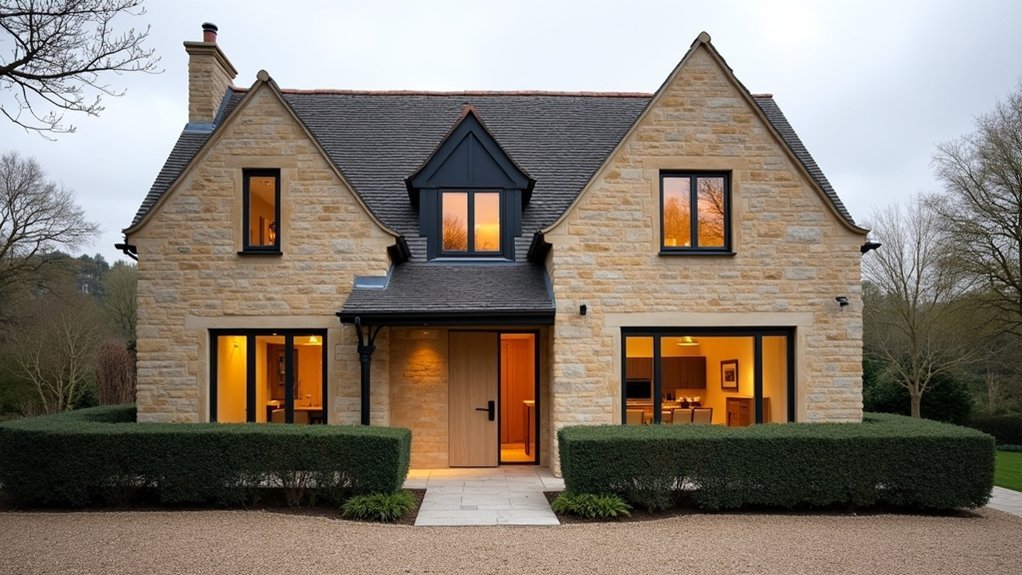
You’re not erasing history; you’re editing it by Reimagining a Cotswold Stone Cottage. You set priorities first—what must stay, what can shift, and where planning limits bite—then rework the layout to keep the original routes while gaining storage and flow. You upgrade mullioned openings with slimline glazing, refine junctions with crisp reveals and shadow gaps, and choose lime-friendly, calm finishes that flatter Cotswold stone. Then you conceal heating, lighting, and services so the cottage feels effortless—until one key detail forces a decision…
Key Takeaways
- Start by protecting listed Cotswold stone features and confirming scope, materials, and opening changes with conservation officers and planning rules.
- Rework the layout around original entry, stair, and hearth, using boot rooms and pantries to declutter main living spaces.
- Improve light with slimline double glazing that matches historic timber profiles, and selectively widen existing openings while aligning heads to original lintels.
- Detail junctions precisely with consistent reveal depths, shadow gaps, and slim stop-beads, finishing in mineral paints and limewash for a calm contemporary feel.
- Conceal modern services early using slim underfloor heating build-ups, service voids, and integrated lighting and storage to keep walls and stonework visually clean.
Set Priorities and Constraints for a Cotswold Stone Cottage
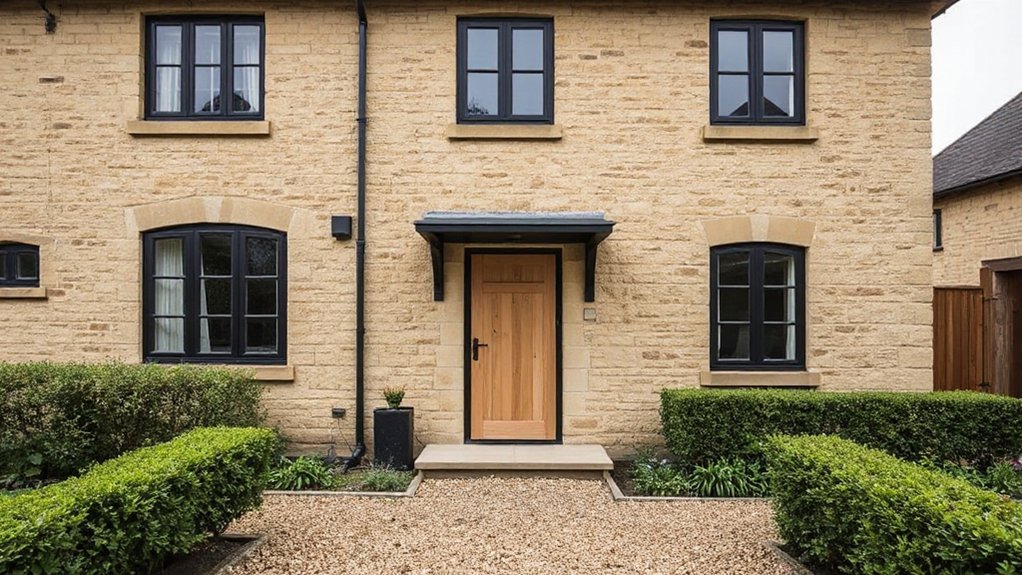
Before you sketch layouts or pick finishes, lock in your non-negotiables for the cottage—what must be preserved, what can change, and what the budget and planning rules will actually allow. Start by mapping the building’s significance: Cotswold stone elevations, mullions, roof pitch, and any listed features that trigger Historical preservation requirements. Confirm with conservation officers what you can alter, then translate that into a scope you can price realistically, including contingency for hidden defects.
Next, set performance targets without compromising character: insulation strategy, airtightness, moisture management, and services routes that avoid cutting original fabric. Prioritise Landscape integration early—access, drainage, biodiversity, and discreet external lighting—so your upgrades sit quietly in the setting and won’t stall approvals.
Plan a Modern Layout That Keeps Cottage Charm
Once you’ve locked your constraints—what the conservation officer will sign off and what your budget can carry—you can shape a layout that lives like a modern home without flattening the cottage’s character.
Start by keeping the original circulation legible: retain the entry, stair, and primary hearth as anchors, then reassign smaller rooms to purposeful uses (boot room, pantry, utility) so the main living zone can breathe.
Use partial openings and framed thresholds rather than full knock-throughs; they preserve intimacy while improving flow. Prioritise aligned sightlines to the garden for subtle Garden integration, and place dining where it can borrow outdoor views.
Add storage in wall thicknesses and under-stair voids to avoid bulky furniture. For extra area, consider Roofline enhancements like discreet rear dormers or a modest cat-slide extension that respects the ridge and eaves.
Upgrade Cotswold Cottage Windows and Doors for Light
You’ll transform a Cotswold stone cottage fast by upgrading windows and doors to prioritise light without losing character.
Specify slimline glazing to keep sightlines crisp, then enlarge key openings—carefully sized and well-supported—to pull daylight deeper into the plan.
Once the envelope brightens, you can reinforce it with bright interior finishes that bounce light and sharpen the cottage’s new, modern edge.
Slimline Glazing Upgrades
Although Cotswold stone cottages prize character, slimline glazing upgrades let you pull in more daylight without sacrificing the fine timber sightlines and traditional proportions that make them feel authentic. You’ll specify ultra-thin double glazing units that mimic single-pane reflections, keeping muntins crisp and glazing bars visually light.
Choose minimalist framing in painted timber, steel-look aluminium, or timber-aluminium composites, then match putty lines, horn details, and existing reveal depths so the facade reads unchanged.
Insist on energy efficient glazing with low-iron glass, warm-edge spacers, and argon fill to cut draughts and improve comfort without bulky profiles. Upgrade seals, trickle vents, and heritage-compatible ironmongery so windows operate smoothly and meet modern standards.
You’ll also reduce condensation risk by pairing improved glazing with discreet perimeter insulation and careful installation tolerances.
Enlarged Openings, Bright Interiors
Where daylight falls short in a Cotswold cottage, enlarged window and door openings can transform the interior without erasing the building’s quiet hierarchy. You’ll get the best results by widening existing bays rather than punching random apertures, and by aligning new heads with original lintel lines.
Choose steel-reinforced stone lintels or concealed flitch beams so you can open up gables and garden elevations safely. Keep reveals deep and crisp to preserve Rustic charm, then specify slim-profile timber or bronze-clad frames that reference Traditional materials without looking pastiche.
For doors, use oversized, glazed pivot or French sets with a flush threshold to pull light through and improve flow. Finish with limewash-bright walls and pale oak floors to bounce daylight deeper indoors.
Detail Junctions: Reveals, Shadow Gaps, Slim Trims
Once the structural work’s resolved, the cottage’s new character lives or dies in the junctions—reveals that sharpen openings, shadow gaps that keep plaster planes crisp, and slim trims that finish edges without visual bulk.
You’ll treat these interfaces as design, not afterthought, balancing traditional craftsmanship with historic preservation while delivering a clean, contemporary read.
- Set consistent reveal depths at windows and doors so thick stone walls feel intentional, not clumsy.
- Run 10–15mm shadow gaps at ceiling and skirting lines to prevent cracking telegraphing through.
- Specify slim steel or timber stop-beads at corners for hard, durable arrises without chunky architraves.
- Coordinate tolerances early: stone, lime substrates, and joinery must align so gaps stay even.
You’re aiming for precision that feels quiet, not fussy.
Pick Calm Finishes That Suit Cotswold Stone and Lime
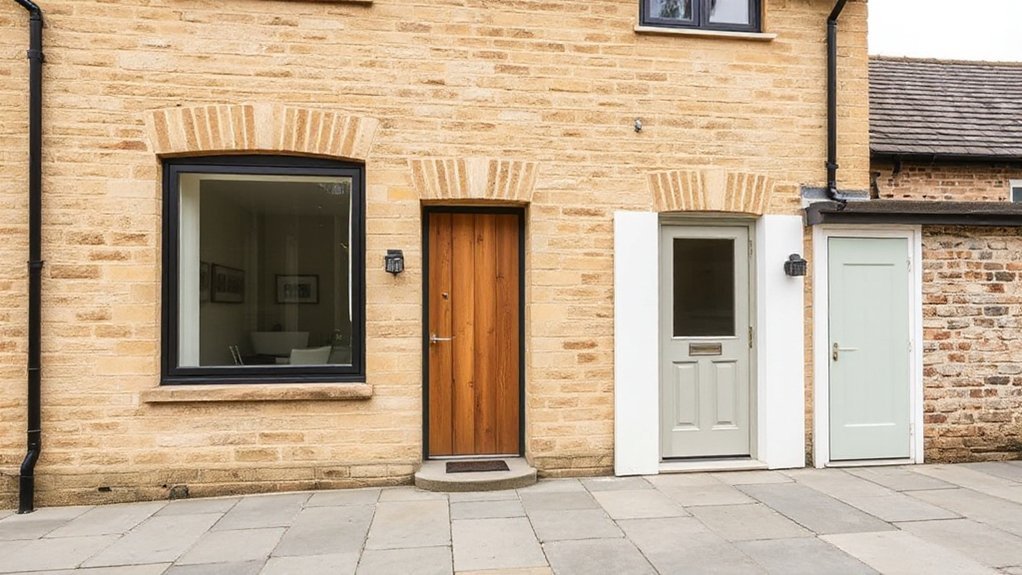
Because Cotswold stone and lime plaster already bring colour, texture, and depth, you’ll get the most timeless result by specifying calm, mineral-led finishes that breathe, patinate gently, and keep the palette quiet. Choose limewash, claypaint, or silicate paint in chalky off-whites, stone greys, and softened ochres, and keep sheen low so light reads as soft, not shiny.
For timber, use soap-finished oak, clear matte oils, or fumed tones that echo aged beams without going orange. Specify tumbled limestone, honed flagstone, or microcement only where you can keep edges crisp and joints disciplined.
Work vintage textures through brushed metals, hand-thrown ceramics, and linen upholstery, but anchor rustic palettes with one cool neutral to prevent the rooms feeling sepia.
Hide Modern Heating, Lighting, and Storage Neatly
Although you can’t pretend modern comfort doesn’t exist, you can make it visually disappear by planning heating, lighting, and storage as part of the architecture rather than as add-ons.
In a Cotswold cottage, you’ll protect the stone’s calm presence by specifying integrated climate control and concealed electrical systems early, before plaster, joinery, and flooring lock you in.
Aim for crisp detailing that reads as craft, not kit.
- Run underfloor heating with slim build-ups; keep radiators off external walls.
- Use shadow-gap coves and micro downlights; bounce light off limewash.
- Build storage into chimney breasts, eaves, and thickened partitions; flush doors, no pulls.
- Hide cables in service voids and skirting ducts; place sockets low and aligned.
Frequently Asked Questions
Do I Need Listed Building Consent for Contemporary Changes to a Stone Cottage?
Yes, you’ll likely need Listed Building Consent if your cottage is listed and changes affect its character—inside or out. Consult conservation officers early; Historic preservation rules apply, even to Modern extensions, glazing, or interiors.
How Do I Manage Damp When Combining Lime Plaster With Modern Insulation?
Treat damp like a silent thief: you stop it with breathability. You pair lime plaster with vapour-open modern insulation, avoid foil-backed layers, tape airtightness, guarantee ventilation, and manage rainwater with sound detailing and capillary breaks.
What Are Typical Costs and Timelines for a Cotswold Cottage Renovation?
You’ll typically spend £2,500–£4,500/m² and allow 6–18 months, depending on surveys, consents, and scope. You’ll finish Interior lighting and Garden landscaping late, but you’ll lock budgets early with fixed quotes.
Which Trades Should I Hire for Stone Repairs and Lime-Based Work?
You’ll “just” need a stonemason, a lime plasterer/renderer, and a lime mortar pointing specialist; add a conservation bricklayer, scaffolders, and a heritage surveyor. Prioritise Traditional craftsmanship, vet Modern materials compatibility, and insist on breathability.
How Can I Improve EPC Rating Without Harming the Cottage’s Character?
You’ll boost your EPC by prioritising Modern insulation that respects Historic preservation: draught-proof doors, secondary glazing, loft/sheepwool insulation, breathable internal wall systems, heat-pump-ready radiators, LED lighting, smart controls, and upgraded cylinders—avoiding impermeable foams.
Conclusion
You test the theory that a Cotswold cottage can feel contemporary without losing its soul, and the evidence backs it. When you set constraints, keep original routes, and refine the plan, the house reads as honest, not “styled.” Slimline glazing and better doors prove light is a material, not a luxury. Tight reveals, shadow gaps, and discreet trims show craftsmanship, not fuss. Calm lime-friendly finishes, concealed heating, layered lighting, and built-in storage complete the quiet upgrade.