

You’ll restore a salt weathered harbour cottage properly by mapping moisture and salt routes first, using carbide/capacitance readings at skirtings, chimney breasts, and party walls, and logging tide and wind exposure. Fix ingress next: renew flashings, lead soakers, gutters, and repoint in NHL 3.5 lime to keep walls vapour‑open. Then repair joinery with scarfed sections, linseed putty, and 316 stainless fixings, while improving drainage, vents, and extraction. Keep going for the full sequence and specs.
Key Takeaways
- Survey moisture and salt pathways with moisture readings, tide/wind logs, and mapped efflorescence, blistered paint, and friable plaster.
- Stop water ingress first: repair flashings, soakers, ridge bedding, gutters, and valleys to prevent spray backing under slates.
- Repoint and patch masonry using vapour-open NHL 3.5 lime and matching bricks, adding discreet drip edges to shed runoff.
- Restore joinery by consolidating or scarfing timber, renewing putty and seals, and using stainless or silicon bronze fixings with breathable coatings.
- Manage harbour damp with improved drainage and ventilation: lower ground levels, clear gullies, add French drains, and maintain subfloor and extractor airflow.
Survey Salt Damage in a Coastal Cottage
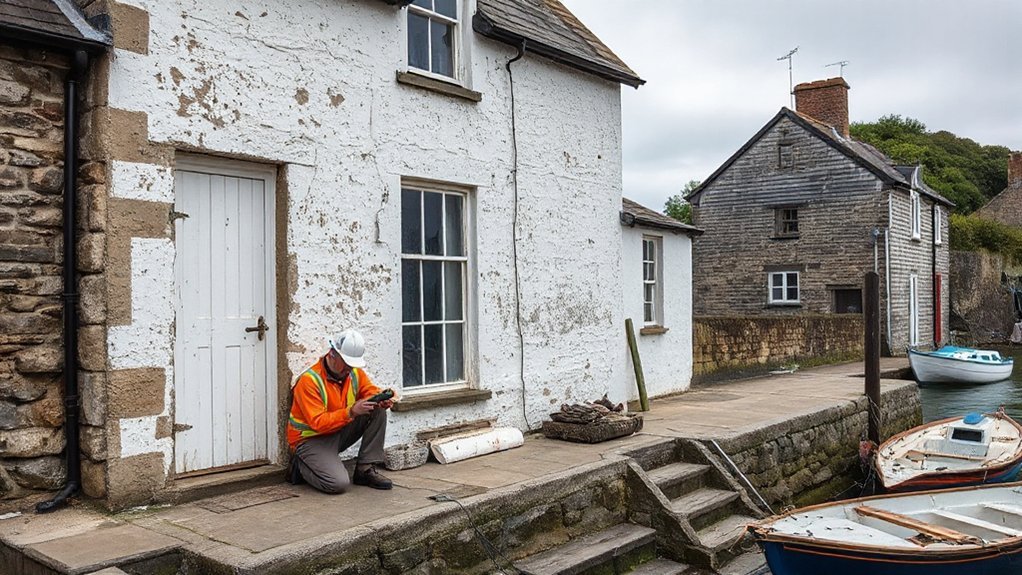
Before you specify repairs, you’ll need to survey the cottage methodically for salt-driven decay, because marine aerosols and tidal damp can mask the true failure points.
Start with a moisture profile: take carbide or capacitance readings at skirtings, chimney breasts, and party walls, then log tide state and wind direction.
Map efflorescence, friable plaster, and blistered paint to identify salt migration paths.
Check metalwork for Salt corrosion: hinges, fixings, wall ties’ tell-tales, and service penetrations; note rust staining and magnetic pull changes.
Inspect timber joinery for raised grain and fastener bloom.
Externally, review Coastal landscaping—hard standings, planting beds, and drainage falls—so you can trace splashback and ponding that keep salts active.
Photograph, label, and grid-mark findings for comparison.
Prioritize Roof, Masonry, and Structural Repairs
Once you’ve mapped where salts and moisture are travelling, prioritize repairs that stop water ingress and arrest structural movement. Start at the roof: replace failed flashings, renew lead soakers to LSA details, and re-bed ridge tiles with a lime-rich mortar, not cement. Check sarking felt, valleys, and gutters so driven spray can’t back up under slates.
Next, tackle masonry: rake out hard, cracked joints and repoint in NHL 3.5 lime to keep vapour-open walls; patch spalled bricks with like-for-like and add discreet drip edges to shed runoff.
Stabilise bulging walls with stainless helical bars or localised rebuilding, then grout voids.
Finally, set falls and drainage in Coastal landscaping so splashback reduces; it also softens Harbor acoustics by damping reflected sound.
Restore Windows, Doors, and Timber Joinery for Salt Air
With the roof and masonry now keeping bulk water out and movement in check, turn to the joinery that takes the brunt of salt-laden wind: windows, doors, sills, and frames.
Strip failing paint to sound timber, then consolidate soft fibres with epoxy where appropriate, scarf in matching sections where loss is structural, and keep profiles true to Coastal aesthetics.
Specify durable, straight-grained hardwood (sapele or oak) or Accoya for replacements, and isolate dissimilar metals to limit Salt corrosion.
Renew glazing putty with linseed-based compound; bed glass on setting blocks and seal with low-modulus silicone only where detailing demands.
Fit new draught seals and adjust hinges, locks, and keeps; choose 316 stainless or silicon bronze fixings.
Prime all end grain, then apply a breathable marine-grade system.
Stop Harbour Damp With Drainage and Ventilation
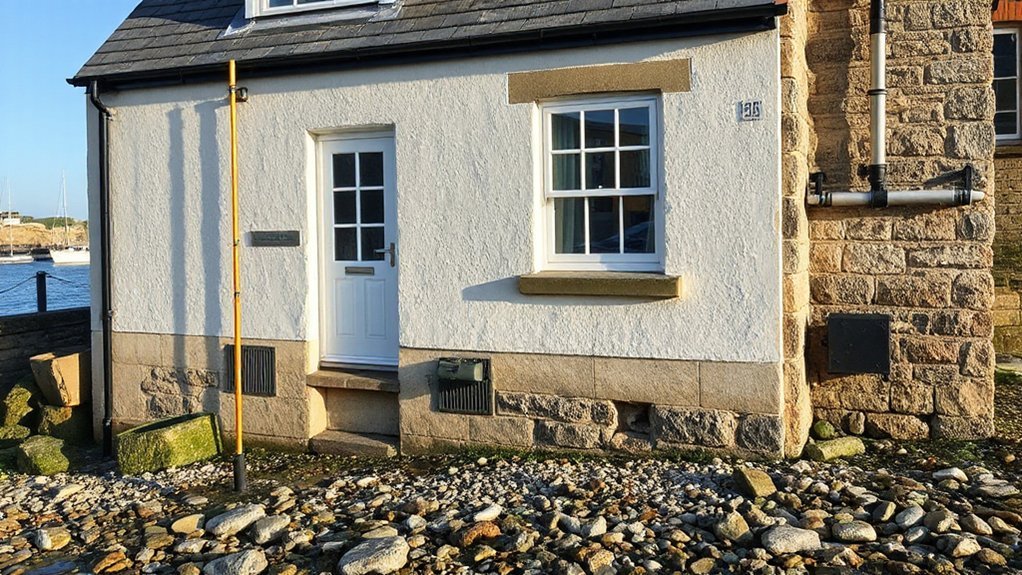
Although salt air and driving rain get most of the blame, harbour damp usually persists because ground water and trapped humidity keep feeding the fabric, so you need to manage both drainage and ventilation in tandem.
Start outside: lower external ground where feasible, clear gullies, and ensure downpipes discharge into sound drains, not at the footings. Regrade paths to fall away and add a French drain with geotextile and clean gravel where paving traps harbor moisture.
Keep air bricks clear and reinstate subfloor vents; if you’ve blocked them, you’ve bottled up humidity.
Indoors, run background heat and use a humidistat extractor in kitchens and bathrooms, ducted to outside.
In cellars, consider passive vents or a positive input ventilation unit.
Track RH with a meter.
Choose Marine-Grade Paints, Metals, and Sealants
Because salt-laden spray accelerates corrosion and film breakdown, you’ll get far better longevity if you specify truly marine-grade systems rather than “exterior” products.
Use marine coatings with a zinc-rich epoxy primer on steelwork, then a high-build epoxy intermediate and an aliphatic polyurethane topcoat; keep to the manufacturer’s DFT and overcoat windows.
For ironmongery, choose A4/316 stainless or silicon bronze, and isolate dissimilar metals with nylon washers to avoid galvanic attack.
Where you must use mild steel, hot-dip galvanise to BS EN ISO 1461 before painting.
Seal joints with MS polymer or polysulphide, not bargain silicone, and prime porous masonry.
This is practical corrosion prevention in UK harbour exposure zones.
Frequently Asked Questions
How Long Can the Cottage Remain Habitable During Restoration?
You can usually keep it habitable for 2–12 weeks, if you phase works, maintain electrics, water, heating, and fire egress. You’ll prioritise Historical accuracy and minimise Environmental impact under UK building control conditions.
Do I Need Special Permits for Harbourfront Repairs and Scaffolding?
Yes—you’ll likely need them; in the UK, about 60% of coastal works trigger additional consents. Check Harbour regulations and your council for scaffolding permits, highways licences, and temporary obstruction notices before erection.
What Is the Typical Restoration Cost Range for a Small Fisherman’s Cottage?
You’ll typically pay £60,000–£180,000, with £200,000+ for extensive structural or services upgrades. Historical accuracy and Material sourcing drive costs, especially lime mortar, slate, bespoke joinery, damp remediation, and specialist labour rates UK-wide.
How Do I Protect Furnishings and Valuables From Salt Dust During Works?
Up to 70% of airborne dust can settle on soft furnishings, so bag items, use zippered covers, and seal rooms with taped poly sheeting. Run HEPA air scrubbers for Salt dust mitigation; apply Furniture protection techniques: microfibre wraps.
Will Restoration Affect My Coastal Insurance Coverage or Premiums?
Yes, restoration can affect your coastal insurance coverage and premiums. You’ll need to notify your UK insurer, document works, manage contractor liability, and update rebuild values; Insurance implications include reduced cover during works or higher excesses.
Conclusion
You’ve traced salt’s quiet creep through lime joints, corroded fixings, and spalled brick, then answered with loud, practical work: sound roof coverings, stitched masonry, and braced structure. You’ve balanced old and new—draughty sash against renewed cords and marine‑grade seals; weathered oak against boron treatment and oil. You’ve swapped trapped harbour damp for fall, French drains, and sub‑floor airflow. Finally, you’ll lock it in with epoxy primers, A4 stainless, and polysulphide mastic.