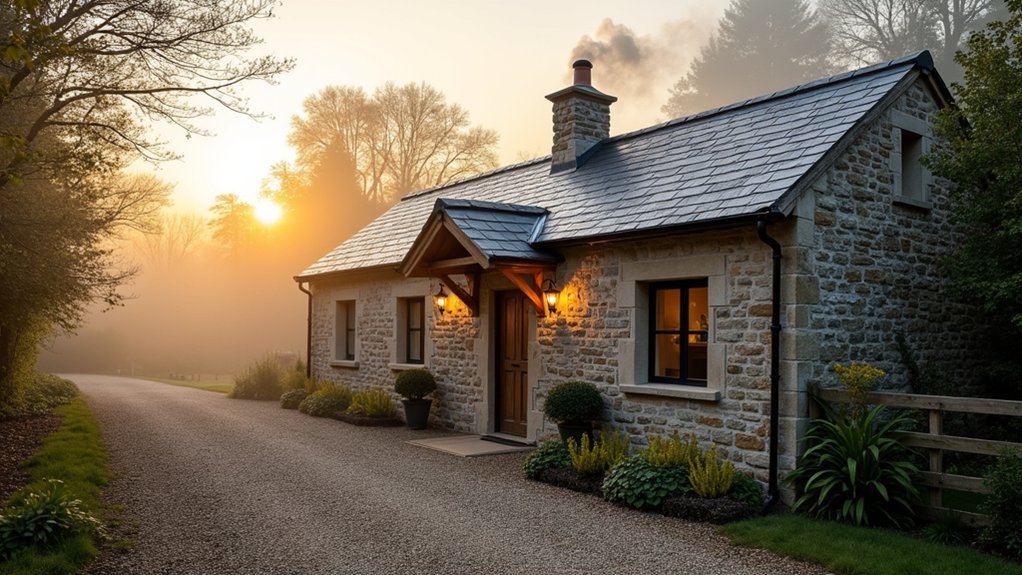
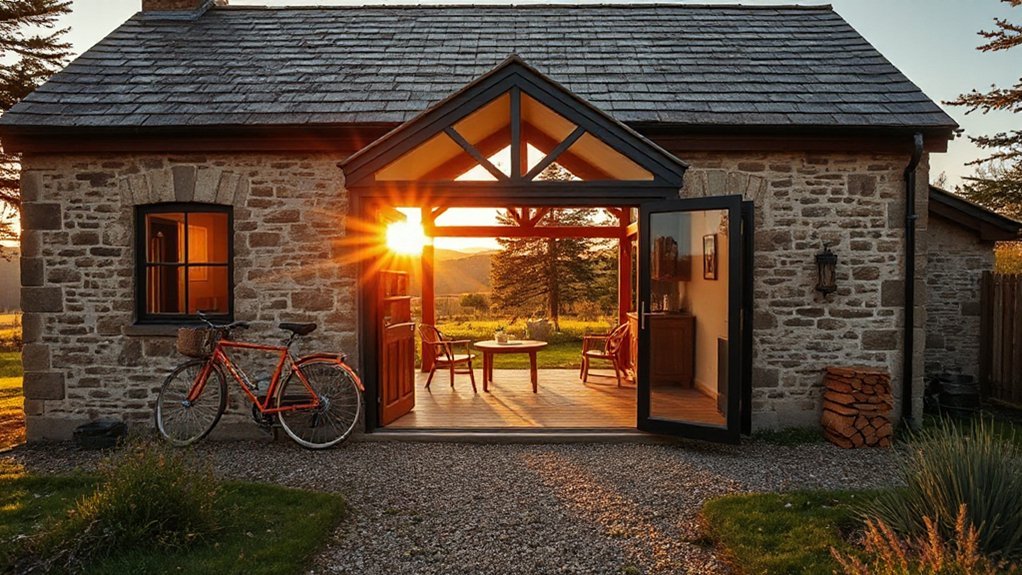
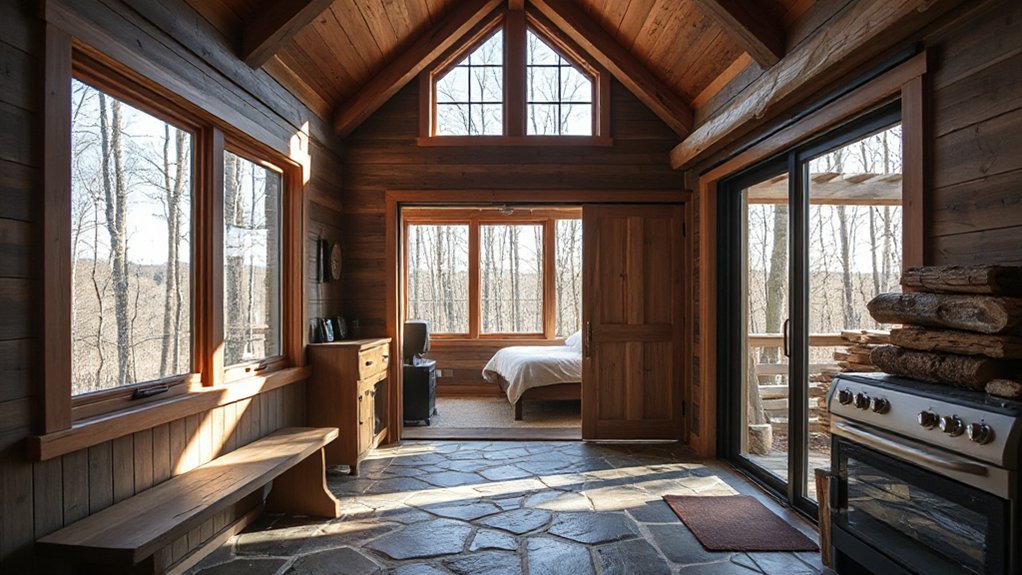
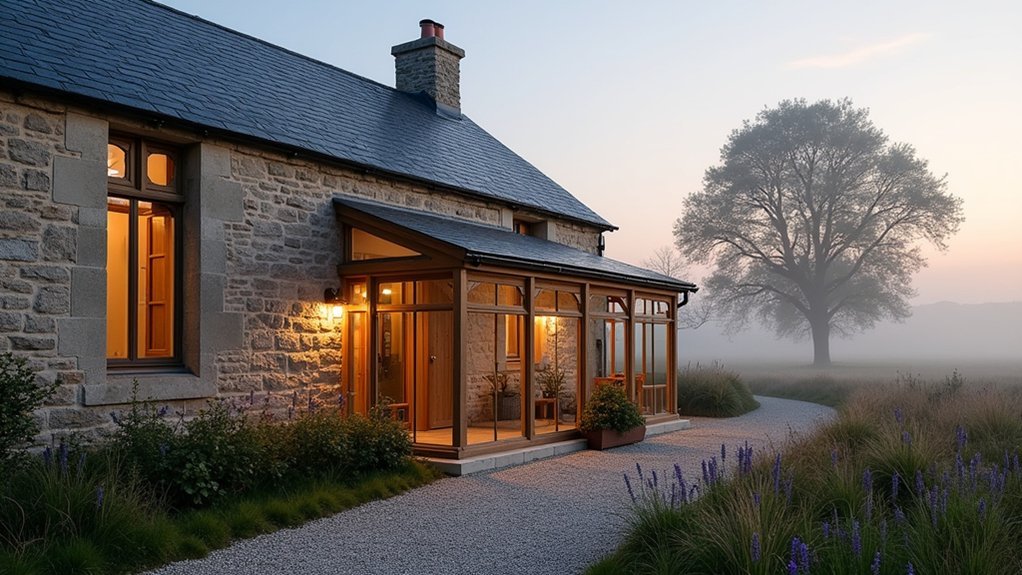
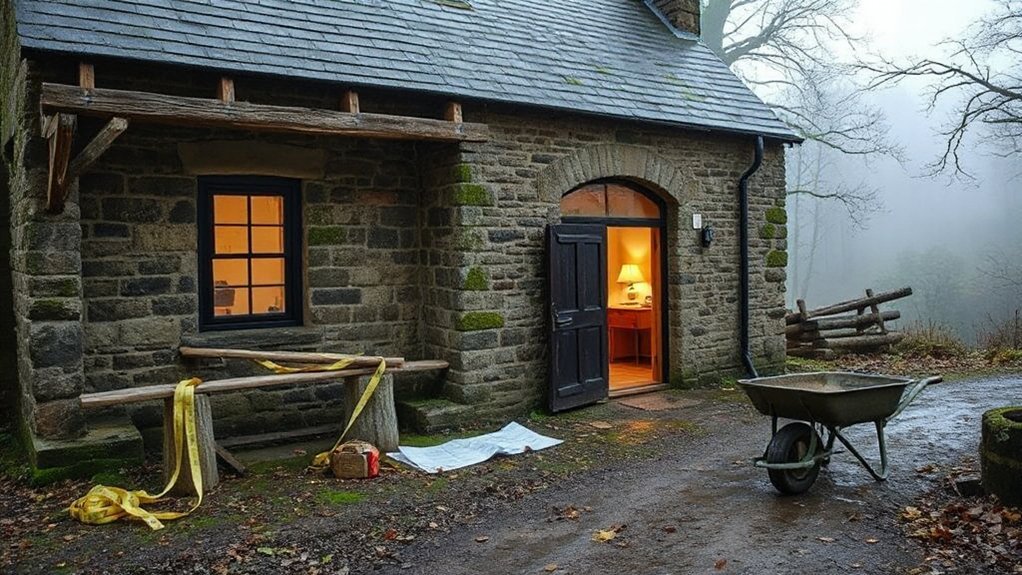
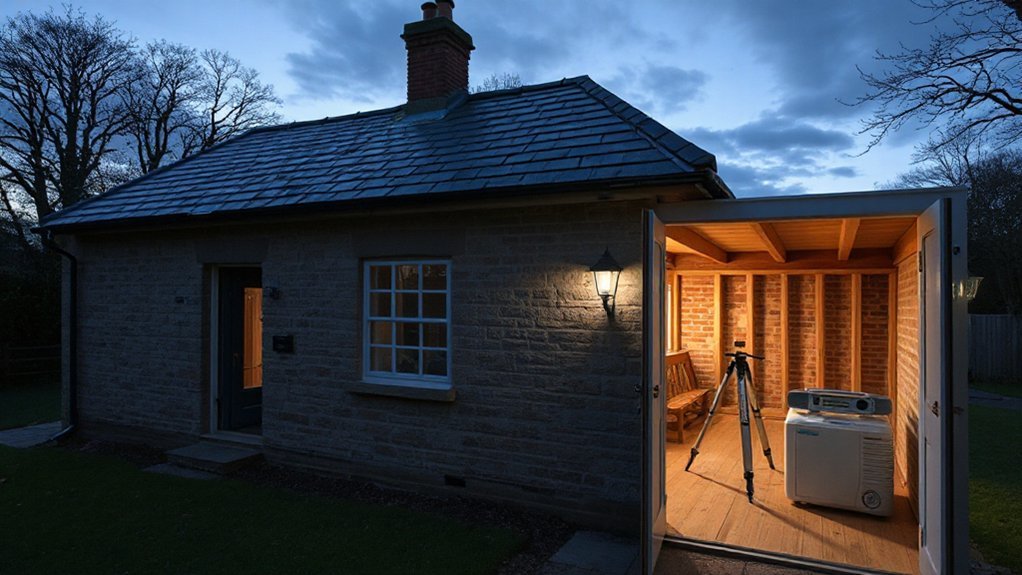
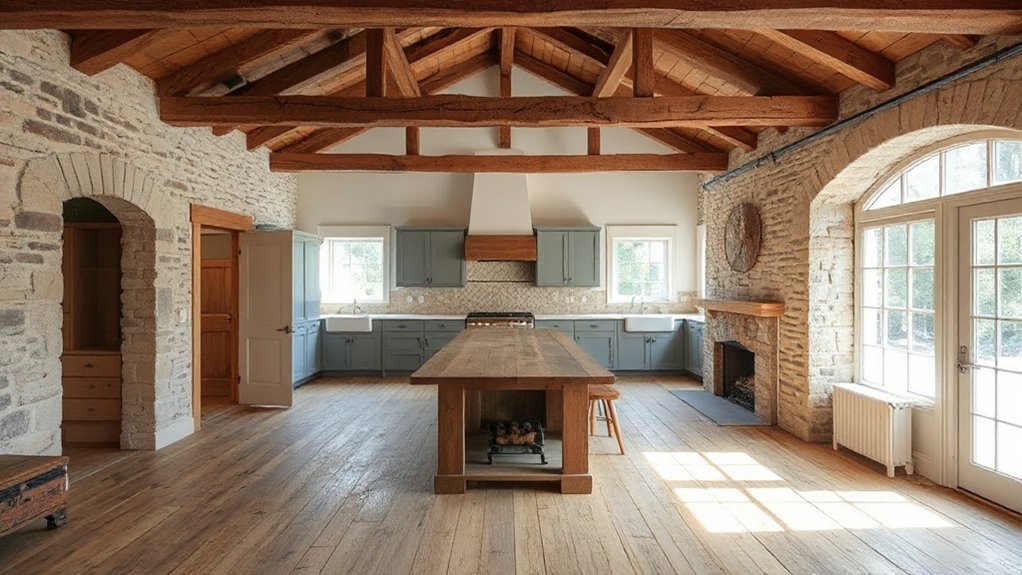
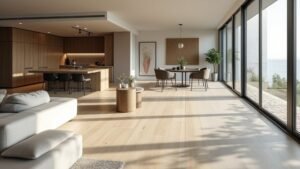
We’ll give a gamekeeper’s lodge new purpose by respecting its original hierarchy—boot room, scullery, and hearth-led living—then shaping it into a design-led home, guest retreat, studio, or conservation base. We’ll confirm planning and any listed constraints early, keeping plan form, joinery, and fireplaces, and favouring reversible additions. We’ll survey damp, structure, and services, then add breathable insulation, lime finishes, secondary glazing, and discreet heating. Next, we’ll map layouts and upgrades in detail.
Key Takeaways
Define a new use—home, retreat, studio, or conservation base—while preserving the lodge’s boot room, scullery, and hearth-led living hierarchy.
Confirm planning, zoning, and any listed or conservation constraints early, and use pre-application advice to avoid redesigns and delays.
Survey moisture, structure, and services thoroughly, using non-destructive thermal scans and recording cracks, damp sources, ventilation, and obsolete pipework.
Design a compact layout around existing walls, chimneys, and openings, stacking utility functions in colder corners and keeping circulation tight and light-filled.
Upgrade comfort discreetly with draft-proofing, reversible secondary glazing, breathable insulation, and low-impact heating, while siting external services unobtrusively.
What Can a Gamekeeper’s Lodge Become?
Whether we’re working with a crag-top stone bothy or a tucked-away brick cottage on an old estate, a gamekeeper’s lodge can become far more than a relic of rural management—it can be a design-led home, a characterful guest retreat, a small studio or workshop, or even a discreet base for conservation work.
We can keep the lodge’s original hierarchy legible: boot room, scullery, and hearth-led living, then layer in comfort with breathable insulation, lime finishes, and sustainable materials like reclaimed timber and locally sourced slate.
For hospitality, we’ll make arrivals effortless with a mudroom and robust joinery.
For craft, we can convert an outshot into a light-washed bench space.
For wildlife conservation, we’ll add bat-friendly detailing, dark-sky lighting, and habitat-sensitive boundaries.
Planning, Listed Status and Change of Use
Once we’ve agreed what the lodge should become—home, retreat, studio, or conservation base—we need to test that ambition against planning control, listed status, and any change-of-use rules that sit on the site.
We’ll start by checking the local plan and zoning regulations: is residential use supported, or are we within countryside restraint, estate policy, or habitat buffers?
If the lodge is listed, or within a conservation area, we’ll treat every intervention as Architectural preservation. That means retaining plan form, protecting original joinery and fireplaces, and designing additions as clearly legible, reversible moves.
We’ll map what needs consent—windows, rooflights, signage, access, outbuildings, and hardstanding—then stage pre-application conversations with the authority.
With that clarity, we can shape a compliant brief and avoid costly redesign later.
Survey the Lodge for Damp, Structure and Services
Before we sketch a single new wall line, we’ll survey the lodge as it stands—tracking damp pathways, testing structural stability, and mapping every service run—so our design responds to real conditions rather than assumptions.
We’ll log moisture with carbide and salt tests, note tide marks, and check whether cement pointing is trapping vapour in soft stone. We’ll inspect joists, lintels, and roof spread, then record movement cracks against dates and weather.
A thermal scan will confirm cold bridges without disturbing historic finishes. For services, we’ll trace incoming water, power, and drainage, identify obsolete pipework, and test earthing and ventilation rates.
Outside, we’ll note ground levels, rainwater discharge, and Wildlife habitat constraints. We’ll also invite Community engagement: locals often know where leaks start and how the lodge breathes.
Design a Compact Gamekeeper’s Lodge Layout
Although the lodge may feel small on plan, we can make it live larger by organising a compact layout around the existing structure—keeping thick loadbearing walls, original chimney massing, and window openings as our fixed points.
Then placing the busiest functions where the building already wants them to sit. We’ll keep circulation tight: a straight run from entry to hearth, with doors aligned to borrow light and shorten steps.
We can tuck a galley kitchen along an external wall, stack pantry and utility in the colder corner, and set a dining perch at the best view.
Bedrooms should sit quiet, using built-in joinery under eaves for storage.
For Wildlife habitat, we’ll avoid expanding into hedgerows and keep thresholds permeable.
Interior decor can echo original joinery: limewashed walls, honest timber, and simple ironmongery.
Energy Upgrades That Keep Original Character
Because the lodge’s character lives in its breathability, proportions, and patina, we’ll treat energy upgrades as careful edits rather than a wholesale retrofit—starting with measures we can hide, reverse, or express honestly.
We’ll begin by tightening drafts at thresholds, then add insulation where it won’t trap moisture or disturb moldings, keeping walls vapor-open for historic preservation.
For glazing, we’ll favor slim-profile secondary panes so original sashes stay put, and we’ll tune ventilation so rooms feel fresh without heat loss.
Heating can shift to a compact heat pump with discreet emitters, while flues and hearths remain visually intact.
For landscape integration, we’ll bury services thoughtfully and site external units behind hedges.
Draft-proofing and repairs first
Reversible secondary glazing
Moisture-safe insulation and controls
Frequently Asked Questions
What Are Typical Insurance Costs for Renovating a Gamekeeper’s Lodge?
We typically see insurance costs for renovating a gamekeeper’s lodge run £500–£2,500 annually, depending on heritage fabric, listed status, and rebuild value; Insurance premiums rise with contractor risk, while renovation coverage protects phased, design-led works.
How Long Does a Full Lodge Renovation Usually Take From Start to Finish?
A full lodge renovation can feel like it takes forever, but we typically finish in 6–12 months. Your Historic preservation scope drives the renovation timeline: surveys, consents, design detailing, structural work, services, finishes, commissioning.
Can I Rent Out the Lodge as a Holiday Let After Renovation?
Yes, you can rent it as a holiday let after renovation, if we comply with Holiday rental regulations. We’ll plan heritage-sensitive upgrades, then address Seasonal occupancy considerations, insurance, safety certificates, access, and local planning.
What Furniture Styles Best Suit a Restored Gamekeeper’s Lodge Interior?
We’ll pair antique furniture with rustic decor—like timber, linen, and aged leather—so the rooms hum like a fireside ballad. Choose Shaker simplicity, Arts-and-Crafts craftsmanship, and classic country pieces to honor heritage.
How Do I Find Reputable Local Craftspeople for Traditional Restoration Work?
We’ll find reputable local craftspeople by checking heritage body directories, asking conservation architects, and visiting workshops. We’ll prioritise artisan craftsmanship, verify portfolios and references, insist on local sourcing, and request itemised restoration quotes, timelines.
Conclusion
We’ve traced what a gamekeeper’s lodge can become, but the real test waits in the quiet details. Before we commit, we’ll have checked permissions, respected listed fabric, and proved the structure is sound—dry walls, steady floors, honest services. Then we’ll tighten the plan: compact rooms, clear circulation, light pulled deep. Finally, we’ll upgrade gently—insulation, airtightness, efficient heat—so the patina stays. And that’s when it changes: not restored, but reborn.
This project was about Breathing New Purpose Into a Gamekeeper’s Lodge. We’ll treat a gamekeeper’s lodge like a working artifact: survey plumb, spread, moisture, and load paths, then map services routes, daylight, and access before we change anything. We’ll plan for rural and listed constraints by documenting significant fabric and using repair-first, breathable materials—lime mortars, vapour-open insulation, and reversible service runs. We’ll tighten the layout by consolidating wet zones, improving ventilation, and adding acoustic breaks for comfort. Keep going and we’ll show the checklist and key details.
Key Takeaways
Start with measured and structural surveys to understand movement, damp, roof condition, and service routes before committing to designs.
Build a planning and heritage strategy that protects significant features and uses repair-first, reversible upgrades suitable for listed rural buildings.
Define the end use early (home, let, or studio) to prioritise layout, thermal zoning, storage, durability, acoustics, and compliance needs.
Optimise the layout by shifting functions, consolidating wet areas, and rerouting services with minimal chases to reduce risk and preserve fabric.
Upgrade fabric with breathable, vapour-open insulation, lime-based repairs, and improved drainage to cut heat loss while managing moisture safely.
Is This Lodge Worth Converting?
Although a gamekeeper’s lodge can look charming at first glance, we’ve got to verify that its bones and setting can support a modern brief before we commit to conversion. We’ll start with a measured survey: wall plumb, roof spread, moisture profiles, and the capacity of existing foundations for upgraded loads.
Next, we’ll map daylight, access, and services routes to test whether discreet insulation, ventilation, and drainage upgrades can be integrated without trapping damp. We’ll also evaluate orientation and external constraints so our interventions respect Wildlife preservation—bat roosts, nesting seasons, and habitat corridors—while keeping construction logistics realistic.
Finally, we’ll check planning risk and heritage value: documenting original fabric, repairs, and alterations so the lodge’s historical significance guides what we retain, reveal, and rebuild together.
What Makes a Gamekeeper’s Lodge Different?
Because it was designed as working accommodation within an estate system, a gamekeeper’s lodge reads less like a small cottage and more like a piece of rural infrastructure: compact, serviceable rooms; thick, loadbearing masonry; and a plan that privileges supervision and utility over generous circulation.
We’ll usually find low eaves, narrow stair runs, and small, deeply set openings that manage weather and sightlines. Outbuildings, stores, and boundary walls often stitch the lodge into the working landscape, so thresholds and yard surfaces matter as much as interiors.
Materials skew to local stone, lime mortar, and simple timber sections—repairable, not precious. When we re-inhabit one, we’re joining an ecology: hedges, rides, and edge conditions that support Wildlife habitat and demand careful Forest conservation in every detail.
Run a Quick Feasibility Checklist
Before we draw a single plan line, we’ll run a fast feasibility check that treats the lodge as both a building and a working edge condition.
You’re joining a process that respects Wildlife conservation and the lodge’s historical significance while testing what’s realistically achievable within time, access, and permissions.
Site access + servicing: track width, turning, utilities proximity, foul drainage route, and construction staging.
Planning context: designation status, curtilage limits, permitted development scope, and likely conditions.
Spatial fit: existing room geometry, circulation efficiency, headroom, and daylight potential for intended use.
Landscape interface: habitat buffers, lighting strategy, noise management, and boundaries that protect species movement.
If these four align, we can proceed with confidence and shared intent.
Get a Survey: Structure, Damp, Roof
Once the quick feasibility checks out, we’ll commission the right surveys so we’re designing from evidence rather than assumptions. A measured building survey gives us accurate wall thicknesses, levels, and openings, so our drawings fit the lodge you’re inheriting, not an idealised version.
Next, we’ll pair structural assessments with targeted opening-up: inspect lintels, floor joists, and roof trusses, then map load paths for any new stair, insulation build-up, or stove flue.
Damp investigation matters too—moisture profiling, salt analysis, and ventilation checks help us distinguish rising damp from bridged ground levels and leaking goods.
Finally, a roof survey reviews coverings, flashings, valleys, and chimney stacks, plus timber decay and insulation voids. These Survey insights keep us aligned as one team.
Planning, Listings, and Rural Restrictions
Next, we’ll map the lodge’s proposal against rural planning policy—access, drainage, ecology, and landscape impact—so we can set the design parameters before we draw details.
If it’s listed (or within a curtilage or conservation area), we’ll treat every intervention as a heritage change, specifying repair methods, breathable materials, and reversible junctions to satisfy consent.
We’ll also flag rural restrictions early—rights of way, agricultural occupancy ties, and services constraints—so you don’t design a scheme that can’t be approved or insured.
Rural Planning Permission
How do we secure consent to adapt a gamekeeper’s lodge without eroding its rural character? We start by framing the design as stewardship: lightweight interventions, reversible details, and measurable gains for Wildlife habitat and Forest conservation.
When we speak the planners’ language—landscape-led siting, dark-sky lighting, and low-carbon fabric upgrades—we show we belong in the countryside, not on top of it.
Map constraints: access, drainage, flood risk, and ecological buffers.
Justify need: rural worker ties, sustainable tourism, or local housing.
Prove impact: biodiversity net gain, traffic reduction, and services capacity.
We’ll pre-apply with the case officer, then submit drawings, statements, and surveys that align policy with place.
Listed Status Constraints
Although a gamekeeper’s lodge may look modest, listed status shifts the brief from “upgrade and extend” to “conserve, reveal, and only then adapt,” because every change must preserve the building’s special interest and its setting.
We’ll map significance room by room: hearths, lintels, stair strings, plaster, and joinery. Then we’ll test interventions against Local regulations, choosing repair-first details—lime mortar, breathable insulation, timber splices, and like-for-like sash profiles.
If we need new services, we’ll route them through reversible zones, keep chases minimal, and document everything for consent.
Outside, we’ll treat boundary walls, outbuildings, and sightlines as part of the asset, while protecting Wildlife habitats with low-impact lighting, bat-aware surveys, and careful drainage.
Together, we’ll make change feel rightful, not imposed.
Set a Realistic Budget (With Contingencies)
We’ll lock the scope first—what we’re restoring, what we’re upgrading, and what can wait—so every pound supports the lodge’s layout, envelope, and services strategy.
Then we’ll price the hidden restoration costs you can’t see on day one, from damp remediation and timber splice repairs to rewiring, flue lining, and drainage corrections.
Finally, we’ll build in contingency funds sized to the risk profile of an older rural structure, so discoveries on site don’t force design compromises mid-build.
Define Scope And Priorities
Before any drawings harden into plans, we need to define the lodge’s scope and rank priorities so the budget stays defensible under real site conditions. We’ll align every line item to how you want to live here, and to the land’s obligations—Wildlife habitat and Forest conservation included—so our spend supports a shared ethic, not just finishes.
We’ll document what’s fixed, what’s flexible, and what can phase without compromising performance.
Contingency logic: assign percentages by work package, hold client reserve.
That way, you’re part of a disciplined team, not a guessing game.
Price Hidden Restoration Costs
With scope and priorities locked, we can now price the hidden restoration costs that typically blow out lodge projects once floors come up and walls open. We’ll walk the building with you, logging likely failure points: rotten joist ends, chimney flaunching, damp bridging, undersized lintels, tired slates, and legacy wiring.
We then assign rates using measured quantities, heritage-trade dayworks, and access assumptions (scaffolding, skips, welfare).
Next, we specify investigative openings—lift three boards per room, camera-drain survey, moisture mapping, and a trial patch in lime render—so allowances aren’t guesswork. These micro-tests convert renovation surprises into line items, letting you compare contractor returns on a like-for-like basis.
Hidden costs become visible, and our budget stays design-led, buildable, and shared.
Build In Contingency Funds
Although our surveys and test openings tighten the numbers, lodge fabric still hides variability, so we build contingency funds into the budget as a defined, ring‑fenced allowance rather than a vague “just in case.”
We typically carry separate contingencies for (1) unknowns in the existing structure and services, (2) design development as details resolve—junctions, trims, ironmongery, M&E coordination—and (3) programme and access risk such as weather windows, scaffold adaptations, and specialist lead times.
We’ll keep you in control by agreeing triggers and sign‑off routes, so every drawdown is intentional and documented.
Our Contingency planning includes:
% bands by work package (roof, stone, joinery, services)
Provisional sums with scope notes and measurement rules
Change-control log tied to drawings/spec revisions
Monthly cost-to-complete reviews to protect Budget flexibility
Choose Your Use: Home, Let, or Studio
Once we’ve stabilised the structure and mapped the services, we need to lock in the lodge’s end use—primary home, short-stay let, or dedicated studio—because that choice drives the layout geometry, acoustic strategy, storage density, and compliance path.
If we’re living here, we’ll prioritise daily ergonomics: robust thermal zones, generous boot-room capacity, and resilient finishes that tolerate mud and dogs.
If we’re letting, we’ll design for turnover: lockable owner storage, simple controls, higher-durability surfaces, and clearer fire-safety documentation.
If we’re creating a studio, we’ll tune reverberation, isolate vibration, and specify task lighting with tight glare control.
Across all options, we’ll protect Wildlife habitat and support Forest conservation by controlling exterior lighting spill, managing drainage, and selecting low-tox materials.
Design the Layout With Minimal Demolition
How do we open a lodge’s potential without tearing out the bones that make it work? We start by reading the plan like a map of loads, services, and daily movement, then we shift functions—not walls. Keeping chimney breasts, stair cores, and primary partitions saves budget and heritage, and it lets you join a community of careful re-users.
Audit structure: identify bearing walls, joist directions, and settlement cracks before moving anything.
Re-route services: consolidate wet zones, reuse stacks, and run new electrics in surface chases.
Rebalance rooms: widen thresholds, swap door swings, and create flexible joins with pocket doors.
Specify Sustainable materials: lime plaster repairs, salvaged boards, and low-VOC finishes that respect Wildlife corridors.
Add Daylight: Rooflights, Glazing, Openings
Keeping the lodge’s primary walls and service cores intact doesn’t mean we accept dim, cellular rooms; we tune the envelope to pull light deep into the plan. We locate rooflights over circulation and wet zones so borrowed light reaches adjoining rooms without shifting structure.
Our skylight design pairs north-facing units for soft, consistent natural lighting with a limited number of solar-control panes where glare might hit worktops. We specify warm-edge spacers, airtight upstands, and insulated flashings to avoid cold-bridging and condensation.
At new wall openings, we widen reveals and angle soffits to spread luminance. Slim-frame glazing keeps sightlines open while meeting U-value targets.
With you, we map sun paths, align views, and size openings to balance daylight factor, privacy, and night-time heat loss year-round.
Keep and Restore Original Features
Because the lodge’s character lives in its fabric as much as its form, we keep and restore original features wherever they still perform—or can be upgraded without losing their integrity. We survey what’s sound, what’s repairable, and what’s missing, then set a conservation-first brief you can feel part of.
Joinery: we ease sashes, re-pin loose tenons, and add discreet draught seals to lift comfort without changing sightlines.
Floors: we re-fix boards, level locally, and retain patina while improving acoustic separation.
Fireplace details: we reset surrounds and sharpen edges, then verify clearances and flue performance.
Outbuildings: we stabilise thresholds and openings to support Wildlife habitat, aligning access with Forest management routines.
The result reads authentic, but works harder daily.
Materials That Suit Stone and Woodland Sites
On stone-and-woodland sites, we’ll specify materials that read as native to the setting and perform in wet, shaded conditions. We can match existing walling with locally sourced natural stone. Then layer in timber with appropriate species, moisture content, and breathable finishes to control movement and decay.
For junctions and exterior details, we’ll use weathered metals—pre-patinated zinc, blackened steel, or aged copper—so flashings and trims settle into the lodge’s tones without looking newly applied.
Locally Sourced Natural Stone
Where a lodge sits among rough stone outcrops and dense woodland, we specify locally sourced natural stone to lock the refurbishment into its setting and control performance at the same time. You’ll feel the Natural beauty immediately, but the real value is technical: matched geology, reliable detailing, and a finish that belongs here, with us.
Petrographic match: we sample existing masonry and select the same bed, avoiding differential weathering.
Wall build-up: we pair dense outer stone with breathable lime mortar, managing moisture without trapping salts.
Thermal mass: we use thicker reveals and hearth elements to smooth temperature swings and boost comfort.
Setting-out: we prioritise consistent coursing, tight arrises, and Local craftsmanship in every junction.
Timber And Weathered Metals
As the stonework anchors the lodge in its geology, we use timber and weathered metals to carry that same site logic into openings, junctions, and external details.
We specify larch or oak for thresholds, porch posts, and window linings, leaving it to silver naturally so it sits quietly against the masonry. You’ll feel the Rustic charm in the grain and the way boards align to door heads and soffits with crisp shadow gaps.
For flashings, gutters, and bracketry, we choose zinc or pre-patinated steel, detailing drips, hems, and standing seams to shed woodland rain without staining the stone. Their weathered textures read as honest protection, not decoration.
Together, timber and metal make the lodge legible, tactile, and ours within the trees.
Insulate Safely (Avoid Trapped Damp)
How do we add warmth and efficiency without turning thick stone walls into a moisture trap? We insulate like custodians: we keep vapour pathways open, so the lodge stays healthy and the craft feels shared.
Specify vapour-open build-ups: woodfibre or hemp-lime with lime plaster, not sealed foams.
Manage junctions: continuous airtight layer inside, but let the wall dry outward; tape service penetrations.
Control ventilation: humidity-sensing extract and balanced background air, sized to occupancy and cooking loads.
Detail the base: capillary break at floors, breathable perimeter insulation, and drained external ground levels.
These moves cut heat loss while respecting Wildlife habitat and Forest conservation, because durable fabric means fewer interventions, less carbon, and a lodge that belongs in its landscape.
Windows and Doors: Repair or Replace Well
Even if we upgrade every wall build-up, leaky windows and tired doors will still dictate comfort, draught lines, and condensation risk. So we survey first: sash weights, pulley stiles, meeting rails, cills, and junction seals, then decide what’s worth keeping.
Window restoration often wins when frames are sound; we splice in matching timber, renew glazing putty, fit brush piles, and add slim-profile double or secondary glazing where sightlines matter. Where decay is systemic, we replace like-for-like and tune reveals with insulated liners to prevent cold bridging.
For Door design, we prioritise a tight threshold, rebated stops, and concealed intumescent strips, then specify durable ironmongery and a storm porch if exposure is harsh.
Together, we keep the lodge’s character, and we all feel it.
Heating Options for Off-Grid Lodges
Because an off-grid lodge can’t lean on a stable gas main or a generous electrical supply, we design the heating strategy as an integrated system—heat source, distribution, thermal store, and controls—sized to the post-fabric demand and the realities of fuel delivery, maintenance access, and winter resilience.
With you, we balance comfort, autonomy, and Environmental impact, while protecting Wildlife habitats through low-noise kit, tidy flues, and clean fuel logistics.
We typically test four proven routes:
Room-sealed wood stove + buffer tank for fast, reliable peak heat.
Air-source heat pump if flow temperatures stay low and siting avoids drifted snow.
Pellet boiler where scheduled deliveries and ash handling are workable.
Solar thermal pre-heat to cut summer cycling and extend store temperature.
Upgrade Electrics, Water, and Drainage
Next, we’ll bring the lodge’s core services up to spec with a full electrical rewire: new consumer unit, RCD protection, correctly sized circuits, and a layout that supports modern loads and future expansion.
We’ll also upgrade the water supply with pressure management, insulated pipework, and filtration where source quality demands it, so fixtures perform consistently year-round.
Finally, we’ll improve drainage by verifying falls, venting, and soakaway or treatment capacity, then rebuilding runs with accessible rodding points to keep maintenance straightforward.
Modern Electrical Rewiring
How do we bring a gamekeeper’s lodge up to modern expectations without compromising its character? We start with a full electrical survey, then rewire with respect for original lath-and-plaster, stone walls, and sightlines. You’ll feel part of the project when we agree routes and fittings that protect the lodge’s quiet patina while meeting today’s loads and safety.
We conceal cabling in floor voids and existing chases, minimise chasing, and specify low-profile plates in heritage finishes. For resilience and stewardship—supporting Wildlife habitat and Forest conservation—we reduce light spill and energy waste.
New consumer unit with RCD/RCBO protection
Zoned lighting with warm-dim LEDs and occupancy control
Dedicated circuits for kitchen, heating, and workshop loads
Bonding, earthing upgrades, and full test certification
Water Supply Upgrades
With the electrics made safe and discreet, we can now upgrade the lodge’s water supply to match modern use while keeping pipework out of sight and frost risk under control. We’ll map demand points, then size a quiet variable-speed pump and accumulator to stabilise pressure without hammer.
We’ll replace tired runs with insulated PEX in service zones, clipping to joists and threading behind linings so your eye stays on stone and timber. At the incoming main, we’ll add Water filtration: sediment pre-filter, carbon stage for taste, and UV for reassurance when the source is variable.
Where roof geometry allows, we’ll integrate rain harvesting into a concealed header and diverter, serving WC flushing and garden taps. Together, we’ll make water reliable, efficient, and belonging-ready year-round.
Drainage System Improvements
Before we close up floors and linings, we’ll rework the lodge’s drainage so it runs quietly, vents correctly, and stays serviceable without visual clutter. We’ll map every branch, keep falls consistent, and zone inspection points so you’ll always know where to access, isolate, and maintain.
Using Eco friendly materials where durability allows, we’ll pair robust pipework with restrained detailing that respects the lodge’s character and protects nearby wildlife habitats.
Regrade runs and set rodding access at direction changes, not hidden dead-ends.
Upgrade traps and anti-siphon venting to stop gurgle, odour, and dry seals.
Fit acoustic collars and resilient hangers to cut structure-borne noise.
Separate rainwater from foul flow, adding silt traps to protect gullies and ground.
A Small-Lodge Kitchen That Still Works Hard
Although the lodge kitchen sits in a tight footprint, we’ve engineered it to perform like a full-size workspace by prioritizing clear workflow, durable materials, and dense storage.
We’ve set a galley run with uninterrupted prep span between hob and sink, so you can move pan-to-board-to-rinse without backtracking.
Full-height cabinetry takes dry goods to the ceiling, while 600 mm deep drawers carry pans, bins, and recycling in one pull.
We specified heat-treated oak fronts, stainless worktops, and a quartz upstand to shrug off wet boots, logs, and hard use.
Task lighting lands directly on the chopping zone, and sockets sit just above the splash line.
A stable door ties cooking to Wildlife habitat and garden design—our shared outdoors in view.
Bathrooms: Ventilation, Tanking, and Plumbing Runs
Because a small lodge holds moisture long after the taps turn off, we’ve treated the bathrooms as sealed, ventilated service pods with short, predictable plumbing runs. You’ll feel the difference in daily comfort because we’re controlling vapour at source, then giving it a clear exit path via Bathroom ventilation sized to the room volumes and ducted to external terminals.
We tank full wet zones with bonded membranes, turning corners and penetrations into continuous seals.
We slope substrates to linear drains, so water can’t linger at thresholds.
We keep hot, cold, and waste runs stacked and accessible, so plumbing upgrades don’t mean invasive openings later.
We specify isolation valves and service voids behind demountable panels, so you’re never locked out of maintenance.
Reduce Noise (Floors, Walls, and Stairs)
Once we’ve locked down moisture paths, we turn to acoustics and treat the lodge like a small sound box: every footfall, door close, and stair tread can telegraph through lightweight floors and tight junctions.
We start by isolating structure: resilient bars to ceilings, acoustic insulation between joists, and a dense, taped layer to add mass.
At party walls, we build independent studs where we can, then use soundproofing materials—membranes, mineral wool, and double-boarded plaster—to break the vibration path.
Floors get an acoustic underlay and perimeter isolation strips so finishes don’t bridge to skirting.
Stairs are the giveaway, so we tighten stringer fixings, add pads at contact points, and close the underside with insulated lining.
Together, it feels calm, shared, and well-made.
Make It Comfortable Year-Round + Light-Touch Landscaping
Next, we’ll tune the lodge for year-round thermal comfort by tightening the envelope, upgrading insulation where it won’t disrupt original fabric, and controlling solar gain with targeted shading.
We’ll pair that with efficient, right-sized heating and balanced ventilation so you get stable temperatures, low running costs, and healthy moisture control.
Outside, we’ll keep landscaping light-touch—improving drainage, reinforcing paths, and planting native, low-maintenance species that protect views and biodiversity without overworking the site.
Year-Round Thermal Comfort
How do we keep a former gamekeeper’s lodge comfortable through frost, driving rain, and high summer glare without over-engineering it? We start with the fabric: seal drafts, insulate discreetly, and let the building breathe where it must. You’ll feel the difference in still corners and steady surface temperatures, and you’ll know you’re part of a careful, shared craft.
Air-tightness at junctions: tapes, gaskets, and repaired lime pointing, not hard cement.
Insulation tuned to heritage: woodfibre to walls, sheep’s wool to lofts, vapour-open layers.
Solar control: deep reveals, shutters, and pale internal finishes to soften glare.
Light-touch landscaping: wind-sheltering hedges that support Wildlife habitat and align with Forest management, while keeping damp away from thresholds.
Efficient Heating And Ventilation
Where do we add heat and fresh air so the lodge feels calm in January and cool in August, without turning it into a plant room? We’ll start with a fabric-first baseline, then size a compact air-source heat pump to run low-temperature radiators or underfloor loops, keeping pipe runs short and service zones tidy.
We’ll add smart zoning so bedrooms coast while the kitchen-living core stays steady. For air, we’ll specify MVHR with rigid, insulated ductwork, balancing supply to habitable rooms and extract from wet rooms, with summer bypass and humidity sensing.
Intake and exhaust terminals sit discreetly, respecting Wildlife habitats and supporting Forest conservation by avoiding noisy, high-velocity discharge. Together, you’ll feel part of a quiet, well-tuned system.
Light-Touch Landscape Enhancements
A calm indoor climate only lands properly if the ground around the lodge works with it, so we’ll keep the landscape interventions light, reversible, and easy to maintain. We’ll shape comfort year-round by tuning sun, wind, and drainage without overbuilding, so you feel part of the place, not parked on it.
Permeable paths: gravel grids and lime fines to shed water, reduce mud, and protect roots.
Shelter belts: clipped hawthorn and mixed hedging to temper prevailing winds and frame views.
Native planting: heather, fern, and birch pockets to stabilize soil and extend seasonal colour.
Wildlife corridors: continuous edge habitats, dark-sky lighting, and log piles to keep movement safe.
We’ll detail thresholds and seating pads as demountable layers, not hardscape.
Frequently Asked Questions
Can I Convert a Gamekeeper’s Lodge Into Two Separate Dwellings?
Yes, we can often convert a gamekeeper’s lodge into two dwellings, but Lodge conversion needs Rural planning consent. We’ll design compliant fire separation, independent access, services, and acoustic detailing so you’ll belong.
How Do I Secure Insurance During Renovation of a Remote Lodge?
Secure renovation insurance upfront—think “telegraph” fast—by briefing a specialist broker on access, security, and contractor scope. We’ll complete a risk assessment, document progress, and align policy terms to streamline Insurance claims together.
What Grants or Tax Relief Might Apply to Restoring Historic Rural Buildings?
We’ll look first to Heritage grants from local authorities, national heritage bodies, and rural development funds; then we’ll model Tax relief via listed-building consents, VAT reductions, and allowable repairs, aligning compliant specifications.
How Can I Improve Mobile Reception and Broadband in Woodland Locations?
Like tuning a radio through trees, we’ll boost woodland connectivity by siting Satellite dishes on clear sightlines, adding directional antennas and signal boosters, and specifying low-loss coax, weatherproof cabinets, and mesh Wi‑Fi nodes.
What Ongoing Maintenance Does a Stone Lodge Typically Require Annually?
We’ll plan annual Structural inspections, clear gutters, check roof flashings, and monitor damp. For Stone preservation, we’ll repoint lime mortar, gently clean biological growth, inspect joints and lintels, service drains, and touch up breathable finishes.
Conclusion
If we treat a gamekeeper’s lodge like a fine mechanism, it’ll reward us: survey first, then tune structure, damp strategy, roof, and services with measured intent. We’ll navigate consents and rural constraints, thread plumbing runs like wiring looms, and specify kitchens and bathrooms that work hard without stealing space. We’ll quiet floors, walls, and stairs, then lock in year-round comfort with airtightness, insulation, and controlled ventilation—finishing with light-touch landscaping that frames, not smothers, the setting.