
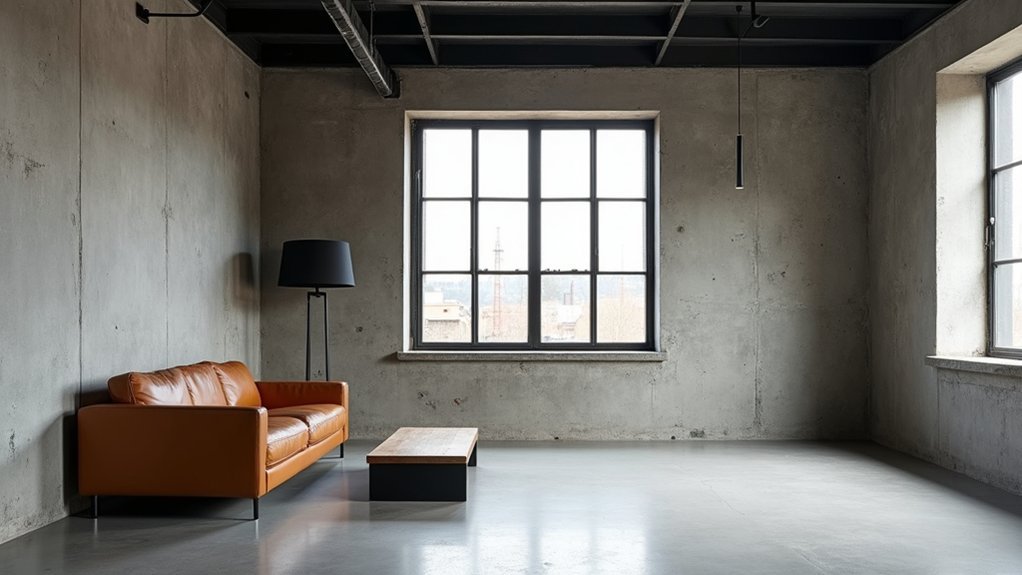
You’ll achieve minimalist industrial interior design by stripping the room to essential forms and keeping circulation clear. Let raw brick, concrete, steel, and timber act as honest structure, sealed with matte finishes for easy upkeep. Work with warm neutrals, add blackened steel for contrast, and introduce one muted accent tone through textiles. Layer dimmable warm lighting and hang pendants low over key zones. Keep surfaces mostly clear with closed storage—there’s more to refine.
Key Takeaways
- Strip rooms to essential forms with open, functional layouts and clear circulation; remove anything that doesn’t support comfort, function, or proportion.
- Emphasize honest raw materials—exposed brick, concrete, steel, and timber—as structural elements; seal brick and use matte sealers on concrete surfaces.
- Keep a tight neutral palette (white, greige, charcoal, black) and add warmth with one timber tone plus restrained accents like aged leather or muted navy.
- Choose utilitarian, clean-lined furnishings and slim steel details; prioritize concealed storage so surfaces stay at least two-thirds clear.
- Layer warm, dimmable lighting with pendants and task lamps; anchor zones with rugs and slightly offset furniture from walls for softness and acoustics.
Define Minimalist Industrial Interior Design (Core Rules)
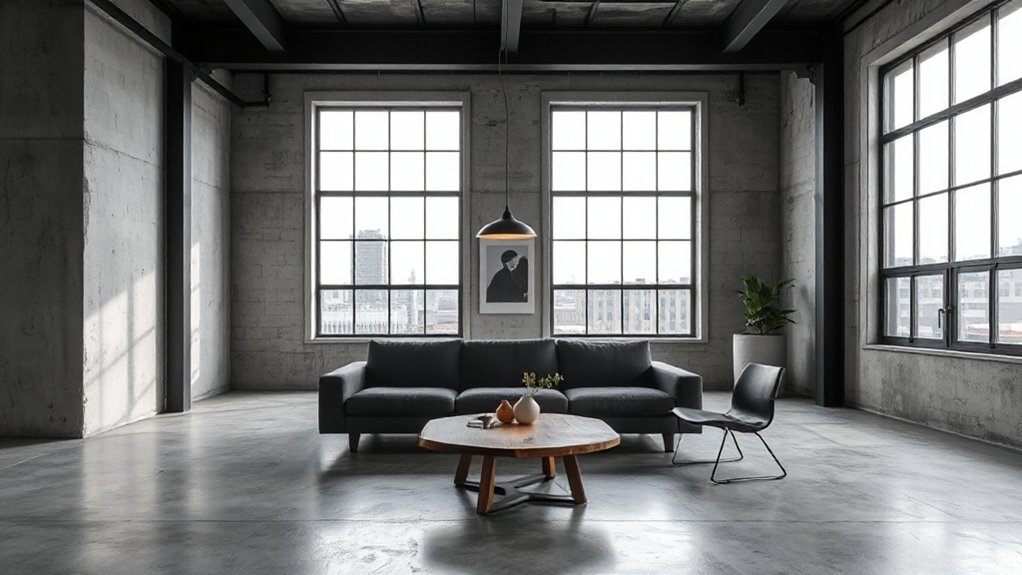
Although it draws from old factories and warehouses, minimalist industrial interior design follows strict rules: you strip the space back to essential forms, keep the layout open and functional, and let raw materials—exposed brick, concrete, steel, and timber—do the visual work. You then control everything else with restraint. Limit your palette, repeat a few shapes, and choose fittings with honest, utilitarian lines. Prioritise circulation: leave clear walkways, avoid over-furnishing, and use concealed storage so surfaces stay calm. Select Vintage furniture sparingly, favouring one or two character pieces over a full set. Add Textured accents through layered lighting, woven rugs, and simple textiles, but keep patterns subdued. Finally, edit relentlessly: if an item doesn’t support comfort, function, or proportion, remove it.
Minimalist Industrial Materials: Brick, Concrete, Steel, Wood
Where do brick, concrete, steel, and wood fit in a minimalist industrial scheme? You use them as honest structure, not decoration, and you keep finishes straightforward. Retain a single exposed brick wall or chimney breast, then seal it for dust control. Choose concrete for floors or worktops; specify a matt sealer to reduce staining while keeping the raw character. Introduce steel through slim-framed glazing, shelving, or stair balustrades, and let Exposed piping read as deliberate infrastructure rather than clutter. Balance the hardness with wood: fit oak or reclaimed boards for shelving, a bench, or a simple dining top. Anchor the room with Vintage furniture in clean silhouettes, and avoid excessive distressing so the materials stay coherent.
Choose a Minimalist Industrial Color Palette (Not Cold)
When you keep the palette tight, minimalist industrial interiors feel purposeful rather than bleak. Start with warm neutrals: soft white, bone, putty, and greige, then anchor them with charcoal or inky black in small doses. Let natural timber and aged leather provide mid-tones, so concrete and steel don’t read as clinical. Choose one muted colour note—oxblood, bottle green, or deep navy—and repeat it sparingly across textiles and artwork for cohesion. Use Vintage accents in brass, patinated bronze, or worn oak to add depth without clutter. Specify Eco friendly finishes such as low-VOC paint, water-based sealers, and natural waxes; they soften sheen and keep surfaces tactile. Keep contrast controlled, favouring matte over high gloss always.
Minimalist Industrial Lighting and Layout for Warmth
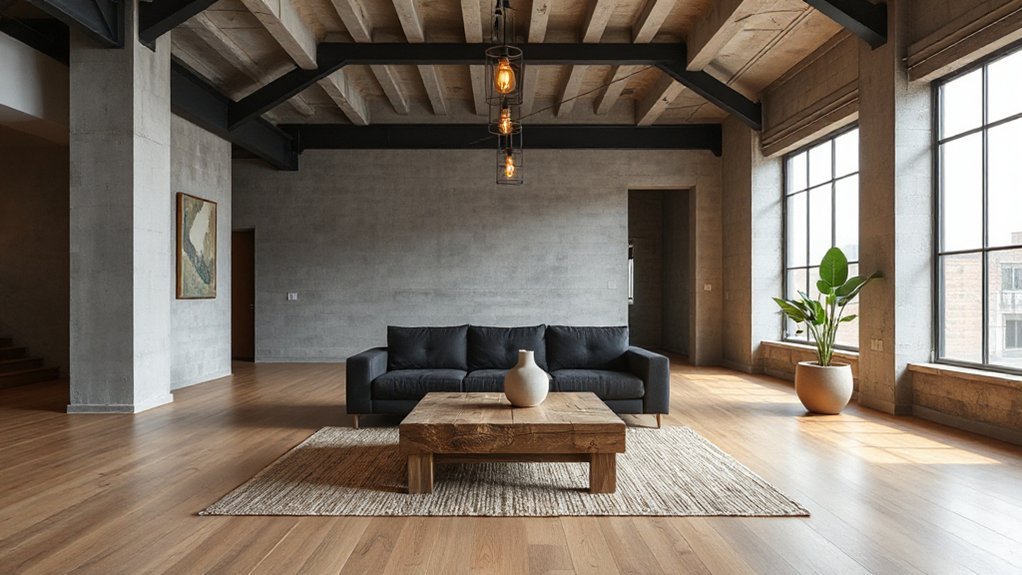
A warm minimalist industrial palette sets the mood, but lighting and layout decide whether the space feels inviting or stark. Layer your lighting: begin with dimmable ceiling light, then add task lamps at worktops and reading spots. Choose Vintage fixtures with warm LED bulbs (2700–3000K) to soften concrete and steel. Use pendant lighting above a dining table or kitchen island, hung low enough to create a pool of light without blocking sightlines.
Plan the layout to support that glow. Keep walkways clear and place seating where it catches natural light by day and lamplight by night. Pull furniture slightly off walls to reduce echo and hard-edge shadows. Add a rug under seating to anchor zones and reduce glare from polished floors.
Minimalist Industrial Styling Rules (Zero Clutter)
Although minimalist industrial rooms celebrate raw surfaces and honest materials, they look their best only if you style them with strict, repeatable rules that prevent visual noise. Set a hard limit: one hero piece per zone, then clear everything else. Keep surfaces at least two-thirds empty, and store daily items in closed cupboards, metal lockers, or lidded crates. Choose a tight palette—charcoal, warm grey, blackened steel, and one timber tone—so objects don’t compete. Apply Artistic accentuation with a single oversized print or sculptural lamp, not clusters of décor. Practise Vintage integration by selecting one patinated item with purpose, such as a factory stool or reclaimed bench, and let it stand alone. Maintain clean cable runs, align edges, and edit weekly. Relentlessly.
Frequently Asked Questions
How Do I Apply Minimalist Industrial Style in a Small Apartment?
Choose a restrained palette, streamline furnishings, and prioritise multifunctional pieces. Highlight Exposed brick where possible, add Vintage lighting, and keep storage concealed. Use metal accents, open shelving sparingly, and maintain clear walkways throughout.
What Budget-Friendly Upgrades Create an Industrial Look Without Renovations?
Forge an industrial look by swapping Lighting fixtures for black metal pendants, adding peel-and-stick Wall textures like faux brick, displaying exposed-bulb lamps, using reclaimed timber shelves, and styling with galvanised storage and concrete-effect accessories.
How Do I Reduce Echo and Improve Acoustics in Industrial Spaces?
You’ll reduce echo by adding soft furnishings, rugs, and heavy curtains, plus ceiling baffles and wall panels. Choose soundproofing solutions like sealed doors, and acoustic treatment options such as fabric-wrapped absorbers and bookcases.
Which Plants and Greenery Suit Minimalist Industrial Interiors Best?
You’ll suit minimalist industrial spaces with snake plants, ZZ plants, rubber plants, and trailing pothos; as light slants across raw brick, Urban greenery softens lines. Choose statement planters in matte black or concrete, and cluster sparingly.
How Can Renters Achieve Minimalist Industrial Design Without Permanent Changes?
You can achieve it by layering removable elements: peel-and-stick tiles, freestanding shelving, and neutral textiles. Use urban lighting, add vintage accessories, and define zones with rugs. Keep clutter minimal, and choose portable, matte finishes.
Conclusion
Keep minimalist industrial design grounded in its core rules: honest materials, clean lines, and purposeful restraint. Balance brick, concrete, steel, and wood so the space feels lived-in, not clinical. Stick to a muted palette, then soften it with warm lighting and a well-planned layout. Style with discipline—every object earns its place, and clutter stays out. Done well, your room becomes a quiet workshop of calm: a steel frame with a warm heart.