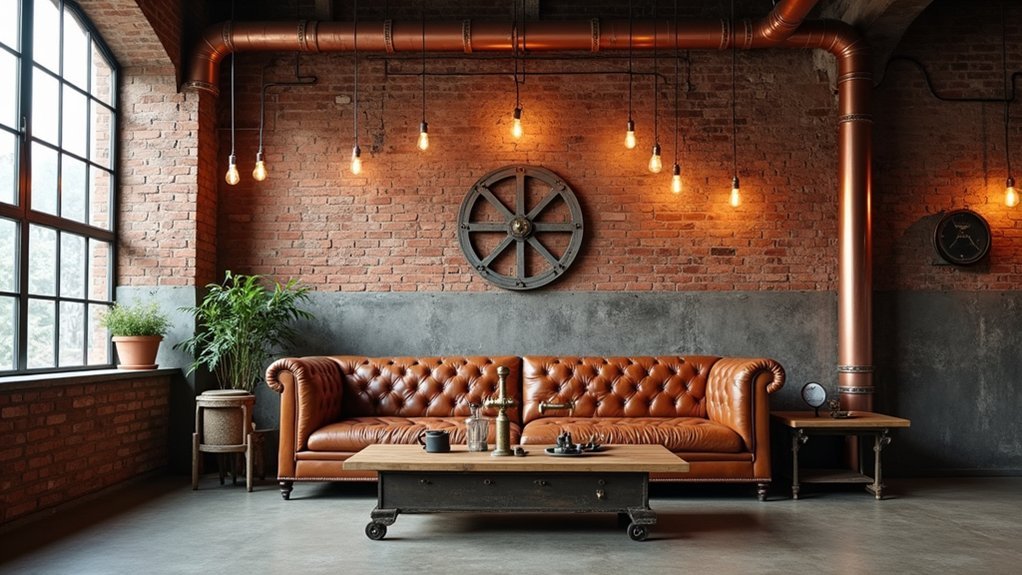
You’ll nail industrial steampunk by starting with honest bones: exposed brick sealed matte, RSJs and box steel in black, and reclaimed timber left textured. Keep the palette moody—charcoal, bottle green, oxblood—with brass as your feature metal, mostly aged, plus leather and smoked glass for contrast. Choose engineered, oversized furniture and add a single “hero” object like a gauge or flywheel. Get the lighting right—dimmable Edison bulbs in cage fittings—and there’s plenty more to refine.
Key Takeaways
- Expose authentic materials—sealed brick, raw or matte-black steel, and reclaimed timber—to establish an industrial steampunk foundation.
- Use a restrained palette: charcoal, soot-black, oxblood, bottle green, worn leather, with brass accents showing controlled patina.
- Choose engineered furniture—riveted steel frames, oversized timber tops, distressed leather—keeping finishes matte to let patina develop naturally.
- Layer warm, dimmable Edison-style lighting with cage pendants, bulkheads, and visible conduit to create moody, workshop-like ambiance.
- Avoid theme-park clutter: pick one hero machinery piece, add 2–3 “working” objects, and keep décor purposeful and story-driven.
Define the Industrial Steampunk Look (in 60 Seconds)
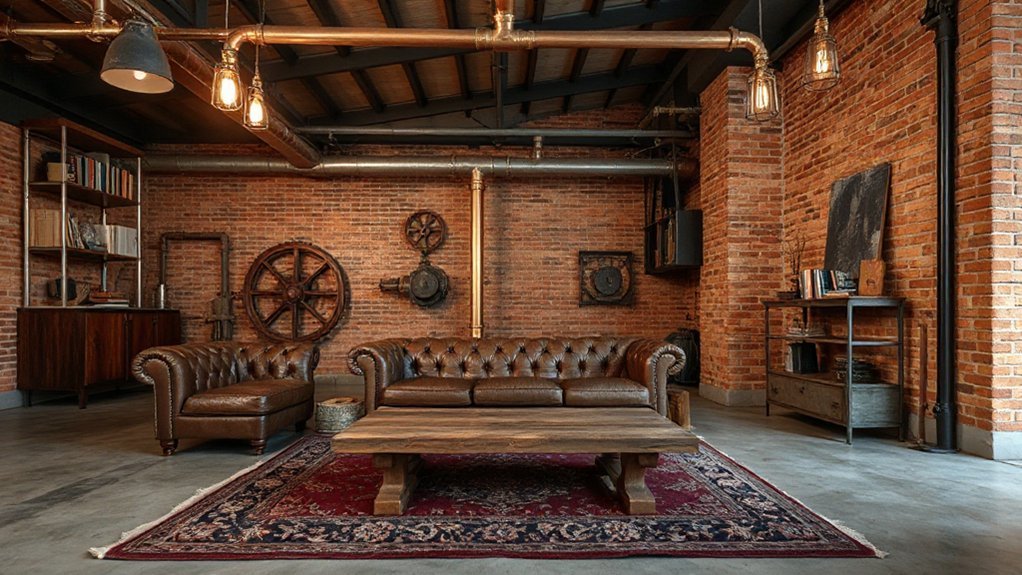
If you blend Victorian-era invention with hard-edged factory practicality, you’ve got the industrial steampunk look: expose brick, steel and pipework, then layer in brass, copper, rivets and gear-like details for a purposeful, engineered feel.
Keep the palette moody and utilitarian: charcoal, soot-black, oxblood, bottle green, and worn leather. Choose furniture with robust silhouettes—metal frames, aged timber tops, tufted chesterfield forms—then punctuate with polished brass taps, cage lamps, and oversized clock faces. Add storytelling through Vintage machinery as sculpture: a reclaimed flywheel, pressure gauge cluster, or drafting stool. Use Retro gadgets—valve radios, bakelite telephones, filament-bulb instruments—to suggest experimentation without turning the room into a theme park. Finish with patina, not shine: you’re curating a working inventor’s quarters.
Start With Industrial Bones: Brick, Steel, Timber
Start by exposing what the building’s already got: brick foundations, steelwork, and timber. Let exposed brick set the grit, use steel structural accents to frame key lines, and bring in reclaimed timber elements to warm the scheme. Keep finishes honest and robust—clean, seal, and preserve rather than covering them up.
Exposed Brick Foundations
While polished plaster and pristine paint can look smart, nothing anchors industrial steampunk like exposed brickwork as your base layer. You’ll get instant grit, warmth, and a workshop feel without trying too hard. If your bricks are already there, strip back carefully, then repoint with lime mortar to keep the wall breathable. If they’re not, use reclaimed slips for authenticity and avoid shiny faux finishes.
Seal brick with a matt, breathable sealer to cut dusting while keeping texture. Leave odd scars and soot marks; they read like honest age. Then dress the surface with Vintage machinery silhouettes and Mechanical details: bolt-on plaques, valve-handle hooks, and gear-shaped wall brackets. Keep lighting warm to pull out the russet tones and deepen shadow.
Steel Structural Accents
Once you’ve let brick set the mood, bring in steel structural accents to give the room its industrial backbone. Expose existing RSJs or box beams where safe, or add faux I-beams to frame ceilings and openings. Use steel uprights as structural elements for shelving, mezzanine supports, or room dividers, keeping lines clean and honest. Specify a matte black powder coat for a crisp factory look, or choose a clear lacquer over raw steel to preserve patina without rust transfer. Add bolted plates, rivet heads, and angle brackets as controlled metal accents, but keep them functional rather than fussy. Balance weight by pairing steel with light walls and considered lighting to stop the space feeling oppressive.
Reclaimed Timber Elements
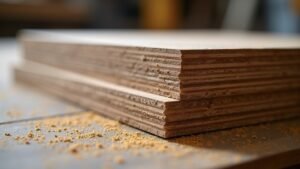
One well-chosen run of reclaimed timber brings warmth and scale to an industrial steampunk scheme without softening its edge. Use it where you’ll touch and see it: a chunky mantel, stair treads, open shelving, or a bar top against brick and steel. Check provenance, insect damage, and moisture content, then keep the original saw marks to maintain authenticity. For Eco friendly durability, seal with hardwax oil or a low-VOC matte lacquer; you’ll protect fibres while keeping a workshop patina. Apply timber restoration techniques selectively: wire-brush grime, de-nail carefully, fill splits with dark epoxy, and reinforce with hidden steel plates. Pair timber with riveted brackets and antique brass fixings for a credible, engineered finish.
Add Steampunk Story: Without Looking Like a Set
Even if you love the drama of gears and brass, you’ll get a stronger industrial steampunk interior by suggesting a backstory rather than staging a Victorian film set. Choose one narrative: inventor’s workshop, airship cabin, or telegraph office, then edit everything else. Anchor it with two or three credible “working” objects—an engineer’s lamp, a battered instrument case, a labelled storage tray—so the room reads as used, not dressed.
Limit costume cues: display one piece of Steampunk fashion like goggles in a shadow box, not scattered props. Balance nostalgia with modern art: a bold abstract print or sculptural piece stops the space turning theme-park. Keep surfaces purposeful, hide clutter in plain storage, and let negative space do the storytelling.
Build a Steampunk Palette: Brass, Leather, Glass
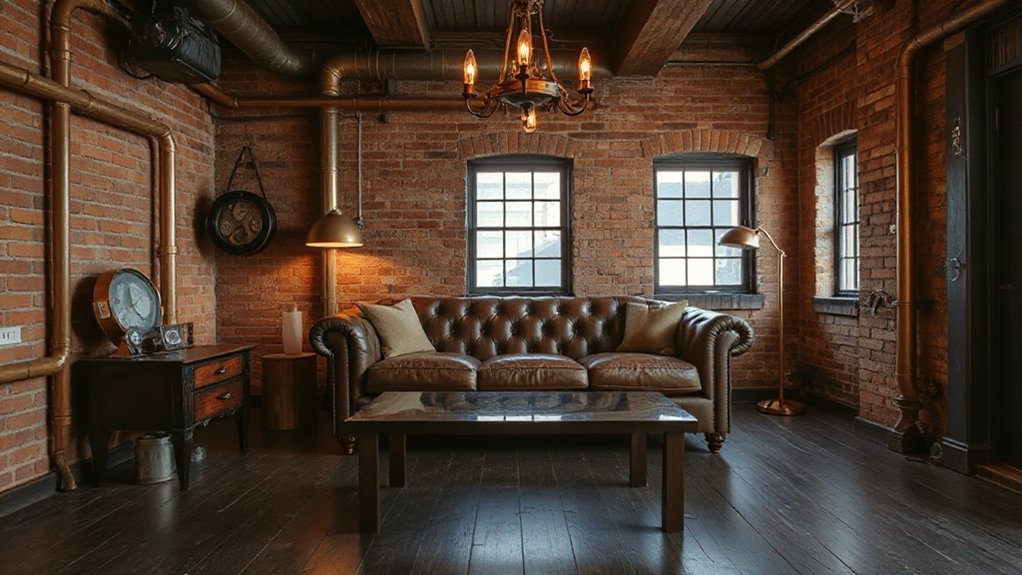
Build your steampunk palette by balancing brass finishes—mix bright polish with aged patina so it looks collected, not contrived. Layer leather through seating, straps, and trims, then vary tones from oxblood to tobacco to add warmth against industrial surfaces. Finish with glass in clear and smoked panels to lighten the scheme and sharpen the contrast without losing the grit.
Balancing Brass Patina
Although brass is the headline metal in steampunk interiors, you’ll get a more convincing look by controlling its patina rather than letting it dominate. Start by deciding on a finish range: bright, honeyed, or darkened, then keep it consistent across fittings so the room reads intentional, not scrapyard. For Brass aging, use chemical patina solutions on test pieces first, then seal with microcrystalline wax to lock the tone and stop blotching. Limit high-shine brass to small highlights—switch plates, clock bezels, lamp collars—and use darker brass on larger items like pipework or shelving brackets. For Patina maintenance, dust with a soft cloth, avoid abrasive cleaners, and re-wax quarterly. If fingerprints bother you, choose lacquered brass on frequently handled handles.
Layering Leather And Glass
When you layer leather with glass, you soften all that metalwork while keeping the room sharp and engineered. Start with a tufted leather armchair or a saddle-style bench, then balance it with a glass-topped coffee table or cabinet doors. Choose Leather textures with visible grain, stitching, and a slightly worn finish; they echo Vintage machinery without looking like costume. Use smoked or ribbed glass to diffuse light and reduce glare from brass fittings. Keep frames slim: blackened steel or aged brass works best. Add a glass cloche over gears or gauges for controlled display. Finally, control upkeep: condition leather twice yearly, and use microfibre cloths and vinegar-free cleaner on glass to avoid streaks.
Pick Industrial Steampunk Colors and Patina
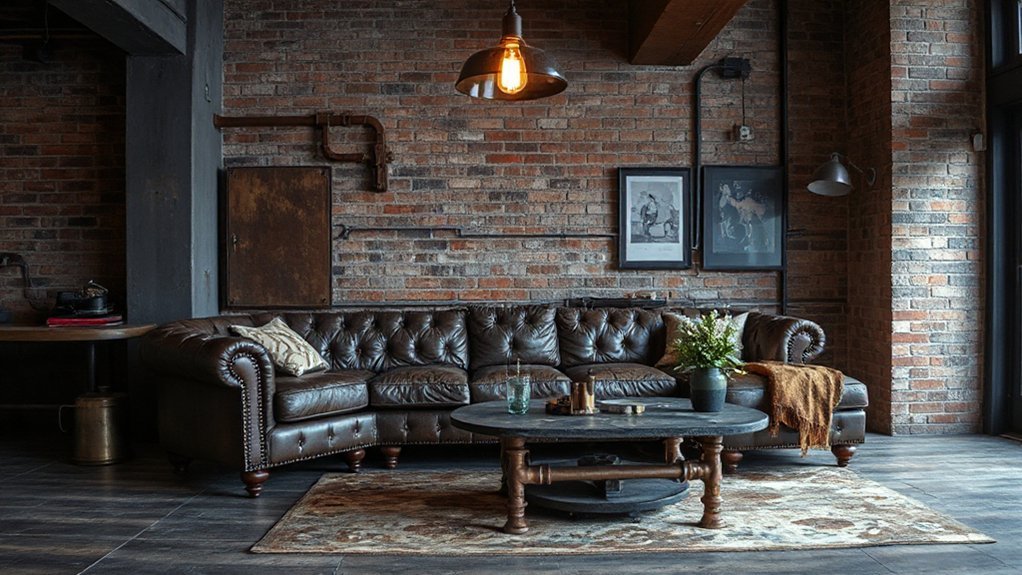
To nail an industrial steampunk look, you’ll need a colour palette that balances factory grit with Victorian richness, then amplify it with believable patina. Start with soot black, charcoal, and concrete grey as your base, then layer in oxblood, bottle green, and navy for depth. Use brass, copper, and gunmetal as accents; they echo Vintage machinery without feeling theme-park. Keep timber tones smoked or walnut, not honeyed pine, and choose matt finishes over gloss to hold the mood.
Build patina honestly: waxed steel, aged leather, and rubbed edges on handles do the work. Introduce Victorian motifs through etched glass, damask trims, or subtle gear detailing, then restrain it with plenty of negative space.
Industrial Steampunk Lighting: Edison, Cage, Gaslamp
Lighting locks in the industrial steampunk mood faster than any other element because it puts warm, period-style glow against hard, workshop materials. Choose Edison filament bulbs (2700K or warmer) in clear glass to show the amber coil; put them on dimmers so you control drama without glare. Use caged pendants and bulkhead fittings in blackened steel or aged brass to echo Vintage machinery, and keep runs of conduit visible for honest, industrial lines. Add a gaslamp-style wall light with frosted glass to soften edges and build depth in corridors or reading corners; pick LED “flame” lamps for safety. Finish with switches and plates in metal, and tie it all back to Steam powered decor with gauges and pulley-inspired shades.
Industrial Steampunk Furniture: Shapes, Materials, Scale
That warm Edison glow looks its best once your furniture brings the same engineered honesty into the room. Choose silhouettes that feel built, not styled: squared-off frames, riveted edges, and exposed joinery. Anchor pieces with robust scale so the look reads purposeful rather than fussy; one oversized table beats three dainty ones.
Prioritise materials that age well and echo Vintage machinery: reclaimed timber, blackened steel, cast iron, and distressed leather. Keep finishes matte or oiled, and let patina do the work. Add Mechanical detailing sparingly, where it looks structural, not glued-on.
- Use bolted brackets, gears, and valves as functional hardware
- Balance heavy frames with slim legs to avoid visual drag
- Leave breathing space around big pieces for crisp proportions
Industrial Steampunk by Room: Living to Bedroom
Once you’ve locked in the core materials and proportions, carry the industrial steampunk look room by room so each space feels engineered for its purpose, not themed. In the living room, anchor with a low, riveted coffee table, leather seating, and a trunk-style storage bench; add task lighting on articulated arms and a wall clock that nods to Vintage machinery.
In the kitchen-diner, use open metal shelving, labelled canisters, and a butcher-block island on castors; choose tapware with knurled controls and integrate discreet futuristic gadgets like smart bulbs in cage pendants.
In the home office, fit a steel-frame desk, cable trunking, and a filing cabinet; mount maps and technical drawings. In the bedroom, prioritise calm: a metal bedstead, heavy linen, and bedside lamps with exposed valves.
Industrial Steampunk Mistakes (and Quick Fixes)
Although industrial steampunk thrives on contrast, the look falls apart quickly when you lean too hard on novelty props, over-darken every surface, or mix metals and “vintage” pieces without a plan. Treat it like a curated workshop, not a theme pub. Start with one hero piece of Vintage machinery, then build a restrained palette: iron, aged brass, smoked oak, and warm leather. Keep walls lighter so pipes and beams read as structure, not gloom. Use Steampunk fashion as guidance: tailored, layered, and intentional, never costume.
- Limit gadgets to one vignette; hide chargers and cables in trunking
- Match metals by undertone; unify with one repeated finish
- Balance patina with clean lines; add linen, glass, and clear lighting
Frequently Asked Questions
How Can I Achieve Industrial Steampunk Style in a Rental Without Drilling?
Use removable adhesive hooks and tension rods to hang Vintage lighting and faux pipes, and apply peel-and-stick wallpaper. Add Metal accents with magnetic shelves, freestanding racks, and reclaimed trunks. Layer rugs, leather cushions, and brass clocks.
What’s the Best Way to Mix Steampunk With Modern Minimalist Decor?
Less is more: you’ll mix steampunk with minimalist decor by keeping clean lines and adding one or two statement pieces of Vintage machinery, plus restrained Victorian accents. Limit metals, stick to monochrome, and declutter.
Where Can I Source Authentic Salvaged Parts Safely and Legally?
You can source authentic salvaged parts at a reputable salvage yard, architectural reclamation dealer, or auction house. Check local legal regulations, request provenance and receipts, and guarantee safe handling: inspect for asbestos, sharp edges, contaminants.
How Do I Childproof Steampunk Decor With Gears, Pipes, and Glass?
Childproof steampunk décor by anchoring pipes, capping gear teeth, and using safety glass; UK data shows 2,700+ children visit A&E yearly after furniture tip-overs. Fit Vintage lighting guards, keep Exposed brick sealed, lock display cabinets.
What Budget Should I Expect for a Full Industrial Steampunk Makeover?
Expect £2,000–£8,000 for a full industrial steampunk makeover, depending on room size and labour. Prioritise Vintage lighting and durable Leather furniture first, then add reclaimed metalwork and bespoke cabinetry as funds allow.
Conclusion
The real question is whether industrial steampunk works because it’s “themed”, or because it tells a believable history. Test the theory: strip your room back to honest bones—brick, steel, timber—then add just one narrative layer (brass fittings, worn leather, a caged Edison lamp). If it still feels grounded, you’re doing it right. Keep patina consistent, scale furniture to the space, and stop before it turns into a film set.