Start by mapping your floor plan to the bagua: align a nine-square grid to your front door wall, then check each sector for clutter, blocked paths, or missing corners. Keep your entrance bright, functional, and clear, using a slim console and healthy plant to slow rushing qi. Put your bed, sofa, and desk in command position with solid backing and door view. Balance the five elements with one scale-appropriate item per room, plus warm layered lighting. Next, tackle common UK layout fixes.
Key Takeaways
- Map your floor plan with a nine-square Bagua grid aligned to the front door, and assess each sector for balance and issues.
- Keep the entrance bright, clear, and functional, adding welcoming plants, warm lighting, and storage to slow and guide qi.
- Place key furniture (bed, sofa, desk) in a command position with a solid back and clear sightline to the door.
- Reduce clutter by tackling hotspots and using purpose-built storage, maintaining clear walkways for smooth energy flow.
- Balance the five elements room-by-room with one deliberate addition—wood, fire, earth, metal, or water—scaled to the space.
Map Your Floor Plan With the Feng Shui Bagua
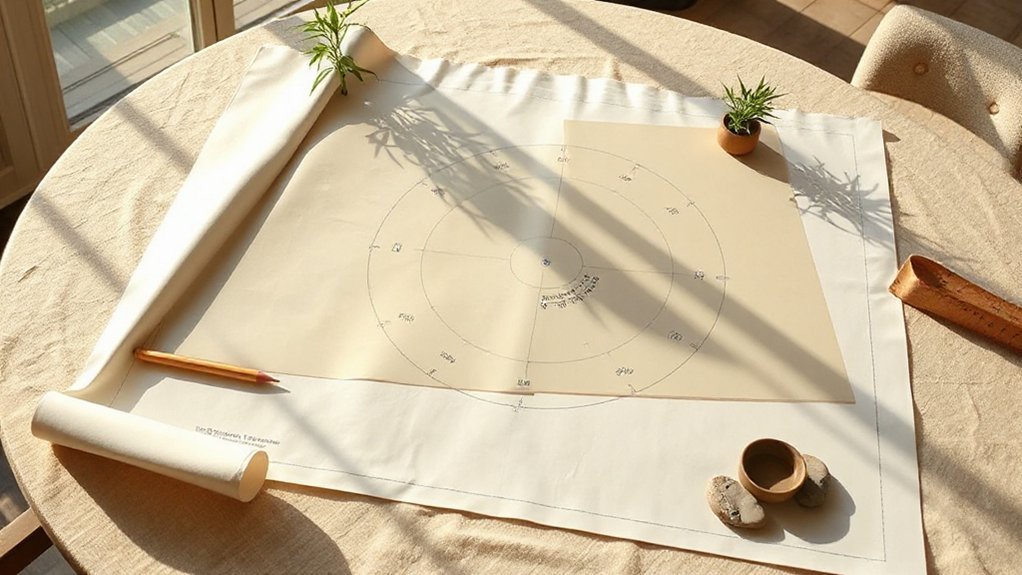
Before you move furniture or choose colours, map your floor plan with the Feng Shui Bagua so you can see exactly how each part of your home supports key areas of life—such as career, health, and relationships. In the UK, start with a scaled plan (estate-agent brochures or your own measurements in metres work well). Overlay the Bagua as a nine-square grid aligned to your main front door wall, then label each sector: Wealth, Fame, Relationships, Family, Health, Children, Knowledge, Career, Helpful People. Walk each zone and note what’s there now—clutter, sharp corners, missing corners, or blocked pathways. Use Feng shui symbols deliberately, not randomly: choose one clear cue per sector. Apply Traditional remedies proportionately, such as balancing elements with lighting, plants, metal finishes, or water imagery, to correct imbalances without overdoing it.
Set Up Your Entryway to Welcome Good Chi
Once you’ve overlaid the Bagua, treat your entryway (the “mouth of chi”) as a working system rather than a dumping zone: keep the route from the front door into the hall clear, bright, and easy to navigate. In UK homes, small porches and narrow corridors need disciplined storage and purposeful Entrance decor so chi can enter, settle, and circulate.
- Fix a sticky latch, squeaky hinges, and dim bulbs; function is feng shui.
- Add a slim console or wall hooks so coats and post don’t pile up.
- Use a clean doormat and tidy threshold; remove shoes to reduce clutter.
- Choose welcoming symbols: a healthy plant, artwork, or a warm-toned lamp.
- Keep the air fresh: open a window daily or use a subtle reed diffuser.
Use the Command Position for Key Furniture
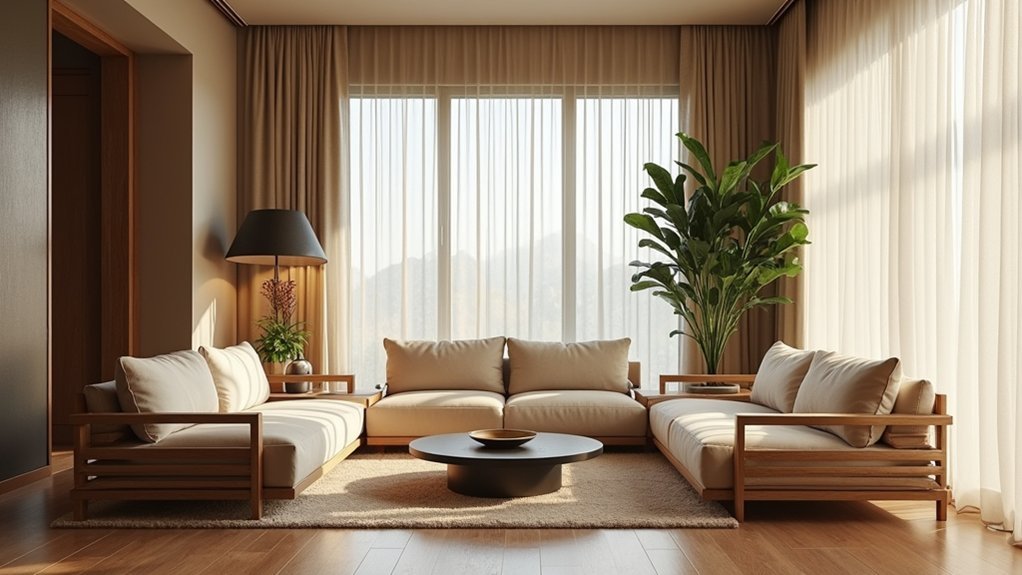
Although feng shui talks about energy, you’ll get the quickest results by placing your key furniture—bed, sofa, and desk—in the command position: set them where you can see the door without sitting or sleeping directly in line with it, and support your back with a solid wall.
In a UK flat, you might not get a perfect layout, so prioritise function: move the bed so the headboard sits on a firm wall and you can glance at the bedroom door. Place the sofa so you face the room’s entrance, not a blank wall, and add a side table or lamp to anchor the setup. For your desk, avoid having your back to the door; angle it, or use a screen behind you for support. This builds ease and control daily.
Clear Clutter to Restore Smooth Feng Shui Flow
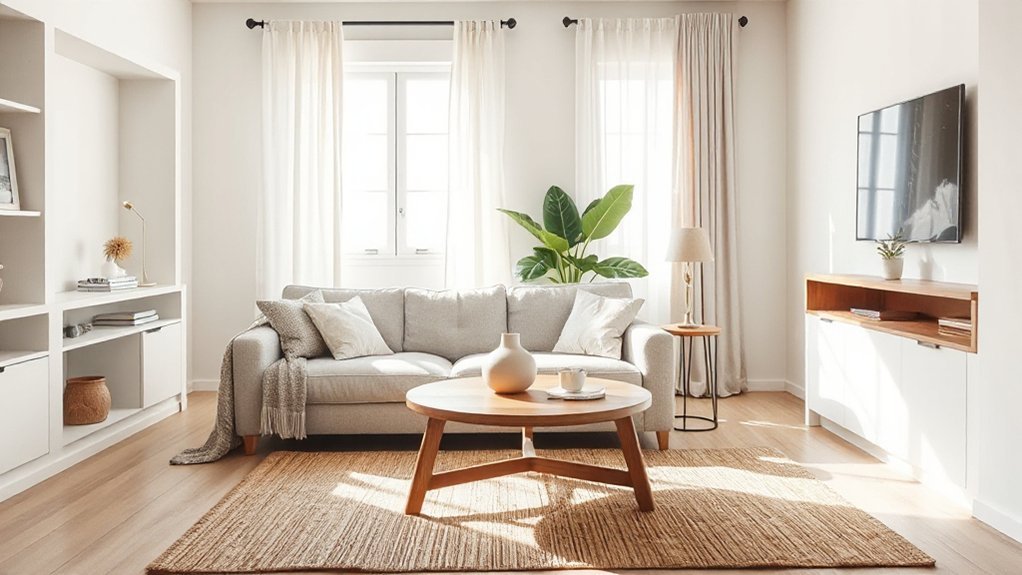
To restore smooth Feng Shui flow, you’ve got to clear clutter where it blocks movement and attention. Start by pinpointing hotspots—your entrance, hallways, kitchen worktops, and the “everything” chair—then set firm boundaries for what can stay. Build simple habits that stick, like a five-minute nightly reset and a weekly bag-for-charity routine, so your home stays orderly without constant effort.
Identify Clutter Hotspots
When you map your home through a feng shui lens, clutter hotspots stand out as the main choke points that stall qi and make rooms feel heavier than they should. You’ll spot these clutter zones by tracking where you routinely pause, squeeze past, or dump items after a long day.
- Front hallway: shoes, post, keys blocking the threshold
- Stairs and landings: “to take up” piles disrupting ascent
- Kitchen worktops: appliances and packaging crowding nourishment
- Bedroom chair or floordrobe: clothes collecting stagnant energy
- Living room corners: cables, magazines, and unused kit trapping qi
Once you’ve identified each hotspot, match it to purpose-built storage solutions sized for UK homes—slim shoe cabinets, lidded baskets, and under-bed drawers—so circulation routes stay clear and energy can move cleanly.
Create Simple Decluttering Habits
Because clutter builds up in minutes but lingers for weeks, you’ll restore smoother feng shui flow faster by relying on small, repeatable habits rather than occasional “big clears”. Set a 10-minute reset after dinner: clear worktops, return shoes to a rack, and empty the post tray. Practise daily tidying by pairing actions with routines—kettle on, wipe the sink; telly on, fold throws. Use a minimalist approach: keep only what you use weekly in prime cupboards, and store the rest out of sight or donate via your local charity shop. Create a one-in, one-out rule for mugs, coats, and toiletries. Finish with a weekly bin-and-recycle sweep so energy and air move freely throughout your rooms.
Balance the Five Elements (Simple Room-by-Room Swaps)
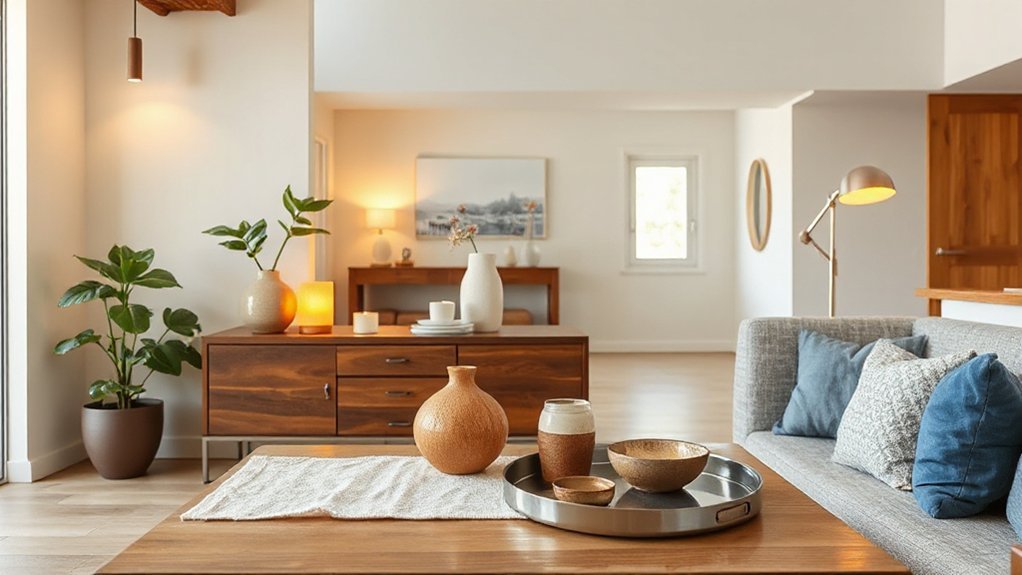
Although feng shui can seem abstract, you’ll get faster results by balancing the five elements—Wood, Fire, Earth, Metal, and Water—through straightforward room-by-room swaps. Start by checking each space for what’s missing, then add one deliberate item rather than lots of clutter. In UK homes, scale matters: choose compact pieces that suit terraces and flats, and prioritise natural light and clear walkways for smoother qi. Use these element balancing room swaps as a practical checklist:
- Hallway: add a slim wooden console for Wood and stability.
- Living room: introduce a warm lamp or candles for Fire.
- Kitchen: use a ceramic bowl or stone coaster for Earth.
- Bathroom: add a metal caddy to contain Water energy.
- Bedroom: place a small water feature image for calm.
Choose Feng Shui Colors Based on Your Goals
If you pick colours with intention, you can steer the “feel” of a room in line with feng shui rather than just decorating by habit. Start with your goal: calm, focus, sociability, or renewal. Use Color symbolism to guide you—blues and soft greens support rest and recovery in UK bedrooms; warm earth tones (sand, terracotta) ground a living room and suit period properties with natural materials. For productivity, choose muted whites or light greys to keep energy clean, then add controlled hits of red for drive. In dining areas, warmer reds and corals can encourage conversation, but keep them as accents to avoid agitation. Make paint choices based on undertones and daylight direction: north-facing rooms cope better with warmer neutrals.
Use Lighting to Lift Chi (and Reduce Shadows)
When you layer light properly, you lift chi through the space and stop heavy, stagnant corners from forming. In UK homes, aim for balanced ambient illumination first, then add task and accent lighting so energy moves smoothly and safely.
- Use warm-white LEDs (around 2700–3000K) for welcoming flow in living areas.
- Place lamps in dim corners and behind seating to support shadow reduction.
- Fit dimmers to ceiling fittings so you can match light levels to the time of day.
- Light hallways and landings evenly to guide chi from the front door without harsh glare.
- Keep shades and fittings clean; dust dulls brightness and drags the room’s feel down.
Check mirrors and glossy surfaces, and reposition lights to prevent glare hotspots.
Feng Shui Your Bedroom for Deep, Quiet Rest
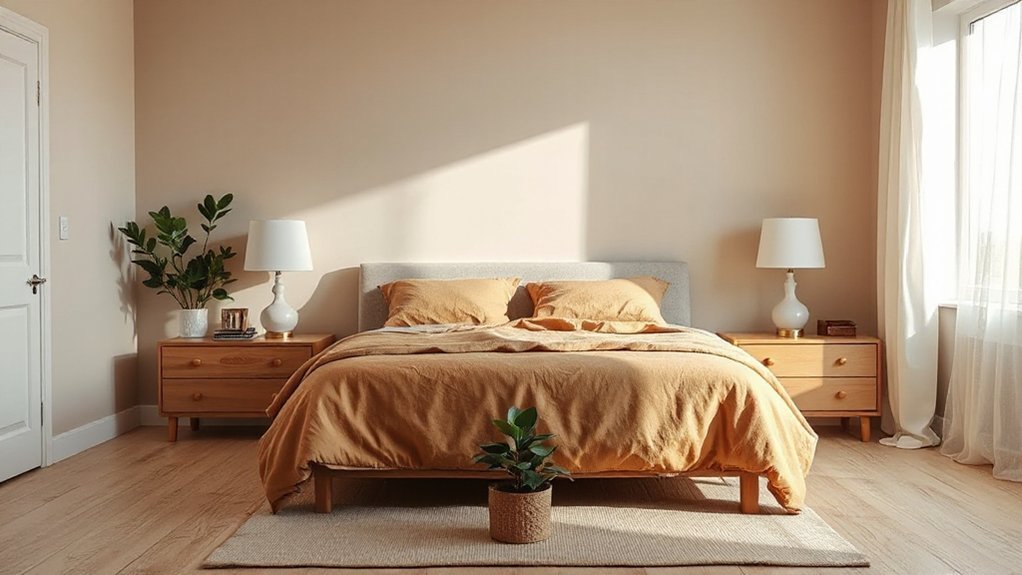
Start with commanding bed placement: you’ll sleep best when the headboard sits on a solid wall, you can see the door without lining up with it, and you keep clear access on both sides. Then set the tone with calm, muted colours—soft earths, gentle greens, and warm neutrals suit most UK bedrooms and help the space feel grounded. Finish with quiet lighting by swapping harsh overhead glare for layered lamps and dimmable bulbs, so your room signals rest from the moment you step in.
Commanding Bed Placement
Although colour palettes and soft furnishings set the mood, your bed’s position does most of the heavy lifting in Feng Shui because it governs how secure and settled you feel the moment you lie down. Aim for bed placement in a commanding position: you can see the bedroom door, but you’re not directly in line with it, so your body doesn’t stay on alert. In typical UK bedrooms, work with chimney breasts, boxed-in pipes, and radiators rather than fighting them.
- Put your headboard on a solid wall, not under a window.
- Leave equal access on both sides for balanced energy.
- Keep sight of the door from the pillow.
- Avoid aligning feet-to-door or head-to-door.
- Don’t place the bed beneath heavy shelves or sloped ceilings.
Calm Colors And Lighting
Even if your bed sits perfectly in a commanding position, harsh colour contrasts and bright, cold lighting can keep your nervous system on standby instead of letting you drift off. Use Color psychology to guide your palette: choose soft, muted tones like warm greige, oatmeal, clay, blush, or dusky sage, and keep ceilings and trims calm to reduce visual “noise”. Limit high-contrast black-and-white patterns and overly glossy finishes that bounce light.
Apply Lighting techniques that suit UK evenings: fit warm LEDs (around 2700K), add a dimmer, and layer bedside lamps with shaded bulbs for downward, diffuse glow. Skip blue-rich task lights near the bed; use a low-level night light for safe trips without jolting you awake. Keep switches within easy reach.
Quick Fixes for Common Feng Shui Layout Issues
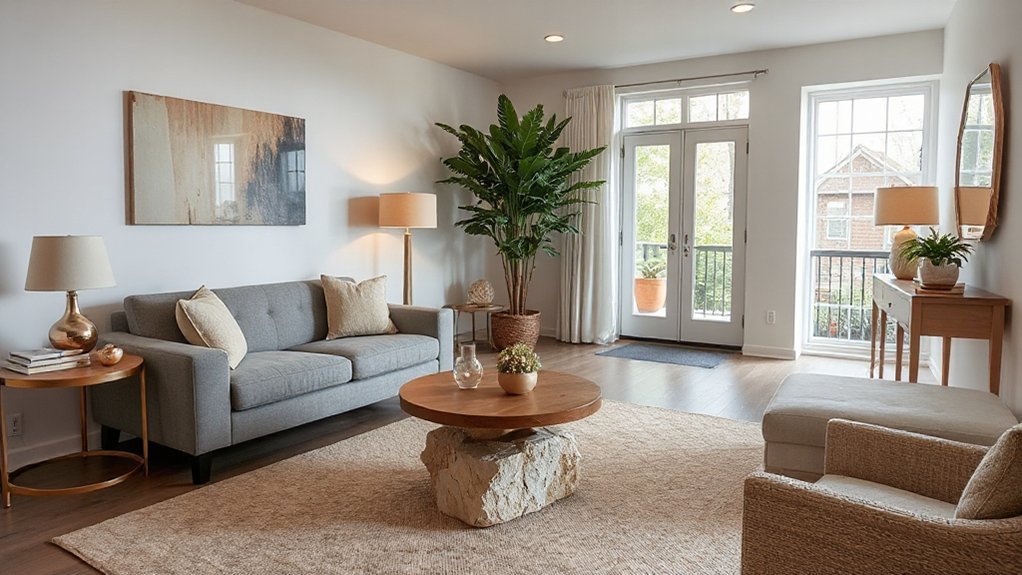
When your home’s layout doesn’t quite support smooth flow, a few targeted feng shui adjustments can correct the issue without major renovations. Focus on Energy alignment and Space optimization: you’re guiding movement, light, and sightlines so rooms feel settled, not scattered. In typical UK homes—terraces, semis, and flats—small changes often deliver outsized results.
- Place a slim console by the front door to slow rushing qi and catch keys.
- If your sofa backs onto a doorway, add a tall plant or screen for support.
- Mirror a narrow hallway’s side wall (not the front door) to widen it.
- Break up a long room with a rug and lighting zones to anchor purpose.
- Keep bed and desk in command position; use a solid headboard and task lamp.
Frequently Asked Questions
Can I Use Feng Shui in a Rented Apartment Without Major Changes?
Yes, you can use feng shui in a rented flat without major changes. Focus on Feng shui essentials: declutter, optimise furniture flow, improve lighting, add plants, and use Temporary modifications like removable hooks, rugs, and curtains.
How Do Mirrors Affect Feng Shui, and Where Should I Avoid Placing Them?
Mirrors can turbocharge or totally wreck your home’s qi; you’ll control it with smart mirror placement. Avoid reflective surfaces facing your front door, bed, or cooker, and don’t multiply clutter in tight UK hallways.
Do House Numbers and Mailbox Placement Influence Feng Shui Energy?
Yes, they do: house number placement and mailbox positioning affect how smoothly energy and opportunities reach you. Keep numbers clear, well-lit, and unobstructed; place the mailbox accessible, tidy, and not directly opposite the front door.
How Can I Feng Shui an Open-Plan Kitchen, Dining, and Living Area?
Define zones with Furniture placement, keep clear walkways, and anchor seating to a solid wall. Use balanced Color schemes: warm neutrals, muted greens, soft blues. Separate hob from sink, and improve lighting.
What Feng Shui Adjustments Help Reduce Noise and Improve Household Harmony?
Measure twice, cut once: you’ll reduce noise and boost harmony by applying soundproofing techniques—rugs, heavy curtains, door seals—and using calming color schemes like soft sage or warm greige. You’ll also declutter corridors, balance lighting.
Conclusion
Now you’ve turned your floor plan into a compass: the bagua guides you, the entryway acts as a well-lit front gate, and key furniture sits in command like a steady captain. You’ve cleared clutter so chi runs like a clean river through every room. You’ve balanced wood, fire, earth, metal, and water with practical swaps, chosen colours with intent, and lifted dark corners with layered light. Sleep becomes sanctuary; awkward layouts get corrected.