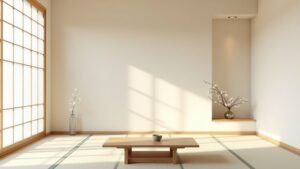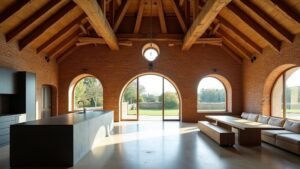
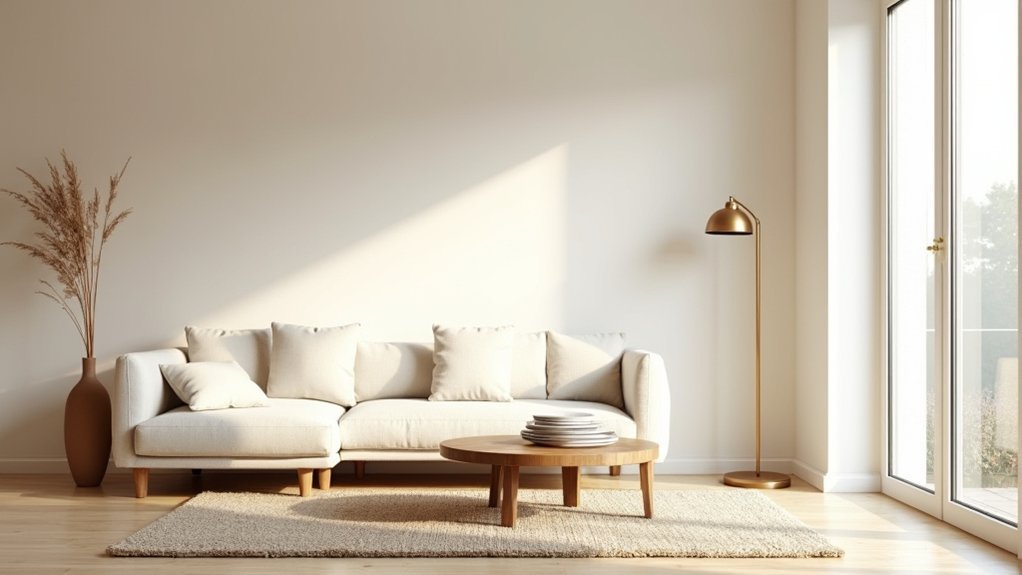
You’ll incorporate warm minimalism by sticking to soft whites, oat, sand, and greige, then choosing just two earthy accents (clay, olive, or caramel) plus one dark anchor like espresso. Repeat each color at least three times to keep it cohesive. Layer visible-grain wood, relaxed linen, and matte ceramics for depth without clutter. Pick slim, functional furniture with hidden storage and clear walkways. Use 2700K–3000K dimmable lighting and keep surfaces to one anchor item—more helpful nuances are ahead.
Key Takeaways
- Build a warm neutral base (soft white, oat, sand, greige) and limit accents to two earthy hues plus one dark anchor.
- Edit by function: choose only pieces that earn their space, favoring slim silhouettes, clear walkways, and hidden storage to prevent clutter.
- Layer natural textures—wood grain, relaxed linen, and matte ceramics—while keeping warm undertones consistent for depth without visual noise.
- Create cohesion by repeating each color at least three times and using minimalist art with simple forms and generous negative space.
- Use layered, dimmable lighting (2700K–3000K): ambient wash, focused task lights, and small cozy lamps to add warmth and mood.
Warm Minimalism Basics: Palette + Guiding Rules
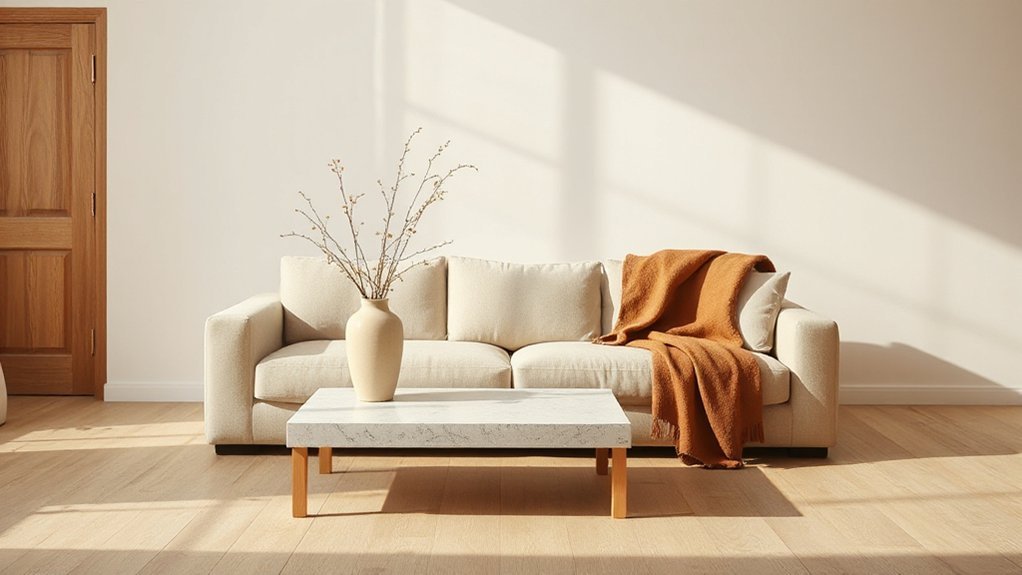
If you want minimalism that still feels inviting, warm minimalism starts with a restrained palette and a few firm rules that guide every choice. Choose a base of soft whites, oat, sand, and greige, then limit accents to two earthy hues (clay, olive, or caramel) plus one dark anchor (ink or espresso). Apply Color psychology: keep saturation low to reduce visual noise, use warm undertones to signal comfort, and reserve high contrast for focal points only.
Follow three rules. First, edit by function: every item must earn space. Second, repeat colors at least three times across the room for cohesion. Third, select minimalist art with simple forms and generous negative space, scaled to the wall so it looks intentional, not sparse.
Build Warmth With Wood, Linen, and Ceramic Texture
Because warm minimalism relies on restraint, you’ll get most of your comfort from texture—especially wood, linen, and ceramic—layered with intention. Start with one dominant wood tone (oak, walnut, ash) and repeat it in small accents so the grain reads as a calming pattern. Use linen to soften edges: choose washed, mid-weight weaves that drape rather than shine, and practice Textile pairing by mixing one smooth cotton with one nubby linen for quiet depth. Add ceramics for tactile contrast; matte glazes and imperfect rims make even empty surfaces feel lived-in. Maintain Color harmony by keeping undertones consistent (warm beige, clay, honey) and limiting stark whites.
- Wood: visible grain, consistent finish, repeated accents
- Linen: layered weaves, muted solids, relaxed folds
- Ceramics: matte glaze, earthy forms, small clusters
Choose Warm Minimalist Furniture: Function, Scale, Storage
Texture sets the mood, but the right furniture keeps warm minimalism functional and uncluttered. Start with pieces that earn their footprint: a sofa with slim arms, a solid-wood coffee table with a lower shelf, and dining chairs that tuck fully under the table. Check scale by mapping circulation paths; you should keep clear walkways and avoid bulky silhouettes that crowd corners.
Prioritize hidden storage: closed credenzas, beds with drawers, and benches with lift-tops so daily items disappear fast. Use Color accentuation through one warm-toned upholstery or a single wood finish, then repeat it sparingly for cohesion. Plan accessory placement around surfaces that can be cleared in 30 seconds: one tray, one vessel, one stack, max. Let negative space stay intentional.
Layer Warm Minimalism Lighting for a Softer Mood
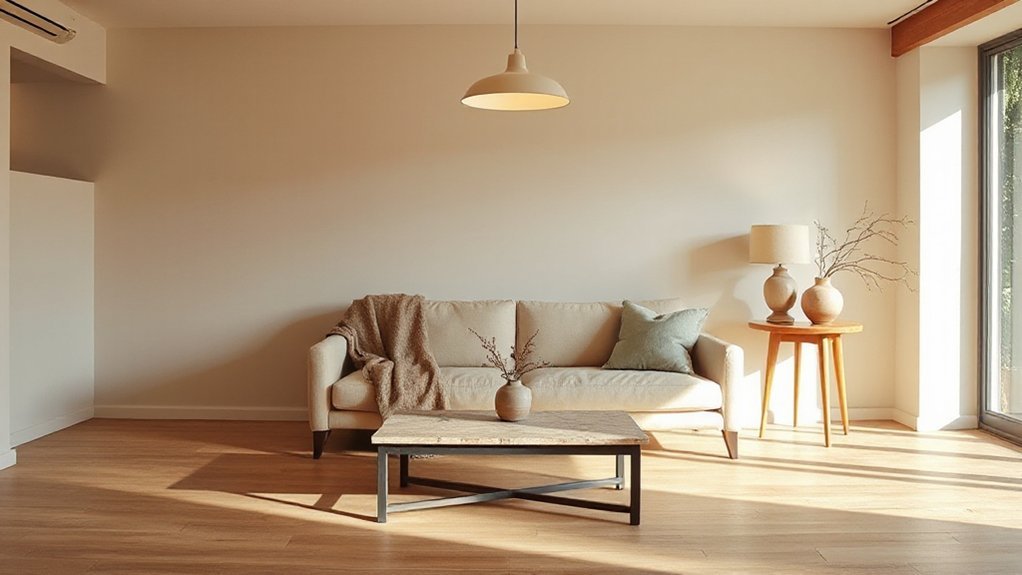
While warm minimalism relies on restraint, layered lighting keeps the room from feeling flat or stark. Start with ambient lighting that evenly washes walls and ceilings; choose warm-white bulbs (2700K–3000K) and put them on dimmers so you can shift from daytime clarity to evening calm. Next, add task lights where you read, cook, or work, aiming beams down to reduce glare and eye strain. Finish with cozy accents that create depth—small pools of light that soften corners and highlight texture without clutter.
- Ceiling or wall ambient lighting on a dimmer for adjustable glow
- Focused task lamps at seating, desks, and counters for function
- Cozy accents like a shaded table lamp or low uplight to warm edges
Keep outputs layered, not bright, and you’ll get a softer mood.
Style Warm Minimalist Decor With Calm, Clear Surfaces
If you want warm minimalism to feel serene instead of sterile, you’ve got to protect your surfaces. Start by clearing counters, tables, and consoles to one “anchor” item: a tray, bowl, or low vase. Everything else earns a closed home—drawers, cabinets, or lidded baskets—so visual noise can’t creep back.
Use Color psychology to guide what stays out: warm neutrals and soft earth tones read calming, while bright primaries spike attention. Limit finishes to two: matte wood and brushed metal, or linen and ceramic, to keep the field consistent. Respect Cultural influences by choosing one meaningful object—handmade pottery, a woven textile, a carved box—then give it breathing room and deliberate placement.
Frequently Asked Questions
How Do I Blend Warm Minimalism With Existing Traditional or Boho Pieces?
You’ll blend warm minimalism with traditional or boho by editing clutter, anchoring with neutral Color pairing, then adding a few heritage accents. Use Texture layering: linen, wool, wood, rattan. Repeat shapes, limit patterns, prioritize quality.
Is Warm Minimalism Suitable for Renters Who Can’T Paint Walls?
Yes, it’s suitable for renters who can’t paint walls. You’ll rely on wall decor like textiles and art, plus smart furniture arrangements. Choose warm neutrals, natural materials, layered lighting, and removable hooks.
What’s the Best Way to Keep Warm Minimalism Kid- and Pet-Friendly?
You keep warm minimalism kid- and pet-friendly by choosing washable cozy textiles, stain-resistant rugs, rounded furniture, and durable natural materials like leather and wood. You’ll limit clutter with lidded bins and use wipeable, low-shed surfaces.
How Can I Apply Warm Minimalism Effectively in Very Small Apartments?
You’ll apply warm minimalism in tiny apartments by limiting Color palettes to two neutrals plus one accent, maximizing hidden storage, choosing scaled furniture, and using Texture layering with rugs, linen, wood, and boucle. Keep surfaces clear.
How Do I Maintain Warm Minimalism on a Tight Decorating Budget?
Maintain warm minimalism on a tight budget by prioritizing budget friendly decor: buy fewer, better basics, thrift natural textures, and DIY lighting. Stick to a minimalist color palette, and edit relentlessly, rotating accessories seasonally.
Conclusion
You’ve learned warm minimalism isn’t empty—it’s edited. You’ll anchor the palette in soft neutrals, then bend the room toward comfort with oak grain, rumpled linen, and matte ceramics. You’ll choose furniture that earns its footprint: right scale, clean lines, hidden storage. You’ll layer light like a slow sunrise—ambient, task, accent—so shadows stay gentle. Finally, you’ll keep surfaces clear, styling a few quiet pieces that breathe.