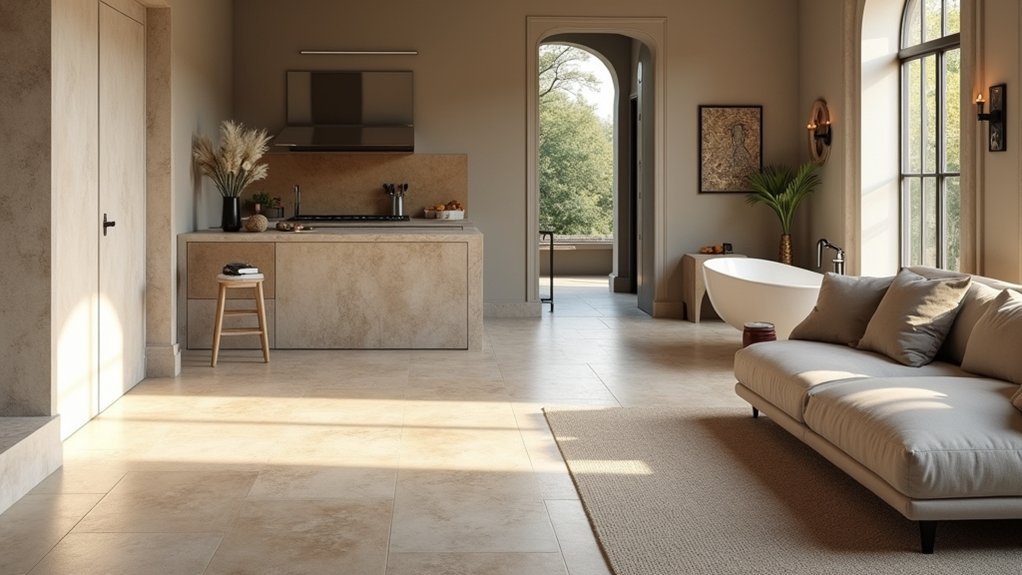
You’ll get natural stone floors right in a UK home by matching each room’s traffic, moisture and abrasion risk to stone type, finish and sealing. Specify honed, brushed, flamed or bush-hammered surfaces where wet coats, boots or bare feet make polished stone risky, and always ask for pendulum-test data. Seal porous limestone/travertine with breathable impregnators, use salt-resistant grout in entryways, epoxy in bathrooms with tanking and falls to drains, and guarantee substrates suit UFH. Keep going for room-by-room specs.
Key Takeaways
- Match stone type and finish to each room’s traffic, water exposure, and abrasion risk for durability and safety.
- Prioritise slip-resistant finishes in wet zones; request supplier slip data and retest after sealing where required.
- Specify robust entryway and utility detailing: textured/honed stone, de-icing-resistant grout, strong sealing, and recessed mats to trap grit.
- Design kitchens and living areas for comfort and maintenance: choose dense stones, seal porous varieties, and use rugs for warmth and acoustics.
- Plan bathrooms and external areas carefully: tanking membranes, correct falls to drains, epoxy grout, and UV-stable, freeze–thaw-rated stones outdoors.
Choose Stone Floors by Traffic, Water, and Wear
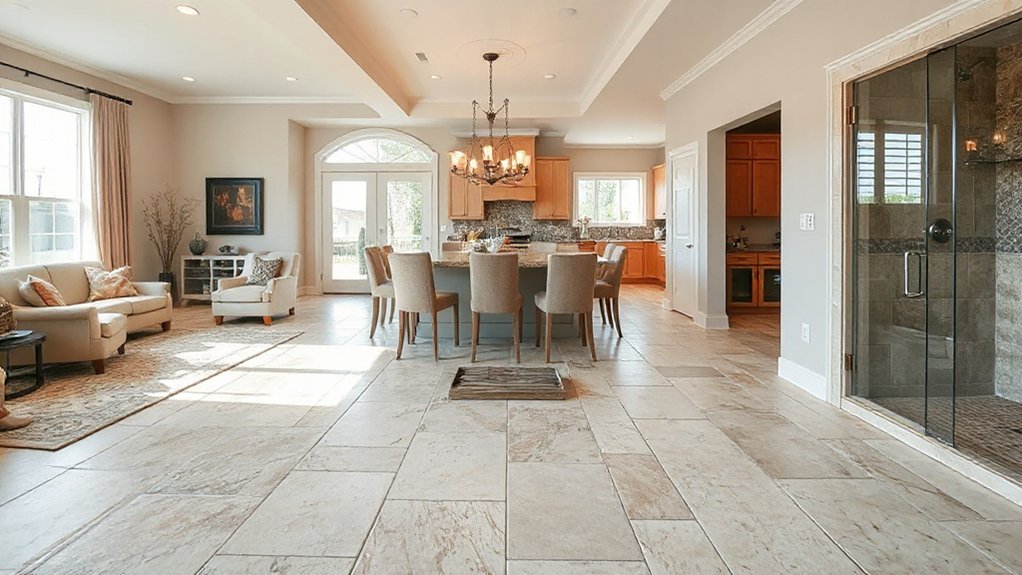
Because stone varies so much in porosity, hardness, and surface finish, you should choose your flooring by matching the room’s traffic levels, water exposure, and abrasion risk to the right material. Map traffic patterns from front door to kitchen and set a higher slip-resistance where you’ll carry wet coats or boots. In UK homes, entryways and utility rooms need robust sealing and grout suited to de-icing salts and grit. For bathrooms, specify a finish that maintains pendulum-test performance when wet, and detail falls to drains to limit standing water. In open-plan spaces, anticipate wear patterns under dining chairs and at island perimeters; use mats and wider joints to disguise micro-chipping. Finally, confirm substrate moisture and movement before installation to prevent debonding.
Compare Marble, Travertine, Slate, and Limestone
Once you’ve matched traffic, water exposure, and abrasion risk to a stone floor, you still need to pick the right geology and finish, and marble, travertine, slate, and limestone behave very differently in UK conditions. Choose marble for Marble elegance, but expect calcium carbonate to etch with lemon, vinegar, or some bathroom cleaners, and to need consistent sealing. Use travertine where you want travertine textures; it’s also carbonate-based, often voided, so you’ll rely on factory-filled faces and periodic resealing, especially with UFH cycling. Pick slate for hardwearing, cleft metamorphic durability; it tolerates grit and wet well, though iron-rich varieties can show rust staining if damp stays trapped. Specify limestone for softer, warmer tones; it scratches more readily and can show patina in busy hallways.
Pick the Right Stone Finish for Slip Resistance
You’ll cut slip risk by matching the finish to the room: choose textured options like honed, brushed, or flamed stone where wet feet are likely. In UK settings, aim for a higher pendulum test value (PTV) in bathrooms, kitchens, and entrances, because polished surfaces typically underperform when contaminated with water. Then lock in safer, more consistent traction by sealing correctly, since the right impregnating sealer reduces water uptake and helps prevent slick surface films.
Textured Finishes For Traction
While polished stone looks elegant, it can turn hazardous underfoot when it’s wet, so the finish matters as much as the stone type if you’re targeting slip resistance in UK homes. Choose textured finishes that increase micro-roughness and interrupt water films, delivering measurable traction enhancement in real use.
For kitchens, utility rooms, and hallways, specify honed-and-brushed limestone or tumbled travertine to balance grip with cleanability. In bathrooms and wet rooms, consider sandblasted, flamed, or bush-hammered granite and slate; these profiles raise the pendulum test value (PTV) and help meet typical UK wet-area expectations. On external thresholds, a flamed or riven surface resists algae slicking better than smooth honed stone. Always request slip data from your supplier and match finish to location and cleaning regime.
Sealing For Safer Floors
Because sealer choice affects surface friction as much as stain resistance, you should treat it as a safety spec, not a cosmetic afterthought—especially in UK wet areas where slip expectations often reference pendulum test values (PTV). On honed limestone, avoid high-build topical coatings that can lower microtexture; specify a breathable impregnating sealer and confirm it won’t reduce the tested PTV. In kitchens, pick a solvent-free, low-VOC product as one of your Eco friendly options, and re-test after application if you’re targeting a particular PTV band. For bathrooms and utility rooms, use a penetrating sealer plus a compatible, non-slip maintenance cleaner so residues don’t create a film. You’ll still get aesthetic enhancements: colour enrichment sealers deepen tone without adding gloss. Always follow British manufacturer data sheets closely.
Entryway Stone Flooring That Hides Dirt and Grit
After a wet walk to the car or a muddy school run, the entryway takes the brunt of Britain’s grit, salt, and rainwater, so your stone choice needs more than good looks. For reliable dirt concealment, choose honed or tumbled limestone, riven slate, or flamed granite in mid-tone, variegated colours; they disguise scuffs better than polished, pale stones. Specify a textured finish to improve grip and reduce visible abrasion from sand. Use darker grout (a medium-grey) and a tighter joint to keep edges crisp and traffic marks less obvious. For maintenance tips, fit a proper scraper mat outside, a washable runner inside, and vacuum grit daily; mop with a pH-neutral cleaner and refresh sealer as specified.
Kitchen Stone Flooring: Stains, Heat, and Durability
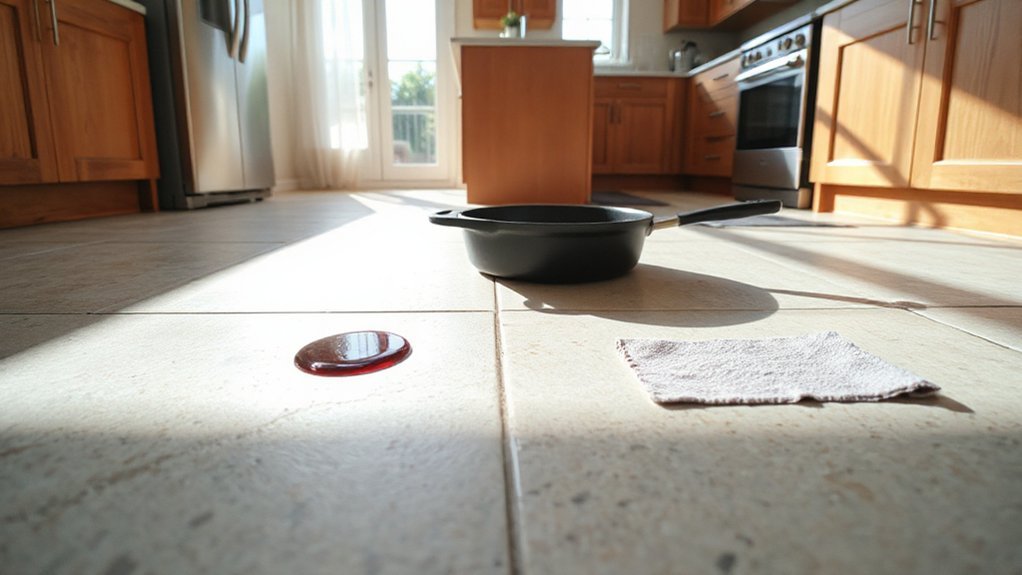
Even if you cook hard every day, the right stone floor will cope with spilled wine, hot pans, and dropped tins without looking tired. Choose dense stones like granite or slate for kitchens; they resist scratching and handle short heat exposure better than softer limestone or marble. Specify a honed finish to reduce slip risk on wet patches, common in UK kitchens.
Prioritise stain prevention: seal porous stone with an impregnating sealer and refresh it to the manufacturer’s interval (often 12–36 months). Wipe acids (lemon, vinegar) immediately to avoid etching, especially on calcareous stones. For Kitchen cleanliness, use pH-neutral cleaners and avoid bleach or acidic descalers. Fit doormats and felt pads, and you’ll minimise grit abrasion and keep joints crisp.
Living Room Stone Floors That Feel Warmer Underfoot
While stone has a reputation for feeling cold, you can make a living room floor noticeably warmer underfoot by matching the right stone and finish to your build-up. Choose limestone or sandstone with a honed finish; they conduct less “chill” than high-polish marble and feel softer at first contact. Specify insulated screeds and a decoupling membrane over UK concrete slabs, then add low-temperature hydronic underfloor heating set for steady output. Keep joints tight and grout flexible to reduce draughty voids. Layer with wool rugs and felt underlay where you sit most. For eco friendly options, source UK or European quarry stone and use low-VOC sealers. Plan stone maintenance: re-seal on schedule, use pH-neutral cleaners, and fit entrance mats.
Bathroom Stone Flooring for Showers and Wet Areas
Because bathrooms combine constant moisture, temperature swings, and cleaning chemicals, you need a stone floor system that prioritises slip resistance and waterproofing over looks alone. Specify honed or brushed finishes and an R11 slip rating for shower zones, with smaller formats or mosaics to increase grout lines and traction. Use a full wet-room build-up: tanking membrane to BS 5385, falls to the waste (typically 1:80), and epoxy grout to resist staining. Choose dense stones like slate or granite, or sealed limestone if you’ll maintain it. Align Natural stone color palettes with limescale realities in hard-water UK areas—mid tones hide marks better. For Eco friendly stone options, select UK-quarried slate or reclaimed flags to cut transport and embodied carbon.
Mudroom and Laundry Stone Floors That Take Abuse
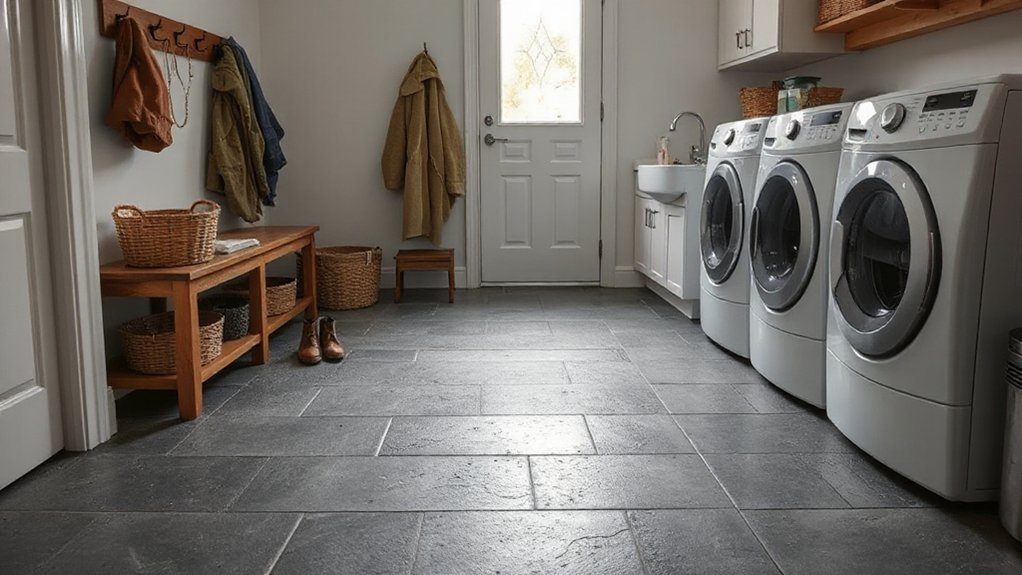
Once you’ve built for wet bathrooms, focus next on mudrooms and utility rooms, where grit, wet boots, pet traffic and detergent spills punish the floor every day. Prioritise mudroom durability with hard-wearing slate, honed granite, or flamed basalt; avoid polished finishes that show scratches and go slippery. Specify a slip-resistant rating (aim for pendulum P4 or higher) and use a flexible S2 adhesive plus decoupling matting if you’ve got underfloor heating. Choose a dark grout and a stain-resistant sealer to handle tannins, oils and bleach splashes. In laundry areas, balance toughness with laundry room aesthetics: limestone or porcelain-look stone can soften the space, but keep edges eased and joints tight to stop lint traps. Add recessed coir mats at doors.
Bedroom Stone Floors: Comfort, Rugs, and Acoustics
Although bedrooms don’t face the same grit and chemical spills as utility spaces, stone can still feel unwelcoming unless you design for warmth underfoot and controlled sound. You’ll get the best results by pairing thermally stable stone with targeted soft finishes, so the room feels calm at night and practical in the morning. Prioritise bedroom acoustics with mass-and-absorption, not guesswork.
- Specify honed limestone or slate; avoid high-polish if you want a quieter, less reflective surface.
- Add electric mat or low-profile wet UFH; keep surface temps within manufacturer limits for sealers.
- Plan rug placement: a large wool rug under the bed, extending 600–750mm either side, stops cold step-downs.
- Use acoustic underlay beneath rugs and felt pads on furniture to cut impact noise and stone “ring” within UK timber floors.
Stone Floors for Stairs & Halls: Edges, Grip, Noise
On stairs and in halls, you need stone detailing that meets UK Building Regulations while staying practical underfoot. You’ll specify stair edge profiles—pencil-round, bullnose, or mitred with a contrasting nosing—then add slip-resistant treatments such as honed finishes, anti-slip etching, or R-rated coatings to maintain grip in wet footwear conditions. To cut footfall noise through the core, you’ll pair decoupling underlay or acoustic matting with fully bedded fixing and tight joints to minimise impact and rattle.
Stair Edge Profiles
When you specify a stone stair, the edge profile matters as much as the tread finish because it governs slip resistance at the nosing, impact durability, and how noise transmits into the hall. Choose stair edge profiles that suit traffic, substrate, and detailing, and coordinate stone stair nosings with UK Part K expectations for consistent, safe step geometry.
- Square (arrised) edge: crisp lines, but chips easily; specify a small 2–3mm arris.
- Pencil-round: softens impact and reduces chipping; suits limestone and marble in family halls.
- Bullnose: generous radius improves durability and comfort; can read heavier on narrow treads.
- Mitred drop-front: creates a thick visual nosing; ensure adequate bed and mechanical restraint.
Detail joints tightly and isolate edges from hollow spots to control tapping noise.
Slip-Resistant Treatments
Because stairs and entrance halls see the highest wet-foot traffic, you should specify a slip-resistance strategy for the stone itself rather than relying on mats or sealers alone. Ask your supplier for pendulum test values to BS 7976 and target a low slip potential in wet conditions, especially at external thresholds and near cloakrooms.
Choose finishes that build grip: honed limestone with micro-etching, flamed granite, bush-hammered or sandblasted surfaces. For existing polished stone, specify an acid-etch or mechanical abrasion system that raises the surface coefficient without creating patchiness. Add safety enhancements with discreet anti-slip strips or inserts rated for domestic stair use, and keep nosings fully supported. Specify maintenance notes: neutral cleaners only, and re-test after deep cleaning to confirm slip resistance remains.
Noise Reduction Strategies
Although stone treads and hall flags deliver hard-wearing performance, they can amplify footfall, heel-click and impact noise if you leave them fully rigidly bedded and hard-edged. You’ll cut transmission and airborne reflection by treating stairs and corridors as a system: substrate, fixings and finishes. Prioritise these soundproofing techniques:
- Decouple with a 3–5mm acoustic underlay or resilient mat below the bed; keep perimeter gaps and seal with flexible mastic.
- Specify a polymer-modified adhesive bed, not dot-and-dab, to avoid voids that drum.
- Soften edges: bullnose nosings, cork/rubber stair rods, and carpet runners reduce click.
- Add acoustic panel options on adjacent walls/ceilings, and use solid-core doors with drop seals to limit reverberation.
Sunrooms and Patios: UV, Freeze–Thaw, Drainage
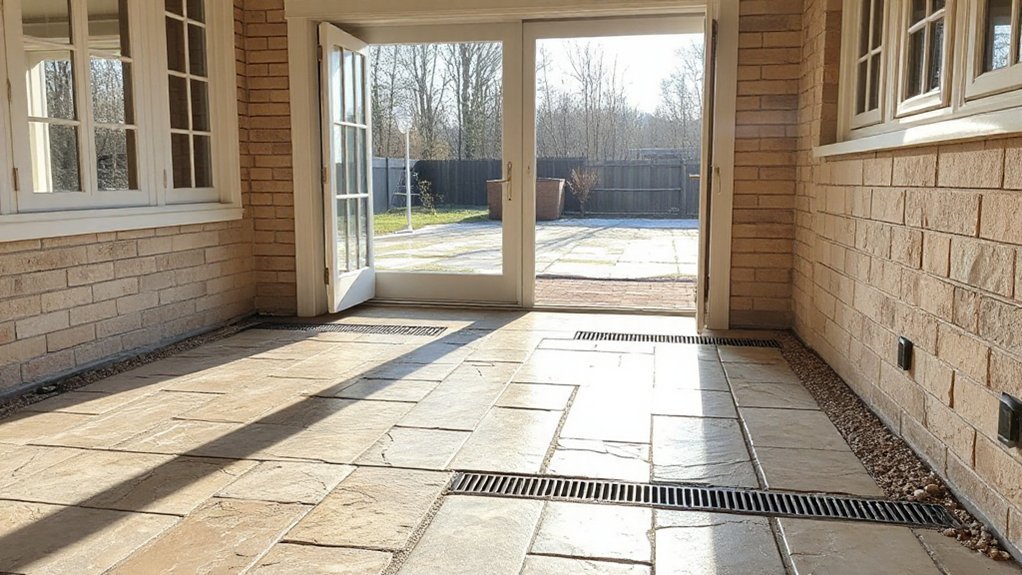
If your sunroom or patio sits in full exposure, natural stone has to cope with three constant pressures: UV fade, freeze–thaw cycling, and surface water that won’t drain. Choose a UV-stable stone such as slate or granite, and specify a honed or textured finish that won’t become slick in rain. For UV protection, keep colour expectations realistic: some limestones and sandstones will mellow under southern aspect glazing or open sky.
For UK winters, prioritise freeze thaw resilience by avoiding porous, poorly graded stones and insisting on external-rated thickness. Build the substrate with a fall of 1:60 away from the house, add perimeter drainage where needed, and keep joints clear so water can exit fast.
Grout Color, Sealers, Lighting, and Decor Pairings
Once you’ve specified a stone that can handle sun, frost, and standing water, the finish choices that follow—grout colour, sealer type, lighting, and decor—decide whether the floor looks sharp and stays low-maintenance in day-to-day UK living. Keep joints tight (around 3–5 mm) to reduce algae and grime, and choose additives rated for exterior use. Grout color matters: match for a calm plane, contrast to emphasise setts or Versailles patterns.
- Pick a breathable impregnating sealer for porosity; avoid film-formers outdoors.
- Re-seal on a water-drop test, typically every 2–5 years.
- Use 2700–3000K lighting to flatter warm limestones; 4000K suits slate.
- For decor pairings, echo stone undertones in cushions, planters, and powder-coated furniture.
Frequently Asked Questions
How Much Does Natural Stone Flooring Cost per Square Foot Installed?
You’ll typically pay £70–£180 per square foot installed in the UK, depending on stone type, substrate prep, and sealing. For cost comparison, limestone runs lower than marble; material durability and slip rating may raise labour.
How Long Does Stone Flooring Installation Typically Take for an Average Home?
You’ll typically need 5–10 days to install stone flooring in an average UK home, depending on subfloor prep, curing, and sealing. Plan Stone care and follow Maintenance tips: avoid early washing, protect grout, seal promptly.
Can Natural Stone Be Installed Over Existing Flooring Without Demolition?
Yes, you can install natural stone over existing flooring if it’s sound, flat, and dry, but installation challenges include height build-up and movement. Use UK-approved adhesives, add decoupling membranes, and follow maintenance tips: seal regularly.
Does Radiant Floor Heating Work Safely and Efficiently With Natural Stone?
Yes—you can run radiant floor heating safely and efficiently beneath natural stone; stone’s conductivity can cut warm-up times by up to 25%. Prioritise radiant heating compatibility, Safety considerations: BS EN 1264 design, sensors, insulation, commissioning.
How Do I Repair Chips, Cracks, or Loose Tiles in Stone Floors?
For chips, you’ll colour-match epoxy resin, cure, then stone polishing to blend. For cracks, you’ll rout and inject resin for crack repair. For loose tiles, you’ll lift, remove adhesive, re-bed, grout.
Conclusion
Choose your stone like you’d choose a good pair of boots: fit it to the terrain. In Britain’s wet, grit-strewn seasons, you’ll want the right finish for slip resistance, the right sealer for tea, wine, and oil, and the right grout tone to disguise daily wear. Done properly, natural stone becomes the quiet backbone of your home—cool underfoot, tough as old granite, and glowing warmly in lamplight.