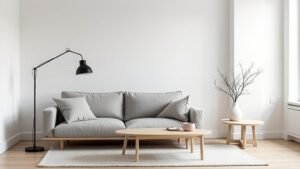
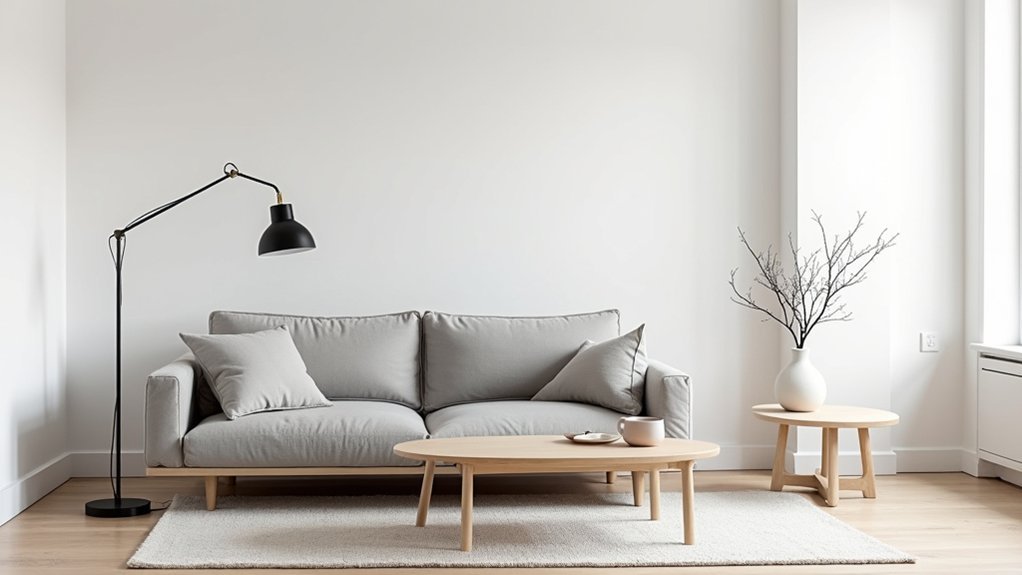
Scandinavian minimalism helps you create a brighter, calmer home by prioritizing natural light, clean lines, and open circulation. You’ll keep a restrained palette of soft whites, pale oak, and muted greys, then add warmth with wool, linen, and matte black accents. You’ll choose fewer, better pieces and rely on built-in or closed storage to keep surfaces clear. Layer dimmable lighting for winter-proof comfort, and you’ll see how each room can simplify beautifully.
Key Takeaways
- Scandinavian minimalism creates calm, light-filled rooms using clean lines, open circulation, and an edited, functional layout.
- It evolved from Nordic winters and limited daylight, prioritizing practicality, durability, and democratic design for small, efficient homes.
- Use a restrained palette: soft whites, pale oak, muted greys, with matte black accents and one saturated color for contrast.
- Choose fewer, high-quality pieces in honest materials like oak, wool, linen, and stone, emphasizing tactile warmth over decoration.
- Hide clutter with built-in, closed storage and add layered, dimmable lighting to avoid cold, flat spaces.
What Is Scandinavian Minimalism?
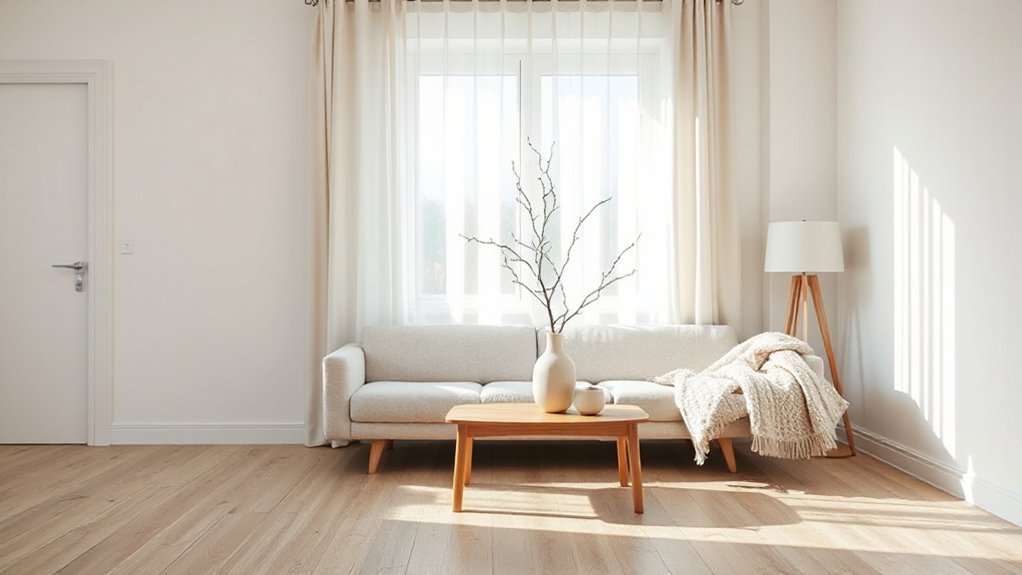
Why does Scandinavian minimalism feel so calm the moment you walk in? You experience a disciplined edit: clean lines, open circulation, and a light-first layout that makes rooms read larger and brighter. You’ll notice pale timber, matte finishes, and a restrained palette that lets architecture lead. Furnishings stay low-profile yet tactile, balancing comfort with visual quiet. Storage works hard, so surfaces stay clear and your eye rests.
You’re also seeing Cultural influences translated into livable priorities—warmth, practicality, and respect for daylight—without decorative excess. In today’s homes, Modern adaptations add performance: integrated LED layers, acoustic softening textiles, and multifunctional joinery suited to compact plans. You get spaces that feel intentional, efficient, and effortlessly premium.
Scandinavian Minimalism Origins: Why It Evolved
That calm, light-led feeling didn’t happen by accident—it grew out of Nordic realities that demanded homes perform well. You’re dealing with long winters, low sun, and tight heating budgets, so interiors evolved to capture daylight, cut visual noise, and make compact plans feel larger. In property terms, the look wasn’t just aesthetic; it improved liveability and resale by delivering dependable comfort in small footprints.
Cultural influences also shaped it: a respect for craft, egalitarian living, and nature-adjacent materials pushed design toward honest finishes and durable joinery. The historical development accelerated with early-20th-century social housing, postwar rebuilding, and democratic design programs that scaled quality across price points. You can trace today’s clean, functional rooms back to those practical constraints and civic ambitions.
Scandinavian Minimalism Principles: 5 Simple Rules
Because Scandinavian minimalism grew out of hard practical needs, you can apply it today with five simple rules that make a home feel brighter, bigger, and more valuable. You’ll protect resale appeal by privileging function, daylight, and calm surfaces while showcasing Nordic craftsmanship and minimalist aesthetics.
- Prioritize light: keep sightlines open, use pale finishes, and let windows read larger.
- Edit to essentials: fewer, better pieces photograph well and make rooms survey-ready.
- Choose honest materials: oak, wool, linen, and stone add tactile value without visual noise.
- Build in storage: concealed solutions reduce clutter and support premium square-foot perception.
Fifth rule: keep a cohesive palette across rooms so buyers experience continuity, not chopped-up spaces.
How to Start Scandinavian Minimalism in Your Home
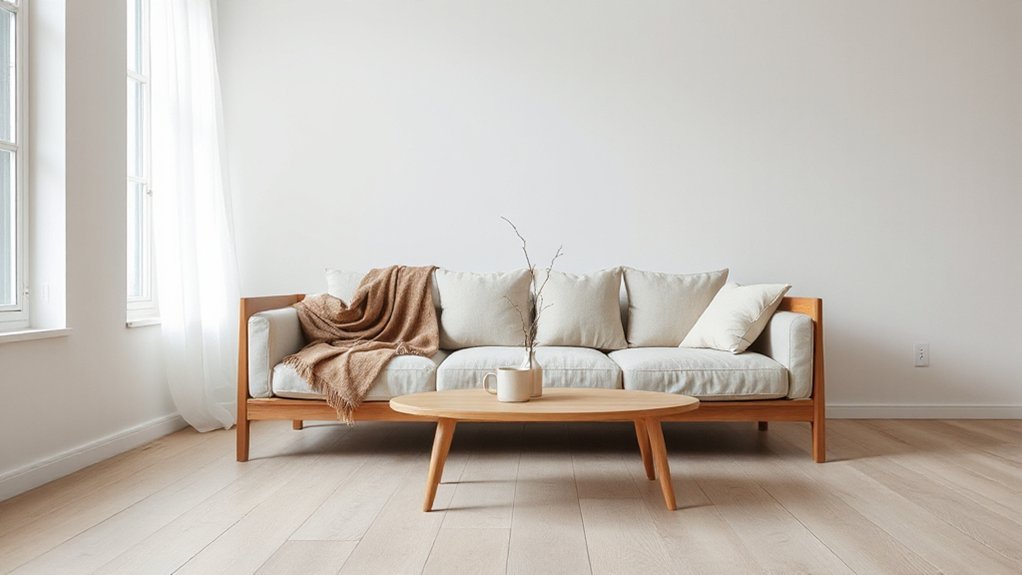
Where do you begin if you want Scandinavian minimalism to lift both your daily comfort and your home’s market appeal? Start with a ruthless edit: clear countertops, remove visual clutter, and store daily items behind closed doors. Buyers read this as space, light, and calm. Next, anchor each room with one purposeful focal piece—sofas, dining tables, or beds with clean lines—and retire anything that competes.
Then improve flow: widen pathways, keep sightlines open, and use consistent hardware and handles for a unified look. Choose durable, easy-care finishes that photograph well and signal quality. Lean into Eco friendly practices by repairing, refinishing, and selecting certified materials over fast replacements. Finally, follow Modern Scandinavian trends: layered lighting, discreet storage, and matte, tactile surfaces that feel premium.
Warm Scandinavian Minimalism Color Palettes
Once you’ve edited the clutter and tightened the furniture mix, the fastest way to make Scandinavian minimalism feel inviting (and photograph like a premium listing) is to warm up the palette. You’ll keep the look clean while boosting perceived comfort—key for showings and short-list decisions. Use Color psychology to steer mood: warmer neutrals read welcoming, while muted tones reduce visual noise and let light bounce.
- Creamy off-white + soft greige: lifts rooms without looking clinical.
- Warm taupe + clay: adds depth that flatters north-facing spaces.
- Blush-beige + muted terracotta: signals calm, modern hospitality.
- Honeyed sand + smoky olive: grounded, upscale, and renter-resistant.
Cultural influences matter: Nordic winter light rewards warmer undertones, so your staging feels lived-in, not sterile, across seasons.
Scandinavian Minimalism Materials: Wood, Wool, Linen
To make Scandinavian minimalism feel high-end rather than bare, you’ll want to anchor the space with a tight trio of materials—light-toned wood, tactile wool, and relaxed linen. Specify ash, birch, or oak with matte oil or soap finishes to keep grain visible while resisting daily wear; that’s Material durability you can market in a listing. Prioritize Sustainable sourcing with FSC-certified timber and low-VOC finishes, especially in open-plan homes where air quality reads as “new.” Layer wool in natural shades for acoustic softening and thermal comfort without visual clutter; choose tightly woven, high-twist piles that won’t shed. Finish with linen—stonewashed, midweight, and slightly rumpled—to diffuse light and make window walls feel calmer. Keep textures consistent across rooms for cohesive appraisal-ready value.
Scandinavian Minimalism Furniture: Simple, Comfy Shapes
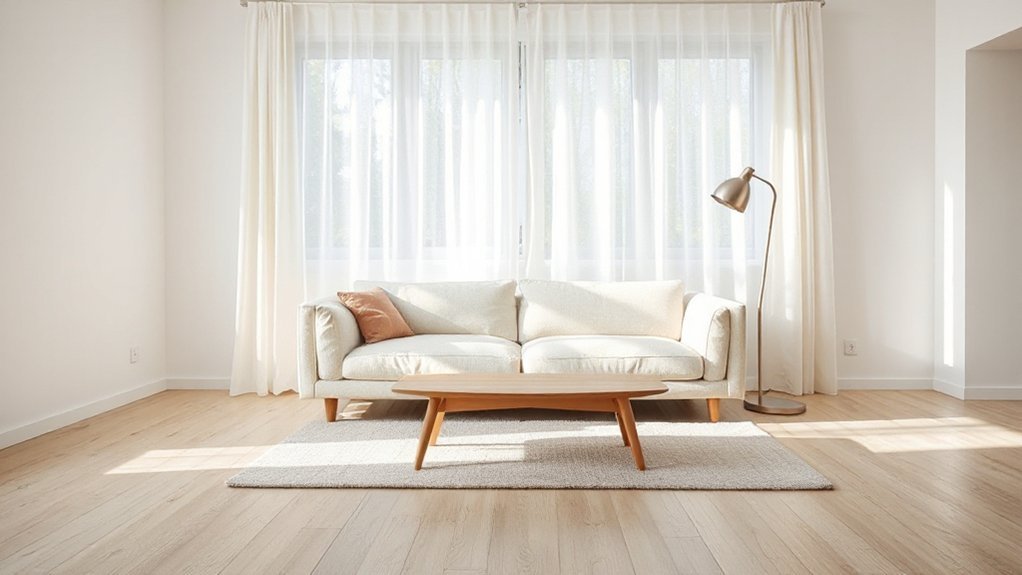
You’ll notice Scandinavian minimalism furniture balances soft curves with clean lines, so each piece reads calm and intentional in your space. You’ll get cozy forms—low-slung sofas, rounded lounge chairs, and airy tables—that prioritize comfort without visual clutter. You’ll anchor the look with natural materials like solid wood frames, wool upholstery, and linen blends that keep the profile warm and refined.
Soft Curves, Clean Lines
While Scandinavian minimalism favors restraint, its furniture rarely feels severe—soft curves temper clean lines to keep a room inviting. You’ll notice how a rounded sofa arm, an oval tabletop, or a gently arched chair back softens strict geometry without adding visual noise. In a listing-ready interior, this balance reads polished, calm, and highly livable, making spaces feel larger and more considered.
- Choose silhouettes with radiused edges to reduce harsh shadows and visual clutter.
- Pair a single curved statement piece with rectilinear storage for structure.
- Keep profiles low and leg lines crisp to maintain airy sightlines.
- Repeat one curve motif across the room to create cohesion, not chaos.
Soft curves, clean lines deliver comfort through form, while staying decisively minimal.
Cozy Forms, Natural Materials
A Scandinavian-minimalist room feels most inviting when cozy, simple forms meet honest natural materials. You’ll get the best value when you choose furniture with generous seats, rounded arms, and low visual weight, then let craftsmanship do the talking. Think solid oak tables, ash veneer casework, wool upholstery, leather pulls, and linen drapery—materials that age well and photograph beautifully for resale.
Keep finishes matte and tactile, but avoid artificial textures that read like laminate or plastic under daylight. You can still layer modern accessories: a slim black floor lamp, brushed-steel hardware, or a single sculptural vase. Balance soft silhouettes with precise joinery, tight seams, and consistent wood tone. Your space stays calm, comfortable, and market-ready.
Scandinavian Minimalism Lighting for Dark Winters
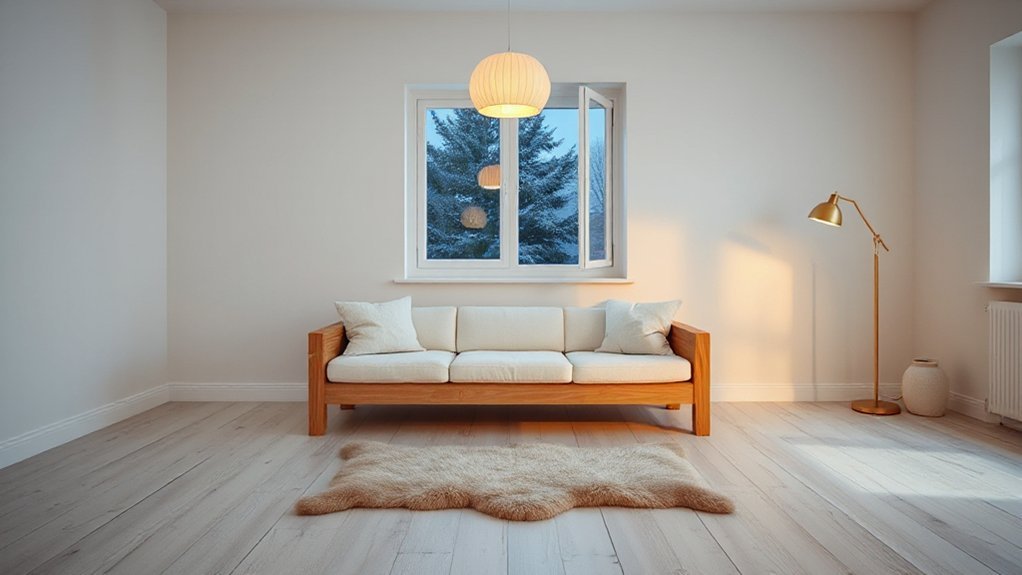
- Ceiling: slim pendants or track with diffusers
- Task: under-cabinet and desk lamps, 90+ CRI
- Accent: wall washers to brighten verticals
- Control: dimmers, timers, and 2700–3000K scenes
Scandinavian Minimalism Decor: Cozy, Not Cluttered
Because Scandinavian winters push you indoors, decor has to deliver warmth without visual noise. You’ll get there by choosing fewer, better pieces that read intentional from the entry onward. Anchor the palette in soft whites, pale oak, and muted greys, then add contrast with matte black hardware and one saturated accent.
Layer tactility, not trinkets: wool throws, shearling, linen, and a dense flatweave rug that improves acoustics and resale appeal. Keep surfaces edited with closed storage, and let negative space frame Scandinavian art—one large print beats a gallery wall of smalls. Use ceramics and timber boards that nod to Nordic cuisine, but display them like objects, not clutter. Finish with greenery and a single sculptural vase to soften lines.
Scandinavian Minimalism by Room: Living to Bedroom
When you carry Scandinavian minimalism from the living room to the bedroom, you’ll get the cleanest result by repeating a tight palette and a few honest materials while adjusting each room’s function. You’ll boost resale appeal by keeping sightlines open and finishes consistent: pale oak, matte whites, and soft wool read premium and calm under natural light.
- Living room: Anchor with a low-profile sofa, one wool rug, and a single piece of Scandinavian art sized to the wall.
- Dining zone: Choose a light-wood table and molded chairs; it frames Nordic cuisine without visual noise.
- Hall/transition: Use flush storage and slim hooks to protect circulation and flooring.
- Bedroom: Prioritize a platform bed, linen bedding, blackout shades, and one bedside sconce per side.
Scandinavian Minimalism Mistakes (and Easy Fixes)
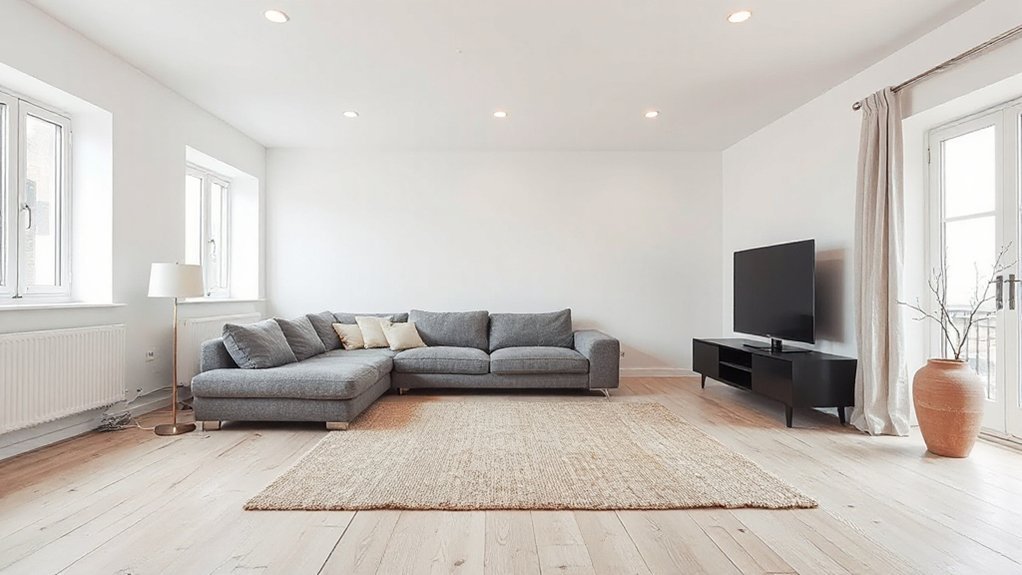
Although Scandinavian minimalism looks effortless in photos, most real homes miss the mark in predictable ways that can cheapen the space and even flatten buyer appeal. First mistake: going too cold. If you stick to stark whites without warmth, rooms read sterile on tours; fix it with layered oak tones, wool, and matte black accents. Second: clutter disguised as “cozy.” Edit surfaces, then store in closed cabinetry so sightlines feel larger. Third: undersized rugs and skinny curtains shrink perceived square footage; size up and hang drapery high. Fourth: ignoring lighting. Swap a single ceiling fixture for dimmable, mixed sources. Fifth: flat walls. Use Minimalist color schemes with subtle contrast, then anchor with Scandinavian art styles—one large piece beats a gallery of small prints.
Frequently Asked Questions
How Do I Maintain Scandinavian Minimalism With Kids and Pets?
You’ll maintain it by zoning storage, rotating toys, and choosing wipeable textiles. Prioritize Balancing clutter with closed cabinetry and baskets, then add Playful decor via washable art and durable accents that still elevate resale appeal.
What’s the Typical Budget for a Scandinavian Minimalist Home Makeover?
You’ll typically spend $5,000–$30,000, like repainting sunlit walls and swapping sleek fixtures. Use Budget planning to prioritize Design essentials: durable flooring, lighting, storage, and furnishings. Keep contingencies, and phase upgrades room-by-room.
Which Scandinavian Minimalist Brands Offer Affordable, Sustainable Options?
You’ll find affordable, sustainable options at IKEA, JYSK, and Hem, plus Muuto’s entry lines. You can source Eco friendly materials via FSC wood and recycled textiles, choosing Budget friendly brands that still elevate your property.
How Do I Blend Scandinavian Minimalism With Maximalist Art Collections?
You’ll blend minimal calm with maximalist art by keeping Color palettes restrained, curating a tight furniture selection, and letting artworks anchor focal walls. Use gallery-style lighting, ample negative space, and repeat frames for cohesion.
Does Scandinavian Minimalism Work Well in Small Apartments or Studios?
Yes, it works brilliantly in small apartments and studios. As morning light hits bare floors, your Color palettes stay airy, while smart furniture choices—slim sofas, wall-mounted storage, nesting tables—keep circulation clear and square footage feeling larger.
Conclusion
You’ve walked your home like a northern shoreline, clearing driftwood clutter until clean lines and honest materials emerge. Scandinavian minimalism rewards you with space that performs: light that lifts dark winters, palettes that warm without noise, and decor that reads intentional, not empty. Room by room, you’ve built a calm architecture of daily living—storage that disappears, textures that soften, and lighting that layers. Keep steering by those five rules, and your property stays timeless.