
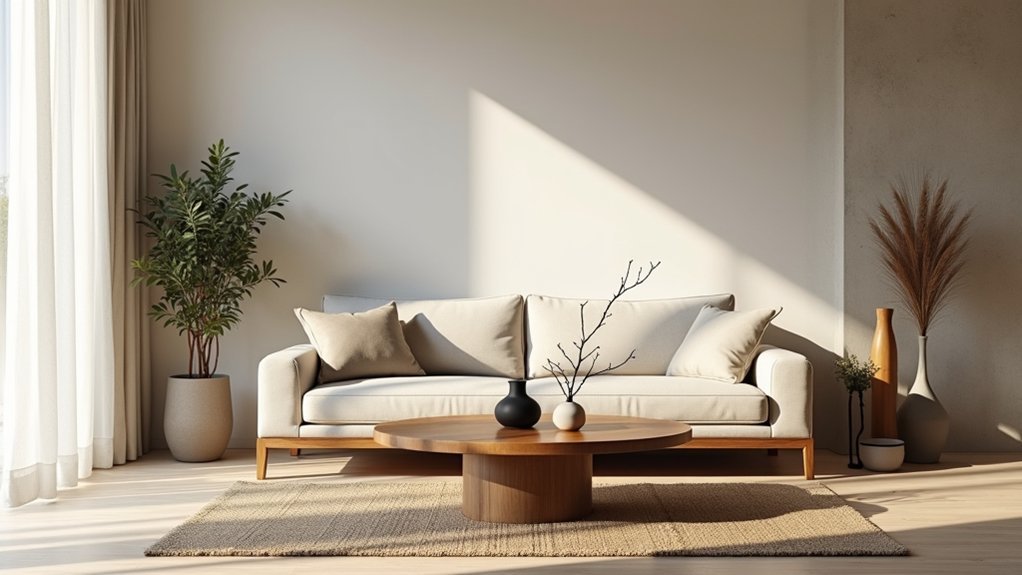
Apply Japandi in your living room by keeping the layout minimal, with clear 75–90cm walkways and seating facing one calm focal point. Choose warm UK-friendly neutrals (oatmeal, stone, soft greige), add one mid-tone wood, and limit accents to a grounded dark plus one muted colour. Pick fewer, better clean-line pieces with hidden storage, then layer linen, wool, timber, and matte ceramics. Use warm 2700K layered lighting and one or two plants; there’s more to refine.
Key Takeaways
- Keep the layout minimal with 75–90cm clear walkways, and arrange seating around one calm focal point like a fireplace or low media unit.
- Use a restrained palette of warm neutrals plus one dark grounding shade, with a muted accent introduced through cushions or ceramics.
- Choose fewer, high-quality pieces in natural materials—oak, linen, wool—with clean silhouettes, avoiding mismatched undertones like cold grey with warm wood.
- Layer warm, dimmable lighting at different heights using 2700K bulbs, and add one or two healthy plants in matte ceramic or clay pots.
- Reduce visual noise by keeping surfaces mostly clear, using closed storage, and limiting decor to one tray, one vase, and one large artwork.
Japandi Living Room Rules: Minimal, Warm, Functional
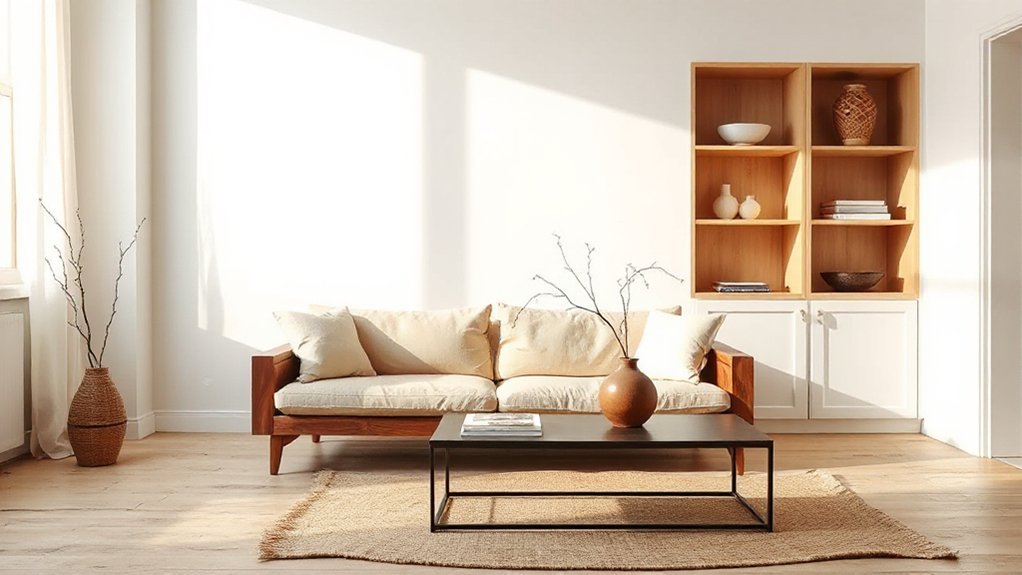
While Japandi style looks effortless, it relies on a few clear rules: keep the layout minimal, add warmth through natural materials, and choose pieces that earn their place through daily function. Start by editing your floor plan: leave clear walking routes from doorway to seating, and limit furniture to a sofa, one anchor chair, and a compact table. Respect Cultural influences by balancing Japanese restraint with Scandinavian comfort, so you don’t over-style. Use material contrasts to keep the room inviting: pair pale oak with blackened metal, linen with smooth ceramic, and a wool rug with a clean-lined timber bench. Prioritise storage that hides clutter—closed cabinets or a lidded ottoman suit UK-sized living rooms—then keep surfaces mostly clear.
Choose a Calm Japandi Color Palette (and Accents)
Because colour sets the room’s mood before you add a single texture, start your Japandi palette with quiet neutrals and build contrast sparingly. Choose warm whites, oatmeal, stone, and soft greige for walls and larger upholstery, then repeat one mid-tone wood (oak, ash, or walnut) to keep consistency.
For Color pairing, keep to two neutrals plus one grounded dark, such as charcoal, ink, or deep olive, used in small doses. You’ll get depth without visual noise. For accent integration, introduce one muted highlight—clay, rust, sage, or dusty blue—through cushions, a throw, or ceramics. In UK light, especially north-facing rooms, test samples morning and evening and favour warmer undertones to avoid a flat, cold feel.
Plan Your Layout: Focal Point, Pathways, Balance
Start by deciding what should lead the room—typically a fireplace, a large window, or a low media unit—and arrange seating to face it. Then you’ll need to keep pathways clear, allowing easy movement between the door, sofa, and key storage areas without weaving around furniture. When you set a strong focal point and maintain open routes, the space feels calm, balanced, and distinctly Japandi.
Define The Focal Point
Before you choose a sofa or sideboard, decide what feature should anchor the room, as this focal point will guide every other placement in a Japandi living room. In most UK homes, that anchor is often a fireplace, a picture window, or a low media wall; select one and commit to it.
Use focal point placement to create calm order: centre your main seating to face it, keep surrounding pieces lower and quieter, and limit competing statements. Build a clear visual hierarchy by giving the anchor the strongest contrast in texture or tone, then stepping down through mid-weight elements such as a coffee table and a single artwork. Choose restrained materials—oak, ash, stone, linen—and let negative space frame the feature, so it reads intentional rather than sparse.
Ensure Clear Pathways
Once you’ve set the focal point, map clear pathways so you can move through the room without weaving around furniture. Aim for a direct route from the doorway to seating and to any patio doors, keeping circulation lines open and calm. In a typical UK terrace or flat, leave at least 75–90cm between key pieces, and avoid placing side tables where knees and shins will catch.
You’ll preserve Japandi’s quiet order by spacing furniture evenly, not pushing everything to the walls. Use rugs to define zones without blocking movement; keep edges aligned with walkways. Cultural influences matter: Japanese restraint and Scandinavian practicality both favour uncluttered routes. Maintain Material contrast, pairing light timber with darker textiles, while keeping floors visually uninterrupted.
Choose Clean-Line Japandi Furniture That Lasts
Choose Japandi furniture with clean, minimalist silhouettes so your living room stays calm and current for years. You’ll get the most value by selecting well-made pieces in durable natural materials such as solid oak, ash, or bamboo, finished to withstand daily use in UK homes. Prioritise quality joinery, sturdy frames, and hard-wearing upholstery so your scheme looks refined and lasts.
Timeless Minimalist Silhouettes
Although trends come and go, Japandi living rooms look most convincing when you commit to timeless minimalist silhouettes with clean, uninterrupted lines. You’ll achieve this by choosing low-profile sofas, straight-armed lounge chairs, and simple rectangular coffee tables that keep visual noise to a minimum. Prioritise pieces with balanced proportions, tight seams, and discreet hardware, so the form reads calm from every angle. In UK flats and terraces, scale matters: select slimmer frames and raised legs to maintain clear sightlines and improve circulation. To accommodate Evolving silhouettes without frequent replacement, favour modular seating or nesting tables that reconfigure neatly. Then introduce Artistic expressions through a single sculptural lamp or a pared-back sideboard, letting one strong shape anchor the room rather than competing details.
Durable Natural Material Choices
Clean silhouettes only stay serene when the materials can cope with daily wear, so pair your pared-back forms with durable, natural finishes that age well. Choose solid oak, ash, or beech frames, and avoid thin veneers on high-touch areas such as arms, tops, and edges. For sofas, specify tightly woven wool or linen blends and removable covers, as they suit UK homes and changing seasons.
Prioritise Sustainable sourcing: look for FSC-certified timber and verified chain-of-custody from reputable UK retailers. Select Eco friendly finishes, such as hardwax oil, low-VOC lacquers, or water-based stains, which resist marking while keeping grain visible. Add resilience with leather only when it is vegetable-tanned and properly cared for. Finally, check joinery, warranty length, and spare-part availability so your clean-line pieces endure.
Layer Natural Textures: Wood, Linen, Wool, Stone
When you layer natural textures, Japandi style in the living room feels calm yet lived-in rather than sparse. Aim for Textural layering that looks intentional: pair pale oak or ash furniture with linen upholstery and a wool throw, then anchor the scheme with a stoneware vase or slate tray. Keep finishes matte to avoid visual noise.
Create Organic contrast by mixing smooth and tactile surfaces within a restrained palette. You can place a jute rug under a low coffee table, add boucle or brushed wool cushions, and introduce a timber sideboard with visible grain. In UK homes, balance cooler stone with warmer wood tones to prevent the room feeling flat. Limit patterns, vary weave and weight, and repeat each material at least twice for coherence.
Light It Softly: Warm Japandi Lighting Tips
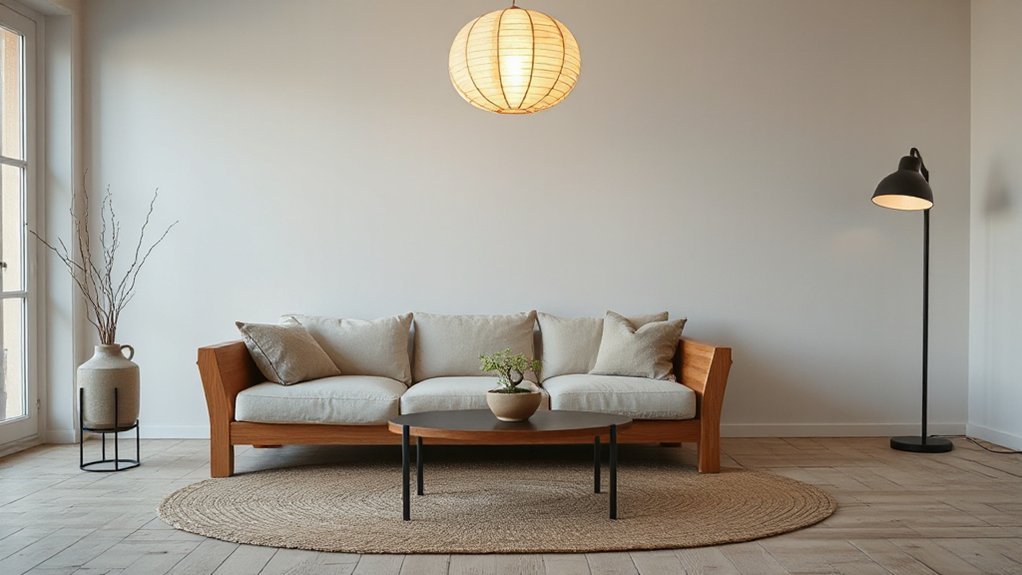
Because the right lighting sets the mood as much as your furniture does, you’ll want to build a warm, layered scheme that keeps Japandi style in the living room soft and restful. Start with dimmable ceiling lighting, then add table and floor lamps to create an ambient glow without harsh shadows. Choose warm-white LEDs (around 2700K) and avoid cool daylight bulbs that can make timber and textiles look flat. Use paper, linen, or opal glass shades for soft illumination, and position lamps at different heights to smooth contrasts. If you’ve got a fireplace, treat it as a secondary light source rather than the main one. In UK homes, fit draught-proofing and curtains so evening light feels contained and calm.
Decorate With Purpose: Fewer, Better Japandi Pieces
Although Japandi style in the living room favours calm restraint, you’ll still want each object to earn its place. Edit hard: keep a few pieces with clear function or meaning, and remove anything that merely fills a corner. Choose one strong focal item, such as a low oak coffee table or a linen-upholstered lounge chair, then support it with quieter companions.
Let Cultural influences guide selection: pair a simple ceramic bowl with a well-made British wool throw, rather than mixing many patterns. Use Material symbolism deliberately; pale timber signals warmth, stone suggests permanence, and blackened metal adds measured contrast. In UK homes, prioritise quality over volume and buy fewer, better items you can maintain and repair easily over time.
Add Simple Greenery (Without Visual Clutter)
If you add greenery with the same restraint you apply to furniture, plants can soften Japandi lines without creating visual noise. Prioritise one or two healthy specimens rather than a collection, and choose calm forms such as a rubber plant, peace lily, or small olive tree suited to UK indoor light.
Plan Indoor plant placement as you would lighting: anchor a taller plant near a window, then balance with a single tabletop option on a sideboard. Keep pots understated—matte stone, pale ceramic, or natural clay—and repeat one finish for cohesion. Use minimal greenery accessories, such as a slim watering can and a neutral saucer, stored out of sight. Maintain clear surfaces and negative space so foliage reads as a quiet accent.
Japandi Living Room Mistakes to Avoid (and Quick Fixes)
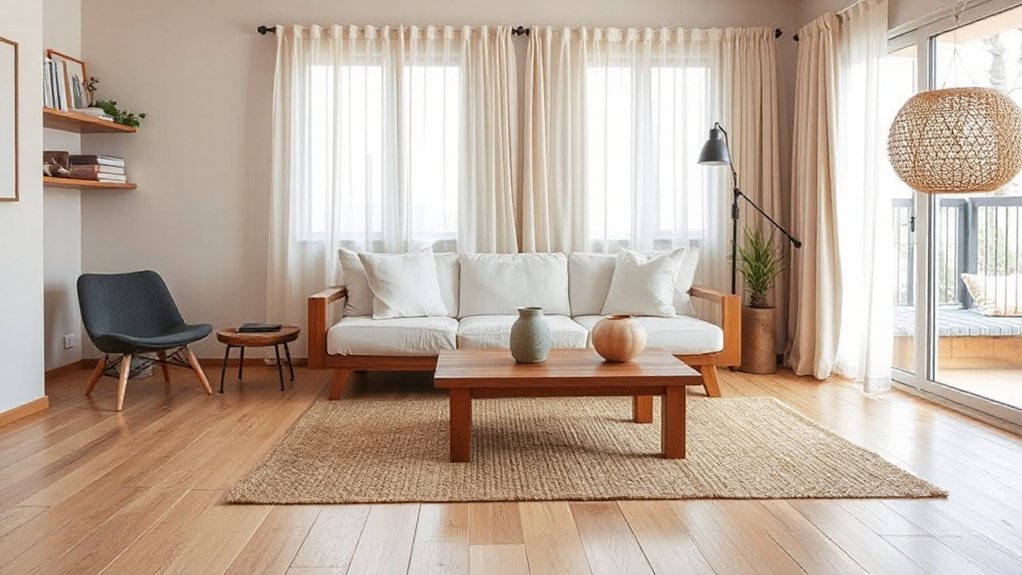
Greenery should read as a quiet accent, not a cue to add more, and that same restraint helps you avoid the most common Japandi living room missteps. You’ll keep the look calm by editing rather than adding, and by choosing pieces that earn their space in a typical UK lounge.
- Over-accessorising: Too many decorative accessories create noise. Fix it by limiting yourself to one tray, one vase, and one textural object, then store the rest.
- Busy walls: Gallery clusters can fight the serene palette. Choose one larger piece of wall art with generous white space, centred at eye level.
- Mismatched tones and materials: Cold greys with warm oak look unsettled. Repeat three materials (timber, linen, ceramic) and stick to warm neutrals throughout.
Frequently Asked Questions
What’s the Difference Between Japandi, Scandinavian, and Japanese Interior Design?
You’ll find Japandi blends Scandinavian warmth with Japanese restraint; Scandinavian favours cosy functionality and lighter woods, while Japanese stresses calm symmetry. Use Minimalist color palettes and Natural material textures; choose UK-made oak, linen, ceramics.
How Do I Incorporate Japandi Style in a Small Rental Living Room?
In a small UK rental, you’ll incorporate Japandi by prioritising simple furniture arrangement, keeping clear walkways, and choosing multifunctional pieces. Use restrained colour palette selection: warm neutrals, black accents, pale timber, plus tactile linens and ceramics.
What Are Budget-Friendly Ways to Achieve a Japandi Look?
Like a calm shoreline, you’ll achieve a Japandi look cheaply by choosing Affordable decor in natural woods, linen, and ceramics, sourcing from charity shops and IKEA, and tackling DIY projects: sanding, staining, and decluttering.
Which Rug Sizes Work Best for a Japandi Living Room Layout?
You’ll get the best balance with 160x230cm for small rooms, 200x300cm to anchor sofas, or 240x340cm for larger layouts. Choose Natural fiber rugs and Minimalist color palettes; leave a 20–30cm border.
How Do I Mix Antiques or Heirlooms Into a Japandi Living Room?
You’ll mix antiques or heirlooms by choosing one statement piece, then simplifying around it. For antique blending and heirloom integration, match woods, keep a muted palette, and use quality British textiles to unify proportions.
Conclusion
Bring Japandi into your living room and you’ll feel it exhale. Keep the palette quiet, then let warm timber, linen, and wool do the talking like a steady hearth on a grey British afternoon. Plan clear pathways, anchor a simple focal point, and choose clean-lined pieces you’ll keep for years. Light it softly, decorate with restraint, and add one calm plant. Avoid clutter, and your space will read like a well-edited page.