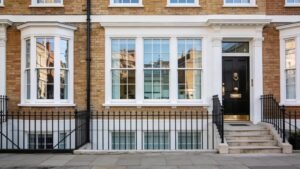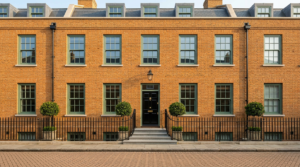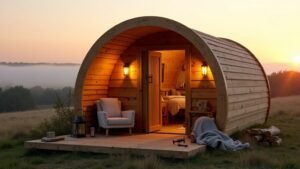
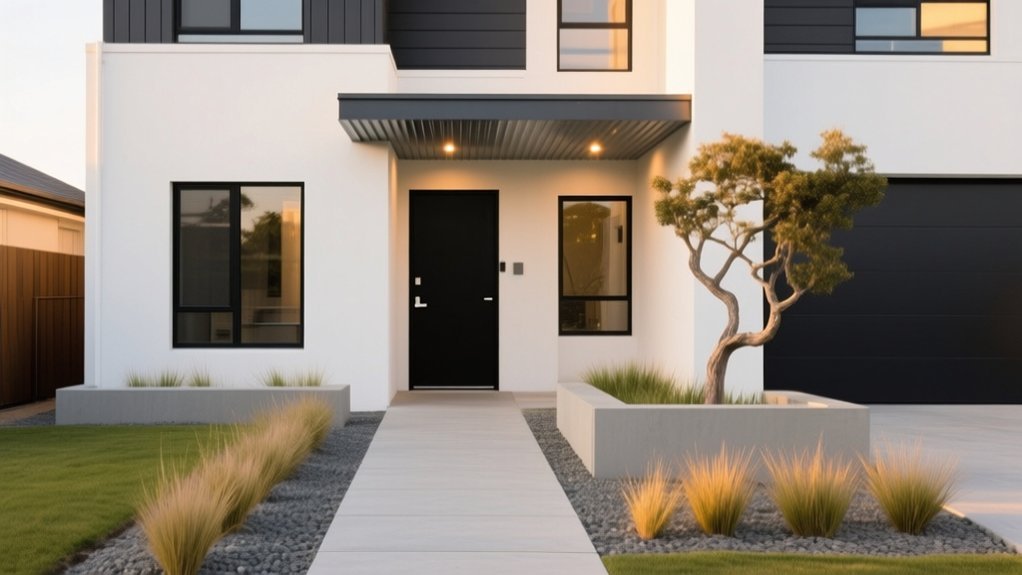
Modernise the front of your property by starting with a quick site audit, then set a firm budget and pick one cohesive style with repeating finishes. Straighten the approach path, rebuild steps with consistent risers, and upgrade to permeable pavers or resin-bound gravel for a crisp driveway. Refresh the front door with coordinated hardware, better glazing, and tight thresholds. Update façade colours in warm off-whites and charcoals, layer warm LED lighting, and repeat 2–3 structured plant species. Keep going for finer details and common mistakes.
Key Takeaways
- Start with a site audit and budget, then choose one cohesive exterior style with repeated finishes for visual harmony.
- Simplify the layout by aligning driveway, gate, and front door, and widening paths or steps to match natural “desire lines.”
- Upgrade hardscape using two coordinated, durable materials like permeable pavers or resin-bound gravel, with crisp steel or stone edging.
- Refresh the entry with a modern front door, coordinated hardware, improved glazing privacy, and a clean canopy with warm LED lighting.
- Modernise the façade with updated paint or cladding, slimline windows, layered exterior lighting, and a minimal planting palette repeated in structured layers.
Plan Your Front Update: Budget, Style, Priorities
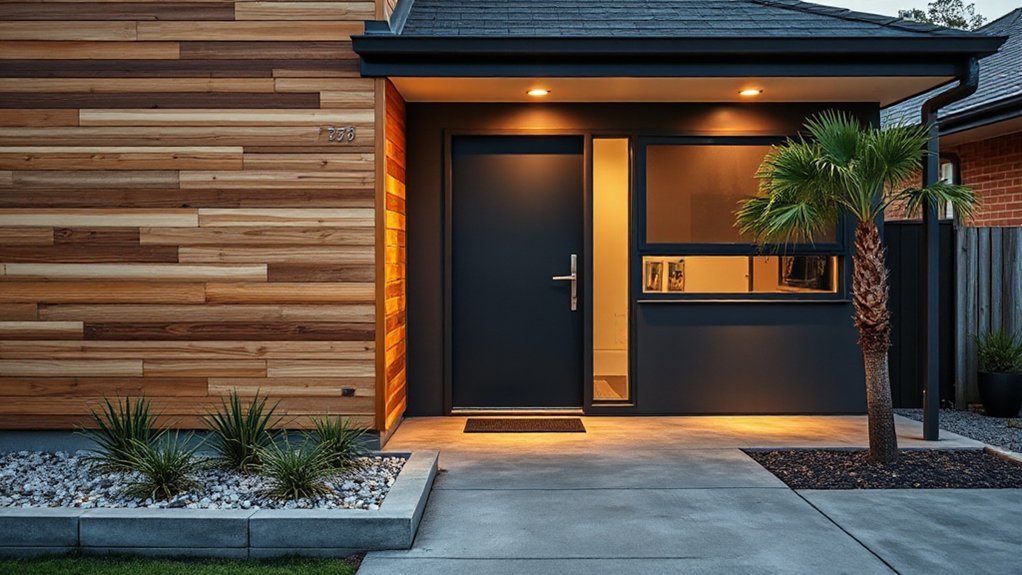
Before you start swapping doors or laying a new driveway, lock in a clear plan that ties budget, style, and priorities together. Start with a quick audit: sightlines from the street, evening visibility, drainage, and any maintenance pain points.
Set a hard spend cap, then allocate by impact—surfaces, lighting, planting, and details—so you don’t blow the budget on low-return extras.
Pick a cohesive look (modern minimal, warm contemporary, or heritage-clean) and repeat two to three finishes across the façade.
Compare driveway materials for cost, slip resistance, permeability, and colour stability; current favourites include permeable pavers and resin-bound gravel.
Specify garden lighting early—layer path, step, and accent lights—and plan cable routes before any excavation.
Refresh the Front Door for Maximum Kerb Appeal
If you want the fastest, most visible modern upgrade, focus on the front door: it anchors the whole façade and instantly signals quality.
Start by checking proportions—your door, sidelights, and transom should support entrance symmetry, not fight it.
Upgrade hardware to a contemporary lever or pull bar, add a smart lock, and choose a crisp, architectural letter plate and house numbers.
Replace tired glazing with clear, reeded, or frosted panels for privacy without losing daylight.
Tighten details: new seals, a straight threshold, and aligned hinges stop drafts and sagging.
Frame it properly with a clean canopy or minimalist porch light.
Finally, make the approach feel intentional by matching pathway materials to the door’s geometry and width.
Keep lines clean and functional.
Choose Modern Colours and Façade Finishes
You’ll modernise your frontage fast by choosing a current palette—think warm off-whites, soft greys, and grounded charcoals—then using one confident contrast for depth.
Upgrade tired masonry with contemporary render or streamlined cladding (fibre cement, composite, or timber battens) to sharpen lines and improve durability.
Finish it properly by coordinating trim, soffits, and accents like gutters, house numbers, and lighting in a consistent, modern tone.
Modern Colour Palette Choices
While a new front elevation often starts with materials, colour is what instantly signals “modern,” so choose a palette that feels deliberate and restrained. Start with a quiet base: warm off-whites, soft greige, or muted stone tones read contemporary and elevate detailing.
Use Color psychology to steer the mood—cool charcoals feel crisp and architectural, while warmer taupes feel welcoming without looking dated.
Limit yourself to three tones: a main field colour, a darker accent for trims or frames, and one highlight for the door. Prioritise low-sheen finishes; they hide minor imperfections and look premium.
Vary paint texture strategically—smooth on flat walls, subtle eggshell on joinery—for a controlled, high-end contrast. Test swatches in morning and dusk light before committing.
Contemporary Render And Cladding
Once you’ve locked in a restrained palette, render and cladding choices decide whether the front elevation reads genuinely contemporary or just newly painted.
Specify a smooth silicone render for crisp, low-maintenance planes, or a fine-textured mineral render if you want a softer, architectural grain that hides minor substrate movement.
For cladding, choose slimline fibre-cement boards, thermally modified timber, or standing-seam metal in matte finishes; they age better than gloss and photograph cleaner in daylight.
Keep junctions deliberate: express a shadow gap, align board courses, and wrap returns so edges look engineered, not patched.
Test samples beside your driveway materials in wet and dry conditions, and check against garden furniture tones to avoid clashes.
Prioritise breathable systems and verified fire ratings.
Coordinated Trim And Accents
After you’ve settled the main render or cladding, coordinate trim and accents to sharpen the façade’s lines and keep the whole front elevation reading intentional. Aim for Color harmony by limiting the palette to two or three tones: a dominant field colour, a crisp trim, and one accent for the door or feature panel.
Use Trim detailing to modernise proportions: deepen window reveals, add shadow-gap trims, and choose slimline fascias and soffits for a tighter profile. Match metalwork finishes—downpipes, house numbers, railings—to one consistent sheen, like matte black, bronze, or brushed stainless.
If you’ve gone light and warm on walls, ground it with darker plinths and sills. Test samples in daylight and shade so undertones stay consistent.
Upgrade Windows on the Front Elevation (for Less)
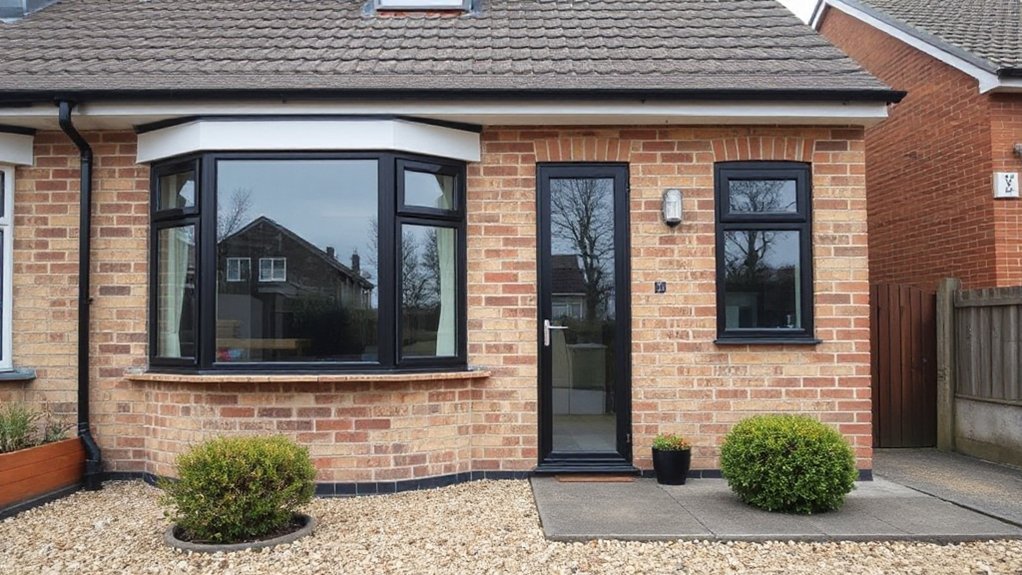
If your front elevation still has tired, mismatched, or outdated frames, upgrading the windows delivers one of the biggest curb-appeal gains for the least disruption—especially when you focus on what’s visible from the street.
Start with the front-facing units: swap yellowed uPVC, warped timber, or dated leaded panes for slimline, energy-rated frames in anthracite, soft black, or warm grey.
To keep costs down, retain openings and choose like-for-like sizes; you’ll avoid structural work and shorten install time.
If full replacement isn’t viable, specify clip-on external cappings, new handles, and refreshed glazing beads for a sharper profile. Add privacy film or modern obscured glass where needed.
Match window tone to garden furniture finishes and driveway materials so the whole frontage reads intentional.
Improve the Path, Steps, and Driveway Layout
Because the path, steps, and driveway dictate how people approach your home, tightening their layout is one of the fastest ways to make the frontage feel modern, deliberate, and higher-end. Start by clarifying desire lines: straighten awkward bends, widen pinch points, and align the front door, gate, and parking bay on one clean axis.
Replace fussy edging with crisp steel, stone, or flush-set kerbs so garden pathways read architectural, not ornamental.
Rebuild steps to consistent risers and generous treads, then use one finish across landing and path to create a continuous “plinth” effect.
For the drive, reduce visual clutter by limiting colours to two and choosing driveway materials that age well: resin-bound gravel, large-format concrete pavers, or permeable block paving.
Add discreet drainage and keep joints tight for a sharp, contemporary grid.
Modernise Exterior Lighting for Safety and Wow Factor
While the hard landscaping sets the lines, exterior lighting sets the mood—and it’s one of the quickest ways to make your frontage feel safer, sharper, and unmistakably modern. Start by layering light: low-level path markers for footing, wall washers to flatten harsh shadows, and a focused beam to highlight a tree or façade texture.
Choose warm-white LEDs (around 2700–3000K) for a premium look, and aim for consistent beam angles to avoid glare. Add smart lighting with motion and dusk-to-dawn scheduling so you get security without the “always on” feel.
Prioritise IP-rated fittings and shielded housings to control spill and protect neighbours’ sightlines. You’ll boost energy efficiency, reduce maintenance, and give visitors an instantly confident first impression.
Update House Numbers, Letterbox, and Door Hardware
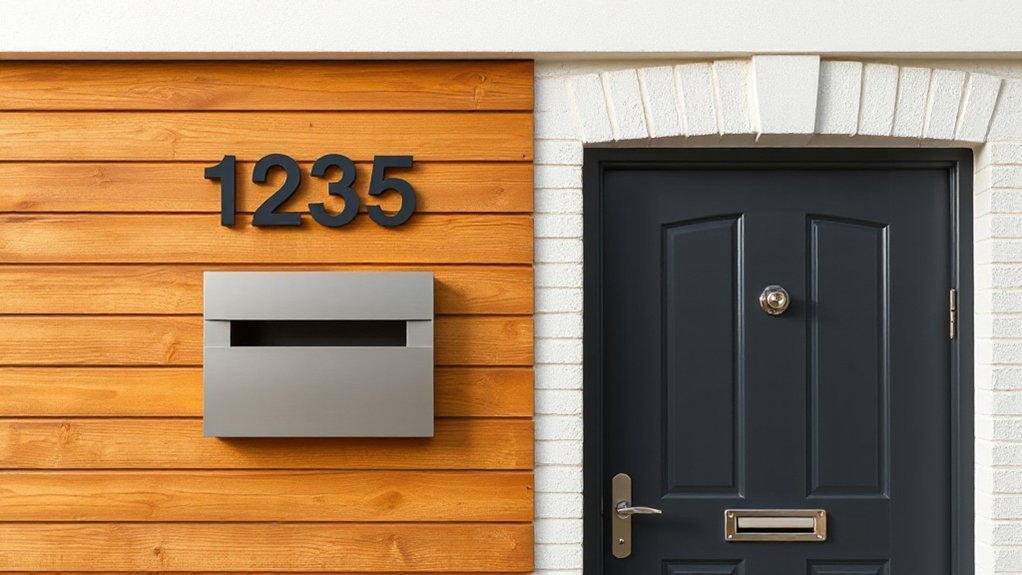
Even when your façade and landscaping feel up to date, tired house numbers, a dated letterbox, or mismatched door hardware can drag the whole frontage back a decade. Upgrade these details and you’ll instantly sharpen the entry’s look and legibility.
Choose a house number set in bold, simple typography; go larger than you think for street-readability. Matte black, brushed nickel, or warm brass suits most modern exteriors—just commit to one finish. Match your letterbox to that finish and pick a crisp, architectural profile; wall-mounted boxes look streamlined, while integrated slots suit minimal doors.
Replace the handle, knocker, escutcheon, and hinges as a coordinated set, and don’t forget a modern doorbell. Check alignment, spacing, and fixing quality so everything reads intentional, not piecemeal.
Create a Clean, Modern Planting Scheme
Keep your front garden modern by committing to a minimalist plant palette—repeat a few architectural species and skip the visual clutter of mixed varieties. Build the look with structured layers, setting low groundcovers up front, mid-height shrubs behind, and one or two statement plants as anchors.
Reinforce clean lines with crisp edging and aligned planting beds that mirror your path, driveway, and façade.
Minimalist Plant Selection
How do you make planting look modern without cluttering up your frontage? You edit hard and choose fewer, stronger performers. Start with a tight palette: two to three plant types, repeated rather than mixed.
Use sculptural evergreen forms for year-round polish, then add texture through ornamental grasses like Stipa tenuissima or Pennisetum for a crisp, contemporary edge.
For sun-baked spots, lean into succulent arrangements—agave, echeveria, and sedum read architectural and stay neat with minimal input.
Keep flower colour restrained (whites, soft mauves, or none) and prioritise foliage tone: silvery, deep green, or blue-grey.
Select plants with clean habits, avoid sprawling groundcovers, and prune lightly to maintain sharp silhouettes and consistent scale.
Structured Layers And Lines
Once you’ve narrowed the palette, give it a modern structure by arranging plants in deliberate layers and straight, readable lines. Set a clear hierarchy: low groundcovers at the edge, mid-height mounds behind, and taller accents as punctuation. Align everything to your house lines and Garden pathways so the scheme feels intentional, not “mixed border.” Repeat the same spacing and plant blocks to create rhythm and calm.
- A crisp edging strip that mirrors paving joints
- A mid-layer ribbon of clipped grasses or shrubs in a single depth
- Upright feature plants placed at measured intervals, like posts
Use contrasting Exterior textures—matte foliage against glossy leaves, fine blades against bold forms—to add interest without clutter. Keep maintenance easy with mulch and consistent pruning.
Add Privacy With Fences, Screens, and Hedging
Although a modern front garden should feel open and welcoming, you can still carve out real privacy with well-chosen fences, slatted screens, and layered hedging. Start with Privacy solutions that match your home’s lines: slim horizontal timber slats, powder-coated aluminium panels, or micro-perforated steel for a crisp, contemporary look.
Keep heights consistent and align posts with paths for clean geometry.
Use aesthetic barriers strategically, not defensively: screen seating zones, bin stores, or ground-floor windows, while keeping sightlines to the door clear.
Pair hard screening with soft planting—pleached hornbeam, yew clouds, or mixed evergreen hedging—to reduce noise and filter views year-round.
Leave a 100–150mm planting gap for airflow, and add integrated lighting at ground level to prevent the frontage feeling closed.
Update the Porch and Canopy Details
If your frontage needs a fast modern upgrade, start at the porch and canopy—because they frame the front door and set the tone for everything behind them. Swap dated trims for crisp lines, then refresh finishes so the entry reads intentional, not incidental.
Choose canopy materials that look lightweight yet durable: powder-coated aluminium, slim-profile steel, or clear laminated glass with minimal brackets.
Dial in porch lighting to add polish and safety without visual clutter. Go for warm 2700–3000K LEDs, glare-controlled downlights, or matte-black wall lanterns with opal diffusers.
Keep hardware consistent across numbers, knockers, and handles.
Picture the upgrade as:
- A floating canopy with hidden fixings
- A flush threshold and clean porch soffit
- Sculptural lighting that pools onto the path
Common Kerb-Appeal Mistakes to Avoid
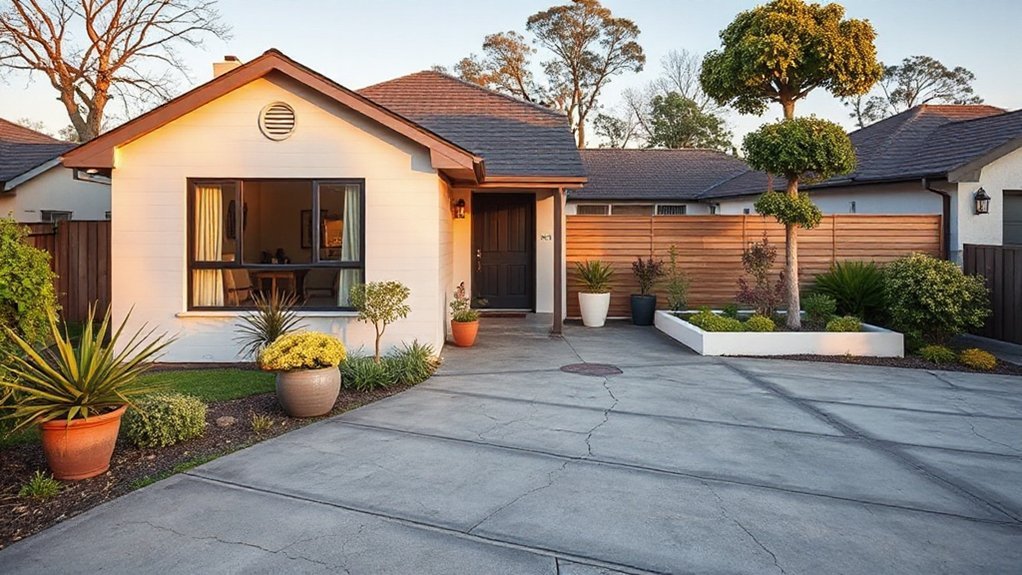
You can modernise your frontage fast, but a few classic missteps will instantly date it—starting with an overcrowded front garden that hides clean lines and sightlines.
You’ll also undercut the look with poor lighting choices, like harsh glare, mismatched fixtures, or dark entry paths that feel unsafe and unstyled.
Finally, don’t neglect entryway details: tired hardware, scuffed paint, and cluttered thresholds make even a new porch and canopy read unfinished.
Overcrowded Front Gardens
When every spare inch of the front garden gets filled with pots, ornaments, mismatched shrubs, and signage, the façade can feel busy rather than welcoming. Garden clutter distracts from your architecture and makes even quality materials look cheaper.
If you’ve got overgrown pathways, visitors instinctively slow down, searching for a clear route, and that hesitation reads as neglect.
Edit with intent: keep sightlines open, repeat two to three planting types, and give hard landscaping room to breathe. Aim for a curated, contemporary look by grouping items, not scattering them.
- A single statement planter by the door, not seven
- One defined path edge, trimmed and swept
- Low, structured greenery that frames windows and steps
Poor Lighting Choices
Why do so many front elevations look flat after dark? Because lighting is treated as an afterthought, not a design layer. If you rely on a single porch bulb or harsh floodlight, you’ll either wash out textures or leave dead zones that feel unsafe.
Instead, build depth with three tiers: low-level garden fixtures to skim paths, mid-height wall lights to reveal materials, and subtle uplights to lift planting or architectural details. Choose warm LEDs (2700–3000K) for a premium look, and match finishes to your hardware for cohesion.
Avoid mismatched colour temperatures, exposed cabling, and glare into neighbours’ windows. Finally, light your exterior signage discreetly so it’s legible, modern, and never overpowering.
Add timers or smart controls for consistency. Read our article on exterior lighting here for a better idea of what works best.
Neglected Entryway Details
Although the front door gets most of the attention, the smaller entryway details often decide whether your elevation reads “considered” or “tired.” Scuffed thresholds, mismatched house numbers, a wobbly letterbox, tired door furniture, and a grimy bell push can undo an otherwise modern façade, because they sit at eye level and get handled every day. Fix them like you’d finish a tailored outfit: crisp, consistent, and intentional.
Clear entryway clutter so the approach feels calm, then address your neglected walkway with a proper sweep, weed removal, and fresh jointing or edging. Upgrade to matching finishes—matte black, brushed nickel, or warm brass—and keep typography modern and legible.
Visualise the reset:
- A straight, clean path with sharp borders
- Aligned numbers and a centred knocker
- A spotless bell and silent, stable letterbox
Frequently Asked Questions
How Long Do Front-Of-House Modernisation Projects Typically Take to Complete?
You’ll typically finish in 1–6 weeks: 1–2 for Front door upgrades, 2–4 for hardscaping, and 1–3 for Landscape lighting. Permits, custom materials, and weather can stretch timelines, so you’ll schedule contingencies.
Do I Need Planning Permission to Change My Home’s Front Appearance?
Measure twice, cut once: you usually don’t need planning permission for front changes, but you must check local rules, especially in conservation areas. Keep Color schemes cohesive, prioritise Material durability, and follow window, cladding, boundary limits.
Which Upgrades Add the Most Value When Selling My Property?
You’ll add the most value with sharp curb appeal: invest in landscaping opportunities, energy-efficient outdoor lighting, a new front door, refreshed paint or cladding, and upgraded windows. You’ll signal low upkeep and modern standards.
How Can I Modernise the Frontage While Matching Neighbouring Properties?
To modernise while matching neighbours, you’ll copy their proportions—ironically, originality helps most. Keep rooflines and colours aligned, then upgrade with crisp garden landscaping and subtle lighting enhancements for contemporary curb appeal.
What Maintenance Should I Expect After Modernising Exterior Materials?
You’ll schedule annual cleaning, reseal joints every 5–10 years, inspect cladding fixings each spring, repaint exposed trims as needed, and clear gutters quarterly. Prioritise Exterior durability to protect Curb appeal enhancement against fading, algae.
Conclusion
Modernising your front doesn’t need a full rebuild—it needs a smart plan. Set your budget, then prioritise the door, lighting, and clean-lined finishes for instant kerb appeal. Update the front elevation with contemporary colours, simplified trim, and cost-effective window upgrades. Rethink paths and planting so everything feels intentional, not cluttered. Add privacy with sleek screens or neat hedging, and refine porch details. Remember: measure twice, cut once—you’ll get a sharper, modern entrance.