
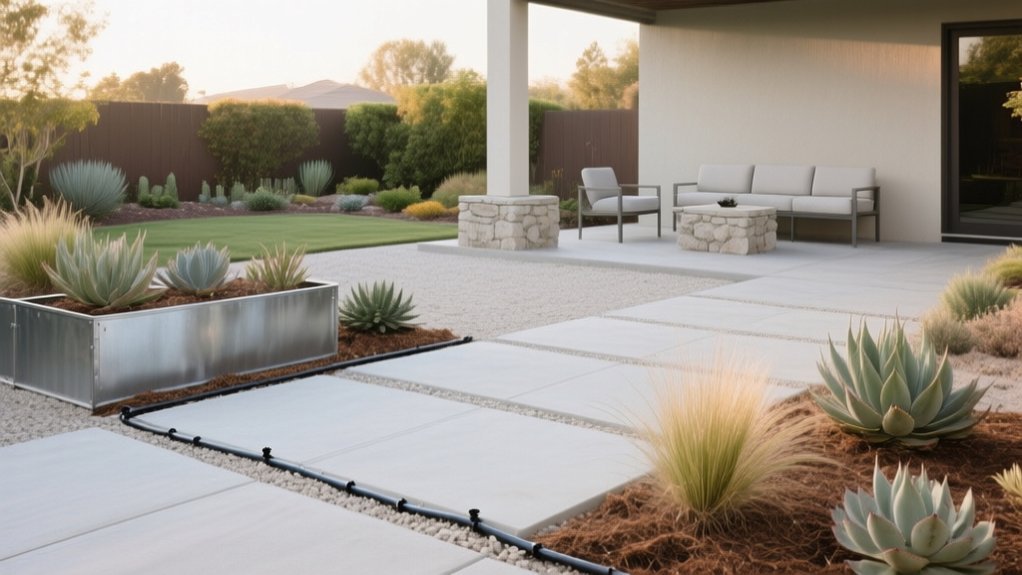
Keep outdoor spaces low maintenance by designing for your site first: map sun, shade, and wind, then place tough plants where they’ll thrive. You’ll save time with simple bed shapes, straight mowing runs, and a tight plant palette plus groundcover. Choose durable hardscape like pavers or broom-finished concrete with polymeric sand. Install drip irrigation with a timer, then mulch 2–3 inches and add edging to block weeds. Keep a 10-minute weekly routine, and you’ll discover more time-savers ahead.
Key Takeaways
- Plan a simple upkeep schedule with weekly time caps and seasonal reset days to prevent small tasks from piling up.
- Simplify the layout with broad beds, straight mowing runs, and clear edging to reduce trimming and detail work.
- Choose durable hardscapes like pavers or poured concrete with proper bases and polymeric sand to limit weeds and settling.
- Use site-suited, drought-tolerant plants in a limited palette, grouped by water needs to minimize watering, pruning, and replacements.
- Install drip irrigation with timers and maintain 2–3 inches of mulch, spot-pulling weeds early to keep beds and cracks clean.
Plan a Low-Maintenance Outdoor Space (Checklist)
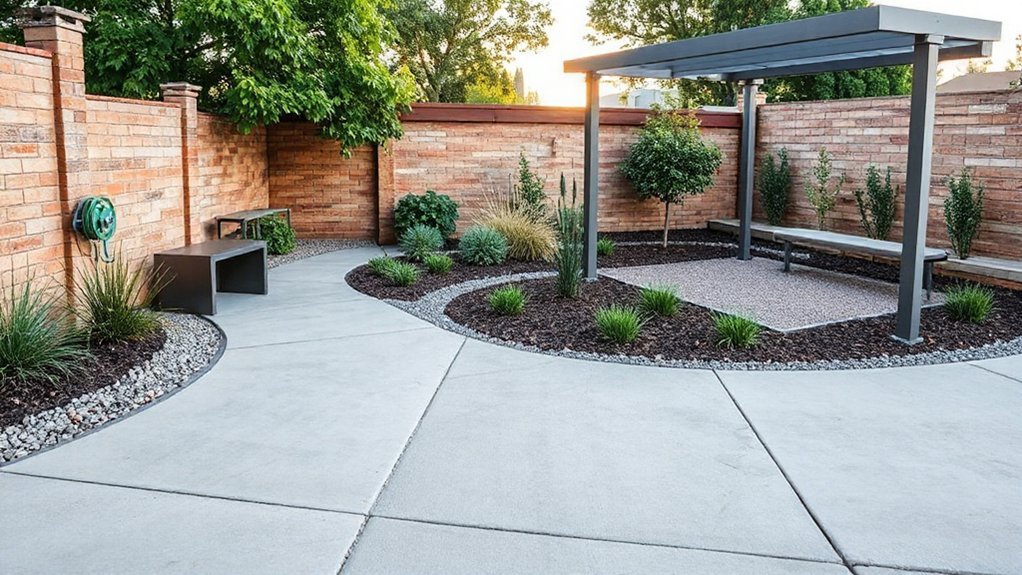
Before you buy plants or pick patio materials, lock in a simple maintenance plan that fits your time, climate, and how you’ll actually use the space. Set a realistic weekly cap (15, 30, or 60 minutes) and schedule two seasonal reset days.
Map sun, shade, and wind so you place tough plants where they’ll thrive, not struggle. Commit to drip irrigation with a timer and add mulch zones to cut watering and weeding.
Choose Garden furniture with wipe-clean frames, stackable pieces, and removable covers you’ll actually store.
Plan Outdoor lighting on a timer or photocell, with accessible bulbs and weather-rated fixtures.
Add a dedicated tool nook, a hose reel, and a debris bin so cleanup stays fast.
Choose Hardscaping That Stays Low-Upkeep
Although plants grab most of the attention, your hardscaping determines how much scrubbing, sweeping, and repairing you’ll do year after year. Choose dense, durable surfaces that resist staining and shifting, like concrete pavers or poured concrete with a broom finish for traction.
Set a proper base: compacted gravel plus geotextile fabric keeps weeds down and prevents settling. Specify polymeric sand or mortar in joints so you won’t be re-sweeping after every storm.
For high-traffic areas, consider Artificial turf over a well-drained aggregate base to eliminate mud and constant edging.
Install Outdoor lighting with sealed LED fixtures and buried conduit; you’ll avoid bulb changes and water damage.
Add drip edges and positive slope so runoff doesn’t pool or erode.
Pick Easy-Care Plants for Sun, Shade, and Zone
Match plants to your site’s light first, so you’re not stuck watering, babying, or replacing them all season. Choose sun-loving low-care performers for hot, bright areas, and pick shade-tolerant easy growers that won’t sulk under trees or along north walls.
Then confirm every plant fits your USDA hardiness zone, because the right zone-appropriate picks survive winters and bounce back with minimal fuss.
Sun-Loving Low-Care Plants
When your yard gets full sun for most of the day, you can keep maintenance low by choosing plants that thrive in heat and handle dry spells without constant watering or fuss. Start with drought tolerant options like lavender, salvia, yarrow, and blanket flower; they bloom reliably, resist pests, and don’t need rich soil.
Add ornamental grasses such as blue fescue or little bluestem for structure without deadheading. Use succulent arrangements in containers or rock beds—sedum, hens-and-chicks, and agave store water and stay tidy with minimal pruning.
Group plants by water needs, then install drip irrigation on a timer and mulch 2–3 inches to cut evaporation. Stick to your zone-hardy varieties so winter dieback doesn’t create extra work.
Shade-Tolerant Easy Growers
If your yard sits under trees or falls in shadow for much of the day, you can still keep maintenance low by planting shade-tolerant workhorses that don’t demand frequent watering, pruning, or pampering. Start with shade tolerant easy growers like hostas, hellebores, ferns, epimedium, and Japanese forest grass for reliable texture and coverage.
Prep the bed once: loosen soil, mix in compost, and top with 2–3 inches of mulch to hold moisture and block weeds. Water deeply the first season, then shift to occasional soakings during dry spells.
Choose plants with pest resistant foliage, and space them to improve airflow and reduce disease. Skip fussy edging; let groundcovers knit together to shade out weed seedlings.
Zone-Appropriate Plant Picks
Shade plants keep a dim corner tidy, but the same low-maintenance payoff depends on choosing varieties that already fit your sun exposure and hardiness zone. Check your USDA zone, then match plants to light: full-sun beds do best with sedum, daylilies, and lavender.
Part shade suits heuchera, brunnera, and hardy ferns. Deep shade stays clean with hosta, hellebore, and epimedium.
Prioritize natives and proven performers labeled drought-tolerant and disease-resistant, and skip borderline tender cultivars that need winter wrapping.
Group plants by water needs so you won’t over- or under-irrigate. Use mulch to stabilize soil moisture and cut weeding.
Position Garden art and Outdoor lighting after planting so you don’t trample roots later.
Water Less With Drip Lines and Timers
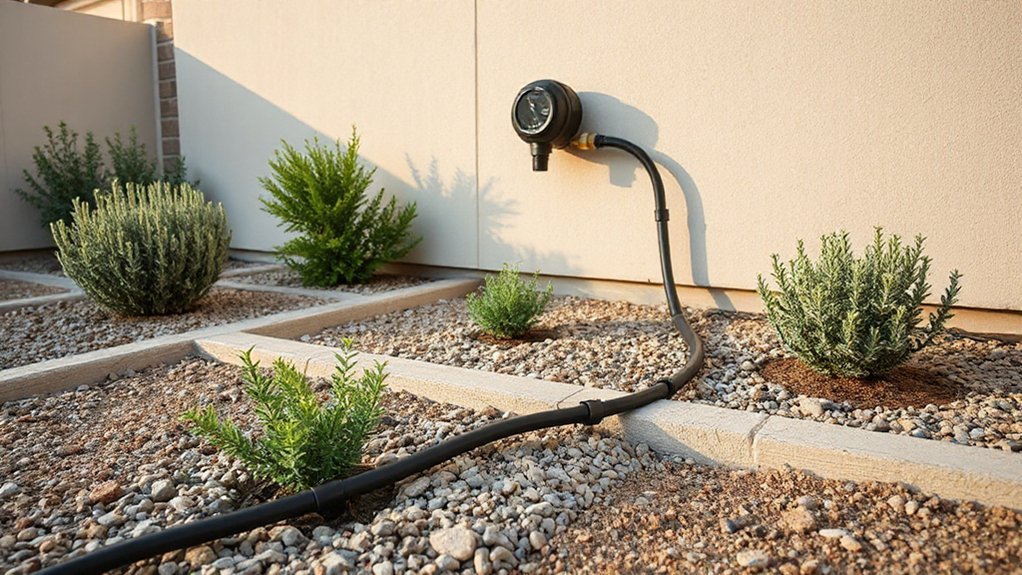
Because sprinklers waste water through evaporation and overspray, you’ll cut both maintenance and costs by switching to drip lines paired with a simple timer.
Drip irrigation delivers water at the root zone, so you’ll see fewer dry spots, less runoff, and steadier growth. Timer automation keeps you consistent even when you’re busy, and it prevents the “oops, I forgot” deep-soak marathons that stress plants.
- Run lines under shrubs and along beds; add emitters where each plant sits.
- Set early-morning cycles, 20–40 minutes, 2–3 days weekly, then adjust for heat.
- Use pressure regulators and a filter to stop blowouts and clogged emitters.
- Walk the system monthly, fixing leaks and flushing end caps before issues spread.
Block Weeds With Mulch, Ground Cover, and Edging
Stop weeds before they sprout by laying mulch 2–3 inches deep and topping it off as it thins each season.
Fill gaps with low-grow ground covers that knit together fast and shade out bare soil.
Lock it all in with clean edging barriers—metal, plastic, or stone—so mulch stays put and grass can’t creep into beds.
Mulch Depth And Refresh
Even a well-weeded bed won’t stay that way unless you maintain the right mulch depth and refresh it on a schedule. Aim for 2–3 inches in most beds; less won’t block light, and more can trap moisture against stems. Keep mulch pulled back 2–4 inches from plant crowns and tree trunks to prevent rot and pests.
Before topping off, rake and fluff to break crusting and expose buried weeds, then water to settle an even layer.
- Measure mulch depth with a ruler in several spots.
- Edge beds so mulch doesn’t drift onto turf.
- Spot-clean: remove leaves and seed heads before they decompose.
- Plan a mulch refresh once a year, or twice in high-rain sites.
Low-Grow Ground Covers
Fresh mulch buys you time, but low-grow ground covers reduce the bare soil that weeds target between refreshes. For smart ground cover selection, match plants to light, moisture, and foot traffic: creeping thyme for sun and paths, ajuga or sweet woodruff for shade, sedum for dry slopes, and dwarf mondo grass for tidy borders. Plant densely so leaves knit together within a season.
Install after weeding and watering the bed; set transplants 6–12 inches apart, then top-dress lightly with mulch to suppress seedlings while roots establish. Your maintenance tips: water weekly for the first month, then taper; pinch runners back into bounds; pull any breakthrough weeds early; and cut back dead growth in late winter to keep coverage tight.
Clean Edging Barriers
When you give your beds a clean, hard edge, you cut off the main weed highways—creeping grass roots, windblown seeds, and mulch that drifts onto the lawn.
Pair that edge with a 2–3 inch mulch layer or dense ground cover so weed seedlings can’t find light, then lock everything in place with the right Edging materials. Choose steel, aluminum, brick, or composite; set it 1–2 inches above grade and bury it deep enough to stop runners.
Keep curves broad so you can mow tight without trimming.
For long-term results, do this:
- Slice a crisp trench line and remove sod.
- Install edging, then tamp for stability.
- Backfill, mulch, and top up annually.
- Add Decorative borders where foot traffic needs guidance.
Use Simple Layouts That Reduce Trimming
Although lush, intricate borders look impressive, they force you into constant edging, shearing, and touch-up trimming. Simplify your plan with broad planting beds and long, straight runs that you can mow in one pass. Use gentle curves only where you can mirror them with a string line and maintain them with a single edging cut.
Choose a limited palette: one groundcover mass, one shrub layer, and a few accent plants. Repeat the same shapes and spacing to support landscape aesthetics without fussy detailing. Keep plants 12–18 inches off hardscape so growth won’t spill onto paths.
For seasonal color, swap a few container annuals or tuck bulbs into one dedicated pocket instead of scattering them everywhere.
Set Up Outdoor Storage for Fast Cleanup
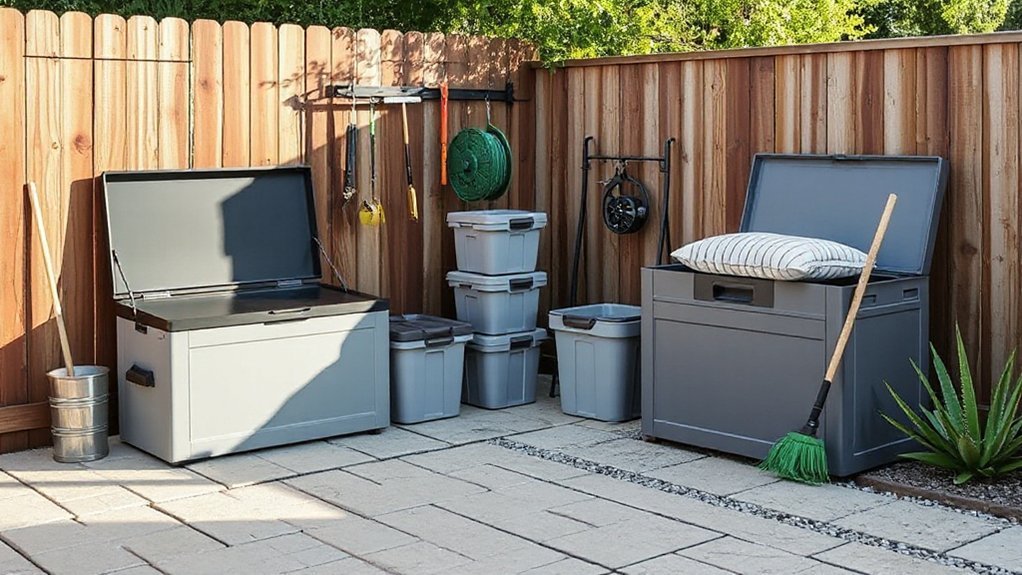
Because clutter slows every outdoor task, set up dedicated storage zones that let you grab tools fast and put everything away in under a minute. Start with Outdoor storage that matches your space: a slim deck box, vertical shed rack, or wall rail by the back door. Place storage where you actually work, not where it “fits,” so cleanup organization happens naturally.
- Mount hooks for hoses, brooms, and loppers at shoulder height.
- Use a labeled tote for gloves, twine, pruners, and spare bags.
- Add a small lidded bin for trash, plant ties, and grit.
- Keep a weatherproof caddy stocked with wipes, hand brush, and a dustpan.
Finish by assigning one “home” per item and sticking to it always.
A 10-Minute Weekly Low-Maintenance Care Routine
Even if you’ve set up smart storage, your outdoor space still needs a quick weekly reset to stay low maintenance. Set a 10-minute timer and follow a fixed sequence so you don’t overthink it.
Minute 1–2: Walk the perimeter, pick up litter, and return tools, toys, and cushions to bins.
Minute 3–5: Sweep hard surfaces and shake mats to prevent grit from grinding into finishes.
Minute 6–7: Spot-pull weeds from cracks and beds before they root deeply.
Minute 8: Check irrigation for leaks and clear clogged emitters.
Minute 9: Deadhead blooms and note Seasonal plant swaps you’ll need next month.
Minute 10: Refill water dishes, top bird feeders, and inspect wildlife friendly features for damage or algae buildup.
Frequently Asked Questions
How Do I Keep Mosquitoes and Ticks Down With Minimal Effort?
You’ll cut mosquitoes and ticks fast by removing standing water, mowing weekly, and trimming brush. Use Mosquito repellents on skin and spray shaded zones. Install Tick barriers with 3-foot gravel/wood chips along edges.
What Are the Lowest-Maintenance Outdoor Furniture Materials for My Climate?
UV exposure can fade fabrics 2× faster at high altitude, so choose powder-coated aluminum or marine-grade stainless—rust resistant metals—and HDPE lumber. Pair cushions in acrylic/olefin synthetic fibers; you’ll hose-clean, avoid rot, and skip staining.
How Can I Reduce Outdoor Stains From Pets Without Constant Cleaning?
Reduce stains by enforcing Pet stain prevention: designate a gravel potty zone, rinse spots immediately, and seal porous pavers. Add Odor control solutions: enzyme cleaner spray, charcoal odor absorbers, and washable outdoor rugs you rotate weekly.
What’s the Easiest Way to Keep Outdoor Lighting Maintenance-Free Year-Round?
You’ll keep outdoor lighting maintenance-free by installing sealed LED Landscape lighting with a photocell timer and corrosion-resistant fixtures—LEDs last up to 25,000 hours. Route wiring above Garden irrigation lines, and snugly weatherproof every connection.
How Do I Keep My Patio and Deck Surfaces Slip-Resistant With Low Upkeep?
Keep your patio and deck slip-resistant by pressure-washing, scrubbing algae, and adding grit anti-slip strips. Choose textured decorative paving, then apply surface sealing with a non-gloss additive. Reapply annually and clear debris weekly.
Conclusion
Keep your outdoor space low-maintenance by sticking to smart hardscaping, tough plants, and simple systems that work on autopilot. Lock in drip irrigation with timers, stop weeds with mulch and tight edging, and choose clean layouts that don’t demand constant trimming. Store tools where you’ll actually use them, so cleanup stays quick. Follow your 10-minute weekly routine, and your yard will run like a well-tuned engine all season.