Landscaping in property value estimations can raise your home’s value about 5% to 15% because you’re boosting curb appeal, signaling “move-in ready,” and lowering buyers’ maintenance concerns. You’ll get the best ROI from high-visibility upgrades like crisp edging and mulch, healthy turf, low-maintenance plantings, outdoor lighting, and durable hardscaping with proper drainage. Smart irrigation and drought-tolerant designs can also cut water use 20% to 50%. Next, you’ll see which projects rank highest and what to avoid.
Key Takeaways
- Quality landscaping can raise home value about 5%–15% by improving curb appeal and buyer perception.
- Visible, “move-in ready” exteriors often appraise better and can shorten time on market.
- High-ROI projects include fresh edging, mulch, healthy turf, and low-maintenance, climate-appropriate plantings.
- Hardscaping and outdoor living upgrades add functional space, boosting perceived value when built with proper drainage and durable materials.
- Efficient irrigation and lighting improvements reduce maintenance and utility costs while improving safety, which strengthens buyer confidence.
How Much Can Landscaping Raise Home Value?
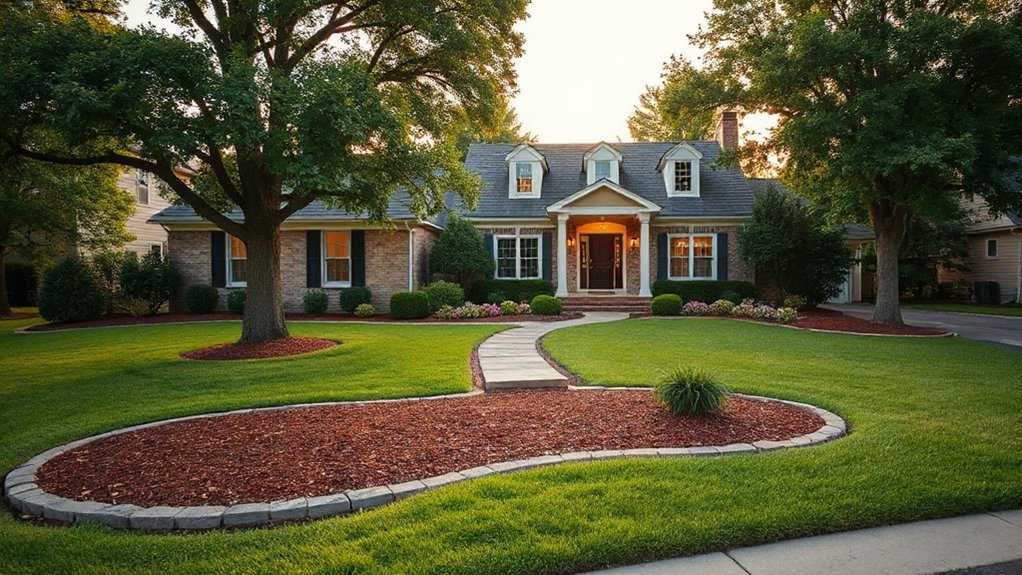
Well-executed landscaping can raise your home’s value by roughly 5% to 15%, with some projects delivering even higher returns when they improve curb appeal and reduce perceived maintenance risk. You’ll see the premium show up in faster sale timelines and stronger offers because buyers anchor on first impressions during initial walk-ups and online listing photos.
You can also influence appraisers’ qualitative condition ratings when your exterior reads “move-in ready,” especially in markets where outdoor living is a buying criterion. To capture value, you should align garden design with local comps, climate, and water constraints, then document improvements with receipts and before-and-after images for agents and appraisers.
Track current Landscaping trends, but prioritize cohesive planting plans and tidy hardscape edges that signal low ongoing upkeep and predictable costs.
Best Landscaping ROI Projects (Ranked)
To maximize landscaping ROI, you should prioritize projects buyers notice immediately and appraisers can justify with comparable sales.
You’ll typically see the strongest payoff from curb appeal enhancements, low-maintenance plantings that reduce upkeep risk, and outdoor lighting upgrades that extend usable space and improve perceived security.
Next, you’ll rank these options by cost, installation complexity, and their consistent impact on marketability.
Curb Appeal Enhancements
How much value can you add before a buyer even steps inside? Curb appeal upgrades routinely deliver top-tier ROI because they shape first impressions in seconds. Real estate listing analytics consistently link strong exterior presentation with higher showing volume and faster time on market.
Focus your budget on visible, low-disruption improvements that photograph well and signal care.
- Refresh edging, mulch, and crisp bed lines to create “finished” structure and contrast.
- Upgrade hardscape details—walkway lighting, repaired pavers, and a clean entry path—for safety and polish.
- Add targeted accents: tasteful garden art and compact water features near the entry to raise perceived quality without major construction.
Keep selections consistent with the home’s architecture, and you’ll improve appraisal appeal and buyer confidence quickly.
Low-Maintenance Plantings
Because buyers discount anything that looks like ongoing work, low-maintenance plantings rank among the best landscaping ROI projects: they reduce perceived ownership burden while keeping the yard visually “finished” in listing photos.
You’ll strengthen value by swapping high-input turf and fussy beds for native plants that thrive in local soils and need less water, fertilizer, and pruning. In many markets, appraisers and agents note faster buyer interest when landscaping looks established yet simple to manage.
Use drought tolerant options—mulched shrub masses, ornamental grasses, and hardy perennials—to signal resilience during water restrictions and heat waves.
Define edges, group plants by irrigation needs, and limit species variety to reduce upkeep. You’ll also lower monthly maintenance bids, improving net proceeds at sale.
Outdoor Lighting Upgrades
Why does outdoor lighting consistently rank as a top landscaping ROI upgrade? You’re buying curb appeal, safety, and usable nighttime space with measurable impact. Real estate listing data routinely shows well-lit exteriors photograph better and help homes stand out in online searches, shortening time on market.
LED systems also cut energy use and maintenance versus halogen, protecting operating costs.
Focus your spend where appraisers and buyers notice it most:
- Path and entry lighting that reduces trip risk and signals security
- Accent uplights that highlight trees, Garden art, and architectural lines
- Shielded, warm-color fixtures that preserve Wildlife habitats and reduce glare
You’ll increase perceived lot size by defining edges and zones after dark. Specify timers, photocells, and professional installation to avoid voltage drop and uneven illumination.
Budgeting for Landscaping: Where to Spend First
While you can pour money into any part of the yard, the highest-ROI landscaping budgets typically start with projects that reduce perceived risk and boost curb appeal in the first 10 seconds of a showing. Put Budget planning first: fix drainage, grade problem areas, and address dead trees or failing retaining walls before cosmetics. These items signal deferred maintenance and can trigger inspection concessions that outweigh any aesthetic upgrades.
Next, fund structure: refresh mulch, edge beds, and keep turf dense; these low-cost moves can outperform hardscapes on ROI because they photograph well and read “maintained.”
Then set planting priorities around durability and seasonal stability—choose region-adapted perennials and a few evergreen anchors, not high-maintenance annuals.
Finally, reserve 10–15% for contingencies and phased add-ons as market feedback comes in.
Front-Yard Curb Appeal Checklist for Resale
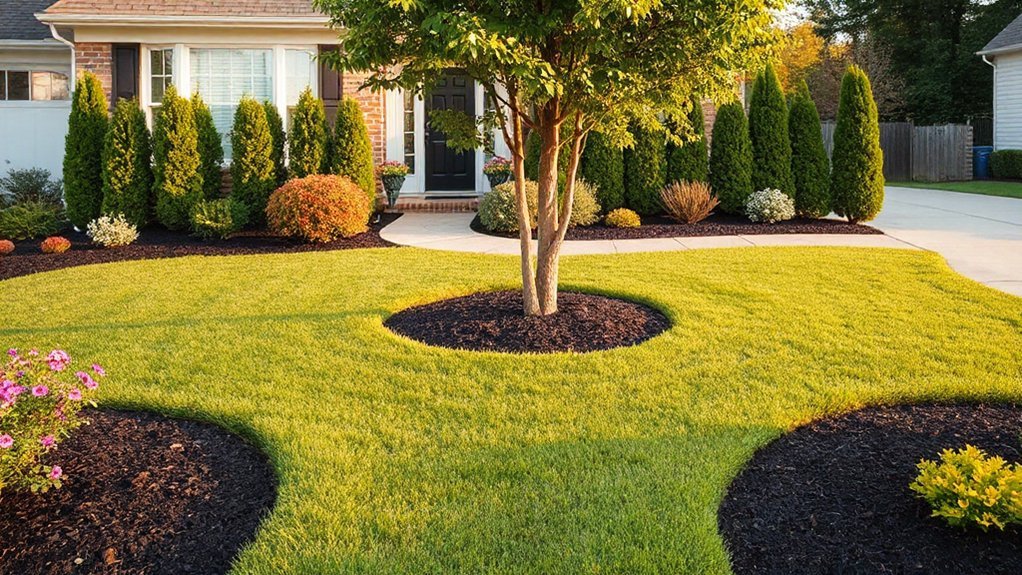
Before buyers notice your kitchen finishes, they form an opinion at the curb, and listing data consistently ties that first impression to stronger showing activity and fewer price objections. Treat the front yard like a pre-inspection: you’re signaling upkeep, risk level, and move-in readiness.
Start with clean sightlines to the entry, consistent materials, and a cohesive color palette that reads well in photos and drive-bys. Use Garden art sparingly as a focal point, not clutter, and swap seasonal décor to match the listing period without looking personal or dated.
Prioritize these high-ROI checks:
- Pressure-wash walkways, stoops, and edging for crisp contrast
- Update visible hardware: mailbox, house numbers, lighting, door paint
- Refresh beds with uniform mulch, trimmed shrubs, and weed-free borders
Lawn Quality: Fastest Fixes That Add Value
If you want a fast, high-ROI boost in perceived property value, you can’t ignore lawn quality—buyers notice cut lines and crisp edges immediately.
Start with quick mowing and edging to create a clean, well-maintained look that signals low ongoing upkeep.
Then follow with fast fertilizing and overseeding to thicken coverage and improve color within weeks, a timeline that aligns with most listing schedules.
Quick Mowing And Edging
Because buyers and appraisers read lawn condition as a proxy for overall maintenance, quick mowing and crisp edging deliver one of the highest visual-ROI upgrades you can make in a single afternoon.
Quick mowing at the right height creates uniform striping, reduces visible scalping, and signals consistent care—key cues in drive-by valuations.
Pair it with edging techniques that define hard lines along sidewalks, driveways, and beds; sharp borders increase perceived lot order and make photos pop in listings.
Focus on repeatable execution and clean finishes rather than fancy equipment.
Prioritize these high-impact details:
- Mow when turf is dry for cleaner cuts and fewer clumps
- Alternate mowing patterns to minimize ruts and grain
- Edge weekly, keeping blades vertical for straight, tight lines
Fast Fertilizing And Overseeding
Mowing and edging sharpen the lawn’s lines, but fertilizing and overseeding are what thicken the turf and even out color—two traits buyers and appraisers notice immediately in listing photos and curbside comps.
To move the needle fast, use fast fertilizing with a controlled-release nitrogen blend (often 30–50% slow-release) so you get quick green-up without burn risk. Apply after a soil test, then water in 0.25–0.5 inches to activate uptake.
Pair that with overseeding techniques that boost germination: mow low, core-aerate, topdress lightly with compost, and seed at the label’s rate for your turf type. Keep the surface consistently moist for 10–14 days, and you’ll show denser cover and fewer bare patches within weeks.
Trees That Increase Home Value (Placement + Health)
While curb appeal gets the headlines, well-placed, healthy trees often deliver measurable value by lowering energy costs, shortening days-on-market, and signaling strong property upkeep to buyers and appraisers. To capture that premium, you’ll prioritize Tree health and smart placement strategies, because buyers notice dieback, heaving roots, and poor pruning fast.
Focus on species that thrive locally and show strong structure, then document maintenance to reduce perceived risk in inspections.
- Plant shade trees to the west/southwest to cut cooling demand and protect siding.
- Keep canopies 10–20 feet from the roofline and lines clear of utilities to limit liability.
- Maintain Tree health with mulching, deep watering, and certified arborist pruning to prevent decline.
Done right, trees read as an asset, not deferred maintenance, at listing.
Shrubs and Garden Beds That Look “High-End
If you want garden beds and shrubs to read “high-end” to buyers and appraisers, you’ll design them like permanent architecture—clean bed lines, layered planting heights, and a limited palette that looks intentional in photos and during showings.
In valuation walk-throughs, you’re signaling low maintenance and predictable replacement cost, which reduces perceived risk. Prioritize evergreen structure (boxwood, inkberry, dwarf holly) and repeat masses for a cohesive garden design.
Then add a second layer of flowering shrubs with disciplined color timing, not one-off specimens. Your shrub selection should favor proven performers for your zone and exposure, with mature size that won’t crowd windows or siding.
Finish beds with 2–3 inches of mulch and crisp edging; it reads managed and protects roots.
Hardscaping ROI: Patios, Paths, and Retaining Walls
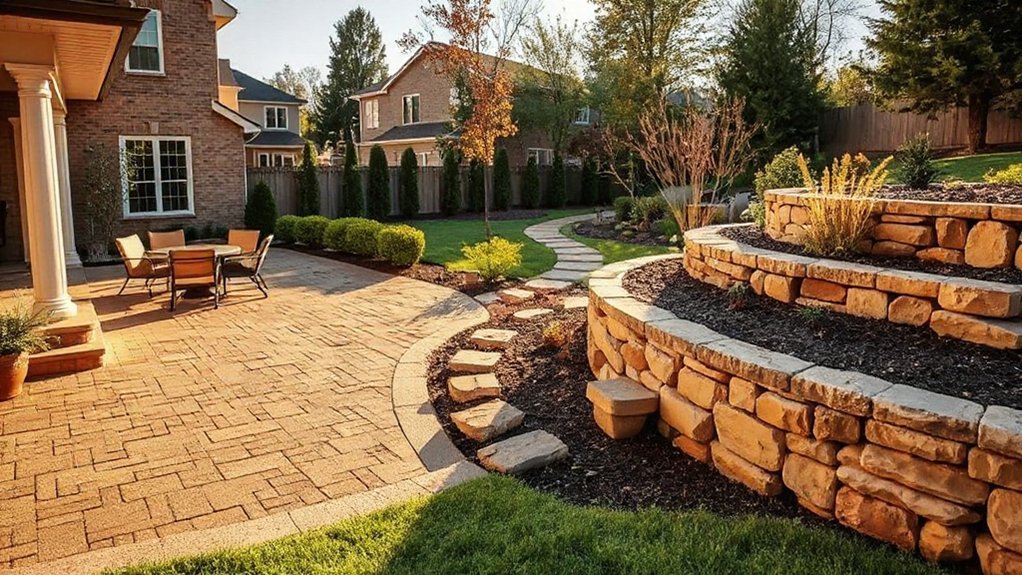
When you invest in hardscaping, you’re funding usable square footage that buyers can quantify.
Patios often rank among the highest-ROI exterior upgrades in contractor and REALTOR® reporting.
You’ll also boost curb appeal and day-to-day flow with well-lit, properly sized paths that improve access and reduce perceived maintenance risk.
If your site needs grade control, you can add resale leverage with engineered retaining walls that protect the lot, create level space, and signal long-term durability.
Patio Investments That Pay
Because buyers consistently value usable outdoor living space, hardscaping upgrades like patios, paths, and retaining walls often deliver some of the most measurable ROI in landscape spending. To make your patio investment pay, prioritize materials and layouts that appraisers and agents can benchmark against local comps: durable pavers, quality concrete, and properly engineered bases reduce callbacks and boost perceived condition.
You’ll also widen buyer appeal when you stage the area with cohesive garden furniture and subtle water features that signal “move-in ready” without overpersonalizing. Focus on improvements that photograph well and read as low-maintenance.
- Choose mid-range, region-appropriate materials to control cost per square foot
- Add lighting and seating zones to extend usable hours
- Maintain clean edges, drainage, and professional installation records
Pathway Appeal And Function
While patios anchor outdoor living, well-designed pathways often drive day-to-day usability and curb appeal—the two factors agents cite most in first-impression scoring. When buyers can navigate cleanly from street to entry, to side yard, and to outdoor zones, you reduce friction and signal maintenance discipline.
Prioritize direct sightlines, consistent widths, and lighting-ready edges; these details help showings move faster and photographs read cleaner. Choose Pathway materials that match your home’s architecture and local climate: concrete pavers for durability, natural stone for premium perception, or stabilized gravel for cost control and drainage.
Keep joints tight, surfaces level, and passage transitions trip-free to limit inspection notes. Well-built Garden pathways also protect turf by channeling foot traffic, lowering wear and ongoing upkeep costs.
Retaining Wall Value Boost
How much value can a retaining wall add beyond curb appeal? If you’re solving drainage, slope failure, or unusable yard space, you’re protecting the asset and expanding functional square footage. Appraisers often treat engineered hardscape as risk reduction plus usability, which can support stronger offers and fewer inspection concessions.
ROI rises when retaining wall construction includes proper base, reinforcement, and water management, since buyers discount visible distress fast.
Focus your budget on details that signal durability:
- Choose retaining wall materials that match the home (segmental block, natural stone, or concrete) and local freeze-thaw demands
- Add engineered drainage (weep holes, gravel backfill, and geotextile) to prevent hydrostatic pressure
- Use tiering or integrated seating to convert grade change into outdoor living space
Outdoor Living Upgrades Buyers Pay More For
If you’re looking for landscaping moves that translate into real dollars at resale, outdoor living upgrades consistently rank among the safest bets. You’ll attract buyers by extending usable square footage outdoors with a paver patio or composite deck, then anchoring it with a built-in grill, lighting, and durable seating.
Appraisers and agents note that defined entertaining zones photograph better and support higher list prices in competitive markets. You can further differentiate with low-maintenance finishes, like stainless fixtures and weather-rated cabinetry, that signal longevity.
Add subtle Garden art as a focal point, not clutter. You’ll also win points by integrating a small Wildlife habitat—native plantings, a water feature, and pollinator-friendly beds—because today’s buyers value sustainability alongside lifestyle.
Keep upgrades code-compliant and professionally installed.
Privacy Landscaping That Boosts Buyer Confidence
Because privacy directly shapes how safe and “settled” a home feels, well-designed screening landscaping can lift buyer confidence and protect resale value. When you give outdoor spaces clear boundaries, buyers perceive less neighborhood friction and more usable yard area—two factors appraisers and agents routinely cite in marketability notes. Your privacy screening should look intentional year-round, not like a last-minute patch.
Use hedging strategies that balance speed, density, and maintenance, and document irrigation or warranties to reduce buyer uncertainty.
Prioritize:
- Mixed evergreen and deciduous layers for seasonal coverage and depth
- Setbacks that respect sightlines while meeting local ordinances
- Clean edging and access paths that signal professional upkeep
You’ll also reduce noise and wind exposure, supporting stronger showing impressions and quicker offers.
Lighting That Adds Safety and Perceived Value
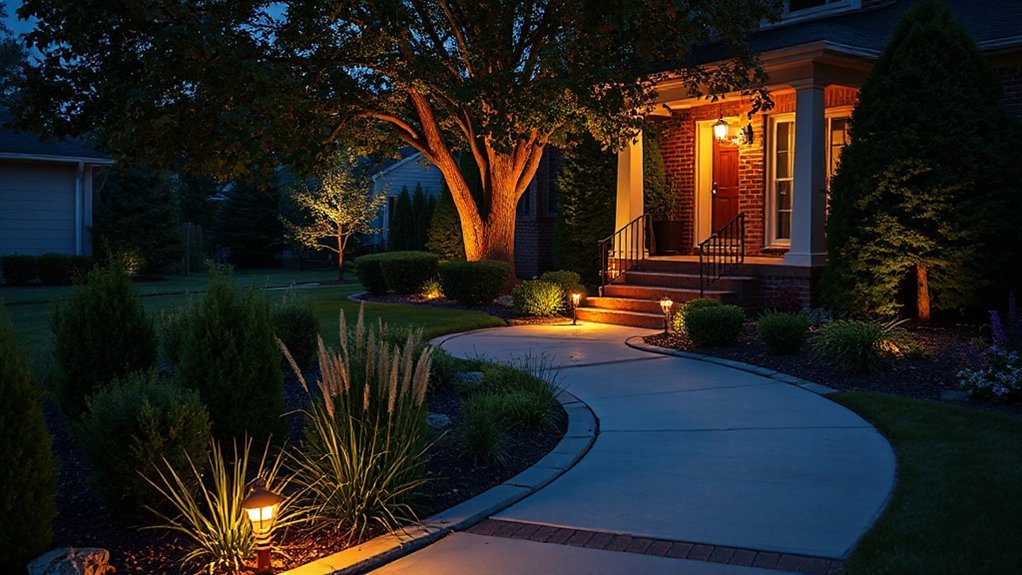
You’ll raise perceived value when you treat exterior lighting as a safety-and-appearance investment, not an afterthought. You can use pathway lighting to improve visibility and reduce trip risk.
While accent lights sharpen curb appeal by highlighting key landscape features. You’ll also strengthen security—and buyer confidence—when you add motion lighting that deters unwanted activity and signals proactive property management.
Pathway Lighting For Visibility
While curb appeal often grabs attention in daylight, well-placed pathway lighting shapes a buyer’s impression after dark by making routes to the entry, driveway, and backyard visibly safer. In real estate walk-throughs, clear footing reduces perceived risk and supports smoother showings, especially on uneven garden pathways.
You’ll also strengthen pathway aesthetics by defining edges and eliminating shadow gaps without changing the landscape plan. Use low-glare fixtures and consistent spacing to meet practical visibility targets and avoid harsh hotspots.
- Place lights 6–8 feet apart to keep illumination uniform
- Choose 2700K–3000K LEDs for natural color rendering and low energy use
- Aim beams downward to cut glare and improve camera-friendly listings
With timers or photocells, you’ll signal professionalism and maintain reliability year-round.
Accent Lights For Curb Appeal
Even after the pathway reads clearly, targeted accent lighting can raise curb appeal and reduce perceived safety risk by highlighting key architectural lines and eliminating dark pockets near entries and garage doors.
You’ll get the best ROI by aiming fixtures at focal points buyers notice first: the front elevation, columns, address numbers, and specimen trees.
Use warm LEDs (2700–3000K) to keep materials looking premium and to avoid the harsh glare that can signal neglect.
Layer wall washes and grazing to emphasize stone, brick, or siding texture; this adds depth in listing photos and night drive-bys.
Keep beam spreads tight and shields in place so light stays on your property, supporting comfort and neighborhood compliance.
Set timers for consistent nighttime presentation.
Motion Lighting For Security
Because buyers equate a well-lit exterior with lower risk, motion-activated lighting near entries, garage doors, side yards, and rear access points can boost perceived safety and protect value without adding the continuous glare of always-on fixtures.
You’ll also reduce energy use versus dusk-to-dawn lights, which signals efficiency to cost-conscious buyers and appraisers. When you pair motion lighting with security cameras, you improve image capture and strengthen deterrence—two factors insurers and property managers routinely flag in risk assessments.
Prioritize placements that eliminate blind spots and support clear wayfinding.
- Use adjustable sensitivity and timers to cut false triggers
- Aim fixtures downward to limit spill and neighbor complaints
- Choose LED, weather-rated units with consistent color temperature
Installed cleanly, these upgrades read as proactive maintenance, not gimmicks.
Irrigation Upgrades That Protect Curb Appeal
Smart irrigation upgrades protect curb appeal by keeping turf and plantings consistently hydrated without wasting water. If you’re relying on manual watering, you risk uneven growth, brown patches, and runoff that signals neglect to buyers and appraisers.
Upgrade to drip irrigation for beds and shrubs; it delivers water at the root zone, limiting evaporation and reducing disease pressure from wet foliage.
For lawns, improve sprinkler efficiency with pressure regulation, matched-precipitation nozzles, and head-to-head coverage to eliminate dry rings and overspray onto hardscapes.
Add a smart controller that uses weather data and soil moisture inputs to adjust runtimes automatically. You’ll stabilize color and density through heat waves while controlling utility costs—two performance metrics that protect perceived value.
Low-Maintenance Landscaping Buyers Actually Want
When you design for low upkeep, you don’t have to sacrifice the finished, “move-in ready” look buyers pay for. In buyer surveys, low-maintenance yards consistently rank as a top exterior preference because they reduce perceived future time costs and keep listings photo-ready.
You’ll get better showing performance when the landscape reads intentional, not “bare-minimum,” so prioritize clean lines, durable materials, and restrained seasonal planting that won’t look tired between cycles. Maintain strong garden aesthetics with repeatable structure and limited plant variety.
- Use evergreen foundation shrubs and ornamental grasses for year-round form
- Replace high-input beds with mulch, edging, and stone accents for crisp contrast
- Choose slow-growing, disease-resistant plants to cut pruning and replacement
Finish with a simple maintenance plan buyers can grasp in minutes.
Eco-Friendly Landscaping That Lowers Monthly Costs
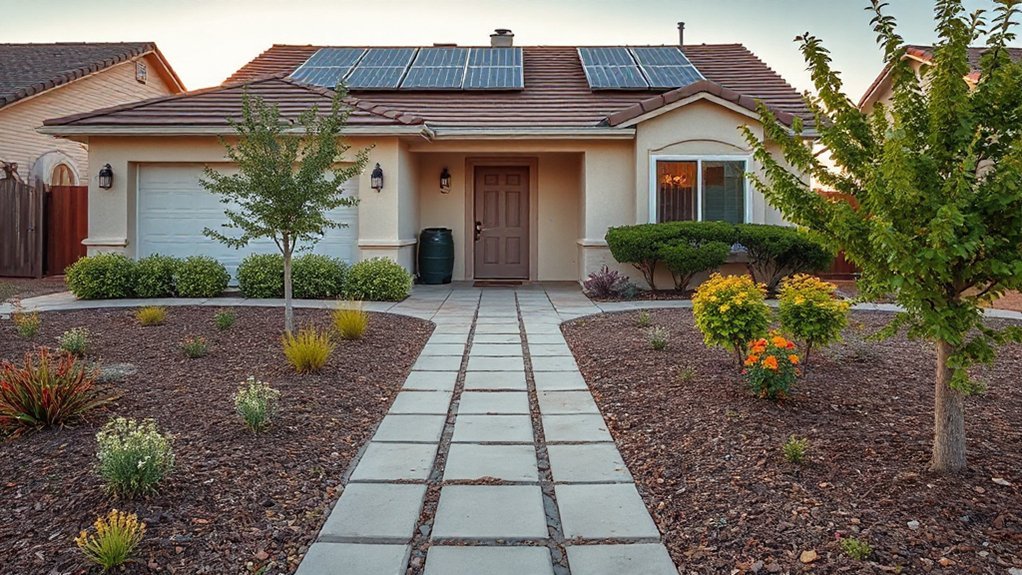
Two upgrades move the needle fastest on monthly ownership costs: water-wise planting and efficient irrigation. If you replace turf with native and drought-tolerant species, you can cut outdoor water use by 20–50% in many U.S. markets, depending on climate and lot size.
Pair that with drip lines, pressure regulation, and smart controllers that adjust to weather, and you’ll typically reduce runoff while stabilizing bills.
Build the rest of the yard around sustainable design: permeable pavers, rain gardens, and mulched beds that improve infiltration and reduce stormwater fees where they’re assessed.
Choose eco conscious materials—locally sourced stone, FSC-certified wood, and recycled composites—to lower lifecycle costs and maintenance.
Add LED path lighting and high-efficiency pumps to keep energy draw predictable year-round.
Landscaping Mistakes That Hurt Home Value (And Fixes)
Although great landscaping can lift resale appeal, a few common missteps reliably drag down value by signaling deferred maintenance, higher ongoing costs, or code-risk to buyers and appraisers. You’ll protect price by fixing issues that show up in inspections, photos, and drive-by impressions.
Prioritize fundamentals before aesthetic garden design upgrades, and document improvements for your agent and appraiser.
- Overgrown trees/shrubs: they hide siding, damage roofs, and reduce light—prune to clear structures and sightlines.
- Patchy lawns and compaction: they imply poor soil health—core-aerate, topdress, and overseed with region-appropriate turf.
- Hardscape and drainage failures: pooling water cracks patios and threatens foundations—regrade, add swales, and extend downspouts.
Keep plant choices low-maintenance, native-leaning, and spaced for mature size to cut perceived future cost.
Frequently Asked Questions
Do HOAS Restrict Landscaping Changes That Affect Resale Value?
Yes, HOAs can restrict changes via CC&Rs and architectural reviews. You’ll need approval for Garden design edits. Data shows compliant upgrades sell faster; you’ll protect value by documenting plans and keeping Landscape maintenance consistent.
Should I Disclose Major Landscaping Work in the Home Listing?
Yes, you should disclose major landscaping work in your listing; buyers track permits, drainage, and warranties. Document landscape design scope, contractors, and costs, plus ongoing garden maintenance plans, to reduce risk and support pricing justification.
How Does Landscaping Impact Homeowners Insurance Premiums or Liability Risk?
Landscaping can raise or lower premiums based on wildfire defensible space, drainage, tree-fall exposure, and pool features; Landscaping and insurance is risk-rated. You’ll cut Liability risk landscaping by improving lighting, paths, and maintenance.
Are Native Plants Better for Resale in My Specific Region?
Yes—Native plants often boost resale if they match regional suitability, since buyers and appraisers favor lower maintenance and resilient landscapes. You’ll reduce irrigation and replacement costs, and you can document performance with local extension data.
Will New Landscaping Increase My Property Taxes After a Reassessment?
Yes, it can—your yard won’t trigger a tax apocalypse, but it may nudge your Property tax assessment if it signals value gains. Pull Landscaping permits when required; assessors treat documented improvements as measurable upgrades.
Conclusion
You’ve seen the numbers: smart landscaping can lift sale prices by ~5–15%, while “creative” choices can just as efficiently lift buyer skepticism by 100%. If you want ROI, you’ll spend first on curb appeal, lawn health, and irrigation—because dead grass has a way of tanking comps faster than a rate hike. Keep it low-maintenance, cost-cutting, and climate-smart. Unless your resale strategy is “mystery jungle,” you’ll landscape like you mean it.