
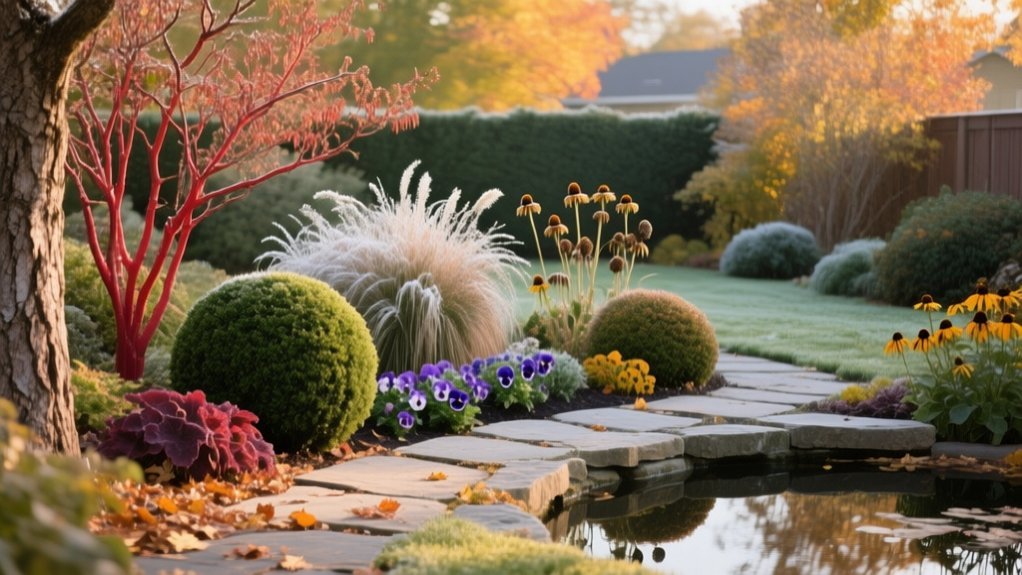
We are looking at way to go about creating a garden that works in every season. Start by mapping sun and shade, testing soil texture and pH, and checking drainage and hardiness so you choose plants that suit your site. Build a four-season backbone with trees and shrubs that offer blossom, canopy, berries, autumn colour, and strong winter silhouettes, then layer evergreens for reliable structure. Stagger bulbs, perennials, and late-season flowers, and keep seed heads and grasses for winter form. Finish with annual mulch and timely pruning—there’s more to refine.
Key Takeaways
- Map sun, soil type, pH, drainage, and frost pockets first, then choose plants suited to the garden’s coldest and wettest spots.
- Build year-round structure with trees and shrubs offering bark, silhouette, blossom, canopy, autumn color, berries, and evergreen layering.
- Plan continuous interest by staggering bulbs, perennials, and late-season plants, repeating key species across borders to avoid seasonal gaps.
- Use foliage, texture, and seedheads for long-lasting structure, and position standout forms near paths, windows, and seating for winter impact.
- Maintain with annual mulch, timely pruning, minimal feeding, and selective cutbacks, keeping stems and seedheads where possible for wildlife and structure.
Assess Sun, Soil, Moisture, and Hardiness Zone
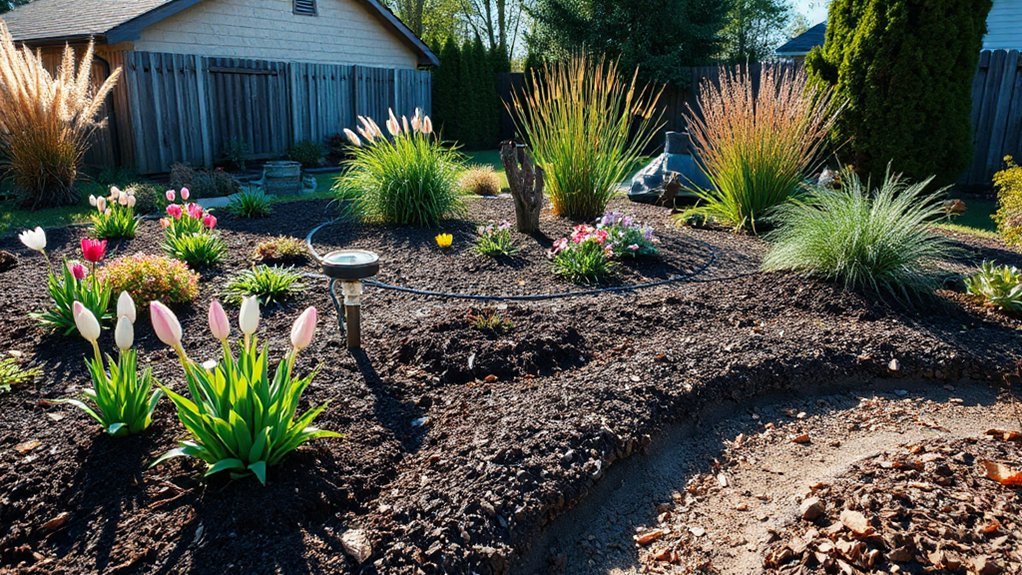
Before you choose a single plant, assess your garden’s sun exposure, soil type, moisture levels, and hardiness zone, because these basics determine what’ll thrive in every season.
Map Sun exposure across the day: note full sun, dappled shade, and deep shade, and observe reflective heat from walls.
Test Soil composition with a simple jar test for sand, silt, and clay, and check pH using a kit; amend with organic matter only after you’ve identified the limitation.
Measure drainage by timing how quickly a dug hole empties after watering, then classify areas as dry, average, or damp.
Confirm your hardiness zone and local frost pockets, then match plants to the coldest conditions you actually have, not the mildest.
Build a Four-Season Garden Backbone With Trees
Once you’ve mapped your site conditions, anchor the design with a small number of well-chosen trees, because they set the garden’s structure in every season. Choose species with strong winter silhouettes, reliable spring blossom, summer canopy, and autumn colour, and match mature height to nearby buildings and overhead lines.
Plant for longevity: dig a wide hole, loosen the base, and incorporate appropriate soil amendments only where needed to correct drainage or fertility, not to create a soft “pot”. Stake lightly, mulch well, and water deeply through the first two summers.
Manage Garden pests by selecting resilient cultivars, keeping trunk guards on, and inspecting buds and bark regularly. Prune to maintain a sound framework and clear access beneath the crown.
Add Shrubs for Structure, Berries, and Bloom
After you’ve set the main framework with trees, add shrubs to provide mid-level structure, extend flowering, and carry berries and foliage colour through autumn and winter. Aim for shrub diversity so your borders stay balanced in scale and interest. Place taller shrubs at the back, mounding types in the middle, and compact forms near paths to keep sightlines tidy.
Choose species with staggered bloom: early camellia or viburnum, mid-season philadelphus, and late hydrangea for reliable performance.
Then build berry varieties for wildlife and winter display, such as cotoneaster, berberis, and skimmia, mixing red, orange, and black fruits.
Prune after flowering to preserve next year’s buds, and mulch annually to conserve moisture and improve soil structure across planting areas.
Layer Evergreens for Year-Round Cover
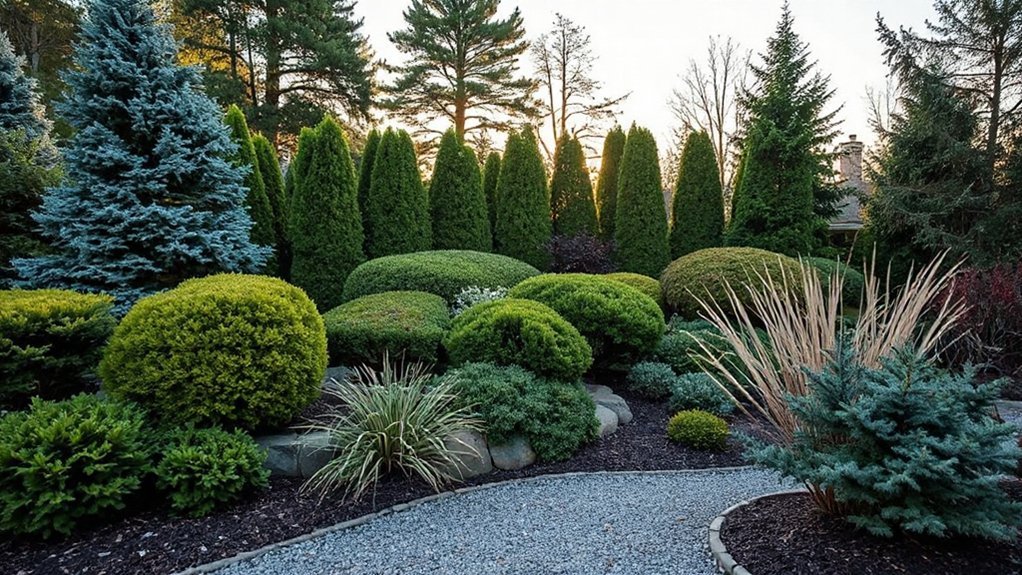
Although deciduous plants bring seasonal drama, you’ll rely on evergreens to hold the garden together when flowers fade and borders thin out. Use Evergreen layering to create depth and shelter: place taller conifers or clipped yew at the back, medium evergreens such as holly or pittosporum in the middle, and low groundcover like hebe or prostrate juniper at the front.
Keep spacing generous so each plant keeps its natural form and air circulates. In shadier sites, choose Shade tolerant shrubs, including sarcococca, aucuba, mahonia, or Skimmia japonica, and tuck them beneath tree canopies to soften bare trunks.
Mix leaf textures and greens for definition, and repeat key species to maintain visual order across the garden.
Stagger Blooms for a Four-Season Garden
Evergreens give your borders structure, but a truly four-season garden needs a planned sequence of flowers to keep colour and nectar coming. Start with late-winter snowdrops and hellebores, then add spring bulbs and early perennials.
Follow with summer performers such as hardy geraniums and salvias, and finish with autumn daisies and late-flowering sedums. Include a few winter-flowering shrubs near paths so you’ll notice them.
Plan overlaps rather than gaps: choose at least two plants for each season and repeat them through the border for continuity. Use Companion planting to extend flowering and support pollinators, pairing alliums with roses or calendula with veg beds.
For Pest prevention, stagger susceptible crops, avoid monoculture blocks, and keep nectar sources available for beneficial insects.
Use Foliage and Texture for Summer Interest
When summer flowers pause between flushes, foliage and texture keep your borders looking deliberate and full. Build structure with shrubs and perennials that hold their shape in heat, then layer leaf forms to maintain interest.
Aim for Foliage contrast by pairing dark, glossy leaves with silvery or variegated plants, and by setting fine, airy grasses against broad, architectural foliage.
Create Texture variety with spiky, strap-like leaves beside rounded mounds, and add ferns for a calm, matt finish in shade.
Repeat these combinations across the bed so the planting reads as intentional rather than busy.
Keep edges tidy, remove tired stems, and water deeply to preserve leaf quality through dry spells.
Design Fall Interest With Color and Seed Heads
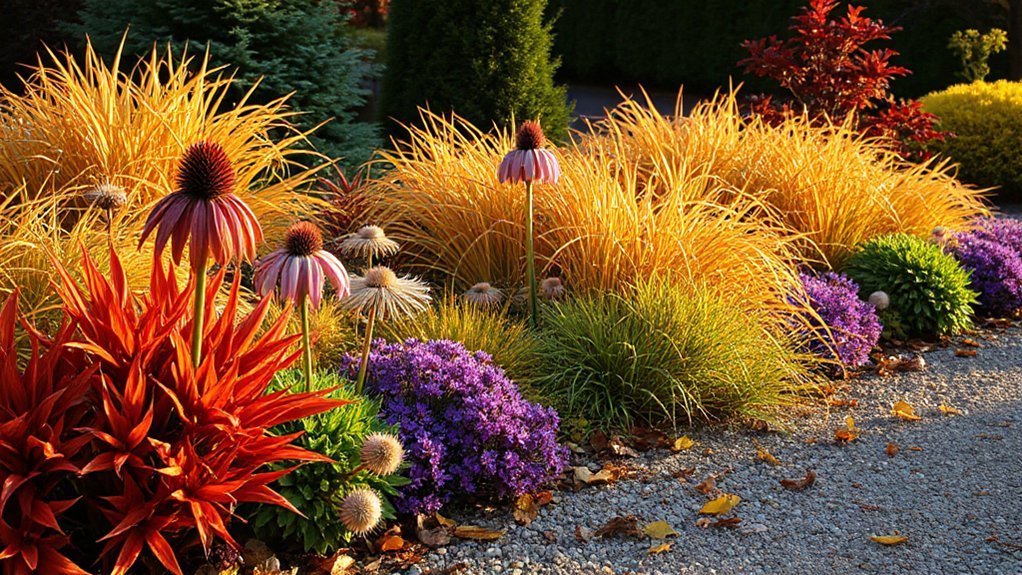
As summer foliage begins to fade, you’ll plan for autumn by layering a palette of russet, gold, burgundy, and copper across borders and containers.
You’ll place late-flowering perennials, grasses, and shrubs in repeating groups so colour reads clearly from a distance.
You’ll also highlight seed head structure—leaving stems standing for silhouette and texture, then positioning them where low autumn light can catch and emphasise their form.
Layer Autumn Color Palettes
Although autumn light softens, you can still create strong garden impact by layering a disciplined colour palette and letting seed heads carry the display.
Begin with two anchor hues drawn from Autumn foliage, such as copper and burgundy, then repeat them across shrubs, perennials, and groundcover for cohesion.
Use Color blending by placing transitional tones—apricot, russet, and smoky pink—between strong colours, so borders read as a measured gradient rather than patchwork.
Keep evergreens as calm backdrops, and deploy silver or straw tones to lift darker schemes on overcast days.
In pots, echo the same palette with heucheras, ivy, and ornamental grasses, and match mulch to your warm tones to avoid visual discord.
Limit late additions to maintain control.
Highlight Seed Head Structure
Even after the last petals drop, you can keep borders looking intentional by treating seed heads as structural design elements rather than leftovers. Choose plants with strong silhouettes: alliums, eryngium, teasel, sedum, and ornamental grasses.
Leave stems standing through autumn so the seed head structure reads clearly against low sun and frost. Group repeats in threes or fives to avoid a scattered look.
Use colour to support the forms: bronze seed heads beside purple asters, straw grasses behind red dogwood, and pale umbels against evergreen shrubs.
Delay cutting until late winter; you’ll protect wildlife and allow natural seed dispersal, while dried heads catch dew and light. If self-seeding is undesirable, remove heads selectively and compost them.
Add Winter Interest With Bark and Form
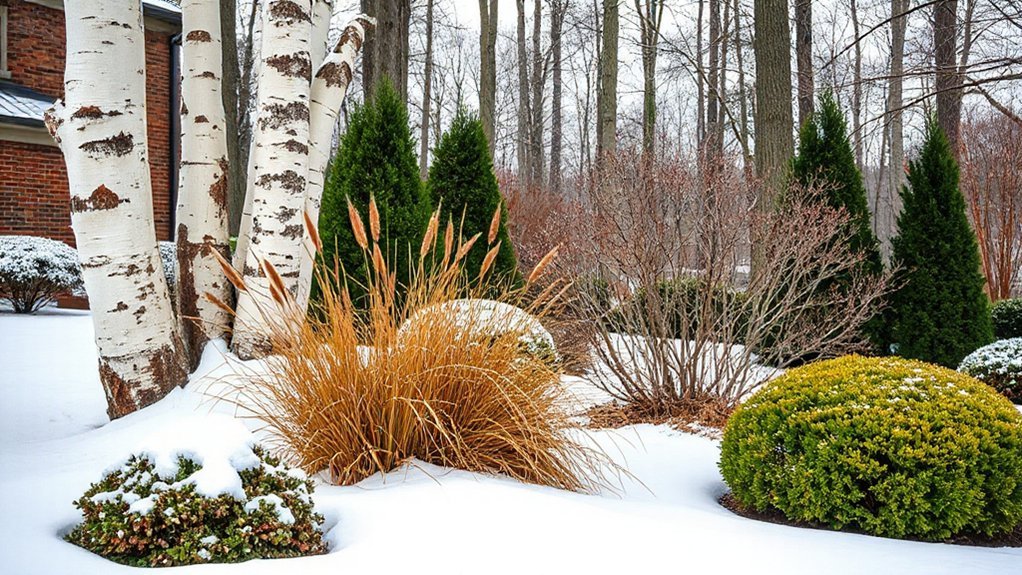
To keep your garden engaging through winter, you’ll need to rely on bark and form rather than bloom. You can showcase ornamental bark by positioning birch, dogwood, or acer where low light catches their colour and texture.
You’ll also highlight structural silhouettes by choosing shrubs and grasses with strong outlines and placing them against plain backdrops for clear contrast.
Showcase Ornamental Bark
When winter strips your borders back to bare stems, ornamental bark and strong plant form step in and carry the display. Choose trees and shrubs for clear colour and pattern: paper birch for white peel, dogwood for vivid stems, and Tibetan cherry for glossy copper. Site them where low sun catches the trunks, such as beside paths or viewed from the house.
You’ll get the best effect by controlling clutter. Lift lower branches to expose bark, underplant with dark evergreens, and mulch with fine bark chips to sharpen texture contrast. Prune dogwoods hard in early spring to renew bright stems, and keep birches watered in dry spells to reduce stress.
Avoid overfeeding; it softens growth and dulls colour. Clean away fallen leaves so trunks stay visible all winter.
Highlight Structural Silhouettes
Although winter reduces borders to outlines, you can turn those outlines into a feature by prioritising plants with clean, architectural silhouettes. Choose multi-stem shrubs, clipped evergreens, and strong perennials that hold shape, such as cornus, sarcococca, box, phormium, and miscanthus.
Place them where you view the garden most: near paths, windows, and seating, so structure carries the scene when flowers fade.
Strengthen structural silhouettes by pruning for clear frameworks and removing weak, crossing growth in late winter. Use contrasting bark and stem colour to sharpen form against low light, and underplant with groundcover to keep soil tidy.
Repeat key shapes at intervals to guide the eye and maintain Garden aesthetics through the dormant season. Keep labels and notes for seasonal adjustments.
Low-Maintenance Care: Pruning, Cutbacks, and Mulch
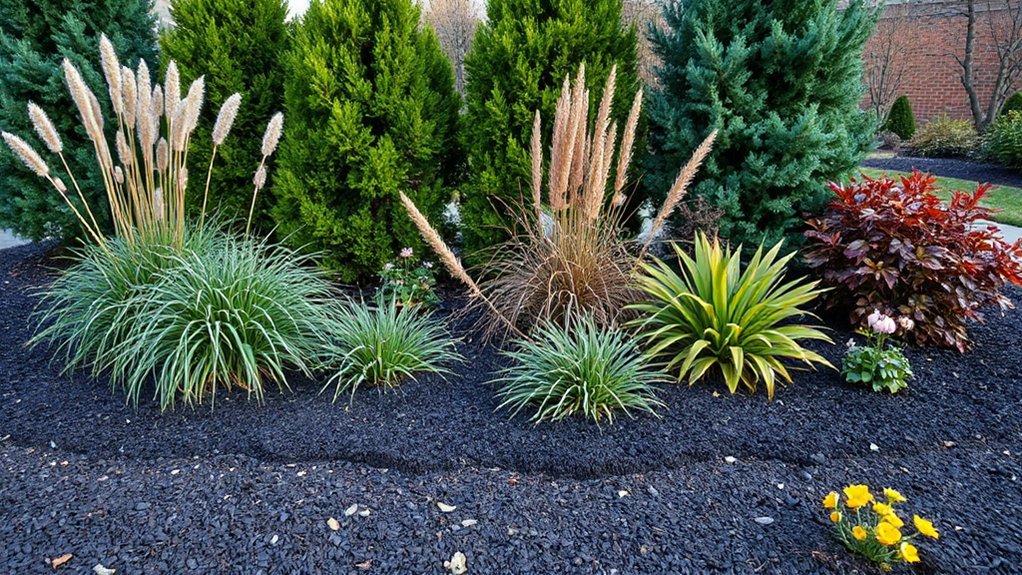
Because a four-season garden only stays attractive with consistent, light-touch upkeep, you’ll get the best results by relying on three low-maintenance fundamentals: timely pruning, sensible cutbacks, and a well-managed mulch layer.
Prune with intent, removing crossing stems and spent flowering wood to keep form crisp and improve airflow.
Cut back perennials only when growth collapses; leave seedheads through winter to feed birds and shelter native pollinators.
Mulch annually to suppress weeds, buffer soil moisture, and reduce labour.
- Prune spring-flowering shrubs after bloom to protect next year’s buds.
- Shear hedges lightly, then refine with secateurs for clean lines.
- Cut back in late winter, before new shoots emerge.
- Top-dress compost, not heavy organic fertilizers, to avoid soft growth.
- Maintain a 5–7 cm mulch, kept clear of stems.
Frequently Asked Questions
What’s the Best Budget-Friendly Way to Create a Four-Season Garden?
Start with garden layout planning that layers hardy shrubs, bulbs, and perennials, then add seasonal pots. Use composting techniques to make free soil improver, prioritise local, resilient plants, and stagger sowings for year-round interest.
How Can I Design a Four-Season Garden for Containers or Small Balconies?
You can design a four-season balcony garden by staggering Plant selection and rotating Container arrangements; 30% more blooms follow seasonal succession. Use hardy evergreens, spring bulbs, summer annuals, autumn grasses; guarantee drainage, wind shelter, and weekly feeding.
Which Plants Are Safest for Gardens With Pets and Young Children?
Choose Non toxic plants and Child safe blooms such as marigold, snapdragon, sunflower, nasturtium, rosemary, thyme, and basil. You’ll need to verify each cultivar with the ASPCA or RHS, and supervise play.
How Do I Keep Deer and Rabbits From Destroying Seasonal Plantings?
You’ll protect seasonal plantings by installing rabbit barriers, adding 1.8m fencing, and using Deer deterrents such as netting and approved repellents. You should remove cover, secure bins, and rotate resistant varieties; don’t feed wildlife.
What’s a Realistic Timeline for Achieving a Mature Four-Season Garden?
You’ll see a convincing four-season garden in 2–3 years, with true maturity in 5–7. Prioritise soil preparation first year, then plant structural shrubs; maintain with seasonal pruning, staged additions, and consistent aftercare.
Conclusion
You’ve now got a clear method for building a garden that performs in every season: start with site conditions, anchor it with trees and shrubs, layer evergreens, then sequence bloom, foliage, seed heads, and winter bark. For example, a small Leeds front garden on heavy clay was transformed by adding an amelanchier, dogwood, sarcococca, and ornamental grasses; it now flowers in spring, holds structure in summer, colours in autumn, and glows in winter, with minimal pruning.