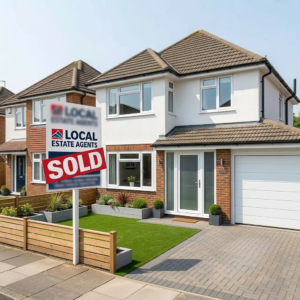
You make a property attractive when you nail the non‑negotiables: an affordable total monthly cost (rent, fees, utilities), a commute-friendly location near jobs, schools, and transit, reliable HVAC and appliances with fast maintenance, secure entry with bright, shadow-free lighting, and internet that works day one. Then you win on curb appeal, functional layouts (36″+ paths, 9’×10′ bedrooms), storage, pet clarity, and parking or bike options. Keep going to see how each upgrade boosts demand.
Key Takeaways
- Affordable, transparent total monthly costs—including fees, utilities, and qualification criteria—make the rent feel attainable and predictable.
- A convenient location near jobs, schools, and transit, supported by walkability scores and commute times, drives strong tenant demand.
- Reliable essentials like HVAC, secure entry, functional appliances, and dependable internet reduce daily friction and signal professional management.
- Strong curb appeal and well-maintained exteriors—landscaping, lighting, paint, and clean common areas—create a great first impression and trust.
- Safe, functional living spaces with good lighting, smart layouts, and ample storage, plus desirable extras like parking or in-unit laundry, boost appeal.
Top Tenant Priorities (Must-Haves vs Nice-to-Haves)
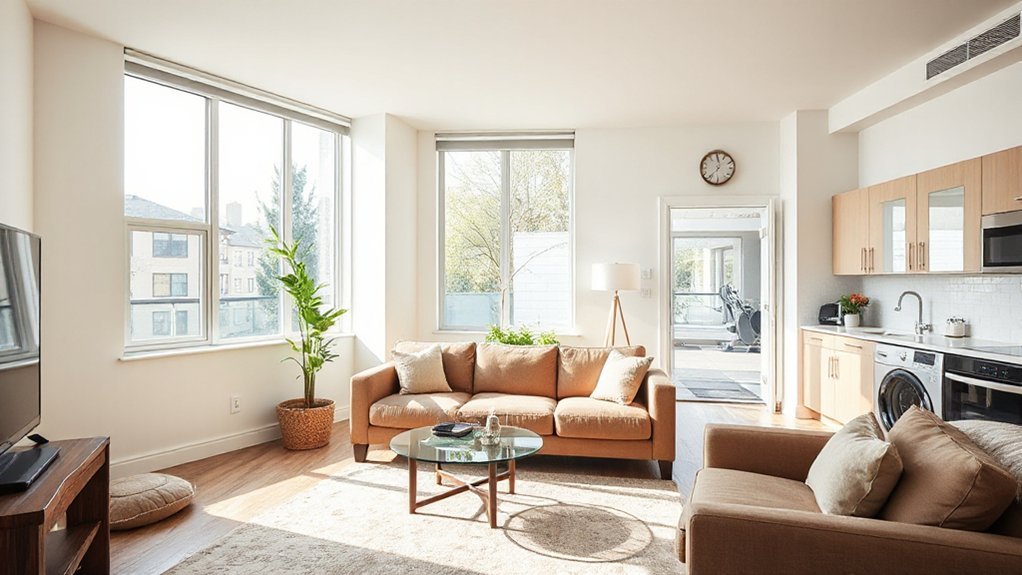
Although every renter’s wishlist looks a little different, tenant surveys and leasing data consistently show the same pattern: “must-haves” are the basics that protect comfort, safety, and monthly budget—think price point, location/commute, reliable HVAC, secure entry, functional appliances, and dependable internet.
While “nice-to-haves” (in-unit laundry, parking upgrades, amenities like gyms or pools, smart-home features, premium finishes) only move the needle after the fundamentals are solid. You’ll attract more applicants when you validate rent affordability upfront: post total monthly cost, fees, and typical utilities, and offer clear qualification criteria.
You should also prove reliability with maintenance response targets, recent service records, and appliance ages. For pet friendliness, specify allowed pets, weight limits, deposits, and nearby waste stations, then enforce policies consistently.
Once these boxes check out, upgrades start justifying higher rent.
Location Tenants Pay Extra For
Once you’ve nailed the must-haves and you’re pricing the unit transparently, location becomes the lever that most consistently earns a rent premium. You’ll see it in comps: units within a 10–15 minute walk of major employment nodes, universities, or high-frequency transit stops often command higher rents and lease faster.
Map Walk Score, Transit Score, and bike infrastructure, then validate with 3–5 comparable leases signed in the last 60–90 days.
You can also monetize “place value.” Districts with historical significance and a recognizable Architectural style attract tenants who pay for identity and convenience: curated retail, parks, and event corridors.
Highlight quantified proximity (minutes, miles) and remove friction with clear parking, storage, and commute options.
Safety and Security Tenants Notice Immediately
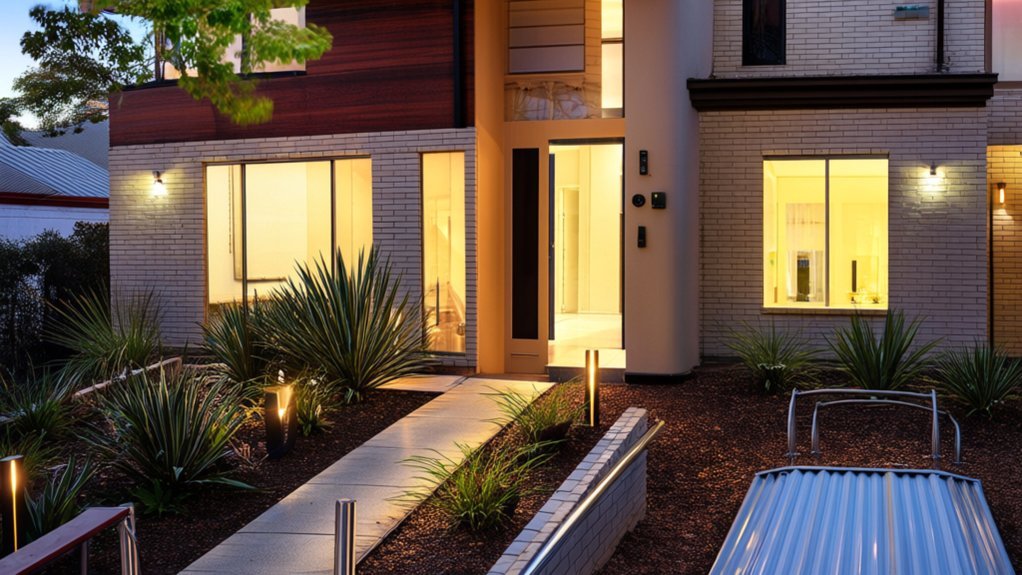
You’ll see tenant interest rise when you control the basics they assess in the first 30 seconds: well-lit entrances and paths with consistent, shadow-free coverage.
You should install secure deadbolts, reinforced strike plates, and controlled access (keyed entry, keypad, or fob) so every door and gate closes and locks reliably.
You can also signal safety fast with visible measures like cameras, clear signage, trimmed sightlines, and maintained common areas that show active oversight.
Well-Lit Entrances And Paths
When prospective tenants walk the property after dusk, lighting becomes an instant proxy for safety and management quality. You should use outdoor lighting that delivers consistent illumination from parking to entry, without dark gaps or harsh glare. Aim for even coverage on steps, corners, and signage; tenants notice when they can read unit numbers and spot trip hazards.
Choose LED fixtures for higher lumen output per watt and longer lifespans, and keep color temperature consistent to avoid patchy visibility. Support it with tight pathway maintenance: repair cracked concrete, level pavers, trim shrubs, and clear leaves that hide edges.
Add timers or photocells so lights turn on reliably every night, and log monthly bulb and fixture checks to prevent outages.
Secure Locks And Access
Because most tenants judge security in the first 30 seconds, your locks and access points need to signal “controlled entry” without hesitation. Install ANSI Grade 1 deadbolts on every exterior door and reinforce strike plates with 3-inch screws into framing to reduce kick-in risk.
Re-key between tenancies within 24 hours and document it as part of key management, so no former resident retains access. Use restricted keyways or smart locks that log entries to support accountable access control without creating friction for tenants.
Standardize hardware across units to simplify maintenance and cut rekey time. Add door closers and verify latch alignment during turnover inspections; a misaligned latch reads as neglect.
Set clear policies for lost keys, replacements, and lockout response times.
Visible Safety Measures
- Replace bulbs to hit uniform illumination; log lux readings quarterly.
- Post camera/notices at entry points; guarantee recordings retain 30 days.
- Trim landscaping to keep 30–50 ft sightlines along paths.
- Share incident updates through neighborhood collaboration and community safety programs.
When tenants see consistency, they infer management reliability and lower risk.
Curb Appeal That Wins More Viewings
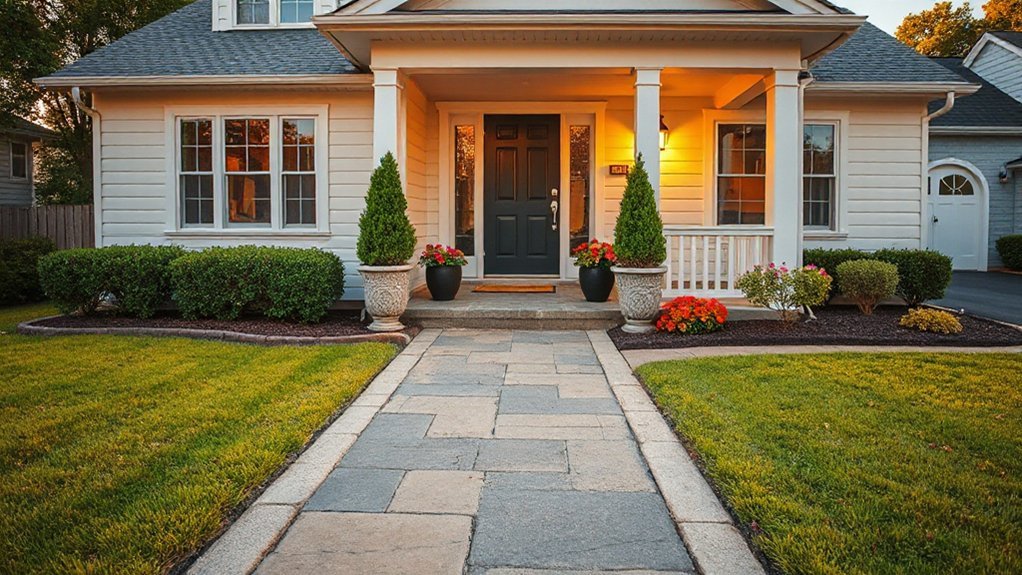
Even if your listing photos look flawless, most tenants decide whether to book or keep a viewing within the first 10–30 seconds of seeing the exterior. You can win that moment with clean lines, brightness, and obvious upkeep.
Start with landscaping design: keep grass under 5 cm, edge paths, remove weeds, and add two low-maintenance focal plants near the entry; it signals “managed” and reduces perceived hassle.
Repaint the front door and trim, then pressure-wash paving and fascia to lift perceived value fast.
Upgrade exterior lighting to bright, warm LEDs (around 2700–3000K) at the door, path, and parking; it improves visibility and makes evening viewings feel welcoming.
Finally, fix gutters, house numbers, and bin storage—small defects read as bigger maintenance risks.
Layouts and Room Sizes That Fit Real Life
While fixtures and finishes photograph well, layout and room sizing drive day-to-day livability—and tenants spot problems fast when they mentally “walk” the space. You’ll rent faster when circulation is clean, doors don’t clash, and each room fits standard furniture without blocking outlets or windows. Aim for proportions that support real routines, then use interior decor to reinforce scale, not disguise it.
Keep sightlines from entry to living area open, and make storage easy to access so clutter doesn’t shrink perceived space. Tie indoors to outdoor landscaping with a clear path and usable patio depth; it extends the “living room” in a measurable way.
- 36″+ walk paths in main routes
- 9′ x 10′ minimum workable bedrooms
- Closet plus linen storage near bedrooms
- Dining area fits 4–6 seats comfortably
Kitchens and Bathrooms That Rent Fast
To rent faster, you’ll win with a modern, functional kitchen: prioritize durable countertops, ample storage, and full-size appliances because these are the features tenants filter for and notice on showings.
You should also keep bathrooms clean and updated—fresh caulk and grout, bright lighting, a strong fan, and a spotless tub or shower—since small wear signals bigger maintenance risk.
If your kitchen and baths photograph well, feel move-in ready, and require zero immediate fixes, you’ll reduce days on market and justify stronger rent comps.
Modern, Functional Kitchens
- Install soft-close drawers and 30–40% more base-drawer storage than cabinets
- Use 3000–3500K LED task lighting at 50+ foot-candles on counters
- Choose quartz or sealed solid-surface tops with minimal grout lines
- Provide a vented hood (200–400 CFM) and quiet, ENERGY STAR appliances
Clean, Updated Bathrooms
A great kitchen gets tours booked, but clean, updated bathrooms close the deal because tenants read them as a proxy for overall maintenance. If grout’s dark, caulk’s split, or vents are dusty, you signal deferred care and invite discount requests.
You’ll rent faster by treating bathrooms like a checklist: re-caulk, re-grout, fix leaks, replace rusted shutoff valves, and install a quiet exhaust fan. Aim for bright, even lighting (3,000–3,500K) and a mirror that isn’t desilvering.
Use durable, easy-clean finishes: large-format tile, semi-gloss paint, and a sealed vanity top. Add perceived value with luxury fixtures—matching faucet, showerhead, and hardware in one finish.
Simple spa-inspired features like a handheld sprayer, glass shelf, and towel hooks boost daily usability.
Storage Tenants Always Ask About
Because storage can make or break your daily workflow, tenants consistently ask upfront about how much dedicated space you’ll actually get and how usable it is—think closet count and depth, pantry capacity, linen storage, garage spots, outdoor sheds, and whether built-ins or shelving are allowed.
You’ll reduce vacancy time if you document storage dimensions, access rules, and load limits in listings and tours, then back it with tenant communication strategies that answer questions before they’re asked.
Track condition and safety with Storage unit maintenance checklists: moisture, pests, locks, lighting, and shelving integrity.
- Measure every closet and label cubic/linear footage in marketing
- Confirm if bikes, bins, or tires are permitted and where
- Specify who provides shelves, anchors, and hardware approvals
- Set inspection cadence and response SLAs for storage issues
Heating, Cooling, and Comfort Year-Round
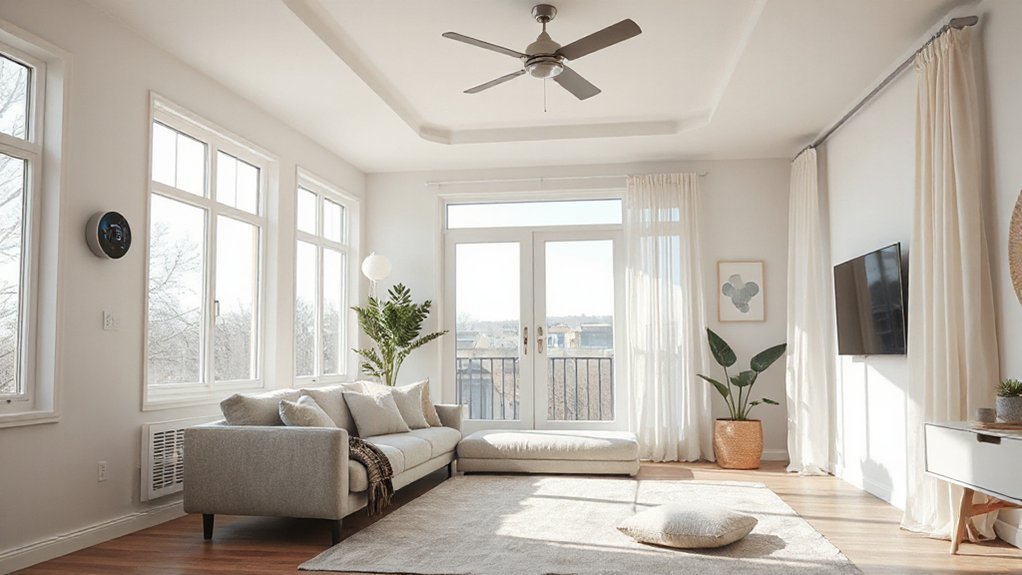
To keep tenants comfortable year-round, you should prioritize an efficient HVAC system with documented SEER2/HSPF2 ratings and a clear maintenance record, since these factors directly influence monthly utility costs and complaint rates.
You’ll also cut hot/cold spots by tightening the building envelope—add insulation to target R-values for your climate zone and seal common leakage points like attic penetrations, rim joists, and around windows and doors.
When you pair HVAC efficiency with strong insulation and air sealing, you deliver steadier indoor temperatures, better humidity control, and fewer work orders.
Efficient HVAC Systems
When you upgrade to an efficient HVAC system, you cut operating costs while delivering steady heating and cooling that tenants notice immediately. Prioritize Energy efficiency with right-sized equipment and high SEER2/AFUE ratings; you’ll typically see lower utility use and fewer comfort complaints.
Choose models with variable-speed fans and smart thermostats so renters get tighter temperature control without constant cycling. To protect cash flow, standardize filters and parts across units to reduce maintenance costs and shorten service calls.
Document performance with commissioning and seasonal tune-ups so you can prove reliability during showings.
- Install programmable or smart thermostats with lockable limits
- Use variable-speed compressors for quieter, steadier comfort
- Set a preventive service schedule and log each visit
- Offer clear filter-change instructions and replacement dates
Insulation And Air Sealing
Although tenants may not see insulation in the walls, they feel its impact every day in steadier temperatures, fewer drafts, and lower bills. You’ll boost comfort by targeting attic, rim joist, and wall cavities to code-level R-values, then sealing bypasses around plumbing stacks, recessed lights, and attic hatches.
Use foam or caulk at gaps under 1/4 inch, and backer rod plus sealant for larger joints.
You can verify results with a blower-door test; tighter homes typically cut heating and cooling losses and improve energy efficiency without changing equipment.
Add weatherstripping to exterior doors and gasket outlets on exterior walls. Insulation also improves noise reduction, especially with dense-pack cellulose in shared walls and insulated floor assemblies.
You’ll reduce complaints and turnover.
Fast Wi‑Fi and Easy Utility Setup
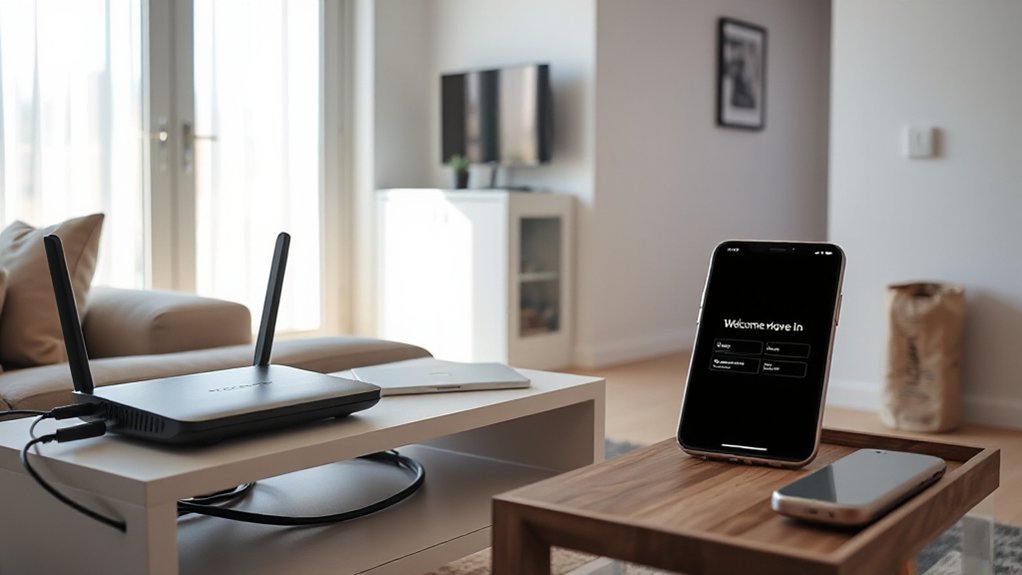
Because reliable connectivity now ranks among tenants’ top move-in priorities, fast Wi‑Fi and frictionless utility setup can measurably shorten vacancy time and reduce early-lease complaints. You’ll win trust by treating internet like a core utility: validate speed at the unit, document coverage, and give tenants a one-page activation guide.
- Prewire with Cat6 and place Wi‑Fi access points to hit every room at ≥-65 dBm.
- Offer ISP-ready status: modem location, labeled coax/ethernet, and tested throughput (e.g., 300+ Mbps down).
- Bundle easy utility setup: online transfer links, meter numbers, and move-in date reminders.
- Add Smart home technology (thermostat, leak sensor) that’s app-ready on day one; pair it with pet friendly amenities like smart door locks for walkers.
Track tickets: fewer connectivity calls signals you’ve nailed onboarding.
Parking, Transit, and Bike Storage
A solid parking and mobility plan can cut down lost tours and lease drop-offs by removing one of renters’ biggest daily frictions: getting to and from home reliably.
Audit demand first: count stalls per unit, track overnight occupancy, and note guest peak times.
Then tighten your parking amenities—clear signage, assigned vs. unassigned rules, EV charging readiness, and well-lit paths to entries.
If you’re near transit, prove it: list walking minutes to bus/rail, post route maps in the lobby, and highlight real commute times to major employers.
Don’t ignore bikes. Secure bike storage (indoor room or covered racks), key or fob access, and repair hooks/pumps can convert cyclists who won’t lease without it.
Add package-friendly curb zones for rideshare pickups, too.
Pricing for Value (and Fewer Vacancies)
When you price for value instead of just “market,” you reduce vacancy days and protect rent growth by matching what renters actually compare: total monthly cost, concessions, and perceived quality.
Your pricing strategy should start with comp data, then adjust for your unit’s differentiators and friction points. Track lead-to-lease conversion and days-on-market weekly, and correct fast; a 1–2% rent trim can outperform a month of vacancy.
- Benchmark effective rent (rent minus concessions), not asking rent
- Price by floorplan and view, not by building averages
- Test small increases after upgrades; measure conversion change
- Use time-boxed concessions to drive vacancy reduction without resetting base rent
Frequently Asked Questions
How Can Landlords Screen Tenants Fairly Without Violating Discrimination Laws?
You can screen fairly by using consistent criteria, documenting decisions, and applying background checks and rental history reviews uniformly. You’ll avoid discrimination by excluding protected traits, using written scoring, and giving adverse-action notices when required.
What Lease Length Options Are Most Appealing in Today’s Rental Market?
You’ll attract more renters by offering lease flexibility: 6-, 9-, and 12-month terms, plus Short term leases (1–3 months) at a premium. Add clear renewal options, fixed rent escalators, and early-exit fees.
Which Pet Policies Attract Tenants While Protecting the Property?
Like Noah’s ark, you’ll attract more tenants by welcoming pets with clear pet deposit policies, modest monthly pet rent, and enforceable Pet breed restrictions tied to insurance. Require screenings, vaccination records, and damage addendums.
What Move-In Incentives Actually Improve Tenant Retention Long-Term?
You’ll boost long-term retention by pairing move in bonuses with a 12–18 month lease, modest rent-step renewals, and service credits tied to on-time payment. Track renewal rates and complaints quarterly; reward tenant loyalty with predictable, fast maintenance.
How Often Should Rent Be Increased to Stay Competitive and Compliant?
Increase rent annually, but only after you verify local notice caps and renewal rules. Statistic: ~60% of operators review rents quarterly. Use rent escalation tied to comps and CPI, then apply a market adjustment at renewal.
Conclusion
If you want tenants to choose you fast—and stay—you’ve got to nail what they’re silently scoring. They’ll pay 5–15% more for walkable locations, strong safety cues (lighting, locks, cameras), and comfort that cuts utility bills. Miss just one friction point—slow Wi‑Fi, awkward layout, unclear parking—and they’ll keep scrolling. Here’s the suspense: the biggest vacancy killer isn’t price. It’s perceived value at the front door, in the first 30 seconds.