
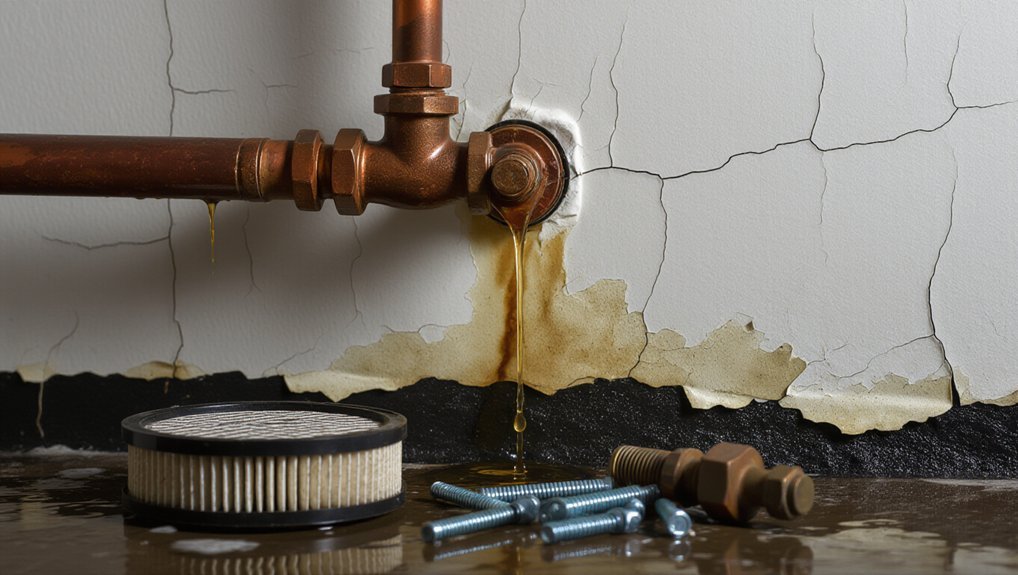
You’ll often overlook small drips under sinks, failed silicone, and damp cabinet backs, but they quickly feed mould, rot, and loose tiles. Blocked gutters and downpipes cause overflow that tracks into brickwork, while slipped tiles and lifted flashing let storms soak lofts and ceilings. Hairline cracks can signal movement, so date and monitor them. Don’t ignore whistling HVAC, weak airflow, or flickering sockets either. Keep going to see the key checks and fixes.
Key Takeaways
- Ignoring clogged gutters, leaking downpipes, or damaged flashing lets water penetrate walls and roofs, causing rot, damp, and expensive repairs.
- Overlooking slow plumbing leaks under sinks, behind appliances, or at toilets promotes hidden mold, swollen cabinets, and subfloor damage.
- Delaying repairs to failing bathroom silicone, grout, or blocked vents traps moisture, leading to persistent black mold and deteriorating finishes.
- Dismissing small cracks, uneven floors, or new skirting gaps can mask foundation movement; unmonitored shifts escalate into major structural work.
- Postponing electrical fixes like warm sockets or frequent tripping raises fire risk; unpermitted DIY structural or wiring changes can force costly rework.
Top Overlooked Home Repairs (and Warning Signs)
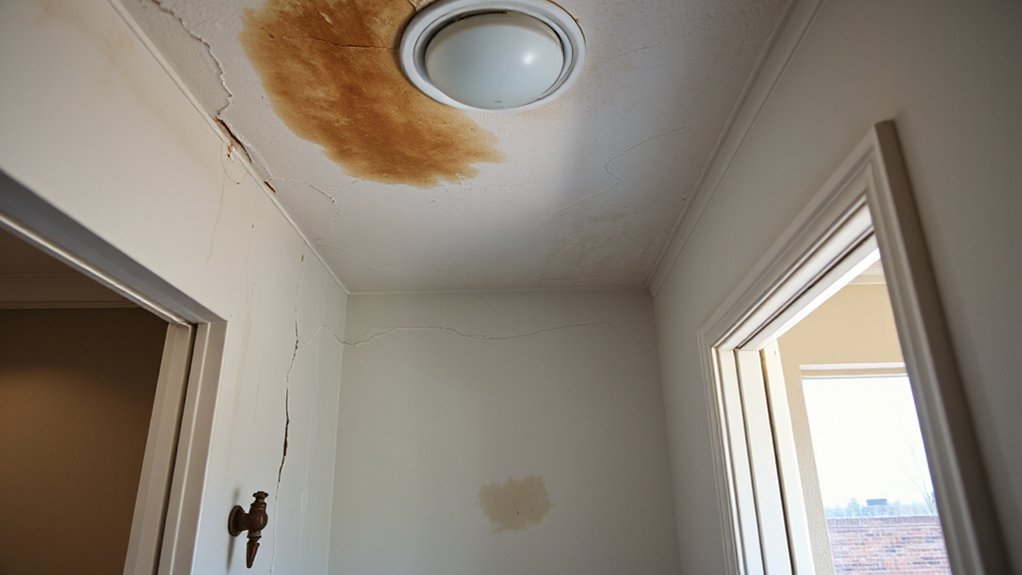
While it’s tempting to focus on big-ticket upgrades, the home repairs most UK homeowners overlook are often the ones that quietly cause the most damage. Start outside: keep gutters and downpipes clear, and watch for staining on brickwork, overflowing during rain, or damp patches on internal walls.
Prioritise landscape maintenance—soil or paving piled against walls can bridge the damp-proof course; look for peeling paint, tide marks, or musty smells at skirting level.
Check roof tiles, flashing, and ridge pointing after storms; slipped tiles, daylight in the loft, or gritty mortar in gutters signal trouble.
Inspect external sealant around windows and doors; drafts, condensation, or cracked mastic mean water ingress.
Finally, schedule pest control if you hear scratching, spot droppings, or see chewed insulation in the loft.
Overlooked Plumbing Drips That Cause Mold and Rot
Once you’ve checked the outside for water getting in, look at the water escaping from within—small plumbing drips often go unnoticed until they’ve fed mould and started timber rot.
Start under sinks, behind the washing machine, and at the toilet isolation valve: feel pipe joints and flexi hoses for dampness, and check cabinet backs for bubbling laminate or black specks.
In airing cupboards, inspect the hot-water cylinder overflow and any weeping compression fittings.
Don’t ignore a musty smell, warped skirting, or loose tiles near baths and showers; these often point to slow plumbing leaks.
Fix drips fast: replace worn washers, tighten fittings, and renew silicone where needed.
Then dry the area, improve ventilation, and use a dehumidifier for mold prevention.
Clogged Gutters That Lead to Roof Leaks
Because gutters catch every leaf and bit of grit that comes off your roof, a small blockage can quickly force rainwater to overflow under tiles or behind fascia boards and show up as damp patches indoors. In the UK’s heavy showers, that overflow can soak felt and timbers, then drip into bedrooms or along party walls.
Stay ahead of it with routine Gutter maintenance and a simple Roof inspection after autumn leaf-fall and big storms. Focus on practical checks you can do safely from ground level or with a steady ladder.
- Clear gutters and downpipes; flush with a hose to confirm flow.
- Check joints, brackets, and end caps for leaks and sagging.
- Confirm downpipes discharge into gullies, not against brickwork.
- Look for staining, moss trails, or bubbling paint on fascia/soffits.
If you spot persistent damp, book a roofer before damage spreads.
Roof Flashing Gaps That Soak Ceilings and Attic
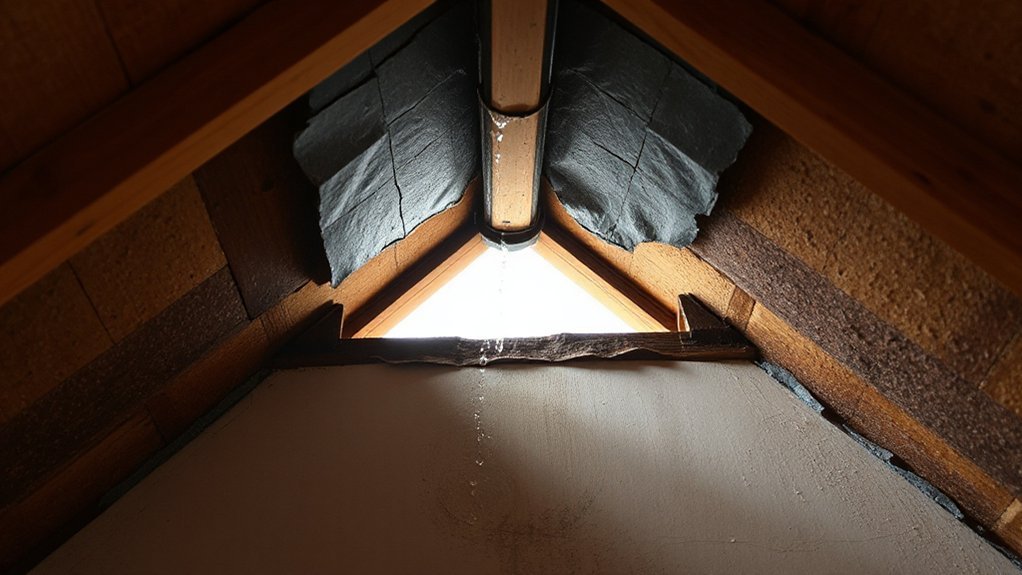
After a spell of wind-driven rain, even a small gap in roof flashing can send water straight into your loft and down onto ceiling plaster.
You’ll often spot brown rings near chimneys, valleys, dormers, or around vent pipes, then find damp insulation and a musty smell.
Don’t just slap on sealant; check lead or aluminium flashing for lifting, splits, missing soakers, and slipped tiles.
Re-bed loose sections, replace torn pieces, and make sure laps shed water the right way.
While you’re up there, keep Roof ventilation clear so moisture can escape and timbers don’t sweat.
Pair the repair with regular gutter maintenance, because overflowing gutters drive water back under flashing during downpours.
Small Foundation Cracks That Signal Bigger Movement
Even if a hairline crack in your foundation looks harmless, it can point to ongoing movement from subsidence, heave, or poor drainage around the house. In UK clay areas, soil movement after wet winters and dry summers can slowly shift footings, stressing masonry. Don’t just fill and forget; track changes and protect foundation stability with early action.
Watch for:
- Cracks that widen, step, or run through mortar joints
- Fresh crumbling, white salts, or damp staining near the crack
- Uneven floors or new gaps along skirting boards
- Outside ground sloping towards the wall, blocked gullies, or leaking downpipes
Mark ends with pencil dates, take monthly photos, and measure with a crack gauge. If it grows, get a chartered structural engineer or surveyor.
Window and Door Gaps That Invite Water Damage
While a slim gap around a window frame or external door can look like normal settling, it often lets wind-driven UK rain track behind the sealant, soak the reveal, and creep into plaster and timber. You’ll spot it as bubbling paint, dark tide marks, or a musty smell after storms.
Don’t just add more silicone: check for failed mastic, cracked pointing, and perished gaskets, then rake out and reseal properly on a dry day. Confirm window insulation hasn’t been compromised by wet cavities or warped trims.
At doors, poor door alignment leaves the weatherstrip uncompressed, so water runs under the threshold; adjust hinges, strike plate, and keep to restore a tight close.
Finish by clearing trickle vents and ensuring sills shed water outward.
Overlooked HVAC Fixes That Raise Energy Bills
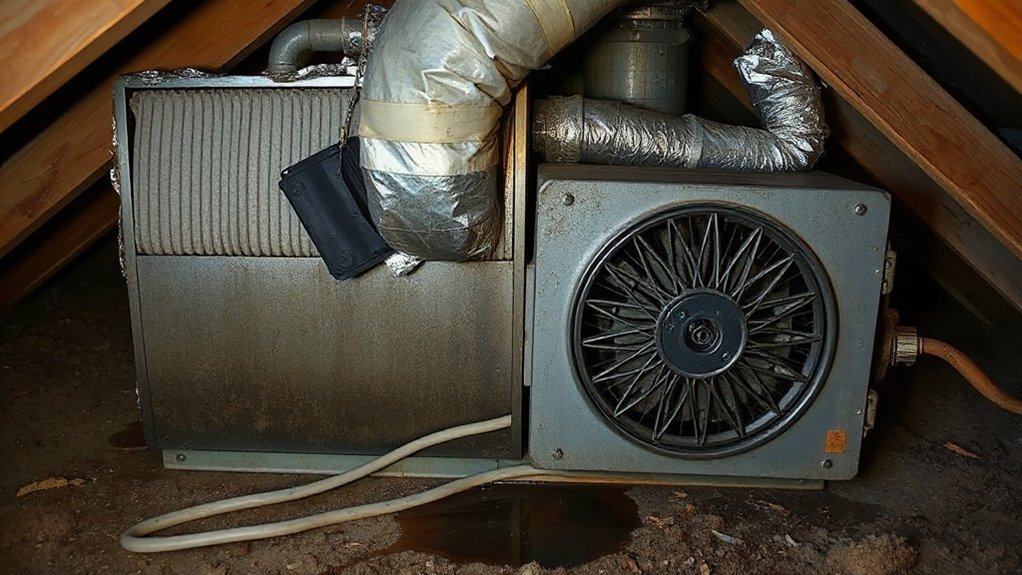
If your energy bills are creeping up, check your HVAC before you blame the weather. A clogged air filter forces your system to work harder for the same heat, so swap or clean it on schedule.
Then look for leaky ductwork in lofts and under floors, because gaps let expensive conditioned air escape into unheated spaces.
Dirty Air Filters Drain Efficiency
When your air filter clogs with dust and pet hair, your HVAC system has to pull harder to shift the same amount of air, so it burns more electricity and delivers less comfort. In UK homes, that shows up fast on your kWh usage and can leave rooms stuffy or uneven.
Stay on top of Air filter maintenance and treat filter replacement urgency as a bill-saver, not a nice-to-have:
- Check the filter monthly in heating season and during summer cooling.
- Replace disposable filters every 1–3 months, sooner with pets or renovations.
- Vacuum reusable filters gently and let them dry fully before refitting.
- Note warning signs: whistling returns, weak airflow, or longer run times.
You’ll reduce strain on the fan, keep temperatures steadier, and cut wasted energy.
Leaky Ductwork Wastes Conditioned Air
Even though your boiler or heat pump might run smoothly, leaky ductwork can dump a surprising chunk of warmed or cooled air into lofts, crawl spaces, and voids instead of your rooms. You’ll notice longer run times, chilly spots, and higher bills, especially in older UK semis with retrofitted duct runs.
Check accessible joints on each air duct for loose tape, gaps, or crushed sections. Don’t rely on cheap cloth “duct tape”; use foil tape or mastic, and re-secure with proper clamps.
If you’ve got a smart thermostat, compare setpoint to actual comfort: big swings often point to air loss, not controls.
Ask an F-Gas registered HVAC engineer to pressure-test and balance the system, then insulate ducts in unheated spaces.
Electrical Issues You Shouldn’t “Wait and See
Although it’s tempting to put off a flickering light or a temperamental socket, electrical faults rarely fix themselves and can escalate quickly. In UK homes, heat-damaged cables, loose terminals, and overloaded circuits can lead to nuisance tripping—or worse. Don’t ignore warning signs; treat them as an Electrical safety issue and book a qualified electrician (NICEIC or NAPIT).
Quick checks now can avoid costly rewiring later and keep you compliant.
- Breakers or RCDs trip repeatedly, especially when one appliance starts
- Sockets feel warm, spark, or smell “fishy” (burnt insulation)
- Lights dim when the kettle or shower runs, hinting at poor connections
- Older fuse boards or DIY extensions suggest you need wiring upgrades
Mold and Mildew That Keeps Spreading (and Why)
If you keep wiping away black spots only to see them return within days, you’re not dealing with a surface stain—you’ve got a moisture problem feeding active mould growth.
In UK homes, it usually starts with condensation on cold bridges, leaking pipework under sinks, failed silicone around showers, or blocked air bricks and extractor fans.
Mildew removal won’t stick unless you cut the moisture source. Check indoor humidity, dry clothes with ventilation, and keep trickle vents open.
Clear gutters and downpipes so damp doesn’t track through brickwork, and watch for tide marks on plaster. Re-seal tiles, fix dripping wastes, and insulate loft hatches and external walls where possible.
For Mold prevention, keep rooms heated consistently and wipe condensation daily until airflow improves.
DIY vs Pro: Safety, Cost, and Permit Red Flags
You can tackle some repairs yourself, but you’ve got to weigh the safety risks and liability if something goes wrong, especially with electrics, gas, and structural work.
DIY can look cheaper until you add tool hire, wasted materials, rework, and the cost of fixing mistakes.
Watch for permit and code triggers in your area—certain plumbing, electrical, boiler, and major alteration jobs may need approval and certified sign-off to stay compliant.
Safety Risks And Liability
When a “quick fix” crosses into structural, electrical, or gas work, safety risks and liability climb fast, so it’s worth knowing where DIY stops and a pro should take over.
If you bodge it, you’re not just risking injury or fire; you can also trigger Insurance claims disputes and create legal liabilities when you sell, let, or renew cover.
In the UK, certain jobs must be signed off under Building Regulations, and gas work requires a Gas Safe registered engineer.
Watch for these red flags:
- You’re altering load-bearing walls, beams, or roof timbers
- You’re touching consumer units, new circuits, or bathroom electrics
- You’re working on boilers, hobs, meters, or pipework
- You can’t evidence compliance certificates or Part P notifications
True Costs Of DIY
Although DIY can look like the cheapest route, the real cost often shows up later in failed fixes, wasted materials, tool hire, and the price of making the job compliant.
When you patch a leaking waste pipe or re-seat loose tiles, you’ll often buy twice: budget parts first, then better fittings after the first attempt fails. You can also lose money on specialist tools you’ll never use again, plus skip-proof fixings that pros already carry.
Hidden damage spreads fast: poor sealant invites damp, and a “quick” floor repair can turn into joist work. If your changes touch electrics, gas, or structural elements, stop and get a qualified tradesperson.
For Home decor and landscaping design, pay for correct prep and drainage.
Permits And Code Triggers
Before lifting a wall, moving a drain, or adding a new circuit, check whether the job triggers Building Regulations, planning permission, or notification to Building Control, because the “small” tasks that cross these lines can rack up costs and safety risks fast.
If you skip Permit processes, you may face stop notices, rework, or trouble when selling. Use competent trades for regulated work; your insurer and mortgage lender may demand evidence of Code compliance.
Watch for these red flags:
- Structural changes: load-bearing walls, RSJs, chimney breast removal
- Electrics in kitchens/bathrooms: Part P, new circuits, consumer unit swaps
- Drainage changes: new soil stacks, external runs, pumping systems
- Fire/escape impacts: loft conversions, new doors, altered staircases
If you’re unsure, ask Building Control early and price inspections in your quote.
Frequently Asked Questions
How Often Should I Schedule a Whole-Home Inspection for Hidden Damage?
You should schedule a whole-home inspection every 2–3 years, and annually for older properties. After storms or buying, book one sooner. It’ll catch Roof leaks and Foundation cracks before repairs escalate. In the UK.
Which Repairs Typically Require Permits, Even for Minor Fixes?
You’ll often need Permit requirements for minor repairs involving structural changes, electrical rewires/consumer units, gas works (Gas Safe), plumbing on drains, new windows, boiler swaps, roof alterations, extensions, loft conversions, and listed-building or conservation-area changes.
What Home-Maintenance Records Help With Insurance Claims and Resale Value?
You’ll want receipts, photos, dated invoices, warranties, and contractor details—because paperwork’s your new hobby. Keep Home insurance claim logs, damp/roof reports, gas-safe and EICR certificates, boiler services, and resale documentation, plus planning approvals.
How Can I Prioritize Repairs When Multiple Issues Appear at Once?
Triage repairs by risk: stop leaks, electrics, and structural issues first, then heating and damp, then cosmetic jobs. Do budget planning with quotes, then focus contractor selection on Gas Safe, NICEIC, and warranties.
What Warning Signs Indicate a Repair Is an Emergency After Business Hours?
It’s an after-hours emergency if a leak’s gushing like the Thames, electrics spark, gas smells, alarms sound, or heat fails in frost. For Emergency preparedness and Nighttime troubleshooting, shut supplies, ventilate, call a UK engineer.
Conclusion
You can’t afford to “wait and see” with small home repairs—those drips, cracks, and loose flashings rarely stay small in the UK climate. Treat your house like a leaky bucket: ignore one pinhole and you’ll soon be mopping the floor. Stay alert for stains, musty smells, tripped breakers, and rising bills. Fix what you can safely, but call a qualified tradesperson when electrics, gas, roofing height, or permits come into play.