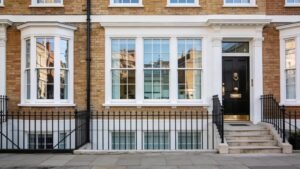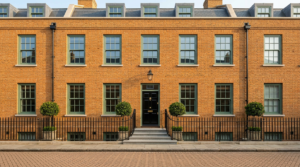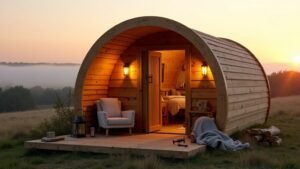
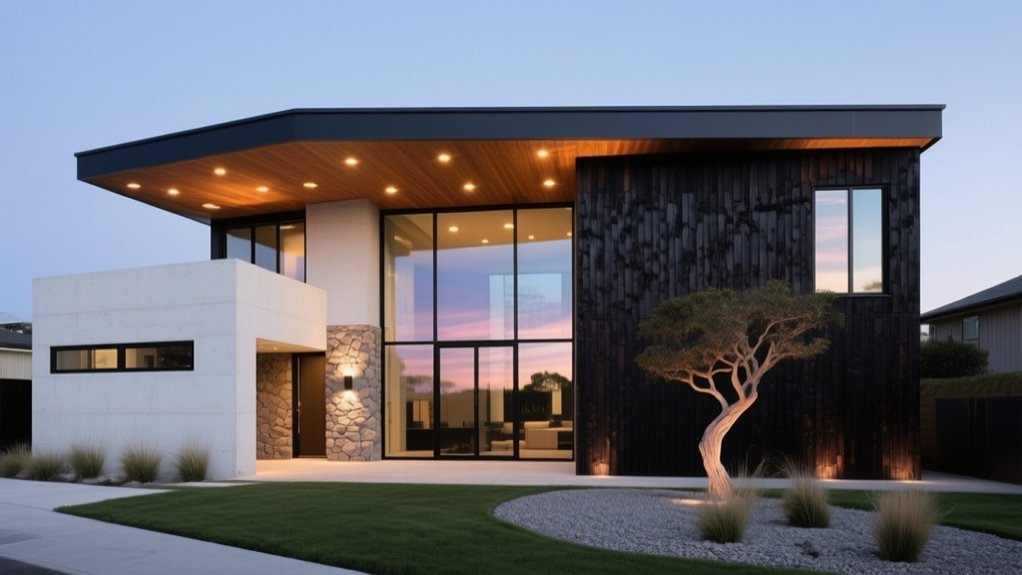
You’ll get exterior design choices that stand out by matching upgrades to your home’s architecture, then tightening the palette to one body color, one trim, and one accent with consistent undertones. Mix only two to three exterior materials and align shifts with rooflines or setbacks for a custom, intentional facade. Upgrade the front door with a statement handle and standoff house numbers. Add layered 2700–3000K LED lighting and rhythmic, native planting borders. Keep going to see the best high-impact moves.
Key Takeaways
- Match upgrades to the home’s architecture, using era-appropriate columns, cladding scale, and window proportions for a cohesive standout facade.
- Limit exterior materials to two or three surfaces, repeating each and aligning transitions with rooflines or setbacks for intentional contrast.
- Choose a tight paint palette—one body, one trim, one accent—with consistent undertones, and test large swatches in multiple lighting conditions.
- Make the entry a focal point with a distinctive door style, coordinated statement hardware, and clearly aligned, standoff-mounted house numbers.
- Layer lighting and landscaping: 2700–3000K LEDs for ambient/task/accent zones, plus repeated plant groupings and evergreens for year-round structure.
Pick Exterior Upgrades That Match Your Home’s Style
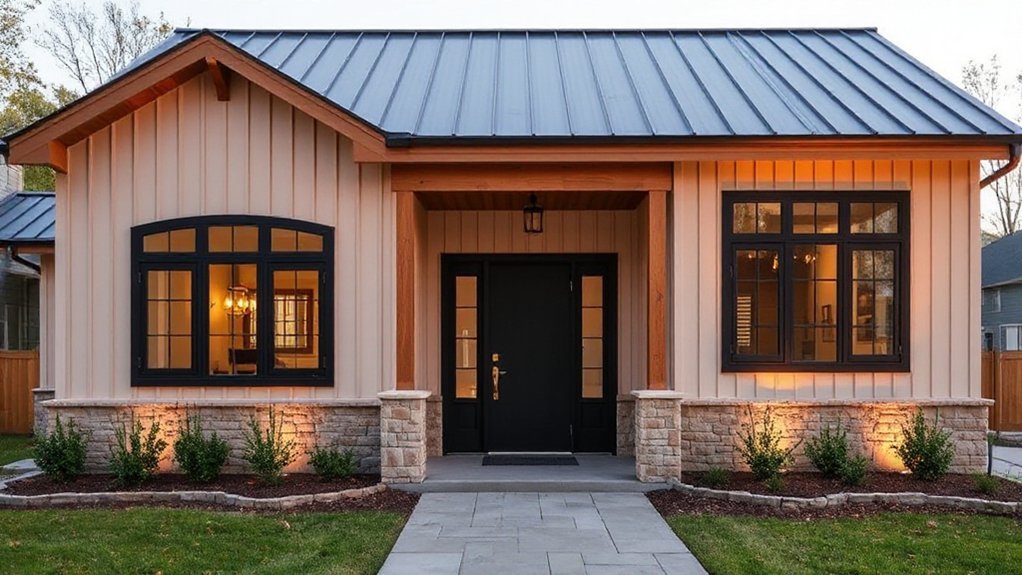
If you want exterior upgrades to look intentional—not piecemeal—you’ve got to start with your home’s architectural style and let it set the rules. For a Craftsman, you’ll strengthen authenticity with tapered columns, wider trim, and bracketed eaves.
For a modern home, you’ll choose crisp fascia lines, slim railings, and large-format cladding with minimal seams. You should match window proportions and grille patterns to the era, not the latest catalog.
Prioritize Roof enhancements that reinforce the silhouette: better ridge detailing, cleaner gutter profiles, and skylights placed on secondary planes.
Finish with Garden integration that mirrors geometry—structured beds for modern lines, layered perennials for traditional forms—so hardscape edges and entry paths align with the façade’s rhythm.
Exterior Paint Colors That Boost Curb Appeal
Once your upgrades respect the home’s architecture, paint becomes the fastest way to make the whole exterior read as one cohesive design. Use color psychology to steer first impressions: warm whites feel welcoming, cool grays read modern, and deep greens signal stability without going stark. Keep undertones consistent with fixed elements like roofing and stone, and test large swatches in morning and dusk light.
- Choose one body color, one trim color, and one accent tone to control contrast.
- Match sheen to paint texture: flatter finishes hide siding flaws; satin sharpens trim lines.
- Track current curb-appeal trends: muted clay, smoky blue, and soft black work best with clean, simple palettes.
Prioritize UV-resistant formulas and proper prep so the color stays crisp for years.
Front Door Upgrades for the Biggest Impact
Because your front door sits at eye level and anchors the facade, upgrading it delivers the fastest, highest-impact curb-appeal return.
Start with the material: solid wood or fiberglass gives you depth and durability, while steel offers crisp lines on a budget. If you want rustic charm, choose a stained wood-grain finish, plank detailing, and a speakeasy window for texture without visual clutter.
For modern minimalism, go flat-panel with a tight reveal, matte black or warm greige paint, and oversized house numbers for a graphic hit.
Swap dated hardware for a statement handle set in brushed nickel, satin brass, or blackened bronze, and make sure the lockset aligns cleanly.
Finally, refresh weatherstripping and adjust the threshold so the door closes with authority.
Outdoor Lighting Ideas for Nighttime Curb Appeal
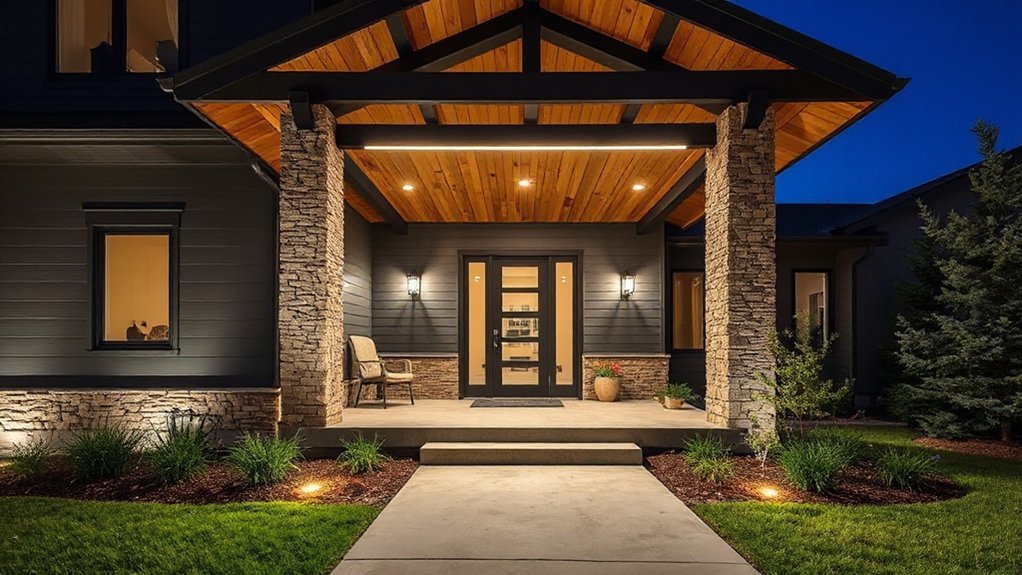
For nighttime curb appeal, you’ll get the best results by layering lighting zones—ambient for overall glow, task lighting for paths and steps, and accent lighting to add depth.
You can spotlight architectural features like columns, stonework, and rooflines with well-aimed uplights or wall grazers that keep glare off the street.
You’ll also want energy-smart fixture choices, pairing LED luminaires with photocells, timers, or motion sensors for efficient, on-trend performance.
Layered Lighting Zones
While daylight shows off your home’s materials and landscaping, layered lighting zones let you control what people notice after dark—and in what order. Start with an ambient glow that makes paths and entries feel safe, then add mid-level task lighting where you actually move, and finish with accents that create a focal point without glare.
Keep color temperature consistent (2700–3000K) for a cohesive, upscale look, and dim wherever you can for flexibility and energy savings. Aim fixtures downward to reduce light pollution and keep neighbors happy.
- Path lights spaced for overlap, not runway brightness
- Step, porch, and garage lighting on separate switches
- Landscape uplights on timers or smart scenes for schedules
Highlight Architectural Features
After you’ve set your lighting zones, use targeted fixtures to emphasize the architecture that makes your home distinctive—your entry surround, columns, gables, dormers, and material shifts.
Aim beams, don’t flood: tight uplights can carve crisp edges on stone piers, while shallow grazers reveal texture in brick or shingle courses.
To reinforce Structural symmetry, mirror fixture placement on both sides of a bay, porch, or garage, keeping beam angles consistent so the façade reads intentional, not patchy.
Showcase Architectural ornamentation with miniature spots on corbels, brackets, or keystones, and add a soft wash under eaves to lift rooflines without glare.
Keep lenses shielded and sightlines controlled, so the architecture—not the hardware—owns the night.
Energy-Smart Fixture Choices
Once you’ve used light to sculpt your home’s best lines and textures, make the fixtures themselves work smarter, not harder. Choose LEDs with warm 2700–3000K color temps for a high-end glow and low watt draw.
Prioritize solar panel integration where daytime exposure is consistent; modern panels look sleek and keep pathways bright without trenching or added bills.
Then focus on smart fixture placement: aim light down and across walking surfaces, not into windows or the street, and stagger fixtures to avoid harsh hotspots. Add motion and dusk-to-dawn controls to cut waste while keeping security tight.
- Solar sconces at entries and side gates
- Low-voltage path lights with timers and dimming
- Shielded uplights on trees using narrow beam optics
Mix Siding Materials for a Custom Exterior Look
Because a single siding profile can make even a well-designed home look flat, mixing materials lets you build contrast, hierarchy, and curb appeal with intention. Start with a dominant field material—fiber cement lap, engineered wood, or stucco—then introduce a secondary layer like board-and-batten, stone veneer, or metal panels to define key masses.
Keep your material blending disciplined: limit the palette to two or three surfaces and repeat each at least twice so it reads deliberate, not patchwork. Use texture contrast to modernize familiar forms—smooth panels against rough stone, or crisp battens beside horizontal lap.
Align progressions with natural breaks like setbacks and rooflines, and use consistent color temperature so everything feels unified.
Trim, Columns, and Accents That Add Depth
You’ll add instant dimension when you sharpen your facade with high-contrast trim—crisp window casings, bold fascia lines, and clean corner boards that frame every elevation.
You’ll anchor the entry with statement columns and accents, choosing squared, tapered, or minimalist profiles sized to the porch and balanced with modern bases and caps.
You’ll finish with intentional highlights—brackets, shutters, and rail details—placed sparingly so the architecture reads deeper, not busier.
High-Contrast Trim Details
While a monochrome exterior can look clean, high-contrast trim details add the depth and architectural definition that make a facade feel intentionally designed. You’ll get sharper rooflines, clearer window proportions, and stronger curb appeal by using deliberate Color contrast and precise trim accents. Keep the palette tight: one body color, one trim color, and one restrained highlight for doors or shutters—then repeat it consistently.
- Paint window casings 1–2 shades lighter or darker than siding to sharpen openings.
- Use a crisp fascia and soffit color to “cap” the elevation and reduce visual clutter.
- Match gutters, downspouts, and garage trim to your trim color so edges read cleanly.
Choose durable, low-sheen exterior paint to prevent glare and keep details looking current.
Statement Columns And Accents
High-contrast trim sets the outline, but statement columns and accent pieces give the facade real dimensionality and a clear focal point. Choose column profiles that match your architecture: square tapered for modern farmhouse, fluted for classic, steel or boxed wood for contemporary.
Upsize bases and capitals slightly to read from the street, and paint them one step darker or lighter than the body color for controlled contrast.
Add depth with layered accents: thick window surrounds, corbels, and a bold front-door pediment. Keep materials consistent—fiber cement, painted wood, or stone veneer—so details don’t look pasted on.
Tie it all together with garden ornamentation and outdoor furniture in similar tones, reinforcing the entry as the home’s visual anchor.
Window Styles and Grids That Sharpen the Facade
Because windows read as the “eyes” of a home, the style you choose—and the grid pattern inside it—can instantly tighten the facade’s proportions and make the architecture look more intentional. Start by matching muntin thickness and sightlines to your home’s era: thin grids for modern, chunkier for cottage or Colonial.
Keep head heights aligned across floors so the elevation feels calm and premium. Use black frames sparingly; they’re still on-trend, but only when they echo other facade accents like railings or lighting. When you mix shapes, repeat them deliberately so it looks curated, not chaotic.
- Choose window grids that mirror roof pitch or gable geometry
- Use fewer lites on larger openings to avoid visual noise
- Reserve decorative grids for street-facing rooms, not everywhere
Landscaping Ideas That Frame the House
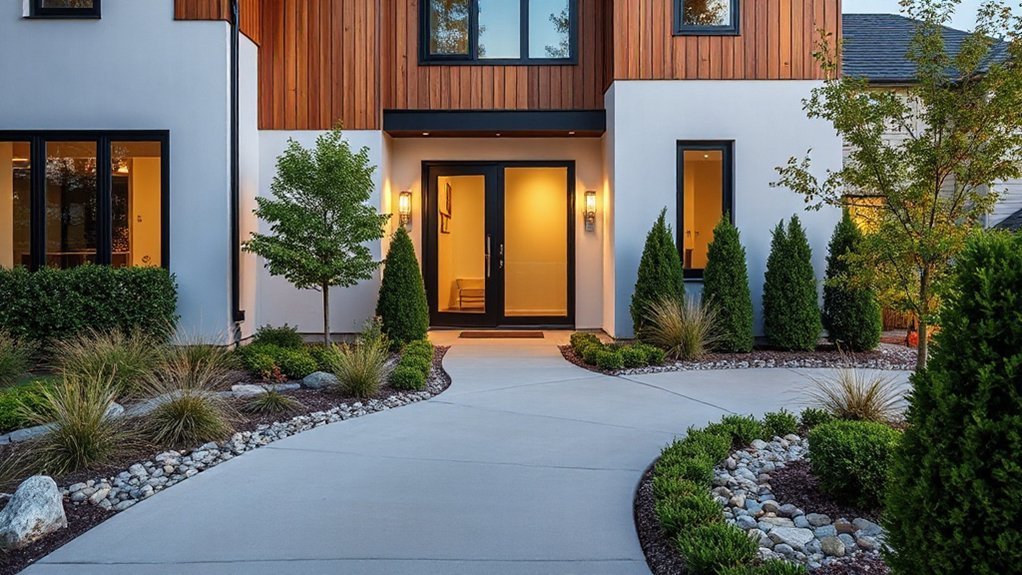
To frame your house with intention, you’ll use layered planting borders that step from low groundcovers to mid-height shrubs and a few upright accents, keeping sightlines to windows clean.
You’ll echo your exterior palette with foliage texture and seasonal color, then sharpen the composition with crisp edging and repeat plant groupings for a modern, cohesive read.
You’ll finish the approach with pathway and entry accents—lighting, large-format pavers, and a statement planter at the door—that guide the eye and make the front elevation feel anchored.
Layered Planting Borders
When you build your foundation beds in layers, you frame the house with depth instead of a flat strip of greenery. Start with taller, airy shrubs or small trees at the back, then step down to mid-height perennials, and finish with low edging plants to create a clean, modern line.
Prioritize native plants so your border looks intentional while staying resilient and low-maintenance.
- Anchor structure with repeating evergreens to keep the façade polished year-round
- Use bold-to-soft color combinations, grouping in threes for designer-level rhythm
- Stagger bloom times and mix textures—fine grasses, broad leaves, and spiky forms
Keep spacing honest to mature size so plants don’t smother windows or vents. Mulch lightly, define curves, and let the layers do the work.
Pathway And Entry Accents
Even if your foundation planting looks dialed in, the pathway and entry accents set the first impression by directing sightlines and foot traffic straight to the front door. You’ll get the cleanest look when you define edges: steel or stone restraints keep gravel crisp and pavers aligned.
For garden pathways, choose one primary material and repeat it at the stoop, risers, or porch skirt so the approach feels intentional. Keep the route wide enough for two people—about 48 inches—and add subtle curves only when they reveal a focal point, like a sculptural pot or modern house numbers.
Layer entryway lighting: low bollards for guidance, step lights for safety, and a warm, shielded sconce to flatter the facade at night.
Walkways, Steps, and Driveways: Easy Surface Refreshes
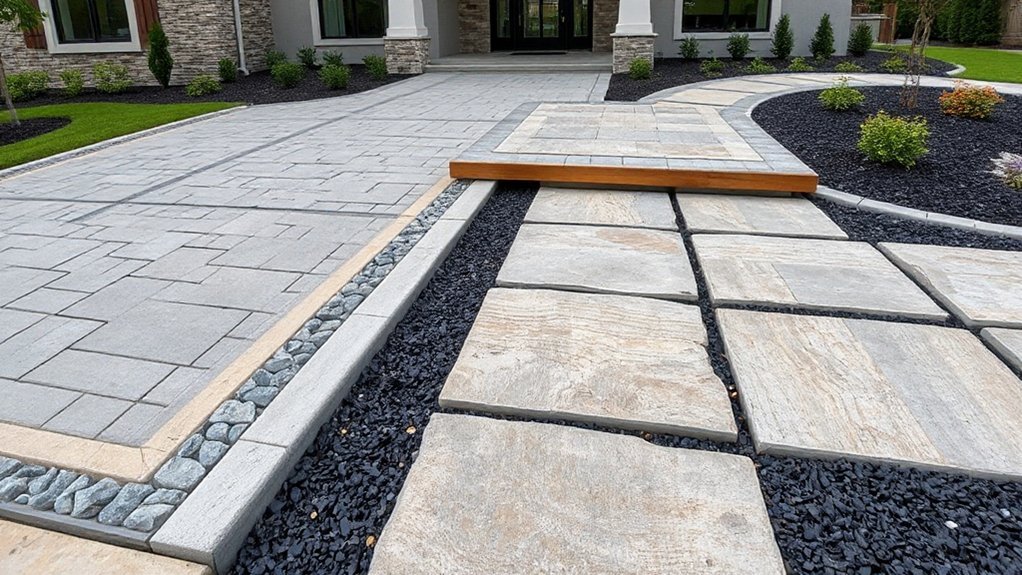
Because your walkways, steps, and driveway set the “first-touch” experience of the exterior, a surface refresh can deliver outsized curb appeal without a full rebuild. Start by pressure-washing, then repair cracks with polymer-modified patch and re-level settled pavers to stop trip hazards.
For concrete, consider a modern microtopping or a tinted sealer in warm gray; for asphalt, a matte sealcoat reads current and hides oxidation. Add traction where it matters—especially on steps—with gritty anti-slip additives.
Keep edges crisp so your garden sculptures and outdoor furniture feel intentionally placed, not scattered.
Focus on three high-impact upgrades:
- Re-point joints or resand pavers with polymeric sand
- Add contrasting border pavers for definition
- Refresh stair nosings with new caps or resurfacer
Personal Exterior Details (House Numbers, Hardware, Decor)
Although big exterior upgrades grab attention, the details you touch and read up close—house numbers, door hardware, mailbox, lighting trim, and small decor—do the real work of making your home feel deliberate and current.
Choose house number styles that match your architecture: tall, sans-serif digits for modern facades; serifed or script options for traditional homes; black-on-brass or matte-white on charcoal for high contrast. Mount numbers with standoffs for crisp shadow lines, and align them with your door sightline for instant readability.
Upgrade to coordinated decorative house hardware—lever set, deadbolt, knocker, and hinge finish—so nothing competes. Keep metals consistent, or mix thoughtfully: warm brass with black accents is trending.
Finish with one restrained decor piece: a simple planter, seasonal wreath, or sculptural sconce.
Frequently Asked Questions
Do I Need a Permit for Exterior Cosmetic Updates?
You might not need a permit for exterior cosmetic updates, but it depends. Check local Permit requirements, HOA rules, and historic districts. If you change siding, windows, structure, or electrical, you’ll need permits before starting.
How Do I Estimate Exterior Redesign Costs Accurately?
You estimate exterior redesign costs by itemizing labor, permits, and contingencies, then pricing Material selection and Landscaping ideas separately. You’ll validate totals with three contractor bids, current material indices, and a 10–15% buffer.
Which Exterior Upgrades Offer the Best Return on Investment?
You’ll get the best ROI from entry door replacement, garage door upgrades, and siding refreshes, then add Landscaping enhancements and modern Lighting fixtures for curb appeal; choose durable, low-maintenance materials buyers recognize, and document warranties.
What’s the Best Season to Schedule Exterior Renovation Work?
Aim for late spring through early fall—like catching a smooth tide—for most projects. You’ll get stable Seasonal weather, faster curing, and safer access. Lock Ideal timing by booking early, avoiding peak contractor demand and rain.
How Can I Improve Curb Appeal in an Hoa-Controlled Neighborhood?
You can boost curb appeal by aligning updates with HOA rules: prioritize landscaping enhancements, refresh mulch, edge beds, and add native plants. Install tasteful outdoor lighting along paths and entries. Submit detailed plans early.
Conclusion
You might think “standing out” means going bold, yet the smartest exteriors win by fitting in—perfectly. When you match upgrades to your home’s architecture, choose a modern-curated paint palette, and swap in a statement door, you create instant curb authority. Layer warm LED lighting, mix siding with intention, and sharpen windows with the right grids. Then frame it all with clean landscaping and refreshed hardscapes. Finally, precise numbers and hardware quietly steal the show.