
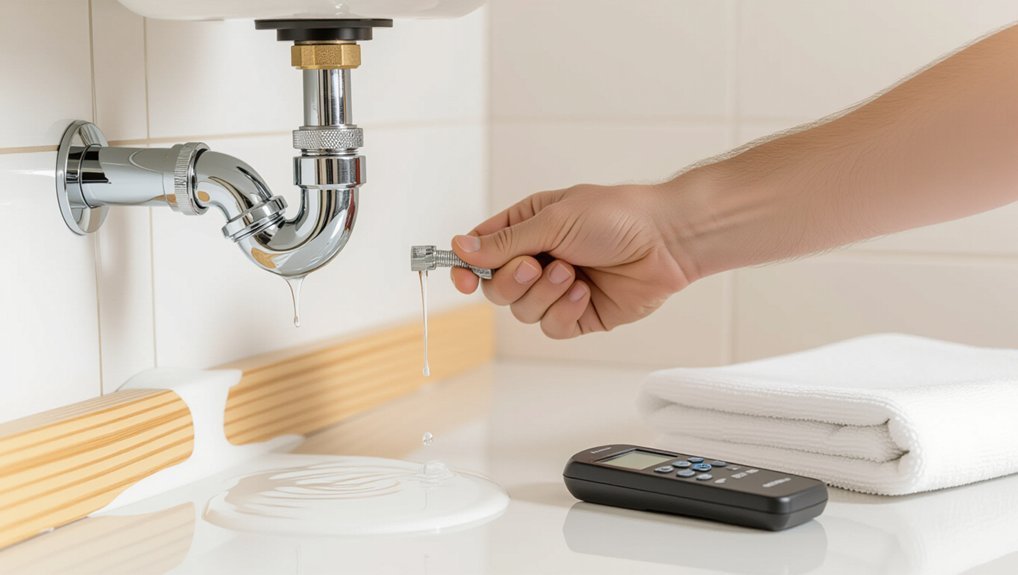
You stop long-term damage by acting on small warnings fast. At home, shut off water for leaks, dry the area, and patch gaps or cover roof openings. In your car, top off fluids, tighten hose clamps, and replace cracked belts before they snap. For tech, turn on cloud backups with versioning, run updates, and test restores monthly. For your body, take microbreaks, fix posture, warm up, and use quick mobility resets. Next, you’ll see simple checklists that make this automatic.
Key Takeaways
- Shut off the main water valve during leaks, dry fast with fans, and contain drips to prevent mold and structural rot.
- Cover roof or window openings with plastic and tape immediately to stop water intrusion until permanent repairs are completed.
- Mark and monitor cracks, tighten loose hardware, and avoid heavy loads to prevent small structural issues from worsening.
- Enable automatic cloud backups with versioning, run updates and antivirus scans, and test restores monthly to prevent irreversible data loss.
- Take 30–60 second microbreaks every 20–30 minutes, reset posture and grip, and stretch briefly to prevent repetitive-strain injuries.
Early Warning Signs You Should Fix Today
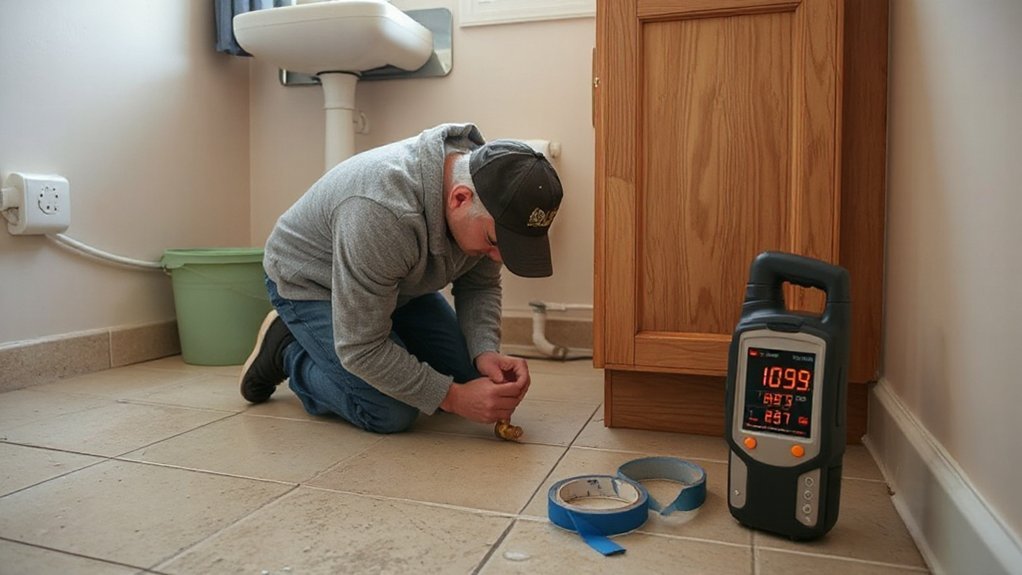
Where do small problems turn into costly damage? You’ll find them in subtle shifts you can miss during busy routines. Track warning signs like new water stains on ceilings, bubbling paint, musty odors, or soft drywall near tubs and sinks.
Note hairline foundation cracks that widen, doors that suddenly rub, and floors that slope or bounce. Listen for intermittent pipe hammer, persistent toilet refills, or a sump pump cycling too often.
Watch electrical red flags: warm outlets, flickering lights, or a breaker that trips repeatedly. Check your attic for damp insulation, rusty nail heads, or daylight at roof edges.
Early detection means documenting changes, confirming moisture with a meter, and scheduling professional evaluation before hidden rot or mold escalates.
Quick Fixes to Stop Home Damage Spreading
Even if you can’t schedule a pro today, you can still stop most damage from spreading by controlling water, movement, and heat right now.
Shut off the main water valve if you see active leaks, then dry the area with towels and a fan to slow mold. Tape plastic over roof or window openings, and place a bucket under drips.
For movement, tighten loose handrails, cabinet hinges, and door strikes to prevent splitting and sagging. Stop cracks from growing by marking their ends and keeping heavy loads off the area.
For heat and moisture, seal gaps around pipes with expanding foam, then restore home insulation where it’s missing.
Finally, boost pest prevention by sealing entry holes and storing food airtight.
Fast Car Fixes That Prevent Major Repair Bills
You can keep repair bills low by catching leaks early and fixing them before they starve the engine of oil or coolant. Check under the car and around hoses, the radiator, and the valve cover for fresh wet spots.
Then top off fluids only long enough to get the leak repaired.
Replace worn belts at the first signs of cracks, glazing, fraying, or squeal so you don’t end up stranded with an overheated engine or dead alternator.
Stop Leaks Early
How often do small drips turn into big repair bills because they go unchecked? You can stop leaks early by spotting wet spots, smelling coolant or fuel, and checking fluid levels weekly. After parking, look under the car for fresh spots and trace them upward with a flashlight; leaks travel.
- Check hoses, radiator seams, and the water pump weep hole; tighten clamps before they cut a groove.
- Inspect the cabin for damp carpet and foggy glass; a heater-core seep can ruin wiring and padding.
- Do a quick Roof inspection and add Pipe insulation where lines sweat or rub, reducing condensation-related drips.
Fixing a seep now prevents overheating, brake fade, and contaminated sensors later. Record what you find and recheck after a short drive.
Replace Worn Belts
When did you last look at your serpentine belt and accessory drive belts up close? Cracks, glazing, frayed cords, or missing ribs mean you’re on borrowed time. A slipping belt can overheat the engine by slowing the water pump, drain the battery by underdriving the alternator, or kill power steering without warning.
Make belt maintenance routine: inspect with a flashlight, then check alignment across pulleys. Verify tension with the vehicle spec; too loose squeals and slips, too tight destroys bearings.
If your car uses an automatic tensioner, watch for wobble or weak spring force. Replace belts as a set when one shows wear, and recheck tension adjustment after a short test drive.
Quick Tech Fixes to Avoid Data Loss
Although hardware can fail without warning, a few fast tech moves can drastically cut your odds of losing important data. You’ll protect files by focusing on redundancy, hygiene, and verification rather than hoping nothing breaks.
- Enable Cloud backups for your critical folders, then confirm versioning is on so you can roll back ransomware-encrypted files.
- Run scheduled Antivirus scans, and update signatures daily; a clean system prevents silent corruption and credential theft that leads to wiped drives.
- Test restores monthly: pull a random file set from backup to a separate location, verify checksums, and document the steps so you can repeat them under pressure.
Also, turn on disk health alerts (SMART) and keep at least 15% free space to reduce write failures.
Simple Health Fixes That Prevent Injury and Burnout

You can prevent injury and burnout with small, repeatable habits: take 30–60 second microbreaks every 20–30 minutes to reset your posture and eye focus.
Lock in a consistent sleep routine—set a fixed wake time, cut screens 60 minutes before bed, and keep your room cool and dark—to speed recovery.
Before any workout or physical task, do a 5–8 minute warm-up with joint circles and light movement to protect your joints and reduce strain.
Microbreaks To Reset Posture
Even if your setup looks “ergonomic” on paper, staying in one position for hours quietly loads your neck, shoulders, hips, and wrists until your posture collapses. Build posture awareness by using microbreaks as resets, not “rest.” Set a timer every 25–30 minutes and treat the break like a checklist.
- Unload and stack: Stand, exhale, drop your shoulders, tuck your chin slightly, and align ribs over pelvis for 10 seconds.
- Restore range: Do 5 slow neck rotations, 10 scapular squeezes, and 10 hip hinges to reverse sitting bias.
- Re-grip and re-seat: Shake out hands, open/close fists 15 times, then sit with feet flat and elbows at 90°.
Sleep Routines For Recovery
Microbreaks keep your posture from collapsing during the day, but recovery happens at night when tissues repair and your nervous system downshifts.
Set a fixed sleep and wake time, even on weekends, to stabilize hormones and reduce inflammation.
Create a Sleep environment that signals “off”: 65–67°F, blackout curtains, and no glowing screens for 60 minutes.
Use a short wind-down sequence—warm shower, light stretch, then 5 minutes of slow nasal breathing—to lower heart rate.
Stop caffeine 8 hours before bed and alcohol 3 hours before, since both fragment deep sleep.
Keep your bedroom for sleep only; work stays elsewhere.
For Dream enhancement, jot one line about tomorrow’s priority, then a gratitude note, and let your mind release.
Warm-Ups To Protect Joints
Because cold joints and stiff connective tissue don’t tolerate sudden load, a 3–5 minute warm-up acts like cheap insurance before workouts, long walks, or hours at a desk.
You’ll increase Joint lubrication, improve range of motion, and reduce sloppy movement that grinds irritated surfaces.
Keep it specific: warm what you’ll use, then ramp intensity gradually.
Use this quick sequence:
- Pulse: 60–90 seconds of brisk marching, cycling, or jumping jacks to raise tissue temperature.
- Mobilize: 6–8 slow reps each of ankle circles, hip hinges, thoracic rotations, and shoulder CARs for controlled motion.
- Prime: 2 sets of 5–8 bodyweight squats or push-ups at 50–70% effort for cartilage protection and tendon readiness.
You’ll move smoother and recover faster.
5-Minute Habits That Keep Problems From Coming Back
When you build a few one-minute habits into your day, you stop small issues from turning into repeat damage. Start with Daily mindfulness: take 60 seconds to scan your body, unclench your jaw, drop your shoulders, and slow your breathing to reset tension before it turns into pain.
Next, lock in hydration habits. Each hour, drink 6–8 gulps of water and add a pinch of salt or an electrolyte tab if you sweat a lot.
Follow with a posture check: stack ribs over hips, keep feet flat, and relax your grip on your mouse or phone.
Finally, do a micro-reset after hard efforts—10 air squats, 10 scapular squeezes, or a 30-second calf stretch. You’ll recover faster and stay consistent.
Frequently Asked Questions
What Quick Fixes Are Safe to DIY Versus Needing a Professional?
You can DIY safety tasks like tightening loose screws, unclogging simple drains, resetting breakers, and patching small drywall. You shouldn’t touch wiring, gas, structural cracks, or leaks—get Professional advice for those.
How Much Money Can Small Fixes Realistically Save Long-Term?
You can realistically save hundreds to thousands long-term. Do a Cost analysis: $20–$100 DIY sealing, filters, caulk can avert $500–$5,000 repairs. You’ll see Long term benefits via lower bills, fewer emergencies.
What Tools Should Every Household Keep for Quick Preventative Repairs?
Keep a claw hammer, screwdrivers, adjustable wrench, pliers, utility knife, tape measure, level, stud finder, flashlight, and duct/pipe tape. Like a $5 washer stopping a flood, you’ll boost home safety with tight tool organization.
How Do I Prioritize Fixes When Multiple Issues Appear at Once?
You prioritize fixes by stopping active damage first, then safety hazards, then leaks and moisture, then comfort issues. Use Maintenance scheduling for deadlines, and run Cost benefit analysis on remaining tasks to sequence efficiently.
Are There Insurance or Warranty Risks When Making Quick Fixes Myself?
Yes—you can trigger Insurance claims denials and warranty voids if you DIY quick fixes. You should document damage, follow manufacturer instructions, use approved parts, and call licensed pros for electrical, plumbing, structural, or safety-critical work.
Conclusion
You’ve seen how small warnings are sparks before a wildfire. If you patch the roof leak, top off the oil, back up your files, stretch tight joints, and fix frayed cords today, you don’t just save money—you buy time and safety. Treat quick fixes like routine tune-ups, not emergencies. Keep a short checklist, set reminders, and act fast. When you stay ahead of wear, problems can’t sink roots and spread.