You’ll get the best modern back garden layout by zoning your space for dining, lounging, play, storage, and planting, then setting the patio size first with at least 90 cm circulation around furniture. Use a central axis, asymmetrical “rooms,” or diagonals to suit your plot and stretch sightlines. Link zones with clean, repeat materials and wide, drain-friendly paths. Add light-filtering privacy screens and soften edges with low-maintenance grasses and evergreens—there’s more to refine next.
Key Takeaways
- Divide the garden into clear zones—dining, lounging, planting, storage—and place the patio first with 90 cm circulation clearance.
- Match the layout to plot shape and sun; use axes, diagonal focal points, or “rooms” to avoid long, narrow tunnel effects.
- Connect zones with clean, wide paths using large-format pavers or gravel; repeat one or two materials for a cohesive modern look.
- Add privacy with light-filtering slatted or perforated screens, positioned around seating at 1.6–1.8 m to block views without darkening.
- Soften hard lines with low-maintenance planting—grasses, evergreen mounds, and groundcovers—using repetition and mulch for structure and reduced weeding.
Define Zones and Place the Patio First
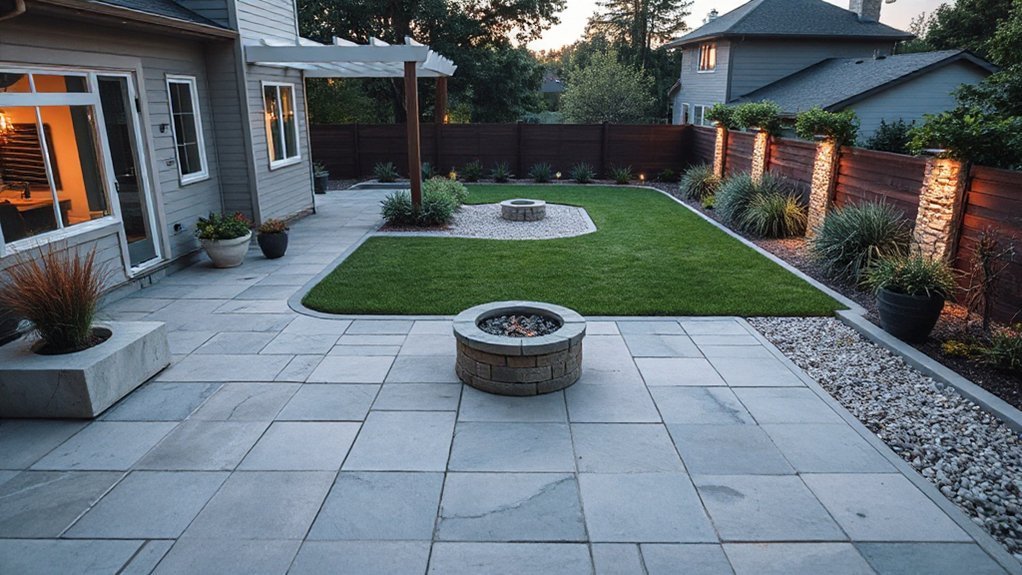
Before you pick plants or buy furniture, map your garden into clear zones—dining, lounging, play, storage, and planting—because layouts that separate functions are easier to use and feel more spacious.
Start by placing the patio first: it’s your main hardscape “room,” and research on outdoor use shows people gather where surfaces are level, dry, and close to the house. Size it to your table plus circulation—aim for at least 90 cm walking clearance around garden furniture.
Then align paths so you can reach bins, sheds, and beds without cutting through seating. Use edging, pergolas, or planters to define boundaries while keeping sightlines open.
Add slim water features near lounging zones for sound masking, but keep them off high-traffic routes and away from leaf-drop trees.
Pick a Modern Back Garden Layout for Your Plot
Once you’ve set your zones and anchored the patio, match the layout style to your plot’s shape, access points, and sun pattern so the garden works day-to-day.
On long, narrow plots, use a strong central axis or asymmetrical “rooms” to reduce tunnel effect and improve perceived width.
In square gardens, a diagonal focal point can extend sightlines and make the space feel larger.
If you’ve got side access, keep service-heavy elements near the entry and reserve the sunniest area for dining.
Place garden furniture where it gets evening light and shelter from prevailing wind.
For north-facing plots, favor pale paving, reflective planting, and compact water features that add movement without stealing sun.
In overlooked gardens, offset seating and add layered screening.
Connect Zones With Clean Paths and Materials
You’ll make your layout feel intentional when you connect each zone with minimalist hardscape pathways that guide movement without visual clutter.
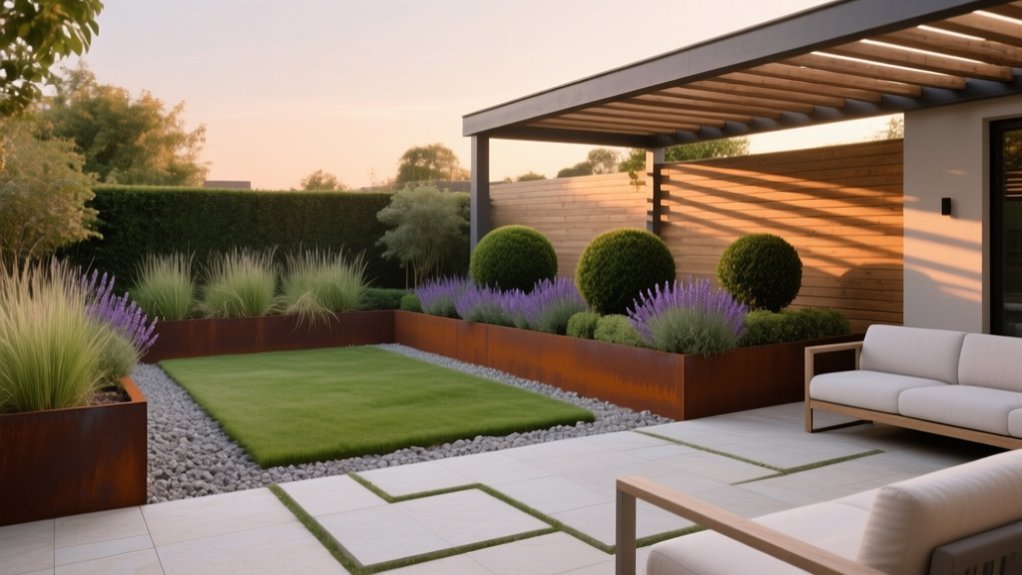
Current garden design trends favor clean lines and durable, low-maintenance surfaces—think large-format pavers, compacted gravel, or permeable stone—to improve drainage and reduce upkeep.
Keep material shifts cohesive by repeating one or two finishes across paths, patios, and edging, so the whole back garden reads as one unified space.
Minimalist Hardscape Pathways
Although planting often gets the spotlight, minimalist hardscape pathways do the heavy lifting in a back garden by connecting zones with clear, durable routes. You’ll improve flow and usability by laying straight or gently offset runs that match how you actually walk between patio, lawn, and planting beds.
Choose slip-resistant surfaces and keep joints tight to reduce weed ingress and trip risk, especially in wet climates. For a modern look, set large-format pavers or poured concrete ribbons with simple edging and consistent widths.
Build in subtle drainage falls so puddles don’t form near garden furniture or door thresholds. Use low-profile path lighting to extend evening use and guide guests toward water features without visual clutter.
Keep routes wide enough for a wheelbarrow and two people.
Cohesive Material Transitions
Clean, durable pathways work best when the materials shift between patio, lawn edges, and planting zones without looking pieced together. Keep a tight palette: one paving, one gravel, one edging detail, repeated across zones.
Research on wayfinding shows consistent cues reduce visual clutter and improve flow, so match joint lines, tones, and surface textures.
Use a “thread” material to connect features—like porcelain pavers that run under garden furniture seating, then narrow into stepping pads toward water features. Link cleanly with metal edging or a soldier course, not jagged cuts.
Where levels change, switch to the same stone in a different finish for grip. Add lighting at junctions to signal routes without extra borders.
Add Privacy Screens Without Losing Light
When you need more seclusion in a back garden, you don’t have to sacrifice daylight to get it. Choose privacy screens that filter sightlines rather than block them: slatted timber with 10–20 mm gaps, perforated metal, or reeded glass panels. These options preserve natural light while reducing direct overlooking, which studies show improves perceived comfort in outdoor rooms.
Place screens where sightlines matter most—along seating zones and near doors—then keep heights targeted (about 1.6–1.8 m) instead of walling off the whole boundary.
Angle slats toward the view you want to obscure, and pick pale finishes to bounce light deeper into the space. Use modular systems so you can adjust panels as your needs change seasonally.
Soften Hard Lines With Low-Maintenance Planting
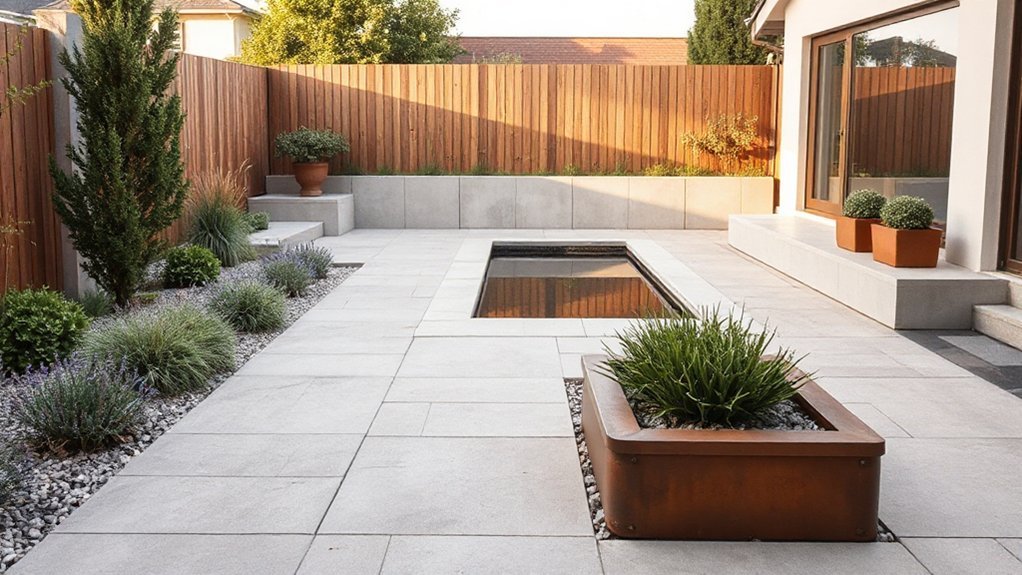
If your back garden feels a bit stark, you can soften paving edges and fence lines fast with low-maintenance plants that research shows reduce visual stress and make outdoor spaces feel more inviting. Start by blurring straight runs: tuck groundcovers or low shrubs into gravel margins, and let them spill slightly over hard edges to break up geometry without blocking access.
Use native grasses in drifts to add movement and a contemporary, naturalistic look; they’re on-trend, resilient, and often need just an annual cut-back. For year-round structure, repeat evergreen mounds at intervals so the layout reads intentional. Mulch well to suppress weeds and stabilise moisture.
If you’ve got water features, ring them with moisture-tolerant perennials to soften reflections and hide liner edges. Choose fewer species, repeat them.
Finish With Modern Lighting and Multi-Use Features
How do you make a back garden feel finished after the planting’s in? You layer lighting and choose features that work twice as hard. Start with warm, low-glare LEDs: studies show softer, indirect light improves visual comfort and perceived safety. Use spike spots to graze textures, step lights for routes, and a dimmable pendant over outdoor seating to extend evenings without harshness. Add smart controls or timers so it’s consistent and energy efficient.
Then pick multi-use elements: a bench with hidden storage, a slim fire pit that doubles as a table, or raised planters that define zones and provide extra perch space. Finish with restrained decorative accents—powder-coated screens, matte planters, and weatherproof art—for a modern, cohesive layout.
Frequently Asked Questions
How Much Does a Modern Back Garden Redesign Typically Cost?
You’ll typically spend $5,000–$30,000 on a modern back garden redesign, depending on size, labor, and Material selection. If you want premium Garden aesthetics—lighting, paving, planting, irrigation—costs can reach $50,000+.
Do I Need Planning Permission for Decking, Pergolas, or Garden Rooms?
You usually don’t need planning permission for decking or pergolas if height/coverage limits apply, but garden rooms often do. Check local rules. Plan garden lighting and outdoor furniture early to avoid access and boundary issues.
Which Garden Layouts Work Best for Families With Young Children?
You’ll get the best results with zoned layouts: keep playground zones visible from the house, add soft surfacing, and use safety fencing to separate water, patios, and driveways. Choose durable turf, shaded seating, and clear paths.
How Can I Make a Modern Garden Safe for Pets?
Choose pet proof fencing, remove hazards, and plant non toxic plants. You’ll secure decking gaps, cover drains, and avoid cocoa mulch. Add shaded water stations, use pea gravel paths, and store chemicals locked up.
What Are the Best Drainage Solutions for Waterlogged Back Gardens?
After last winter, you’d fix waterlogging with French drains, soakaways, and raised beds—one homeowner cut standing water in weeks. You should add rain gardens and permeable paving for rainwater management, improving soil drainage fast.
Conclusion
When you zone your garden, set the patio first, and link spaces with clean paths, you’ll get a modern layout that works every day, not just on sunny weekends. Add slim screens for privacy, then soften edges with low-maintenance planting so the space stays sharp but welcoming. Don’t skip lighting: well-placed LEDs extend use after dark. In fact, UK garden surveys report about 8 in 10 homeowners value outdoor space more now—so design yours to earn its keep.