
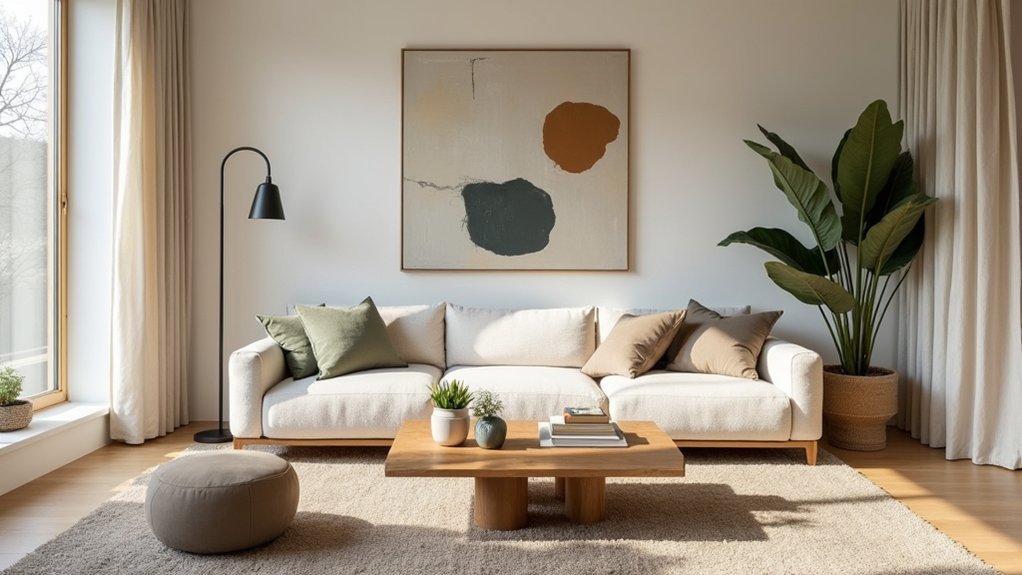
Nearly 60% of homeowners say a simple room refresh boosts their day-to-day comfort more than a major renovation. You can get that same payoff in your living room by choosing one upgrade lane first—layout, color, textiles, lighting, or accessories—then keeping every choice tied to a tight palette and a clear focal point. Start with what feels “off” right now, because one small swap can change the whole flow, and it’s probably not the one you think…
Key Takeaways
- Prioritize high-impact updates first: paint, lighting, and window treatments refresh a dated living room faster than major furniture changes.
- Rework the layout for flow: keep 30–36″ walkways, anchor seating to a focal point, and leave 16–18″ to the coffee table.
- Simplify your palette: use two neutrals, one accent, and one metal finish, repeating each at least three times for cohesion.
- Upgrade softness and texture: add warm LED lamps, plush pillow inserts, layered throws, baskets, and plants for depth and comfort.
- Refresh floors and windows: size rugs to fit front furniture legs, and hang curtains high with clean hems for a taller, polished look.
Decide What to Upgrade in Your Living Room First
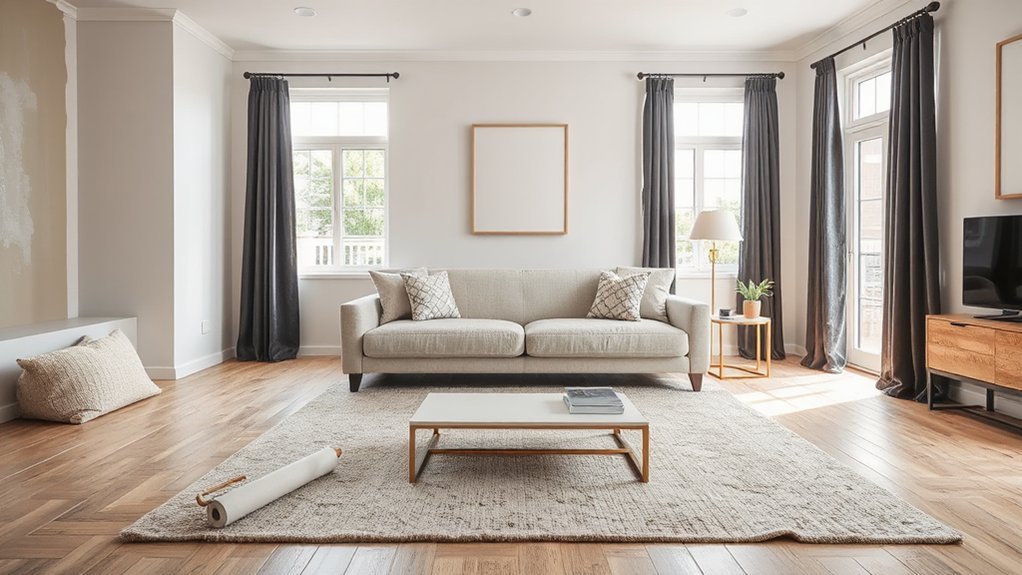
Before you buy anything, pinpoint what’s actually holding your living room back—layout, lighting, seating comfort, storage, or style cohesion—and rank those issues by impact.
If the room feels dated, start with the biggest visual surfaces: paint, window treatments, and flooring options like warm oak LVP, refined wool rugs, or polished concrete for a modern edge.
If comfort’s the problem, prioritize a supportive sofa, then add a compact swivel chair or ottoman that earns its footprint.
For clutter, choose closed storage with flat fronts and integrated pulls, keeping the look current.
Finally, check scale and proportion: measure wall lengths, traffic paths, and sightlines so new pieces fit.
Note your current furniture arrangement to flag what’s not working, without moving anything yet.
Rearrange the Living Room for Better Flow
Start by mapping clear walkways through your living room so you’re not weaving around furniture—aim for about 30–36 inches of open path where you pass most.
Then anchor your seating around a focal point like the fireplace, TV, or a statement art wall to make the layout feel intentional and current.
You’ll get a room that moves better, looks more pulled together, and functions for everyday lounging and hosting.
Define Clear Walkways
How easily can you move from the entry to the sofa, coffee table, and main seating area without sidestepping furniture? Start by mapping your most-used routes, then edit the layout so nothing blocks them.
Aim for 30–36 inches of pathway clearance in primary lanes; in tighter rooms, keep a consistent 24 inches minimum. Pull bulky pieces a few inches off the wall if that straightens routes and improves traffic flow.
Keep the coffee table centered but leave enough space to pass on one side, and angle an accent chair only if it doesn’t pinch the aisle.
Use a runner or low-pile rug to visually mark walkways, and corral cords and baskets off the floor.
Anchor Seating Around Focal Point
Once you’ve cleared the main paths, anchor your seating to the room’s focal point—whether that’s a fireplace, TV wall, picture window, or built-in shelving—so everything feels intentional and easy to navigate.
Start by floating the sofa to face the focal point, not the hallway, and keep sightlines open with lower-profile pieces. Balance your seating arrangement so conversation and viewing both work, then add a rug to “lock” the zone in place.
Fine-tune with these quick checks:
- Leave 16–18 inches between coffee table and sofa for comfortable reach.
- Aim for 7–9 feet viewing distance for a 55–65″ TV.
- Keep 30–36 inches behind chairs for smooth circulation.
You’ll get a cleaner layout that looks curated, not crowded.
Pick a Simple Color Palette (and Stick to It)
Although you might love a dozen looks on Pinterest, your living room will feel more elevated if you commit to one simple, repeatable color palette. Start with a base of two neutrals (warm white + greige, or charcoal + soft taupe).
Then choose one accent and one metal finish. This creates color harmony without feeling matchy.
For palette consistency, repeat each color at least three times across the room: one in art, one in a rug or drapery, and one in a small decor piece. Keep undertones aligned—mix warm woods with warm paints, cool grays with blackened metals.
If you crave trend, use current shades like clay, olive, or inky blue, but limit them to 10–15% of what you see.
Swap Throw Pillows for a Fast Refresh
Swap throw pillows to refresh your living room fast without moving furniture. Mix textures and sizes—think nubby boucle, soft velvet, and a structured lumbar—so your sofa looks layered, not matchy.
Then rotate seasonal color palettes, swapping in warmer tones for fall/winter and crisp, lighter hues for spring/summer.
Mix Textures And Sizes
- Start with two 22-inch squares in a solid, tightly woven fabric to anchor the set.
- Add one lumbar pillow (12×20 or 14×22) in a distinct texture to break up the grid.
- Finish with a smaller 18-inch pillow or a round bolster for asymmetry and depth.
Aim for odd numbers, plump inserts, and tidy chops.
Rotate Seasonal Color Palettes
Why repaint or reupholster when you can rotate seasonal color palettes with a quick throw-pillow edit? Start with a neutral sofa base, then build two to four pillow sets that match your favorite seasonal color schemes: spring sage and blush, summer coastal blue and sand, fall rust and olive, winter ink and ivory.
Stick to one hero color, one supporting color, and one grounding neutral so the mix feels intentional. Use varied fabrics—linen for warm months, velvet or bouclé for cold—to change the mood without changing furniture.
Keep sizes consistent (like 22″, 20″, 18″) and swap covers instead of inserts to save storage. Finish the palette rotation by echoing one hue in a throw, art, or vase.
Choose the Right Rug Size and Style
Although it’s easy to treat a rug as a finishing touch, the right size and style actually anchors your living room layout and makes the seating area feel intentional. Start with rug placement: in most rooms, you’ll want at least the front legs of your sofa and chairs on the rug, or go fully under all seating for a tailored, designer look.
Keep 8–12 inches of floor showing at the perimeter so it doesn’t feel wall-to-wall.
Choose a style that supports your palette and traffic level:
- Match scale: large patterns suit open plans; tight motifs calm smaller rooms.
- Prioritize Rug materials: wool for resilience, cotton for casual, jute for texture.
- Layer thoughtfully: a low-pile base plus vintage runner adds depth without bulk.
Upgrade Living Room Lighting With 3 Layers
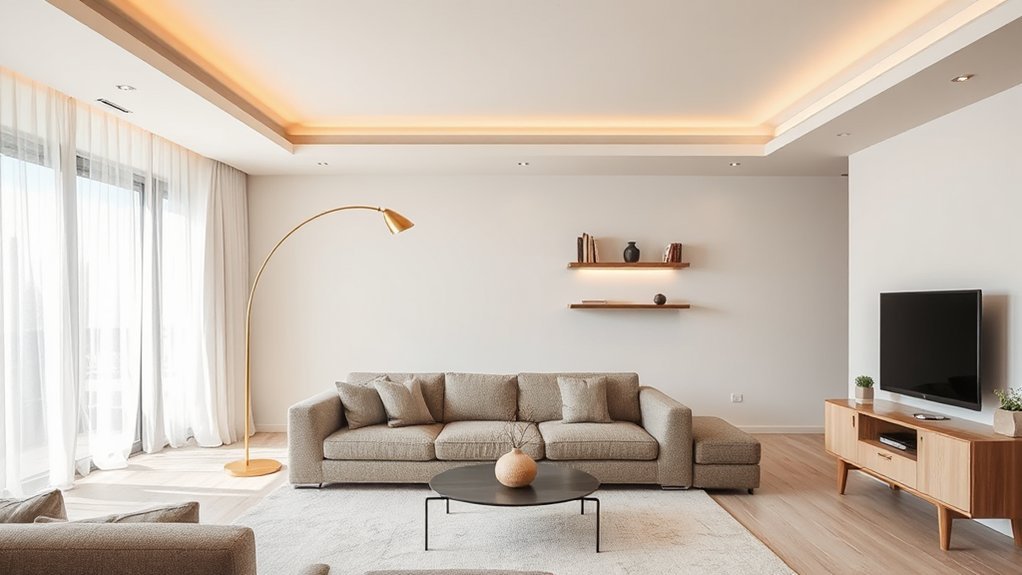
When you build your lighting in three layers—ambient, task, and accent—you’ll make your living room feel brighter, cozier, and more flexible from day to night.
Start with ambient: a dimmable ceiling fixture, flush mount, or floor lamp that fills the room evenly and creates soft ambient ambiance.
Add task lighting where you read or work—an adjustable table lamp beside the sofa, a swing-arm sconce, or a focused LED floor lamp aimed at your chair.
Finish with accent lighting to add depth: picture lights, uplights behind plants, or a small lamp on a console to highlight texture and corners.
Choose warm bulbs (2700K–3000K) and consistent color temps.
Layer in smart lighting for scenes, timers, and voice control.
Update Wall Art With a Quick Gallery Plan
If your living room feels a little flat, a fast gallery plan can add instant personality without a full redesign. Start by auditing what you already own, then decide on one clear vibe: modern monochrome, warm vintage, or bold graphic. Keep it cohesive with matching mat colors or a tight color palette, even if frames vary.
- Pick an anchor piece, then build your gallery wall outward with two supporting sizes.
- Mock up the art arrangement on the floor, spacing pieces 2–3 inches apart for a crisp, current look.
- Hang from a consistent centerline (about 57 inches) and mix mediums—prints, photos, and one textured piece—to add depth.
You’ll get a curated finish fast, with zero guesswork.
Hang Curtains to Add Height and Softness
Even if you keep everything else the same, hanging curtains the right way can instantly make your living room feel taller, softer, and more finished.
Start with curtain placement: mount the rod 4–6 inches above the window trim, or halfway to the ceiling, and extend it 6–10 inches past each side so daylight looks wider.
Choose panels that kiss the floor or barely break for a tailored, current look; avoid hovering hems.
Pick drapery fabrics based on function: linen blends and cotton give an airy, relaxed vibe, while velvet or lined options add polish and light control.
Use sturdy rings or grommets for smooth slides, and keep pleats consistent so the folds fall cleanly.
This quick swap upgrades the whole wall.
Layer Texture: Throws, Baskets, Plants, Wood
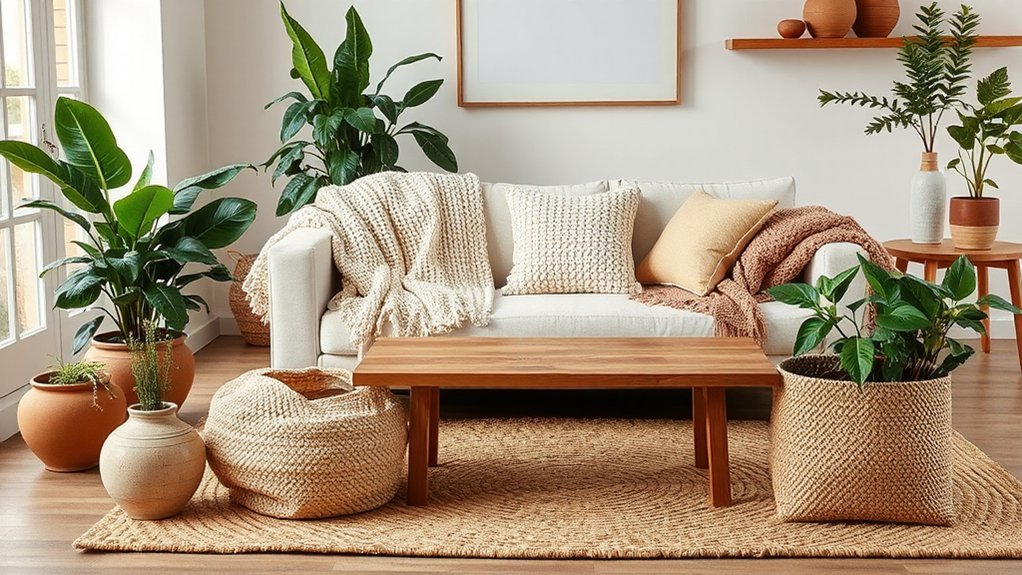
Because a living room can look “done” yet still feel flat, layering texture is the quickest way to add depth without changing your layout. Start by mixing tactile materials at different heights so your eye keeps moving—soft, woven, leafy, and grainy elements work together even in a neutral palette. Layer textures intentionally, not randomly, and repeat each finish at least twice for cohesion.
- Drape a chunky throw over the sofa arm and add a nubby lumbar pillow to break up smooth upholstery.
- Incorporate baskets in lidded and open weaves; tuck remotes in one and fold extra throws in another for styled function.
- Bring in plants and wood: a matte planter, a trailing vine, and a warm-toned tray or side table to add organic contrast.
Budget Living Room Upgrades Worth the Money
While a full renovation can wait, you can make your living room feel noticeably more polished with a handful of budget upgrades that deliver a high “impact per dollar.” Focus on changes you see and touch every day—better lighting, upgraded textiles, updated hardware, and a few intentional styling pieces—rather than trendy clutter.
Swap harsh bulbs for warm LEDs, then add one dimmable floor lamp to soften corners. Upgrade pillow inserts to feather-alternative for a fuller, tailored look, and choose a larger rug pad to stop sliding.
Replace dated cabinet pulls or media-console knobs with matte black or brushed brass hardware. Add budget-friendly furniture only where it counts: a streamlined side table or storage ottoman.
Finish with DIY decor ideas—frame printable art, paint thrifted vases, and style a tray with one candle and one book.
Frequently Asked Questions
What’s the Best Way to Soundproof a Living Room Without Major Renovations?
You’ll get the best no-renovation soundproofing by sealing gaps with weatherstripping, adding a thick rug pad, hanging soundproof curtains, and mounting removable acoustic panels at reflection points. Layer soft textiles and bookcases to reduce echo.
How Can I Hide or Manage TV and Speaker Wires Cleanly?
Like a magician’s cape, you’ll hide wires by running them in paintable raceways for concealed wiring, bundling with Velcro ties, and using a wall-mounted TV panel. Route to a power strip; label everything for cable management.
Which Low-Maintenance Indoor Plants Are Safest for Pets?
Choose pet friendly greenery like spider plants, parlor palms, and Boston ferns; they’re reliable non toxic houseplants. You’ll keep care low with bright indirect light, weekly watering, and well-draining pots to prevent gnats.
How Do I Reduce Glare on the TV From Windows?
You’ll reduce TV glare by angling the screen away from windows and adding window treatments like solar shades or sheer curtains for glare reduction. Try matte screen protectors, bias lighting, and anti-reflective paint nearby.
What’s the Ideal Humidity Level to Protect Wood Furniture and Floors?
You’ll want 35–50% relative humidity for humidity control and wood preservation. Keep it steady year-round: run a humidifier in winter, dehumidifier in summer, monitor with a smart hygrometer, and avoid swings.
Conclusion
You don’t need a full remodel to get a fresh living room—just upgrade with intention. Start by moving furniture to clear a walkway and frame your focal point, then lock in a neutral palette with one bold accent. Swap in two textured pillows, add a properly sized rug, and hang curtains high for instant height. Example: Jenna spent $160 on drapes, a jute rug, and warm LED bulbs—her room went from flat to styled in one afternoon.