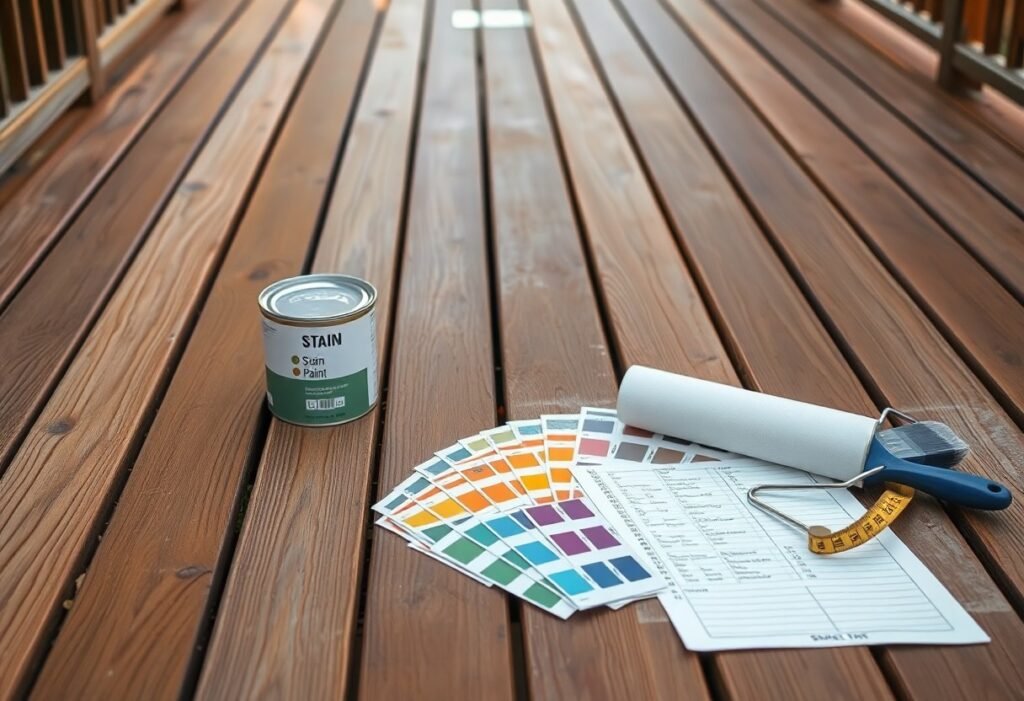
We are looking at the right decking stain or paint to go with. Decking choices require you to assess wood type, climate, and finish; choose UV-protective, long-lasting stains, avoid coatings that emit toxic fumes, and pick textures that reduce slip risk when wet.
Evaluating Your Deck’s Material and Condition
Inspect your deck for species, wear, and structural issues before choosing a finish. Check for rot or loose boards, surface porosity, and fastener corrosion; these factors determine whether stain, paint, or a full replacement is the safer option.
Identifying Wood Species and Porosity
Determine whether your deck is softwood or hardwood and test porosity with a water drop: if water beads, adhesion may suffer. Use species and porosity info to pick penetrating stains for porous woods or durable paint for denser boards.
Assessing Previous Finishes and Surface Integrity
Examine old coatings for peeling, chalking, or multiple layers; peeling paint and potential lead require professional testing. Check surface grit, sanding needs, and adhesion to decide between recoat, stripping, or a fresh paint system.
Check adhesion with a 3M tape test and inspect joints for rot; good adhesion often lets you recoat, while deep peeling or multiple paint layers usually demand stripping. Use a home lead test kit; if positive, engage certified pros for removal. Sand to feather edges, then confirm porosity before applying a new finish.
Stain vs. Paint: Functional and Aesthetic Differences
Comparing stain and paint helps you decide: you get stain that enhances wood grain and usually needs less surface prep, while paint provides solid color and higher UV protection but can trap moisture if applied over damp or decayed wood.
Benefits of Enhancing Natural Grain with Stain
Stains allow you to preserve and accentuate grain while offering penetrating protection against UV and wear, so you keep a natural aesthetic with easier touch-ups and less flaky maintenance.
Protective Advantages and Color Versatility of Paint
Paints deliver opaque, customizable color and strong surface protection against UV and abrasion, but you must prep thoroughly because paint can conceal rot and trap moisture if applied over compromised wood.
Consider that paint forms a durable surface film that keeps color vibrant and resists dirt; proper priming and surface prep are crucial to avoid adhesion failure. You should strip loose coatings, sand smooth, and use a compatible primer on bare or weathered boards to ensure longevity. Primed systems that allow limited vapor transmission reduce the chance of peeling or trapped moisture, and scheduled repainting preserves both appearance and protection.
Navigating Opacity and Transparency Levels
Opacity and transparency dictate how much grain you retain versus the level of UV and moisture protection; you’ll prefer transparent or semi-transparent stains to showcase new timber, while solid, opaque finishes deliver better hiding and long-term defense on weathered boards.
Transparent and Semi-Transparent Options for New Wood
Transparent and semi-transparent stains let you show natural grain while giving moderate UV protection; you should apply thin coats to new wood, follow drying times, and plan for more frequent recoats to avoid sun bleaching.
Solid Stains and Opaque Finishes for Older Decks
Solid stains conceal age and imperfections, offering superior UV and weather resistance; you must strip loose finish and test adhesion because solids can trap moisture if applied over decayed or damp boards.
Before applying a solid stain, you should remove loose paint, sand glossy areas, and allow pressure-treated lumber to dry; choose a product with good adhesion and stain-blocking primers, test a small patch, and expect longer recoat intervals but watch for peeling where surface prep was insufficient.
Considering Environmental and Climate Impacts
Climate influences how you should protect your deck; match stains or paints to local sun, rain and freeze-thaw cycles so you avoid premature fading, mildew growth and wood decay.
UV Resistance and Color Retention in Direct Sunlight
Sunlight forces you to pick high-pigment stains or UV-blocking paints so you maintain color; choose coatings with tested UV resistance for better color retention and slower fading.
Moisture Protection and Mildew Resistance in Humid Climates
Humidity pushes you to select breathable, water-shedding stains or paints with mildewcide additives to block mildew and reduce trapped moisture that causes rot.
Choose penetrating, oil-based or high-quality water-based stains with mildewcide in humid zones; these let the wood breathe and help you shed water. Penetrating finishes limit trapped moisture, while thick, non-breathable paints can accelerate rot. Proper prep, slope, flashing and routine cleaning extend protection and reduce mold-prone pockets.

Long-Term Maintenance and Reapplication Cycles
Maintenance keeps your deck functional and attractive; you should set a schedule for inspections, cleaning, and re-coating to protect against UV damage and moisture. Focus on high-traffic zones and joints prone to rot, and log changes so you can plan timely reapplications that extend service life.
Seasonal Cleaning and Wear Inspection
Seasonal cleaning reduces grime and mildew; you should sweep, wash gently, and inspect for splintering, mold, and loose boards. Note worn finish in sun-exposed areas and treat stains quickly to avoid accelerated decay and safety hazards.
Determining When to Re-Coat for Maximum Longevity
Determining re-coat timing hinges on finish type, exposure, and wear; you should watch for fading, loss of water beading, and surface cracking. A simple water test reveals absorption-if water soaks in, schedule re-coating before moisture damage sets in.
Inspect finishes annually and after severe weather, measuring gloss retention and using a towel or water test to confirm protection. You should prioritize recoating where you see fading, mold growth, or splintering, since those signs indicate rising risk of rot and structural failure. Timely re-coating can add years to the deck and prevent costly repairs.
To wrap up
The best approach for you is to assess your deck’s wood and exposure, test stains or paints on a small area, choose products rated for your climate and traffic, and prepare and apply per instructions to maximize longevity.
FAQ
Q: How do I choose between a decking stain and paint?
A: Choosing between a stain and paint begins with identifying the wood species, current condition, and the look you want. Softwoods like pine and cedar accept semi-transparent stains that show grain, while hardwoods and composite decks may perform better with film-forming products or exterior paints designed for decks.
Stains penetrate and highlight grain, require more frequent recoating (often 1-3 years for transparent or semi-transparent), and resist peeling; solid stains or paint form a protective film, hide imperfections, and typically last longer between full recoats but can peel if applied over unsound surfaces. Consider climate when selecting formulations: high-UV and wet regions benefit from UV-stable, mildewcide-containing products, while freeze-thaw areas need finishes that flex with seasonal movement. Always test a small, inconspicuous patch and follow manufacturer prep and coverage recommendations.
Q: What should I consider when picking color and sheen for my deck?
A: Picking a color and sheen requires balancing aesthetics, heat gain, and maintenance. Light colors reflect heat and tend to show less visible fading, while dark colors absorb heat and can accelerate finish breakdown or dry out wood in hot sun. Semi-transparent stains preserve natural wood character; semi-solid stains offer some opacity while keeping texture; solid stains or paint provide the widest color choices but hide grain.
Low-gloss or satin sheens improve traction and mask surface blemishes, while high gloss highlights imperfections and can be slippery when wet. Apply multiple test swatches on different boards and observe them over several weeks to judge fading, color shift, and how the finish looks at different times of day.
Q: What surface preparation and maintenance steps ensure the chosen coating performs well?
A: Proper surface preparation determines long-term performance. Remove dirt, mildew, and loose old coatings using a deck cleaner, moderate-pressure washing, or a chemical stripper when needed, then allow the wood to dry fully before coating. Sand rough spots and replace any rotted boards to create a stable substrate; for paint, prime bare wood or repaired areas with a compatible exterior primer.
Apply coatings only within the product’s recommended temperature and humidity range to avoid adhesion problems and slow curing. Plan routine inspections and cleanings, recoat when the finish loses water repellency or shows wear, and keep a small amount of the selected product for touch-ups. Consider low-VOC options and follow safety and disposal guidelines for strong solvents and old finish waste.