
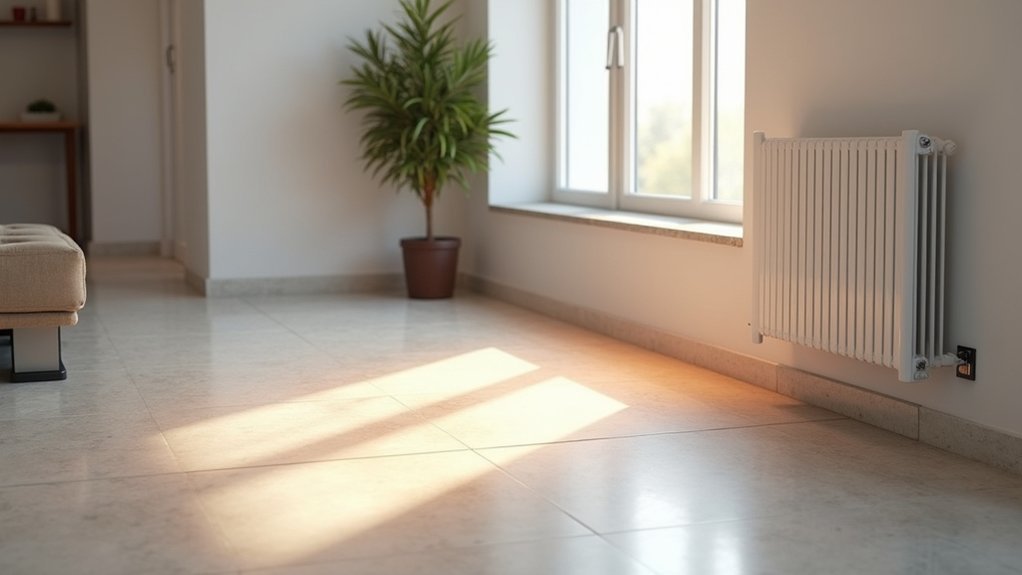
Electric underfloor heating makes sense when you want even, low-profile radiant warmth under tile, vinyl, or engineered timber, and you’re willing to accept slower heat-up and more disruptive installation. You’ll size it by watt density (about 100–200 W/m²) and protect floor finishes with a probe-limited thermostat. Electric radiators make sense when you need fast, room-by-room zoning with minimal disruption, strong responsiveness, and easy wall mounting. Next, you’ll see how costs and room choice change the decision.
Key Takeaways
- Electric UFH delivers even radiant comfort and hidden heating, but needs longer warm-up and careful floor temperature limits.
- Electric radiators heat rooms quickly with responsive thermostats, making them better for intermittent use and rapid adjustments.
- UFH retrofits are disruptive, often requiring lifted floors, insulation, and added build-up; radiators mount easily with minimal disruption.
- Running costs depend on wattage, hours, tariffs, and insulation; smart scheduling and time-of-use rates can cut costs for both.
- UFH suits bathrooms and tiled areas for warm floors; radiators suit bedrooms and living rooms needing fast, zoned heat.
UFH Vs Electric Radiators: The Quick Decision Guide

Wondering whether electric underfloor heating (UFH) or electric radiators make more sense for your space? Choose UFH when you want maximum Aesthetic appeal, clear walls, and even heat in regularly used rooms. It suits refurbishments where you can lift floor finishes and accept longer installation time. Choose electric radiators when you need rapid deployment, minimal disruption, and easy zoning per room; they’re ideal for rentals, extensions, and properties with limited floor build-up.
Compare running cost by matching each option’s wattage to your heat-loss calculation and expected hours of use. Review Maintenance requirements: UFH is largely “fit-and-forget” but harder to access if faults occur, while radiators allow straightforward replacement and simpler fault tracing. Consider furniture layouts, floor type limits, and access to power circuits.
How Electric Underfloor Heating Works (Mats, Output, Controls)
Once you’ve decided UFH fits your room and installation constraints, it helps to understand the hardware that actually produces and controls the heat. You typically install factory-spaced cable mats or loose-wire runs beneath tile, vinyl, or engineered timber, forming an electric flooring layer that warms the finished surface. In some retrofits you’ll use low-profile heating panels that combine insulation and heating elements to reduce build-up height and speed commissioning.
You size the system by watt density (commonly 100–200 W/m²), accounting for floor covering limits, insulation level, and available supply. A floor probe and thermostat regulate surface temperature; you’ll set maximum floor limits to protect timber and adhesives. Timers or smart controls let you schedule heat-up periods and reduce standby consumption.
How Electric Radiators Work (Convection, Zoning, Responsiveness)
With electric radiators, you heat air primarily by convection: the element warms the radiator body, and the rising air circulates through the room. You can implement room-by-room zoning by pairing each unit with its own thermostat or smart controller, so you’re only heating occupied spaces. You also get rapid responsiveness because the heater reaches operating temperature quickly, giving you near-immediate changes in room heat output.
Convection Heating Explained
Although electric radiators don’t circulate hot water, they still heat a room efficiently by driving convection: an internal electric element warms a high-surface-area core, which in turn heats the air in contact with it, sending warmer air upward and pulling cooler air in at the base to sustain a continuous circulation loop. You get predictable stratification, so placement matters: mount units where airflow isn’t blocked by furniture and you’ll reduce cold spots. With adequate thermal insulation, you’ll slow heat loss through walls and glazing, so the radiator’s duty cycle drops and overall energy efficiency improves. Because the element heats the core directly, you’ll see fast warm-up and fine temperature trimming without long system lag, which helps you avoid overshoot and unnecessary consumption.
Room-By-Room Zoning Control
Convection gives electric radiators their fast, predictable heat-up, and that responsiveness makes room-by-room zoning straightforward. You assign each radiator to its own control zone, then set independent schedules and temperature setpoints for bedrooms, living areas, and rarely used rooms. With built-in electronic thermostats and often open-window detection, you reduce overshoot and prevent heat from drifting into unoccupied spaces, supporting Energy efficiency without complex hydraulic balancing. You can also integrate radiators into a smart hub, so you coordinate occupancy routines, tariff-based setpoints, and manual overrides from a single interface. Because zoning happens at the emitter, you don’t need additional valves or manifold hardware. Slimline wall mounting preserves floor area and maintains aesthetic appeal while keeping service access simple.
Rapid Heat Response Time
- Heats air via controlled convection
- Fast warm-up from cold start
- Precise room-level zoning
- Smart thermostats reduce overshoot
- Quick recovery after heat losses
Install Cost and Disruption: UFH Vs Radiators
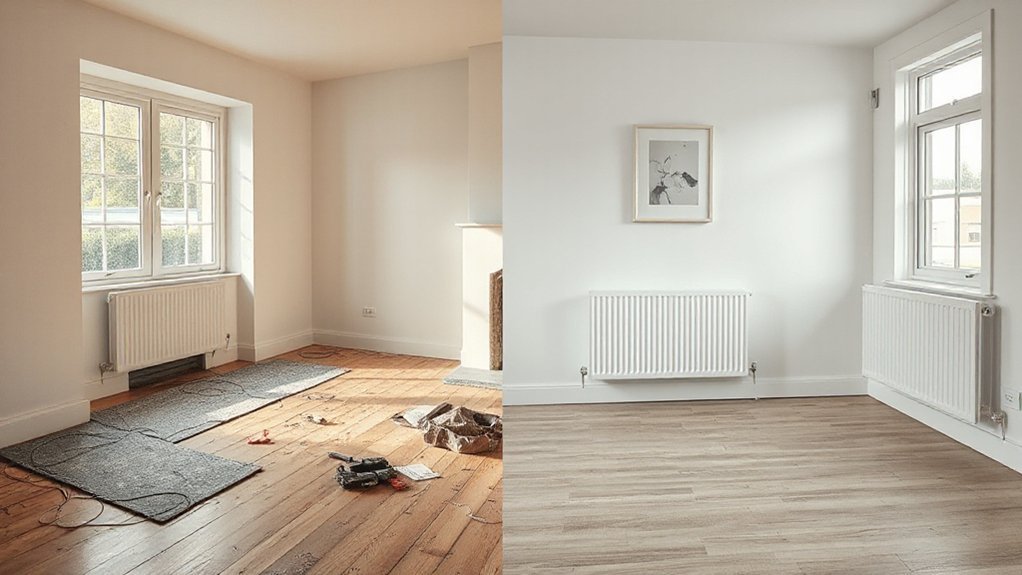
When you compare installation cost and disruption, electric underfloor heating (UFH) typically demands more labour, floor build-up, and planning than electric radiators, which usually mount and wire in with minimal fabric impact. You’ll often lift finishes, prepare subfloors, add insulation, lay mats or cable, then reinstate coverings; this extends programme time and can require doors to be trimmed. In retrofit settings, you must confirm floor heights, allowable load, and moisture tolerance, particularly with vinyl or timber. Radiators typically need a safe fused spur, wall fixings, and positioning to avoid curtains and furniture, so rooms remain usable sooner. UFH can improve Energy efficiency through even heat distribution and enhance aesthetic appeal by removing wall-mounted emitters, but you’ll pay for the added disruption.
Running Costs Explained (kWh, Tariffs, Per-Room Examples)
How much you’ll actually pay to heat a room comes down to a simple chain: the heater’s wattage, the hours it runs, and your unit rate in pence per kWh (plus any standing charge you’d pay regardless). Convert watts to kW (divide by 1,000), then multiply by runtime.
- Formula: kWh = kW × hours
- Example UFH: 150 W/m² over 4 m² = 0.6 kW; 3 h/day → 1.8 kWh/day
- Example radiator: 1.0 kW panel; 3 h/day → 3.0 kWh/day
- Costing: at 28p/kWh, that’s ~50p/day vs ~84p/day
- Tariffs: time-of-use rates can cut bills if you schedule; higher energy efficiency lowers kWh, while maintenance costs stay low for both systems
Heat-Up Time and Comfort: Which Feels Better?
Although both systems convert electricity to heat at near‑100% efficiency, they don’t feel the same in use because their heat delivery differs: electric radiators warm the air quickly via convection for fast temperature changes, while electric underfloor heating (UFH) raises surface temperatures more slowly and then stabilises comfort through even radiant heat and reduced cold spots. If you need rapid warm-up after setbacks, radiators typically deliver usable warmth within minutes, but you may notice stratification and cooler floor-level zones. With UFH, you’ll wait longer for the slab or overlay to charge, yet you’ll feel steadier warmth at lower air temperatures, improving perceived comfort. Your thermal insulation level determines response time and heat retention; better insulation reduces lag and supports energy efficiency with either system. Controls and scheduling matter most.
Best Rooms for UFH Vs Radiators (Bathrooms, Kitchens, Bedrooms)
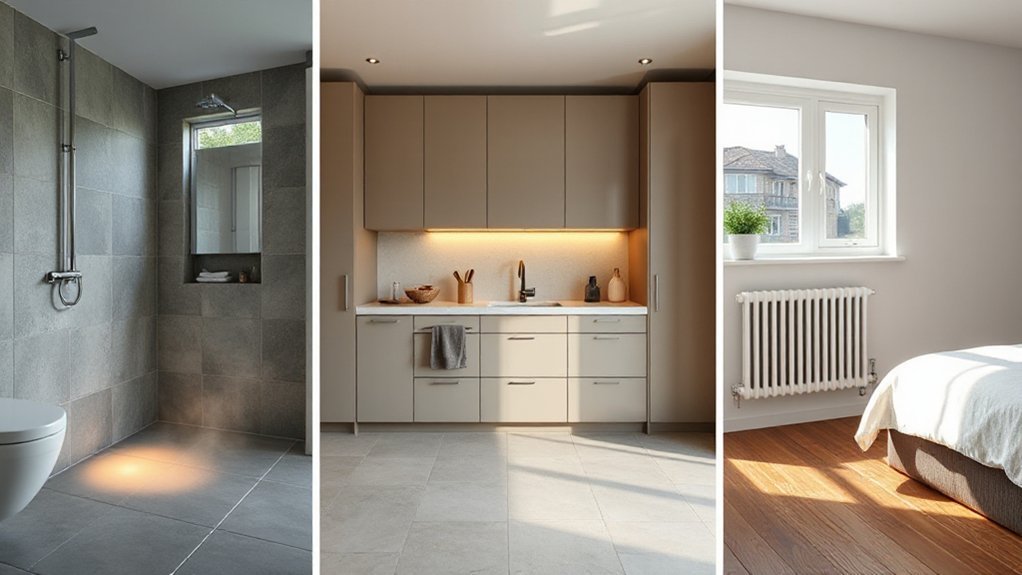
Room choice often matters more than raw efficiency because heat-up speed, heat distribution, moisture exposure, and usable wall space vary from zone to zone. You’ll typically specify electric UFH where you want even radiant comfort and clear walls, while you’ll choose radiators where rapid response and targeted output matter.
- Bathrooms: Use UFH under tile for warm floors and faster drying; keep controls outside splash zones.
- Kitchens: UFH suits open plans and reduces cold spots; watch floor build-up under cabinets.
- Bedrooms: Radiators give quick, controllable bursts; UFH works if you run steady low temperatures.
- Small rooms: Radiators simplify installation and servicing, especially in retrofits.
- Design needs: Radiators offer Decorative options, but UFH improves aesthetic integration by removing emitters.
Frequently Asked Questions
Do Electric Underfloor Systems Affect Laminate or Vinyl Flooring Warranties?
Yes, they can affect your warranty if you exceed the flooring’s temperature limits or ignore approved underlays. You’ll manage installation challenges, follow manufacturer specs, and meet maintenance requirements, or you’ll risk voiding coverage.
Can Either System Run Effectively From Off-Grid Solar and Battery Storage?
Yes, you can run either from off-grid solar and batteries, but you must size storage for peak loads. Radiators suit intermittent use; underfloor needs steadier input. Prioritize solar compatibility and battery efficiency planning.
How Long Do Electric Underfloor Heating Cables and Thermostats Typically Last?
Incredibly, you can expect underfloor heating cables to last 20–30+ years, often longer than the floor itself, while thermostats typically last 10–15 years. Installation challenges affect reliability, and you’ll minimize maintenance costs with quality controls.
Are Electric Radiators Safe to Use With Young Children or Pets?
Yes, you can use electric radiators safely around children and pets if you manage Child safety and Pet considerations: choose low-surface-temperature models, fit guards, secure cables, avoid tip hazards, and use thermostats and lockable controls.
Will Either Option Increase My Home’s Resale Value or EPC Rating?
Like a telegraph, you won’t boost resale value much; you’ll only improve EPC if you raise Energy efficiency. You’ll justify Installation costs with smart controls, insulation, and documented low running costs for buyers.
Conclusion
If you want a discreet, “under-the-radar” warmth and you can tolerate a little upheaval during installation, electric UFH usually earns its keep, especially in tiled bathrooms and kitchens. If you need a cleaner retrofit, sharper zoning, and faster response, electric radiators are often the sensible, low-fuss route for bedrooms and living areas. Either way, you’ll make the numbers work by pairing thermostatic controls with off-peak tariffs and room-by-room scheduling.