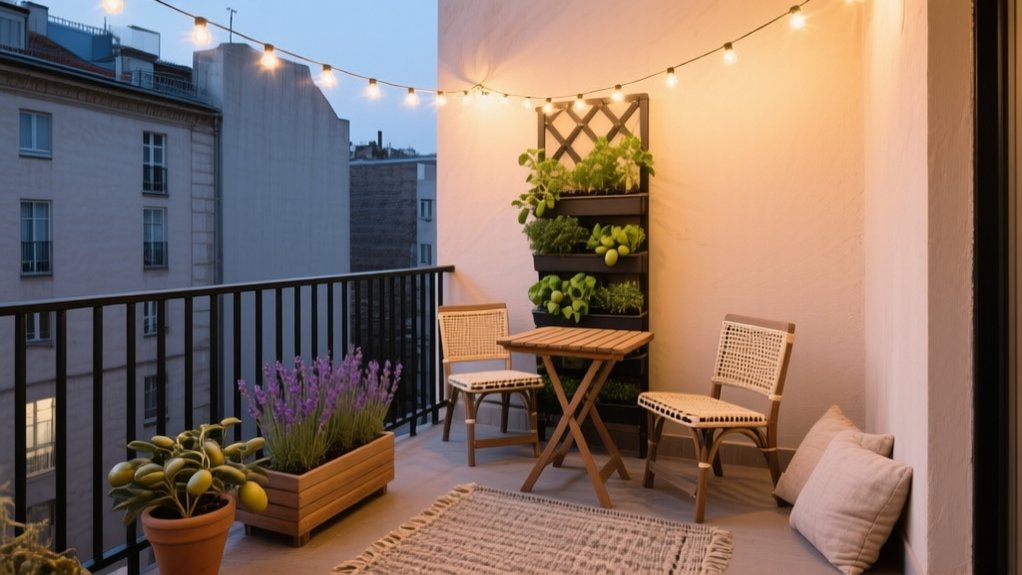
Start by measuring your patio or balcony, including door swing and fixed fittings, then plan a clear 60cm route to your main seating spot. Pick folding or stackable furniture with non-slip feet, and add storage with a bench seat or a lockable deck box. Use wall and railing planters, plus a trellis for climbers, to free up floor space. Layer warm-white festoons and solar lanterns, add a simple screen for privacy, and there’s plenty more to try.
Key Takeaways
- Measure the space, door swing, and fixed items, then plan a clear 60cm walkway to your main seating or planting zone.
- Choose folding, stackable furniture and lightweight textiles so you can reconfigure quickly and store items when space is tight.
- Add storage through benches with lift-up seats or weatherproof deck boxes, and organize tools using slim wall or railing hooks.
- Maximize greenery vertically with wall, railing, and hanging planters, plus trellises for climbers like jasmine or clematis.
- Improve comfort and style with layered warm lighting, simple privacy screens, and patterned outdoor rugs that visually elongate small areas.
Pick a Layout That Fits Your Small Outdoor Space
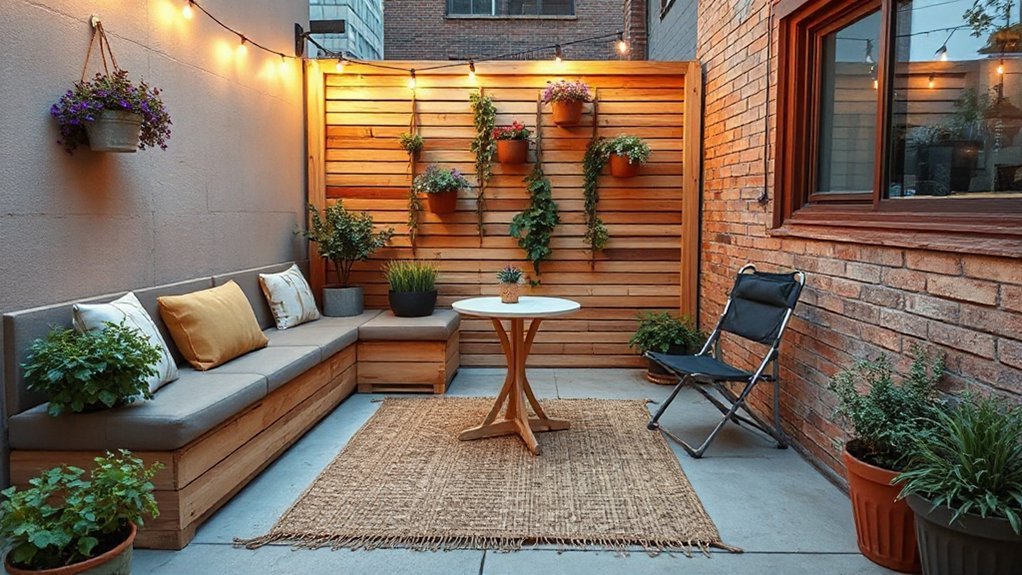
If you start with the right layout, even a compact patio or balcony can feel properly usable. Begin by measuring the footprint, door swing, and any fixed items like a boiler flue, drain, or railing posts.
Mark a clear circulation line (at least 60cm) from the threshold to the main use zone so you don’t trip over pots.
Use Size optimization by zoning: one strip for planting, one for seating, one for storage access. Keep taller items against the back wall to protect sightlines.
Build layout flexibility by planning for seasonal changes: leave a 30–40cm “buffer” edge for moving planters, adding a BBQ mat, or drying rack.
Finally, check sun and prevailing wind, and position your main spot accordingly.
Choose Space-Saving Outdoor Furniture (Folding, Stackable)
Two smart furniture choices can make a tiny patio or balcony feel twice as usable: folding pieces you can tuck away and stackable seats you can pile up when you’re not hosting. Start with Portable chairs that open in seconds, then hang them on a rail or slide them behind a planter so the walkway stays clear.
Add collapsible tables for everyday tea, laptop time, or a quick supper outside. Pick a bistro style that folds flat and a height that suits standard dining chairs. Check UK product specs for weather resistance: powder-coated steel, eucalyptus, or UV-stable resin cope better with drizzle and weak winter sun.
Choose non-slip feet so furniture doesn’t skate on composite decking or smooth paving. Measure door swings and thresholds before you buy.
Add Storage: Benches, Hooks, and Deck Boxes
Because outdoor bits multiply fast on a small balcony, you’ll get more usable floor space by building storage into what’s already there: a bench with a lift-up seat for cushions and throws, slim hooks on a brick wall or balcony rail for lanterns and watering cans, and a weatherproof deck box to corral bags of compost, spare pots, or kids’ toys.
Choose benches storage with treated timber or powder-coated aluminium, and add a wipe-clean cushion.
Fix hooks with stainless screws and wall plugs so they won’t rust in British drizzle; group them by task for better hooks organization.
For deck boxes, pick one with a lockable lid and drainage channels to keep contents dry.
- Lift-up bench for soft goods
- Hooks for tools and lights
- Deck box for messy supplies
Go Vertical With Wall Planters and Railing Gardens
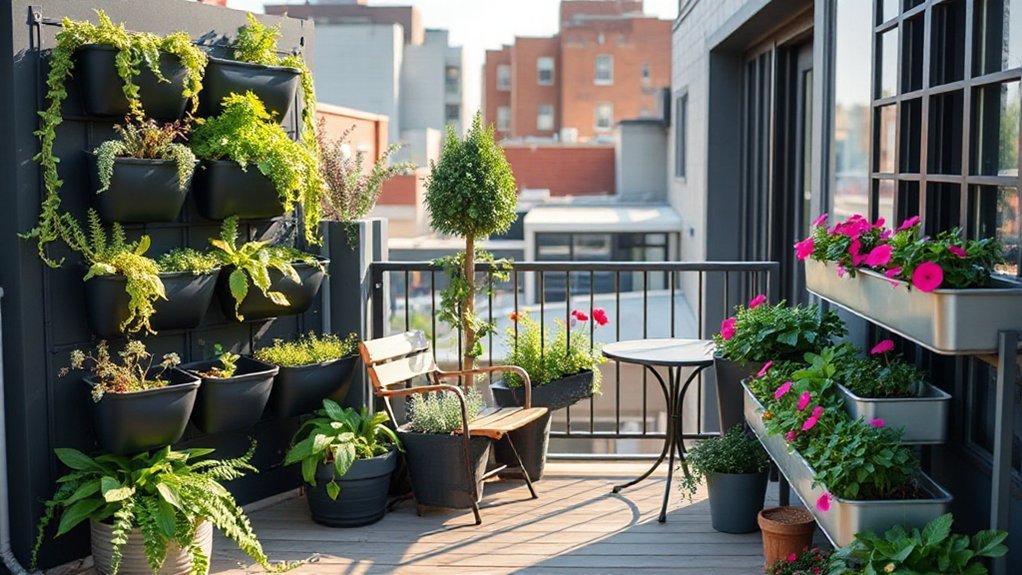
You can free up precious floor space by fixing wall planters to a sunny brick wall or fence panel, using sturdy plugs and checking the weight once they’re watered.
If you’ve got a balcony, clip railing planters onto the handrail and stagger heights for better light and drainage, keeping paths clear of drips.
For vertical herb displays, mount a tiered rack near the kitchen door and plant mint, thyme, and chives in labelled pots so you can snip them fast without cluttering the patio.
Space-Saving Wall Planters
Even if your patio or balcony floor space is tight, wall planters and railing gardens let you add serious greenery by using the vertical surfaces you’ve already got. Fix a modular pocket panel or slatted trellis planter to brick, render, or fencing using appropriate wall plugs, then keep weight down with lightweight compost and smaller pots.
Aim for sunlight optimization by placing sun-lovers on the brightest wall and shade plants where buildings block light. If you’re extending your indoor gardening habit outside, choose herbs and salad leaves that you’ll actually pick daily, and keep watering simple with a narrow-spout can.
- Use coir-lined wall baskets to improve drainage and reduce soggy roots.
- Add a drip tray or liner to protect paintwork and neighbours below.
- Plant in layers: trailing, upright, and filler for coverage.
Railing Garden Arrangements
Where can you squeeze in more planting when the floor’s already spoken for? Use your balcony or terrace railing. Clip-on troughs and over-rail planters let you stack colour at eye level without stealing a single paving slab.
For secure Railing garden arrangements, measure rail width first, choose brackets with locking screws, and keep weight low with peat-free multipurpose compost mixed with perlite. Line pots with coir to slow drying, and add saucers or drip trays to protect neighbours below—especially in flats.
Face matters: on windy, south-facing rails, pick drought-tolerant plants and tie stems to mini canes. Keep Railing garden aesthetics tidy by repeating one pot colour, spacing evenly, and trailing plants outward to soften metalwork.
Vertical Herb Displays
Railing planters give you colour at eye level; take the same idea a step further with vertical herb displays that turn a bare wall or fence into a working kitchen garden.
Fix a felt pocket planter or timber slat rack to brick, then drop in small pots so you can swap out tired plants.
On balconies, use railing gardens plus a narrow wall panel to double your growing space without stealing floor area.
Choose hardy culinary herbs—thyme, rosemary, chives, parsley—and site them where they’ll get 4–6 hours of sun and shelter from prevailing wind.
Add drip trays so water doesn’t stain render, and use peat-free compost.
- Group by watering needs (Mediterranean vs leafy)
- Label pockets to harvest fast
- Snip weekly for Herb drying indoors
Layer Cozy Lighting for Small Outdoor Spaces
Although your balcony or patio might be short on square footage, you can make it feel warm and inviting by layering light at different heights. Start with an ambient glow: drape warm-white (around 2700K) festoon lights along a railing or overhead beam, and add a small solar lantern on the floor for depth.
Next, add task illumination where you actually use it. Clip a USB-rechargeable reading light to your chair, or mount a slim outdoor wall light by the door for keys and bins.
Choose IP44-rated fittings for typical UK weather, and keep cables tidy with outdoor clips. Put everything on a timer or smart plug so it switches on at dusk, and dim where possible to avoid glare and keep neighbours happy.
Add Privacy With Screens, Plants, and Curtains
Once you’ve got your lighting sorted, you’ll notice privacy makes an even bigger difference to how relaxed your balcony or patio feels. Start by checking your lease and any building rules, then choose fixes you can install without drilling.
- Fit slim privacy screens to your railing: bamboo rolls, slatted panels, or reed fencing, secured with UV-stable cable ties.
- Build a green barrier with tall, wind-tough plants in narrow troughs. In the UK, try clumping bamboo (non-running), evergreen laurel, or hardy grasses.
- Hang outdoor curtains on a tension rod or wire between posts. Pick mould-resistant fabric and add simple tie-backs so they don’t thrash in gusts.
Angle screens to block sightlines from neighbours’ windows while keeping airflow and light.
Finish With Décor: Rugs, Textiles, and Planters
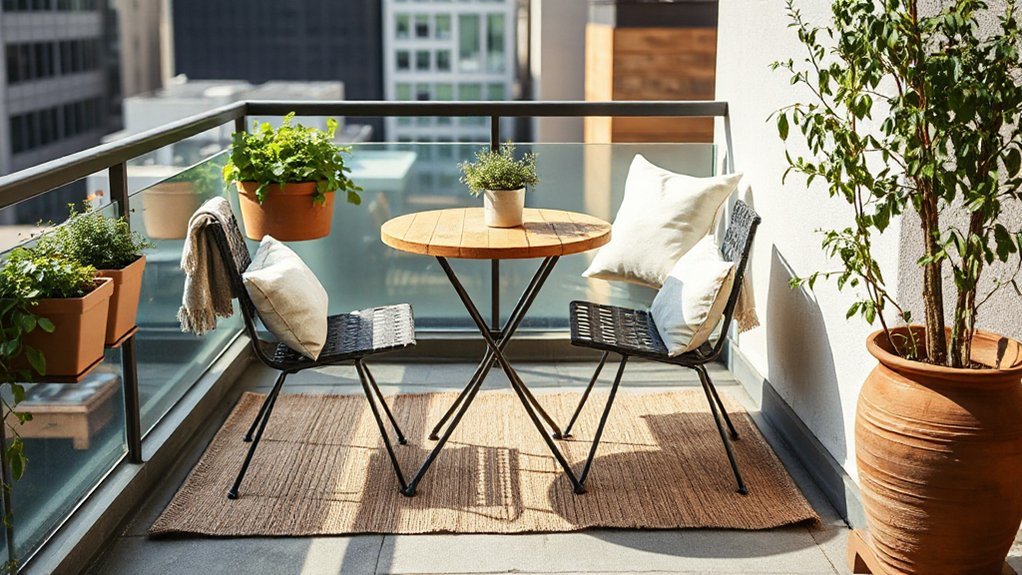
To finish your small outdoor space, layer an outdoor rug with weatherproof cushions and throws to add warmth underfoot and soften hard paving. Choose materials that handle British rain—polypropylene rugs and quick-dry fabrics work well—and keep a spare set in a bench box.
Then free up floor space with vertical wall planters, railing boxes, and hanging baskets. Group pots by sun/shade needs for easier watering.
Layer Outdoor Rugs And Textiles
Two well-chosen outdoor rugs and a few weatherproof textiles can make a small patio feel finished without stealing floor space. Start with a flatweave polypropylene rug as your base, then add a smaller runner to zone a bistro set.
Choose Rug patterns that distract from tight dimensions: narrow stripes lengthen, small geometrics hide dirt, and darker borders define edges.
- Mix Textile textures: canvas cushions, waffle throws, and woven seat pads for depth
- Match colours to your brickwork or fencing, then repeat one accent on cushions
- Keep it UK-practical: quick-dry fills, UV-stable fabric, and machine-washable covers
Anchor corners with non-slip rug tape, and lift textiles indoors when heavy rain’s forecast. Rotate rugs monthly to even fading.
Add Vertical And Hanging Planters
Where do you put greenery when your patio’s already tight on floor space? Go vertical. Fix a trellis to a fence panel and train jasmine or clematis up it for scent without stealing room.
Add wall mounted planters to brick or rendered walls using proper masonry plugs and stainless screws, and keep them in a neat grid so it looks intentional.
Choose lightweight pots with built-in reservoirs to cut watering runs in summer.
For instant colour, hang hanging baskets from a bracket on the shed, balcony rail, or pergola beam, but check weight limits and use rust-proof chains.
Plant trailing ivy, bacopa, or strawberries for edible charm, and keep a drip tray to protect paving.
Rotate plants to balance light and growth.
Frequently Asked Questions
What Plants Thrive on a Shaded Balcony With Little Direct Sunlight?
Choose shade tolerant plants like ferns, ivy, hostas, heuchera, and hellebores; they’ll thrive on your shaded balcony. Add balcony greenery with begonias and impatiens in pots. You’ll keep soil moist and use peat-free compost.
How Can I Weatherproof Décor and Fabrics for Year-Round Outdoor Use?
Seal your outdoor setup like armour: choose Weatherproof materials, spray Fabric treatments (DWR) on cushions, use UV-resistant covers, store textiles in a waterproof box, and reproof yearly with Nikwax. Tape seams, rustproof fittings, avoid mould.
What Are Renter-Friendly Ways to Avoid Damaging Walls or Railings?
Use damage prevention, renter friendly solutions: over-rail hooks, clamp-on brackets, suction cups on glass, Command outdoor strips, freestanding screens, and weighted pots. You’ll avoid drilling; check lease rules, wind-load, and corrosion-resistant fixings.
How Do I Protect My Small Patio From Wind and Heavy Rain?
Like a sturdy brolly in a squall, you’ll add wind barriers and rain shields: clip-on clear PVC screens, weighted planters as anchors, and a sloped awning. Secure furniture with bungees, and store cushions in waterproof boxes.
What Budget Should I Plan for a Complete Small Outdoor Makeover?
You should plan £500–£2,500 for a complete small outdoor makeover, depending on finishes. Start Budget planning by pricing flooring, seating, lighting, and plants; include 10–15% contingency. Track makeover costs with UK retailer quotes.
Conclusion
So yes, your “bijou” outdoor space can become a proper little sanctuary—without taking out a second mortgage for designer bistro chairs. Pick a layout that lets you move, choose folding or stackable furniture, and hide the clutter in benches, hooks, or a deck box. Go vertical with wall planters and railing pots, layer warm lighting, add a screen or curtains for privacy, then finish with a rug and hardy planters.