When you make flooring the focal point, you’re letting it set the room’s mood, color story, and visual rhythm. Start by checking sightlines from doorways and seating so the pattern won’t overpower the space, then keep walls, rugs, and textiles quieter. Choose durable materials for traffic (porcelain in entries, parquet or oak in living areas) and align undertones for clean contrast. Next, you’ll see how layout, lighting, and furniture choices lock it in.
Key Takeaways
- Confirm the room can handle bold visual energy by checking sightlines and keeping walls, rugs, and textiles quieter.
- Choose durable, room-appropriate materials: porcelain for wet zones, engineered wood or parquet for living areas, and slip-rated surfaces for baths.
- Use contrast intentionally by deciding if floors go lighter or darker than walls, and align warm or cool undertones.
- Select a pattern and scale that fit the space; herringbone feels classic, chevron reads sharper, and repeats should suit viewing distance.
- Style with clean-lined furniture, restrained palettes, minimal clutter, and layered dimmable lighting to let the floor remain the focal point.
Decide If Focal-Point Flooring Fits Your Room
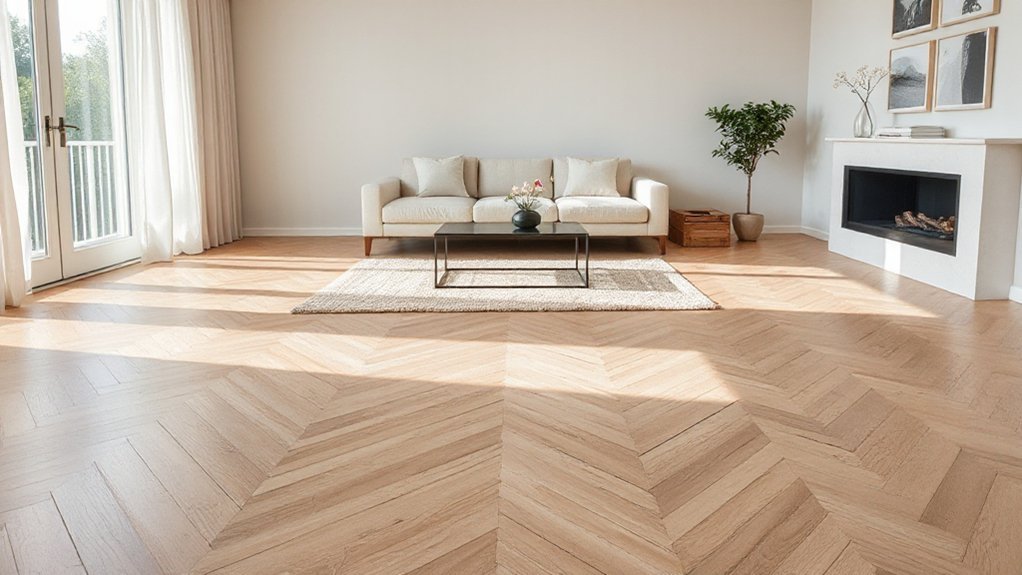
If you’re considering making the floor the star of the room, start by evaluating whether your space can support that level of visual energy without feeling busy. Measure sightlines from doorways and main seating; if the pattern reads immediately, it’s dominant.
Audit your palette next: keep wall color, rugs, and textiles quieter so the floor leads. Plan Furniture placement to preserve negative space—float key pieces, avoid overstuffed profiles, and limit competing geometry. Check scale: large rooms can take tighter repeats, while small rooms need simpler motifs. Use lighting enhancement to control contrast; layered ambient plus adjustable accent light lets you spotlight grain or inlay without glare. Finally, confirm you’re comfortable committing, since focal floors set the room’s tone year-round.
Focal-Point Flooring Materials by Room and Traffic
Because traffic patterns and moisture exposure dictate how well a statement floor holds up, you’ll want to match focal-point materials to each room’s demands before you fall for a look. In entryways and hallways, choose porcelain tile, terrazzo, or engineered hardwood with a durable finish; they resist grit and read polished. For living rooms, wide-plank oak, walnut, or patterned parquet delivers luxury materials without sacrificing refinishability. In kitchens, prioritize porcelain, sealed natural stone, or high-performance LVP that shrugs off spills while keeping a tailored, trend-forward edge. For baths and laundry areas, use slip-rated porcelain, sealed stone, or microcement; skip moisture-sensitive solid wood. In bedrooms and offices, you can lean into minimalist designs with refined wool carpet tiles or quiet matte hardwood.
Use Color Contrast to Make Flooring the Focal Point
While texture and pattern grab attention up close, color contrast makes flooring read like a deliberate focal point from the doorway. Start by deciding whether you want the floor to feel lighter or darker than the walls; that single choice sets the room’s visual hierarchy. For a modern, gallery-clean look, pair pale oak or blonde LVP with saturated paint or deep cabinetry so the floor glows without competing. For a moody, boutique feel, use espresso-stained wood or charcoal tile against warm whites, then repeat that darker note in hardware or trim. Keep undertones aligned: cool gray floors want crisp whites and blue-based colors; warm honey floors want creamy neutrals, clay, or olive. Smart color pairing prevents clashes and makes the focal point feel intentional.
Patterned Focal-Point Flooring Layouts (Herringbone, Chevron)
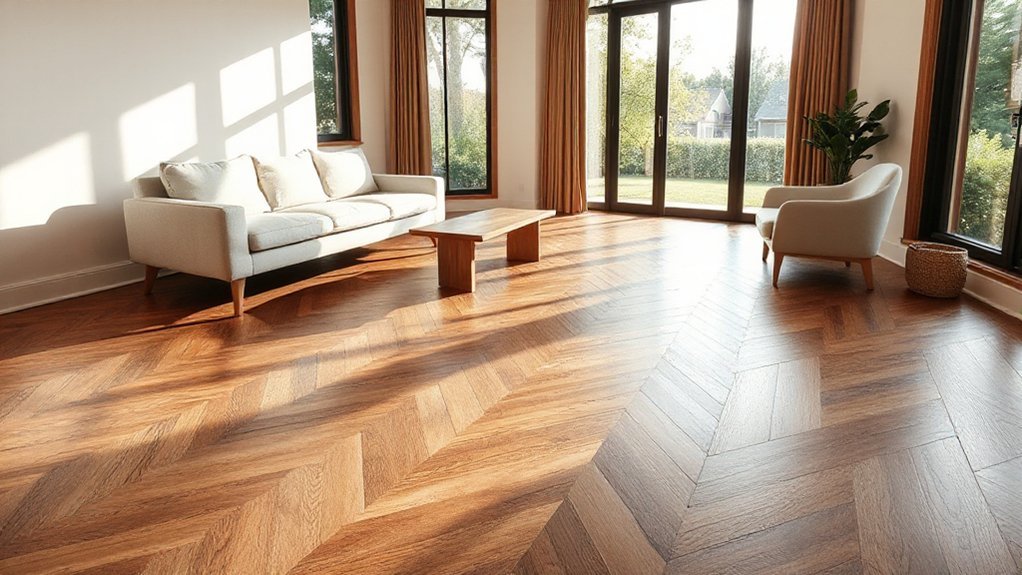
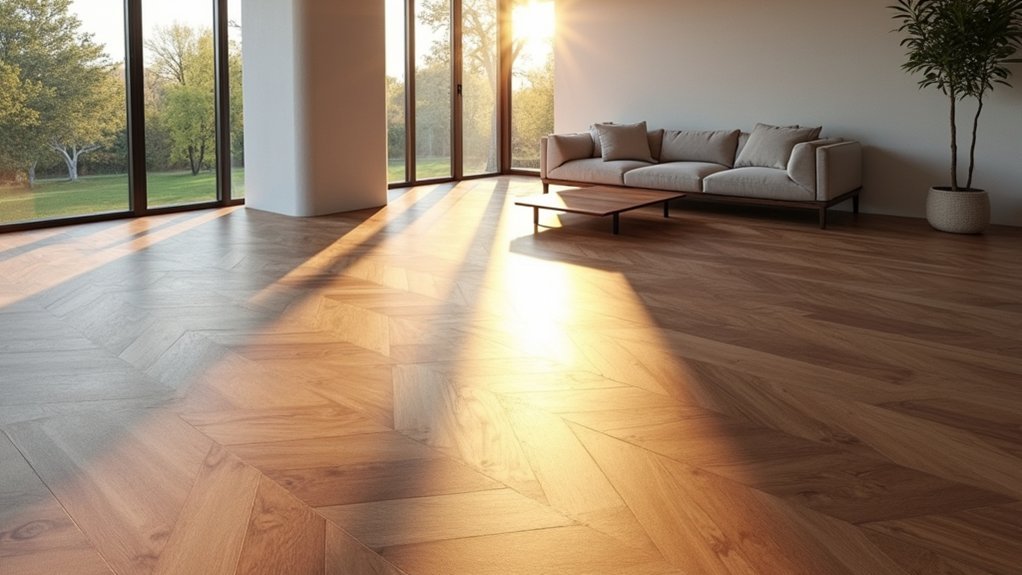
Even when you keep the palette quiet, a patterned layout like herringbone or chevron turns the floor into architecture. You’re not just laying planks; you’re directing sightlines, adding movement, and defining zones without a wall. Herringbone reads tailored and classic, while chevron feels sharper, more graphic, and very current in wide-plank formats.
To get it right, you’ll need disciplined layout control: establish a dead-straight centerline, dry-lay a starter field, and commit to consistent end cuts. Innovative installation details—like a perimeter feature strip or a framed “rug” panel—push the effect further without changing materials. With Unique patterning, prioritize stable substrates, tight tolerances, and a pro-grade adhesive or underlayment so the geometry stays crisp over time.
How to Style Decor Around Bold Focal-Point Flooring
Once you’ve committed to a bold herringbone, chevron, or framed “rug” layout, the rest of the room needs to support that geometry—not compete with it. Start with Furniture pairing: choose clean-lined silhouettes, low visual profiles, and solid upholstery so the floor reads as the hero. If you want pattern, keep it large-scale and tonal in rugs, drapery, and pillows, echoing the floor’s angles instead of introducing new ones. Use a restrained palette pulled from the flooring’s undertones—warm oak with camel, bone, and soft black; cool walnut with taupe and brushed nickel. For Lighting enhancement, layer warm, dimmable ambient light with precise accenting on walls and art, so the floor’s rhythm feels intentional. Finish with matte accessories and minimal floor clutter.
Focal-Point Flooring Mistakes (Scale, Grout, Glare)
When you make flooring the focal point, you can’t afford a pattern scale mismatch—too large overwhelms tight rooms, too small reads busy and dated. You’ll also want grout to support the design, because high-contrast or extra-wide lines can hijack the pattern and chop the floor into a grid. Finally, watch surface sheen under today’s layered lighting, since excessive glare magnifies seams, shows wear fast, and throws off the room’s visual balance.
Pattern Scale Mismatch
Because your floor is the largest uninterrupted surface in the room, a pattern that’s out of scale will hijack the entire design. If you drop tiny mosaics into a big, open-plan space, you’ll read visual “noise” from across the room and end up with pattern overload. Go too large in a tight bath or narrow hall, and the repeats feel cropped and restless, making the footprint seem smaller.
Match scale to viewing distance and furniture mass. In expansive rooms, choose medium-to-large repeats with breathing room, and keep surrounding finishes quiet to avoid a texture clash. In compact rooms, favor smaller, simpler motifs or a subtle directional grain that elongates sightlines. Always test a full repeat on-site, at standing height and seated angles, before you commit.
Grout Line Overstatement
Even with the right pattern scale, bold grout can turn a calm floor into a grid that steals focus from everything else. Grout line overstatement happens when contrast, width, or joint placement reads louder than the tile itself, creating instant focal point overemphasis.
You’ll see it most with small-format tile, brick-set layouts, and high-contrast color choices where every joint telegraphs across the room. Keep joints tight where specs allow, and pick a grout tone that’s one to two shades off the tile to soften transitions while still hiding wear. If you want definition, use it strategically—border details, a niche, or a rug zone—rather than broadcasting lines wall to wall. Seal properly and sample in your lighting before committing.
Excessive Surface Glare
Why does a gorgeous floor suddenly feel harsh or “busy” the moment the lights go on? Excessive surface glare usually comes from a high-sheen Surface finish paired with strong downlights, large windows, or glossy cabinetry that bounces light like a mirror. When your floor reflects every bulb and beam, it steals attention from furniture and makes traffic marks, dust, and micro-scratches look amplified.
- Choose matte or satin Surface finish to diffuse reflections without dulling color
- Make Lighting adjustments: dimmers, warmer LEDs, and layered lamps instead of one bright grid
- Add glare-breakers: textured rugs, window sheers, or a toned sealer on stone/porcelain
You’re not removing drama—you’re controlling it. The goal is a floor that reads rich, not shiny loud, and stays comfortable all day.
Frequently Asked Questions
How Much Does Focal-Point Flooring Typically Cost per Square Foot?
You’ll typically pay $5–$25 per square foot for focal-point flooring installed, depending on material options. For cost comparison: luxury vinyl $5–$10, hardwood $10–$20, patterned tile $12–$25; trends push higher.
Can Focal-Point Flooring Be Installed Over Existing Tile or Hardwood?
Yes—you can install focal-point flooring over existing tile or hardwood if the surface is flat, sound, and prepped. You’ll boost Flooring durability with proper underlayment; DIY installation works, but you’ll need moisture, height, and shift planning.
How Long Does Installation Usually Take for an Average-Sized Room?
You’ll typically finish an average room in 1–3 days: prep, lay, and finish. Your flooring material options shift the installation timeline—LVP goes fastest, engineered wood is midrange, and intricate tile runs longer.
Does Bold Flooring Affect a Home’s Resale Value or Buyer Appeal?
Bold flooring can boost resale if you choose luxury flooring that aligns with current design trends, but it can hurt appeal if it feels niche. You’ll win buyers by keeping patterns timeless and complements neutral.
What Cleaning Products Are Safest for Maintaining Patterned or High-Contrast Floors?
Like a safety net for your design, you’ll use pH-neutral eco friendly cleaners and microfiber pads. Avoid bleach, ammonia, and abrasives. Choose stain resistant products approved for your floor finish, and test discreetly first.
Conclusion
When you make flooring the focal point, you’re setting the room’s visual tempo. Start by confirming your space can handle bold color or pattern, then choose materials that match traffic—durable tile in entries, resilient wood or LVP in living areas. Use contrast to sharpen impact, and keep herringbone or chevron scaled to the room. Style decor as a supporting cast, not competition. Avoid common pitfalls: oversized patterns, busy grout, and high-glare finishes.