

Nearly 3 in 4 homeowners underestimate the time and cost of small improvement projects, and that gap usually shows up in the last 20%. You’ll stay in control if you pick a finishable task, define what “done” means, and confirm permits, HOA rules, and basic code limits before you buy anything. Measure twice, build a materials list, and add a 15% buffer. The next step is where most DIY plans fail…
Key Takeaways
- Choose a contained project and define exact scope, finishes, measurements, and success criteria before starting.
- Check permits, HOA rules, and structural limits early; consult licensed trades when required or uncertain.
- Measure carefully and build a materials list with exact model numbers, compatibility needs, waste factors, and lead times.
- Set a realistic budget with quotes, permits, disposal, rentals, and a 15% contingency; track spending to prevent scope creep.
- Prepare the site and tools: verify PPE, protect surfaces, locate wiring/pipes before drilling, and stage tools and rentals in task order.
Choose a Small Home Improvement Project You Can Finish

Where should you start if you want a home upgrade that won’t stall halfway? Pick a project that fits your available time, tools, and permit exposure. Favor contained tasks like replacing a faucet, installing shelving, swapping light fixtures with like-for-like units, or repainting a single room.
Screen choices against local code: GFCI/AFCI requirements, load limits on studs and anchors, and any work that triggers licensed trades or inspection (new circuits, gas lines, structural changes). Confirm material lead times and access constraints so you’re not waiting on backorders.
Compare decorating options that don’t change building systems. Do a quick cost estimation using unit pricing plus a 10–15% contingency, and choose the job you can fund in one cycle.
Define the Scope and “Done” for the Project
Once you’ve picked a project you can realistically finish, lock down its scope and what “done” means before you buy materials or open a wall.
Write a one-page scope statement: exact locations, dimensions, finishes, fixtures, and performance targets (clearances, drainage slope, GFCI/AFCI protection where applicable). List exclusions so you don’t “accidentally” add wiring, plumbing, or structural work midstream.
Define success criteria that you can inspect: level within tolerance, fasteners spaced per manufacturer, paint coverage, caulk joints continuous, no leaks after a 24-hour test.
Break the work into project milestones: design/final measurements, material procurement, substrate prep, rough-in (if any), finish install, cleanup, punch list.
Put these in your checklist and stop when they’re met exactly.
Check Permits, HOA Rules, and Building Limits
Before you swing a hammer, verify what your city/county permits, your HOA or condo board allows, and what your home’s structure and systems can legally and safely support.
Check local permit requirements for electrical, plumbing, structural changes, window/door replacements, HVAC swaps, and new circuits. Confirm whether homeowner-permitted work is allowed or if a licensed contractor and inspections are mandatory. Pull permits before demolition so you don’t fail rough-in or final inspections.
Next, review HOA regulations on exterior finishes, noise hours, dumpsters, parking, and contractor insurance. Get approvals in writing and keep copies.
Finally, validate building limits: load-bearing walls, joist spans, roof truss rules, fire-rated assemblies, egress, and utility capacity. When in doubt, consult a structural engineer or building official.
Measure and List Materials Before You Buy

Even if you’re tackling a “simple” upgrade, measure every surface and penetration you’ll touch, then turn those numbers into a line-item materials list before you place a single order.
Confirm measurement accuracy by measuring twice, noting units, and recording wall lengths, square footage, thickness, and existing clearances.
Map outlets, valves, vents, and fastener locations so you don’t violate required spacing, access, or fire-blocking rules.
Translate measurements into quantities by coverage rates, waste factors, and manufacturer specs for adhesives, grout, fasteners, and underlayment.
Document exact model numbers, code-rated assemblies, and compatibility requirements (e.g., wet-area, exterior, or load-rated).
For material sourcing, verify lead times, dye lots, and matching trim, and keep submittals and receipts for inspections and warranty claims.
Set a Small Home Improvement Budget (+15% Buffer)
Although a small project can look inexpensive on paper, you should set a hard budget that includes labor, materials, tool rentals, permit/inspection fees, debris disposal, and any required code upgrades triggered by the work (for example, GFCI/AFCI protection when modifying circuits, or proper venting and shutoffs when touching plumbing).
Build line items from your measured takeoff, then price each using current quotes, not last year’s receipts.
Add a 15% buffer for hidden conditions like rot, out-of-square framing, or corroded valves, and keep it untouchable unless you document the cause.
Use budget planning to cap discretionary upgrades and prevent scope creep.
For expense tracking, log every purchase with date, vendor, and category, and reconcile weekly against your cap.
If costs exceed it, pause and reprice or reduce specifications.
Write the Steps and a Realistic Timeline
Once you’ve locked your scope and budget, break the project into discrete, inspectable steps and assign each one a realistic duration based on lead times, cure times, and required inspections.
List tasks in sequence: demo, rough-in, close-up, finish, and cleanup, and note dependencies so you don’t schedule work that can’t start.
For Timeline estimation, use conservative durations and add float for weekends, weather, and permit-office turnaround.
Verify whether you need electrical/plumbing permits, HOA approvals, or utility shutoffs, then schedule inspections before you cover work.
Tie each step to Budget planning by assigning labor hours, rental days, and fees, and track variances weekly.
Keep a change-control log so added scope triggers schedule and cost updates, not surprises.
Pick Materials That Handle Water and Wear
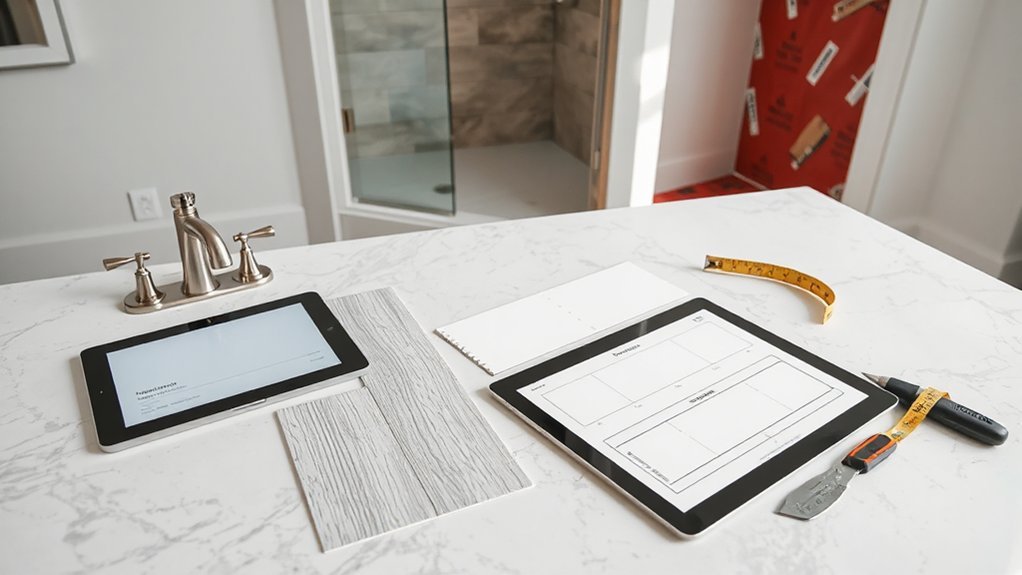
In wet or high-traffic areas, you’ll want moisture-resistant surfaces—like sealed tile, PVC trim, or water-rated flooring—and you should verify they meet the manufacturer’s installation specs and any local code requirements.
You’ll also reduce maintenance by prioritizing durable, easy-clean materials with abrasion-resistant finishes and low-porosity faces that won’t stain or swell.
Before you buy, confirm the full system is compatible (substrate, adhesive, grout/sealant, and underlayment) so it performs as rated over time.
Choose Moisture-Resistant Surfaces
Because moisture intrusion drives mold, rot, and premature finish failure, you’ll want to specify water-tolerant surfaces anywhere you expect splashes, steam, or wet cleaning—bathrooms, laundry areas, entries, and around sinks.
Choose tile, solid-surface panels, sealed stone, or fiberglass-reinforced wallboard where codes or manufacturer specs allow, and verify substrate compatibility.
Behind wet-area walls, install Moisture barriers (e.g., vapor retarder class per climate zone) with taped seams and proper laps to prevent trapped condensation.
At floors, use waterproof membranes or underlayment rated for intermittent wetting, and detail junctions with continuous sealant.
Specify Water resistant finishes in wet zones—epoxy paint, catalyzed coatings, or factory-applied laminates—and confirm they meet ASTM performance and local ventilation requirements.
Prioritize Durable, Easy-Clean Materials
When you pick finishes for high-traffic or frequently wet areas, prioritize materials that resist abrasion, staining, and routine disinfecting so they still meet performance expectations years later. Specify Durable materials like porcelain tile (PEI-rated), quartz, solid-surface, or sheet vinyl with heat-welded seams; they tolerate grit, standing water, and cleaners without delaminating.
Favor Easy clean surfaces with low porosity and minimal grout lines; choose epoxy grout or large-format tile to reduce joints. In kitchens and baths, select stainless or coated hardware with corrosion resistance, and use paints labeled scrub-resistant, low-VOC, and mold/mildew resistant.
Check product data sheets for slip resistance (DCOF/COF) on floors, and verify wet-area approvals to meet local code and warranty requirements.
Plan Tools, Rentals, and Safety Gear
Start by inventorying every tool you’ll need—include blade types, bit sizes, and required power sources—so you don’t improvise with improper equipment.
If you’re renting specialized tools, schedule pickup and return windows to match your work plan, and confirm you’ll have the right accessories, manuals, and electrical requirements on site.
Gather safety gear up front (eye/ear protection, gloves, respirator as needed, and a rated GFCI/extension cord), and follow OSHA-style labeling and PPE guidance to reduce injury and compliance risks.
Inventory Required Tools
Before you buy materials or tear into anything, inventory every tool and piece of safety gear the job requires so you don’t lose time mid-project or improvise unsafe workarounds. Build an Inventory checklist from the scope: measuring/layout, cutting/drilling, fastening, finishing, and cleanup.
Confirm you’ve got serviceable blades, bits, and fasteners rated for the substrate. Verify cords, GFCI protection, batteries, and chargers meet manufacturer specs, and tag damaged tools out of service.
For Tool organization, stage items in task order and label bins so you can account for everything during teardown.
Include PPE: ANSI Z87.1 eye protection, hearing protection, cut-resistant gloves as needed, and an N95/respirator when dust or fumes are possible.
Add fall protection or ladder stabilizers if you’ll work above grade.
Schedule Tool Rentals
Although you may own the basics, schedule any specialty tool rentals early so you lock in availability, the right accessories, and the correct power/fuel requirements for your scope.
Confirm Tool selection against material specs and site constraints, then reserve by model number and capacity (amp draw, PSI, blade diameter).
Coordinate pickup/return windows with your work plan so you don’t pay idle days or miss deadlines.
Review rental agreements for deposit rules, damage waivers, hour-meter charges, and cleaning fees.
Verify the shop’s maintenance log, inspection tag, and any required operator instructions; some tools fall under OSHA/ANSI use guidance even for homeowners.
Ask whether attachments, bits, dust shrouds, and extension cords are included, and note consumables you must supply.
Document condition at checkout with photos.
Gather Safety Equipment
Once you’ve confirmed the tools you’ll use, build a job-specific safety kit that matches the hazards you’ll actually create—dust, noise, flying debris, sharp edges, chemical exposure, and fall risk.
Choose Personal protective equipment that meets ANSI/NIOSH ratings: safety glasses with side shields, hearing protection with adequate NRR, and a fit-tested respirator for fine particulates or solvents.
Add cut-resistant gloves and sturdy footwear; don’t rely on casual clothing.
- PPE matched to tasks: eye/ear/respiratory/hand protection
- Jobsite controls: plastic sheeting, HEPA vac, GFCI cords, ladder stabilizer
- Emergency preparedness: first-aid kit, eyewash bottle, fire extinguisher, posted emergency contacts
Read SDS labels for chemicals, ventilate, and store rags to prevent ignition.
Inspect gear before use, and replace damaged items immediately.
Prep and Protect Floors, Furniture, and Vents
When you prep the work area correctly, you control dust, overspray, and impact damage—and you also reduce slip and trip hazards that can trigger code or lease compliance issues.
Start with Floor protection: lay rosin paper or drop cloths, then tape seams with painter’s tape; avoid slick plastic on walking paths unless you add non-slip runners.
For furniture safeguarding, remove what you can, then cover remaining pieces with breathable fabric and seal edges to prevent dust migration.
Shut HVAC returns near the zone and cover supply registers with magnetic vent covers or taped filter media, but don’t block combustion-air intakes.
Maintain clear egress routes and keep coverings out of door swings.
Post wet-floor or work-area signs if others share the space.
Vacuum with a HEPA unit before you uncover.
Common Small Home Improvement Surprises (and Fixes)
Even if you’ve measured twice and staged the right materials, small projects still throw curveballs that can derail your timeline or put you out of compliance. Expect Unexpected installation issues like out-of-plumb walls, hidden junction boxes, or undersized framing that won’t meet fastener schedules. Verify conditions before you cut or drill, and don’t cover anything that must remain accessible under electrical and plumbing codes.
Use these DIY troubleshooting tips to keep work safe and inspection-ready:
- Map studs, pipes, and wiring with a multi-sensor scanner; shut off breakers and lockout/tagout when required.
- Dry-fit assemblies, then shim to level; maintain required clearances around vents and combustibles.
- If you hit mold, asbestos, or lead paint, stop; follow local abatement rules or hire licensed pros.
Frequently Asked Questions
How Do I Find a Reliable Contractor for a Small Project?
Find a reliable contractor by verifying Contractor licensing, insurance, and local permit history, then checking recent references and reviews. Get 2–3 written bids, compare scopes during Budget planning, and use a signed contract.
Should I DIY or Hire a Pro for This Task?
DIY if it’s a straight road: you’ve got skills, time, and tools. Otherwise, hire a pro. Do Budget planning, follow Safety precautions, meet code, pull permits, and document inspections.
When Is the Best Season to Start Indoor or Outdoor Projects?
You’ll get best results starting outdoor work in late spring to early fall, and indoor work in winter. Seasonal timing hinges on Weather considerations, cure times, inspections, and code-required permits, avoiding temperature extremes, heavy rain.
How Can I Reduce Noise and Dust for Neighbors and Family?
You’ll reduce noise and dust by scheduling within local quiet hours, using soundproofing techniques like door seals and temporary barriers, and applying dust control methods: plastic sheeting, negative-pressure fans, HEPA vacuums, and cleanup logs.
What Home Improvements Add the Most Resale Value?
You’ll add most resale value with kitchen and bath updates, energy-efficient windows, insulation, and curb appeal. Use Renovation budgeting and smart Material sourcing, pull required permits, meet code, and document upgrades for appraisers.
Conclusion
You’ve picked the project, defined “done,” checked permits and HOA rules, measured twice, and built a budget with a 15% buffer. You’ve chosen water- and wear-rated materials, staged tools, rentals, and PPE, and sealed off floors, furniture, and vents. Now comes the part that surprises most DIYers: inspection, cure times, and one hidden mismatch behind the wall. If you planned for it, you won’t panic—you’ll adjust, document, and finish clean.