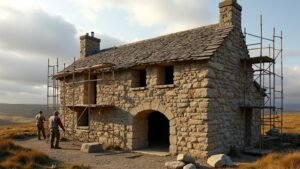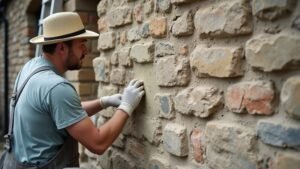
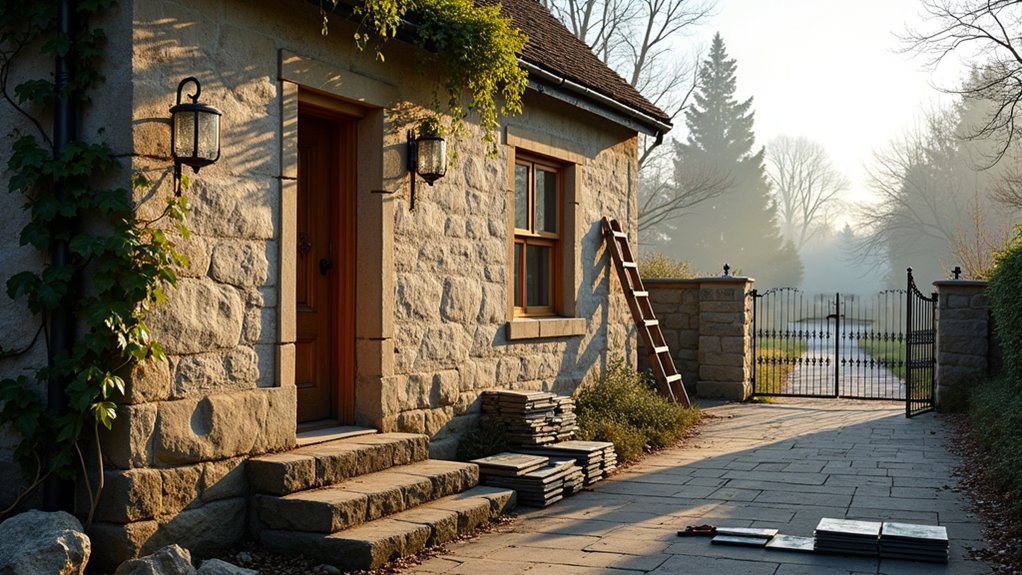
Mist hangs in the yews as you step up to a weathered Forgotten Gatekeepers Cottage, its sash windows filmed with age and its slate roof dipping at the eaves. You start with a measured survey, noting damp lines, timber softness, and any listed details you must preserve. You make it safe and weather-tight first, then tackle rot, roof failures, and failed rainwater goods before you touch finishes. Get that order wrong, and the cottage will dictate the next move…
Key Takeaways
- Survey the cottage methodically, photographing defects and services, then prioritize works by safety, heritage value, and weatherproofing urgency.
- Fix water management first: clear gutters, repair downpipes and drains, and keep walls breathable by avoiding cement renders or tanking.
- Trace and repair rot at its source, splicing matching timber into wall plates, rafter feet, and lintels after cutting back to sound wood.
- Make the roof sound by replacing slipped slates, renewing lead flashings, and re-bedding ridge tiles in lime to prevent recurring damp.
- Modernize electrics, plumbing, and insulation discreetly using existing voids and breathable materials, while repairing original windows, doors, and floors before replacing.
Survey the Gatekeeper’s Cottage and Set Priorities
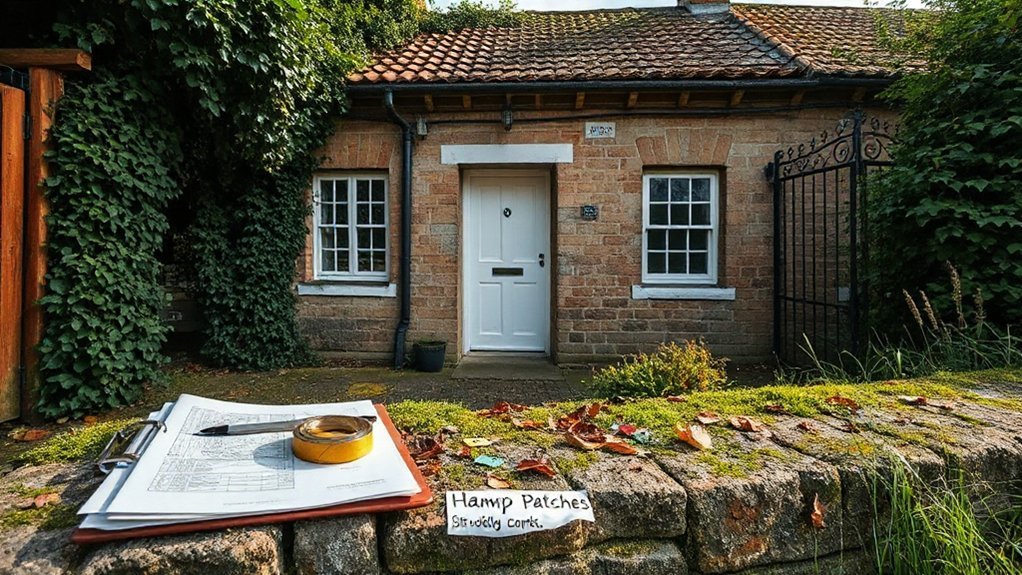
Before you lift a tool, walk the gatekeeper’s cottage methodically and record what you’ve actually got. Photograph every elevation, room, and junction; sketch a simple plan; note cracks, sagging lintels, blocked flues, and failed pointing. Log services: incoming water, electrics, drainage runs, and any redundant tanks or pipes.
Check boundaries, access, and sightlines for Landscaping planning, including paths, gates, and mature trees.
Then set priorities using risk and heritage value. Use historical research to confirm original layout, openings, and outbuildings, and to flag later alterations worth keeping.
Rank tasks: make safe, stabilise, weatherproof, then improve comfort. Price each work package, identify consents, and lock a sequence you can manage without rework.
Stop Damp, Fix Rot, and Make the Roof Sound
Once you’ve set your priorities, tackle damp, rot, and the roof in that order, because water drives most failures in a gatekeeper’s cottage.
Start outside: clear gullies, repair downpipes, lower high ground, and check drains. Keep breathability for Historical accuracy; avoid cement renders and tanking. Use lime mortar, limewash, and improve sub-floor ventilation as Preservation techniques.
Next, chase rot to its source. Probe joist ends, wall plates, and rafter feet; cut back to sound timber, splice with matching species, and treat only where necessary.
Finally, make the roof sound: replace slipped slates, renew flashings in lead to code, tighten fixings, and improve underfelt only if it won’t trap moisture. Re-bed ridge tiles in lime.
Save Original Windows, Doors, Floors, and Trim
Although they may look tired after decades of damp and neglect, the cottage’s original windows, doors, floors, and trim usually repay careful conservation far better than wholesale replacement. You’ll preserve patina, proportions, and the fine joinery that modern stock units can’t match, protecting historical accuracy while keeping the cottage’s character intact. Repair first, replace only where loss is beyond recovery, and document every decision for future stewardship.
- Windows and doors: Ease sashes, splice-in matching timber, retain crown glass where safe, and refit original ironmongery; use brush seals rather than bulky new frames.
- Floors: Lift boards carefully, treat localised decay, and re-lay with cut nails to stop squeaks.
- Trim: Consolidate mouldings, strip gently, and repaint in period tones that complement Landscaping restoration.
Upgrade the Gatekeeper’s Cottage Electrics and Plumbing Discreetly
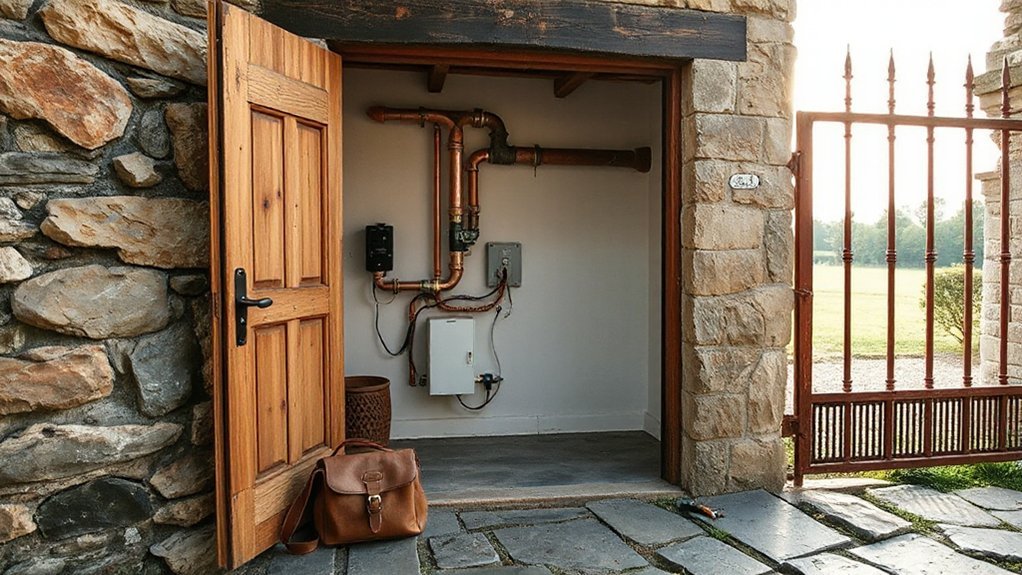
Keeping the cottage’s windows, doors, floors, and trim intact sets a clear standard for the next stage: you’ll modernise electrics and plumbing without advertising the work.
Start with a full condition survey, then isolate and label any Historic wiring before you strip it back to safe, compliant circuits.
Run new cabling through existing voids and chimney breasts where possible, and keep accessories tight to skirtings to avoid chasing plaster.
Choose discreet sockets, slimline switches, and warm-colour lamps so Modern fixtures don’t jar.
Fit a new consumer unit in a cupboard and test to current regulations.
For plumbing, map every run, then replace failing pipework in service routes, not across historic rooms.
Add accessible isolation valves, quiet pumps, and concealed traps to keep maintenance simple.
Match Period Materials and Add Low-Impact Insulation
Because the cottage’s fabric manages moisture as much as it carries character, you’ll get the best result by matching like-for-like materials and adding insulation that doesn’t trap damp. Keep vapour-open assemblies, and avoid cement renders, foil-backed boards, and impermeable paints that force condensation into timbers and lath.
- Specify breathable repairs: lime mortar, limewash, and timber splices to original species; run Historic paint analysis to replicate earlier finishes without sealing the wall.
- Insulate lightly: use woodfibre or sheep’s wool between studs and in roof slopes, with airtightness tapes at junctions and a smart vapour control layer where needed.
- Reinstate details: refit sash cords, skirtings, and period-appropriate fixtures, and keep air paths at eaves and under floors so the building continues to dry.
Frequently Asked Questions
How Do I Get Planning Permission for Restoring a Listed Gatekeeper’s Cottage?
You’ll need Listed Building Consent and likely planning permission: consult your Local Planning Authority, submit Heritage Statement covering Historical significance and Architectural details, commission measured surveys, agree materials, and use accredited conservation professionals; don’t start works beforehand.
What Grants or Tax Reliefs Are Available for Heritage Cottage Restoration?
You can access Historic England and National Lottery Heritage Fund grants, plus local authority schemes; you can’t claim VAT relief unless qualifying. You should budget for Historic landscaping and Traditional building methods; you’ll need professional eligibility advice.
How Can I Document and Date the Cottage’s Original Construction Phases?
Start with a measured building survey: record Construction materials, joints, tool marks, and mortar. Compare fabric changes to dated standards. Use Historical photographs, maps, deeds, and parish records. Log finds in a phased chronology.
Should I Hire a Conservation Architect, and When Is One Required?
Yes—you should hire a conservation architect early. Around 90% of historic defects stem from inappropriate repairs. You’ll need one for listed building consent. They’ll specify restoration techniques and preservation materials, ensuring compliant, durable workmanship.
How Do I Insure the Cottage During Restoration and After Completion?
You’ll need specialist insurance options: take out restoration coverage as a contract works policy plus public liability, and notify your insurer of vacancies. After completion, switch to buildings and contents cover, with listed features declared.
Conclusion
You’ve brought the gatekeeper’s cottage back by surveying first, then tackling damp, rot, and roof defects before anything cosmetic. You’ve conserved original joinery—windows, doors, boards, architraves—repairing rather than replacing wherever sound. You’ve threaded new wiring and pipework discreetly, keeping chases minimal and finishes honest. You’ve matched lime, timber, and slate, adding breathable insulation with restraint. Think of it as installing “firmware”: invisible upgrades, heritage intact, comfort assured. You’ll love your cottage, that’s for sure.