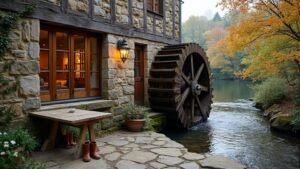
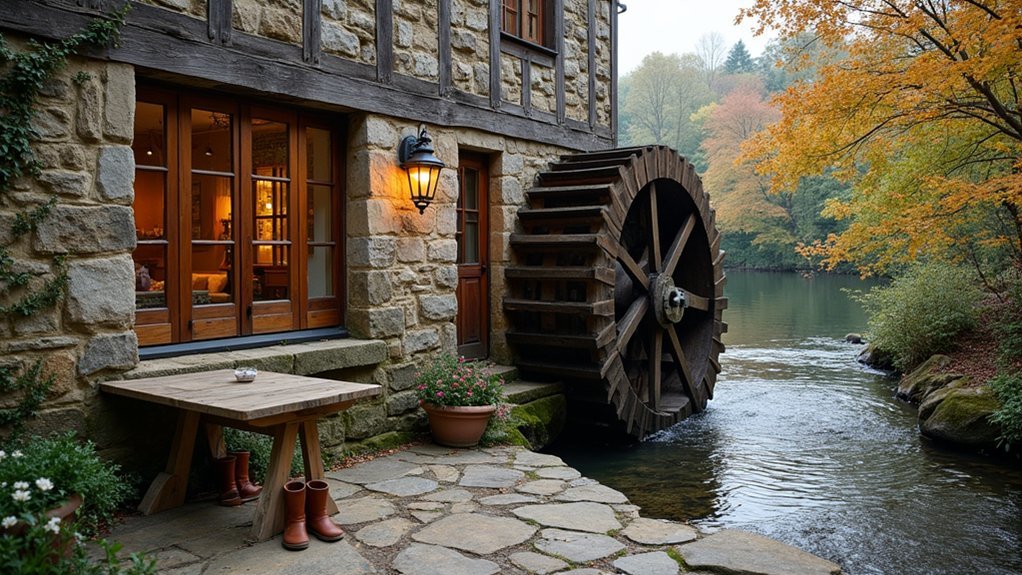
Reviving a water mill for family life means you’ll balance heritage fabric, moving water, and modern routines. Start with flood, damp, and insurance checks, then commission structural and moisture surveys to trace cracks and water pathways. Confirm listed status and riparian rights before you design. Stabilise stone, beams, and floors, repoint with breathable lime, and route services discreetly. Plan wet utility zones, calm bedrooms, and lockable stream-edge safety so the character stays intact. Next, you’ll see how to plan it step by step.
Key Takeaways
- Start with structural and moisture surveys, then stabilize stonework, beams, and floors using breathable, original-compatible repairs.
- Confirm listed-building constraints, water rights, easements, and environmental permits early to avoid planning and drainage compliance delays.
- Design a layout separating wet, noisy mill zones from calm living spaces, with clear sightlines for daily family routines.
- Mitigate flood and damp risk with resilient, reversible measures, improved ventilation, smart drainage, and specialist insurance suited to heritage mills.
- Preserve character while upgrading services discreetly: hidden wiring and plumbing, efficient heating, safe balustrades, and childproof stream and wheel-pit protection.
Decide If a Water Mill Suits Family Life
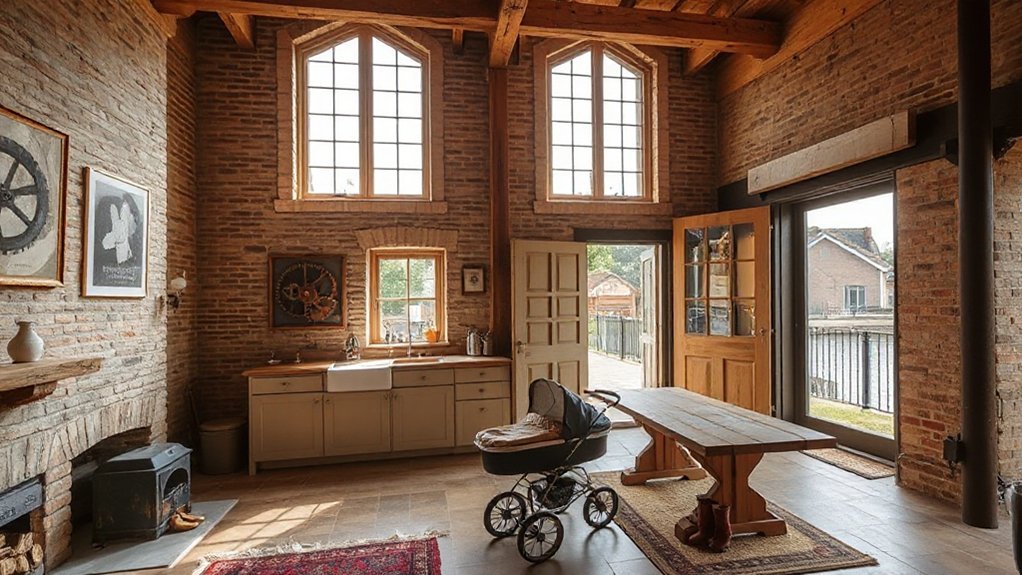
Although the idea of living in a restored water mill feels idyllic, you should first judge it like any serious family-home brief: day-to-day practicality, safety, and long-term resilience.
Map your routines: school runs, muddy boots, laundry volume, and where prams and bikes actually land.
Prioritise clear sightlines, stair gates, and robust balustrades around any drops, while keeping original joinery legible.
Plan zoning so bedrooms feel calm, not like a museum tour; acoustic doors and soft finishes help.
Treat Water conservation as a design driver: low-flow brassware, leak monitoring, rainwater for gardens, and efficient heating controls.
For Aesthetic preservation, you’ll specify reversible fixes, repair-first timbers, and lighting that celebrates stonework without glare.
Budget for custom cabinetry and discreet storage.
Check Flood Risk, Damp, and Insurance Early
Before you commit, you’ll commission a flood risk assessment that maps historic flow paths, culvert capacity, and safe finished-floor levels.
You’ll follow with a damp and moisture survey—salt analysis, hygrometer readings, and thermal imaging—to separate characterful patina from active ingress that will ruin finishes.
You’ll then line up specialist insurance early, confirming flood cover terms, excesses, and any resilience upgrades the underwriter requires.
Flood Risk Assessments
How safe is your mill site when the river runs high? Start with a formal flood risk assessment, not a guess. You’ll review EA/SEPA mapping, historical flood records, and catchment behaviour. Then commission a site survey to confirm floor levels, culvert capacity, and flow paths around the leat and tailrace.
Specify resilient upgrades that respect Historical preservation: discreet demountable barriers, raised services, lime-compatible repairs, and reversible detailing that won’t scar original stonework.
Measure Environmental impact early, because changing banks, weirs, or outfalls can trigger permits and habitat constraints.
Ask insurers for quotes before exchange; they’ll want modelled risk, protection measures, and a maintenance plan.
Finally, design access, plant rooms, and storage above predicted flood levels to protect daily living.
Damp And Moisture Surveys
When you’re turning a mill into a home, you need a damp and moisture survey that treats the building as a working hydraulic system, not just a set of walls. You’ll map moisture sources—groundwater, splashback, capillary rise, and leaking races—then link them to fabric types like stone, lime mortar, and timber. That clarity protects historical preservation and avoids blunt fixes that trap water.
- Commission non-invasive testing: salt analysis, carbide moisture checks, and thermal imaging to pinpoint active ingress.
- Audit ventilation paths and finishes: breathable plasters, limewash, and junction detailing that keeps evaporation working.
- Review site drainage and water handling: French drains, overflow routes, and Water conservation measures that manage flows without starving habitats.
You’ll leave with a targeted specification, staged by risk and repair priority.
Specialist Insurance Options
A moisture survey gives you a clear picture of where water moves through the mill; specialist insurance tells you how that risk will be priced, restricted, or declined.
Before you commit, ask brokers for flood-history mapping, rebuilt-value calculations for heritage fabric, and cover for waterwheel machinery and outbuildings.
Read Insurance exclusions line by line: some policies omit gradual seepage, rising groundwater, or damage to lime plaster and timber frames unless you prove maintenance.
You’ll also want alternative accommodation cover, because drying-out can take months.
Use your survey and upgrade plan to negotiate policy discounts—fit non-return valves, raise electrics, add sump pumps with battery backup, and specify breathable insulation and finishes.
Confirm any excesses for flood claims and ensure lenders accept the wording.
Survey a Water Mill Before You Buy
Before you commit, you’ll commission a structural and damp survey that reads the mill like a system—stonework, timbers, foundations, roof lines, and moisture paths tied to the leat and wheel pit.
You’ll want the surveyor to map defects to repair methods and finishes, so your design budget reflects lime-based breathability, drainage detailing, and reversible interventions.
At the same time, you’ll verify water rights, easements, and maintenance access in writing, because your ability to manage flow, clear screens, and reach the channel can make or break the project.
Structural And Damp Survey
Although the mill’s charm can distract you, a structural and damp survey is the non-negotiable check that tells you whether you’re buying a home—or an ongoing water-management problem. Hire a surveyor experienced with stone, timber, and saturated microclimates, and insist they map moisture movement, not just take surface readings. You’ll protect historical preservation while planning aesthetic restoration that won’t trap damp behind new finishes.
Focus on:
- Structure: check settlement, bowed masonry, lintel deflection, wheel-pit walls, and undersized or corroded ties.
- Moisture: test salts, rising damp versus penetration, condensation, and subfloor humidity; inspect ventilation paths.
- Remedies: specify lime-based repointing, breathable insulation, discreet drainage, and repairable joinery—then cost it realistically before you commit.
Water Rights And Access
Structural fixes won’t matter if you can’t legally control the water that keeps the mill alive. Before you fall for the beams and stonework, confirm Water rights in writing: abstraction, impoundment, and discharge. Ask for deeds, historic agreements, and any easements covering the leat, sluice, tailrace, and weir.
Verify who maintains banks and trash screens, and whether you’re liable for flood damage downstream.
Next, test stream access on the ground. Walk boundaries, check for locked gates, and map where you can reach control points in winter storms. Review Environment Agency or local authority consents for dredging, repairs, and fish passage, because design choices—turbine housings, footbridges, landscaping—must respect flow limits and habitats.
If access or rights are split, price in legal cleanup.
Plan Permissions: Listed Status and Riparian Rights
When you’re reviving a water mill as a family home, planning permission often hinges on two non-negotiables: the building’s listed status and your riparian rights. Listed consent governs what you may alter, so treat Historical preservation as a design brief, not a constraint, and prove Architectural integration through drawings, materials schedules, and a heritage statement.
Riparian rights shape what you can do to the leat, sluice, weir, and any outfalls, and they don’t override Environment Agency rules or flood-risk policy.
- Confirm the listing grade, curtilage, and protected interiors; map every affected element.
- Pre-apply with conservation and drainage officers; submit method, visuals, and impact.
- Document watercourse ownership, easements, and maintenance duties; secure consents early.
Stabilise Stonework, Beams, and Floors
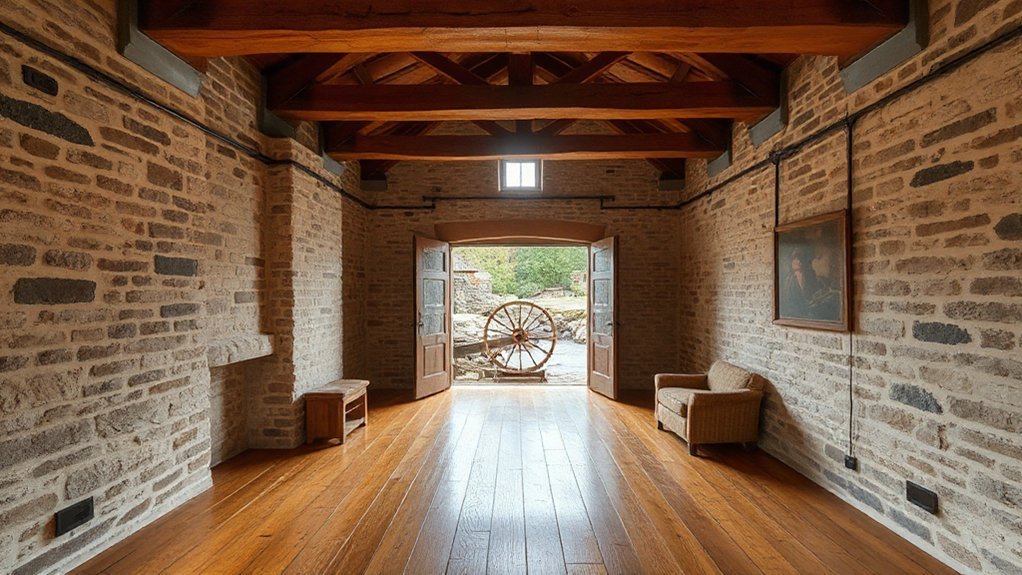
Before you touch finishes or services, stabilise the mill’s stonework, beams, and floors so the building carries loads as intended and moisture can’t keep rewriting your repair work.
Start with a structural survey, then trace cracks, bulges, and damp paths from wheel pit to gables.
Rake out failing cement, repoint in compatible lime, and stitch fractured walls with stainless helical bars where movement’s active.
Protect Decorative stonework by isolating it from structural ties and using gentle cleaning only after salts are managed.
Check timber for rot at bearings and pockets; improve ventilation and capillary breaks rather than sealing.
Specify Beam reinforcement with sistered timbers, flitch plates, or concealed steel, sized to limit deflection.
Level floors by repairing joist ends and adding discreet strutting, not pouring heavy screeds.
Keep Mill Character, Add Modern Comfort
Although you’re upgrading a working relic into a comfortable home, you don’t need to sand off its identity to get modern performance. Keep the mill’s honest wear visible while you refine how it lives: you’ll meet Historical preservation goals and still deliver modern remodeling standards.
- Celebrate originals: clean and limewash stone, oil timber, and leave tool marks where they tell the story; repair, don’t replace, unless failure demands it.
- Hide upgrades intelligently: run services in skirting voids or floor build-ups, specify discreet grilles, and choose period-appropriate switches with contemporary internals.
- Tune comfort: add breathable insulation, high-performance secondary glazing, and quiet heat sources; control moisture with ventilation that respects the fabric.
You’ll gain warmth, acoustics, and reliability without erasing character.
Design a Family-Friendly Water Mill Layout
Because a mill’s footprint grew around machinery rather than family life, you’ll design the layout by separating “wet, noisy, hard-working” zones from calm, day-to-day rooms while keeping circulation simple.
Keep the former wheelhouse, sluice, and stone floor as a durable mudroom, laundry, and workshop spine, with direct outdoor access for boots, dogs, and garden kit.
Pull living, dining, and kitchen into the driest volume, then carve sightlines to the watercourse without turning every route into a damp shortcut.
Put bedrooms upstairs or in the most stable bay, and cluster bathrooms near existing structural cores to limit invasive cuts.
Use glazed partitions and thick doors to manage sound.
Historical preservation guides what you don’t move; community engagement shapes interpretive nooks and shared threshold spaces.
Upgrade Water Mill Services (Heat, Water, Power)
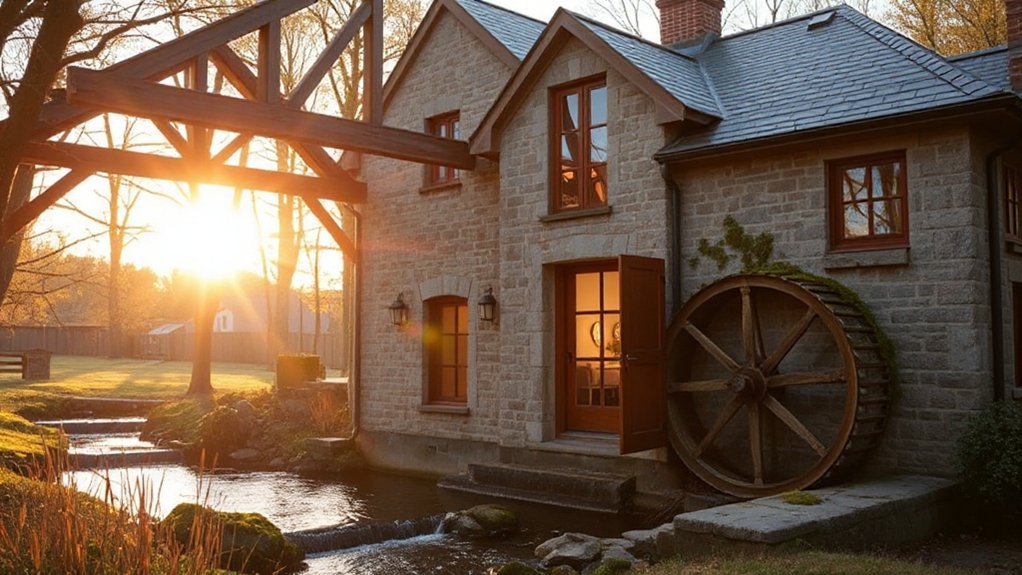
Once you’ve pinned down which parts of the mill must stay breathable and which must stay bone-dry, you can upgrade heat, water, and power without fighting the building’s physics. You’ll route new services through secondary voids—former chutes, redundant flues, or floor build-ups—so original stone and timber read uninterrupted, supporting Historical preservation and aesthetic integration.
- Heat: Specify low-temperature underfloor or slim radiators, fed by an air- or ground-source heat pump. Keep pipework in service zones and use lime-compatible insulation where you can’t trap moisture.
- Water: Install a manifold system with isolation valves, leak detection, and pressurised hot water. Place plant in a discreet utility bay with drainage.
- Power: Rewire with concealed conduits, add generous circuits, and integrate dimmable, warm lighting that flatters patina.
Make the Stream, Wheel, and Banks Kid-Safe
Before you let kids treat the leat like a backyard paddling pool, design safety into the stream edge, wheel pit, and banks with the same rigor you’d apply to a pool enclosure. Install discreet, lockable metal estate fencing set back from the coping, with self-closing gates on every access point.
Grade banks to stable slopes, add geotextile and stone pitching, and specify slip-resistant paths with handrails where falls are likely.
Cover the wheel pit with structural grilles that read like traditional ironwork, and fit a brake or pin to immobilize the wheel during playtime or maintenance.
Use signage that’s minimal but clear.
For Water conservation, control flows with a screened sluice and overflow.
For historical preservation, match materials, mortar, and detailing. Always.
Frequently Asked Questions
How Much Does It Cost to Restore a Water Wheel to Working Order?
You’ll typically spend $15,000–$120,000 to restore a water wheel, depending on size, rot, bearings, and masonry. Historical authenticity raises custom timberwork; Modern adaptations add stainless hardware, guards, and updated control systems.
Can a Water Mill Generate Enough Electricity for Off-Grid Living?
Yes—if your stream actually flows, not just in romantic brochures. With adequate head/flow, you’ll generate 1–10 kW continuously, covering essentials. Historical preservation constraints apply; design smart intake/turbine for reliable Renewable energy.
What Ongoing Maintenance Schedule Should You Expect for a Restored Mill?
You’ll follow a seasonal schedule: monthly debris clearing and lubrication, quarterly belt/bearing checks, annual turbine alignment and electrical testing, and 3–5 year masonry/timber surveys. Prioritize Historical preservation and Structural integrity with qualified specialists’ reports.
How Do You Manage Pests Like Rodents, Bats, or Insects in Old Mills?
Treat pests like uninvited houseguests: seal gaps, install door sweeps, and screen vents for pest prevention. You’ll schedule quarterly inspections, humidity control, and tidy storage. You’ll use humane wildlife control, bat exclusions, and targeted baits.
What Resale Challenges Do Character Water Mills Face Compared to Standard Homes?
You’ll face a smaller buyer pool, lender hesitation, and costly inspections. Historical preservation restrictions limit alterations, while Modern conversions must prove safety and efficiency. Noise, damp risk, access, and maintenance deter standard-home shoppers.
Conclusion
You don’t need to choose between romance and practicality when you revive a water mill. If you’re worried it’ll be cold, damp, or uninsurable, tackle that first: commission a specialist survey, confirm flood modelling and riparian duties, then specify breathable lime repairs, discreet insulation, and resilient services. Keep the wheel, stone, and beams as the narrative, but plan a clear, family-proof layout and robust safety at banks and sluices.