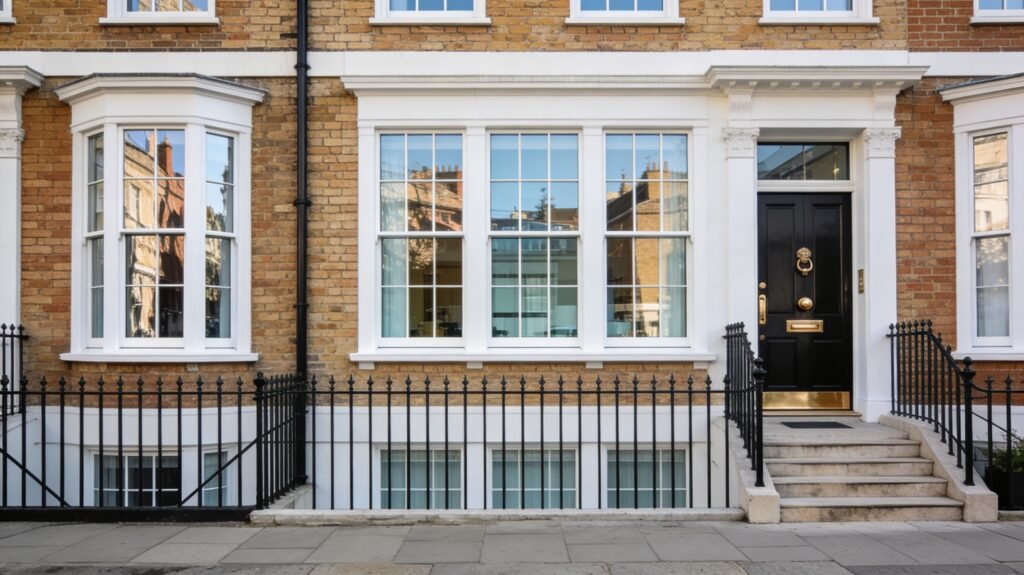
Double glazed sash windows look really nice, but obviously these are not original window types. One of the most common questions from period property owners is whether their existing timber sash windows can be upgraded to double glazing — keeping the original frames, the original character, and the authentic detail of the windows while gaining the thermal performance of a double-glazed unit. The short answer is yes, in most cases, but the reality is more nuanced than a simple upgrade and there are important decisions to make before committing to an approach.
Key Takeaways
- Retrofitting double glazing into original timber sash windows is technically possible — but the glazing bars must be wide enough to accommodate a slim sealed unit, and the frame must be structurally sound enough to take the additional weight of the double-glazed glass.
- Slim double-glazed sealed units — typically 14–20mm overall thickness — are the key product that makes retrofitting feasible. These are significantly thinner than standard domestic double-glazed units (typically 24–28mm) and are specifically manufactured for heritage and retrofit applications.
- The glazing bar width is the limiting factor — Georgian glazing bars are often only 22–25mm wide, which may not accommodate even a slim sealed unit without the bars looking too heavy. Wider Victorian and Edwardian bars are more readily adapted.
- Secondary glazing is almost always the alternative to consider — where retrofit double glazing is not feasible or not consented, secondary glazing provides comparable thermal improvement, better acoustic performance, and is acceptable in conservation areas and listed buildings.
- Conservation areas and listed buildings impose additional constraints — in many cases, retrofit double glazing in original timber frames requires consent and must be shown not to harm the character of the window or building.
- The cost of retrofit double glazing is significant relative to secondary glazing but potentially lower than full window replacement, making it a worthwhile option for the right window and the right property.
- A specialist timber window company should assess each window individually — the feasibility depends on the specific window’s condition, bar widths, and sash weight capacity, none of which can be assessed without inspection.
What “Retrofitting Double Glazing” Means in Practice
Retrofitting double glazing into an existing timber sash window is not the same as replacing the window with a new double-glazed window. It means:
- Removing the existing single-glazed panes from the existing sash frames
- Rebating (routing or widening) the existing glazing rebates to accommodate a slim double-glazed sealed unit
- Inserting and bedding the slim sealed units in the adapted rebates
- Reinstating the glazing beads or putty
The sash frames themselves — the timber stiles, rails, and glazing bars — remain in place. The box frame, the weights, the pulleys, and the mechanical operation of the window are unchanged. What changes is only the glass, which moves from single to double-glazed.
This approach preserves the original timber window’s character, its precise proportions, and its mechanical behaviour. The glazing bars — particularly in a window with finely detailed Georgian glazing bars — remain the original timber with original profiles, not the heavier extruded sections of a new replacement window.
The Technical Requirements
Glazing Bar Width
The most important technical constraint is the width of the glazing bars. A slim double-glazed sealed unit requires a rebate depth — the groove in the timber into which the edge of the unit sits — of at least 10–14mm for a typical 14–20mm overall unit thickness.
Georgian glazing bars are typically 22–25mm wide overall and may have a rebate of only 8–10mm. A slim sealed unit at 14mm overall thickness requires a rebate of approximately 10–12mm — which is at or beyond the capacity of the thinnest Georgian glazing bars without the bar looking heavier than it should. The result, if the rebate is widened to accommodate the unit, is a bar that is visually thicker than the original — detectable to a trained eye and, in some cases, significant enough to change the character of the window.
Victorian and Edwardian glazing bars are typically 30–40mm wide — more substantial sections that accommodate slim sealed units more readily without proportional distortion.
For original Georgian windows with very fine glazing bars, the retrofit double-glazing option is most constrained. The finest Georgian windows are best served either by retaining single glazing (with secondary glazing for thermal improvement) or by very careful specification of the thinnest available sealed units with specialist guidance.
Sash Weight Capacity
Double-glazed glass is heavier than the single-glazed equivalent. A slim double-glazed unit of 14–16mm overall thickness in a standard pane size adds meaningful weight to the sash — which must be carried by the existing sash cords and weights (or spiral balance mechanism in a later window).
The existing counterbalance may need adjustment. In a traditionally weighted window, this means increasing the weight of the sash counterweight — either adding to the existing cast iron weights or replacing them with heavier equivalents. A window with a spiral balance mechanism may need the balance springs replaced with higher-capacity units.
The sash frames themselves — the timber box frame, the cord grooves, the pulley wheels — are generally structurally capable of handling the additional weight of a slim sealed unit, but any window where the frame shows significant deterioration should be repaired before the additional loading is applied.
Frame Condition
A window frame that has decayed timber, loose joints, failed putty beds, or other structural compromise should be repaired before any glazing upgrade. Installing double-glazed sealed units into a compromised frame is a false economy — the sealed unit lifespan (typically 20–25 years) exceeds the likely remaining life of a deteriorated frame, and the investment in the sealed units will be wasted when the frame fails.
A specialist timber window company carrying out a retrofit glazing assessment will identify any frame repairs required as part of the project scope.
The Products: Slim Double-Glazed Sealed Units
The key product that makes retrofit double glazing feasible is the slim sealed unit — a double-glazed unit manufactured at a much smaller overall thickness than standard domestic glazing.
Standard domestic double-glazed units are typically 24–28mm overall (a 4mm outer pane, a 16mm argon-filled cavity, and a 4mm inner pane). These are designed for purpose-made window frames with rebates to match and are far too thick for most heritage timber window rebates.
Slim sealed units for heritage and retrofit applications are typically manufactured at:
- 14mm overall (4mm glass / 6mm cavity / 4mm glass) — the thinnest practical option; lower thermal performance than wider units but fits the most constrained rebates
- 16mm overall (4mm / 8mm / 4mm) — a useful compromise between thermal performance and rebate requirement
- 20mm overall (4mm / 12mm / 4mm) — better thermal performance; requires a wider rebate
The thermal performance of slim sealed units is lower than standard domestic double-glazed units because the cavity is smaller. A 14mm slim unit achieves a centre-pane U-value of approximately 2.8–3.0 W/m²K. A 16mm unit achieves approximately 2.4–2.8 W/m²K. A standard 24mm unit with low-E coating achieves approximately 1.0–1.4 W/m²K.
This means that retrofit double glazing in a heritage timber window does not achieve the thermal performance of a new purpose-made double-glazed window. The improvement over single glazing (approximately 5.0 W/m²K) is significant — approximately halving the heat loss through the glass — but it is a lesser improvement than a full double-glazed replacement.
Low-emissivity (low-E) coatings on slim sealed units improve thermal performance within the constraints of the narrow cavity. A 14mm slim unit with a low-E coating can achieve approximately 2.0–2.5 W/m²K — a meaningful improvement over an uncoated equivalent.
Warm-edge spacer bars — the component at the edge of the sealed unit that separates the two panes — also improve thermal performance and reduce the risk of condensation at the edge of the unit. They should be specified as standard for any retrofit application where thermal improvement is the primary goal.
The Regulatory Context
Conservation Areas
In conservation areas, windows are subject to local planning policy that in most cases requires that replacement windows match the original in material, profile, and character. Retrofit double glazing — because it retains the existing timber frames and does not alter the external appearance — is generally more acceptable to conservation officers than full window replacement.
In many conservation areas, retrofitting slim sealed units into existing timber frames does not require formal planning permission, because the external appearance of the window is not materially altered. However, this depends on the specific local authority’s interpretation of what constitutes “permitted development” for window works in a conservation area.
Confirming with the local planning authority’s conservation officer before committing to any glazing upgrade in a conservation area is strongly recommended — the cost of this conversation is nothing; the cost of installing glazing that requires retrospective consent or removal is significant.
Listed Buildings
For listed buildings, the position is more complex. Listed building consent is required for any work that affects the character of the listed building, and this includes internal works to windows that may not alter the external appearance.
The relevant question for a listed building consent application for retrofit double glazing is whether the slim sealed unit, once installed, materially affects the character of the window and the building. The case can be made that a sympathetically executed retrofit — using a unit thin enough not to alter the bar proportions, installed without visible change to the external face — does not materially harm character and should be consented. Many heritage consultants and conservation officers take this view.
However, the case must be made — it cannot be assumed. A listed building owner should consult their local planning authority and, for significant works, may wish to take professional heritage advice before proceeding.
Secondary Glazing: The Alternative
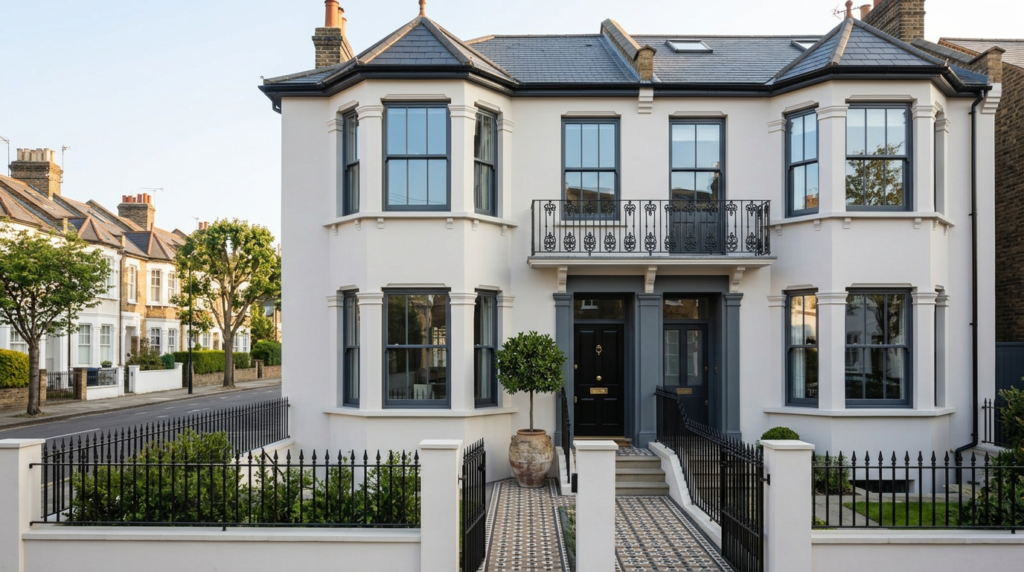
Secondary glazing deserves specific consideration alongside retrofit double glazing, because for many properties — particularly those with very fine Georgian glazing bars, and those in listed buildings or conservation areas where retrofit glazing raises consent complications — secondary glazing is a more practical solution.
Secondary glazing fits a separate inner glazing panel within the window reveal, behind the existing primary window. It does not alter the primary window at all. It is reversible. And it is acceptable to conservation officers and listed building authorities in the vast majority of cases.
Thermal performance: Secondary glazing combined with a single-glazed primary window achieves a combined U-value of approximately 1.4–1.8 W/m²K — comparable to or better than slim unit retrofit double glazing, and approaching the performance of a standard double-glazed replacement window. The large air gap between the primary and secondary panes is key to this performance.
Acoustic performance: Secondary glazing with a 100mm+ air gap provides significantly better sound reduction than a double-glazed sealed unit, because the air gap is much larger. For a period property on a busy road, secondary glazing typically provides better acoustic improvement than retrofit double glazing.
Cost: Secondary glazing typically costs £250–£500 per window installed — considerably less than retrofit double glazing in most cases, and without the complexity of rebating and sash weight adjustment.
Heritage acceptability: Secondary glazing is the solution most consistently recommended by English Heritage (now Historic England) and by conservation officers for thermal improvement in listed buildings and conservation area properties. It meets the principles of reversibility and minimal intervention that heritage practice requires.
Comparing the Options: A Summary
| Approach | Thermal improvement | Acoustic improvement | Heritage acceptability | Cost per window | Preserves original window |
|---|---|---|---|---|---|
| Retrofit slim double-glazing | Moderate (U ~2.0–2.8) | Modest | Often acceptable | £400–£800 | Yes — frames retained |
| Secondary glazing | Good (U ~1.4–1.8 combined) | Excellent | Almost always acceptable | £250–£500 | Yes — untouched |
| Like-for-like timber replacement | Good (U ~1.4–1.6) | Moderate | Required in conservation areas/listed buildings | £800–£2,000+ | No — new window |
| uPVC sash replacement | Good (U ~1.4–1.6) | Moderate | Generally not acceptable | £500–£900 | No — new window |
Getting a Retrofit Assessment
The feasibility of retrofit double glazing depends on the specific windows — their period, their condition, their glazing bar dimensions, and their mechanical state — in ways that cannot be assessed without inspection. A specialist timber sash window company (rather than a general double glazing installer) should carry out the assessment.
The assessment should establish:
- Whether the existing glazing bar rebates can accommodate a slim sealed unit without disproportionate visual impact
- Whether the sash counterbalance system can be adjusted for the additional glass weight
- The condition of the frames and whether repair work is required before glazing
- The appropriate unit thickness and specification for the specific window
- Whether the proposed work requires conservation area notification or listed building consent
Getting quotes from two or three specialist companies — not general glazing contractors — produces the best outcome. The companies most experienced in heritage and retrofit glazing work are those who regularly work on period properties and who understand the technical and regulatory constraints of the application.
Retrofit double glazing is not the right solution for every original sash window, and secondary glazing is often a better answer for the same thermal improvement with less complexity. But for the right window — adequate bar width, sound frames, appropriate regulatory context — it is a worthwhile investment that upgrades thermal performance while preserving the authentic character of the original windows.